
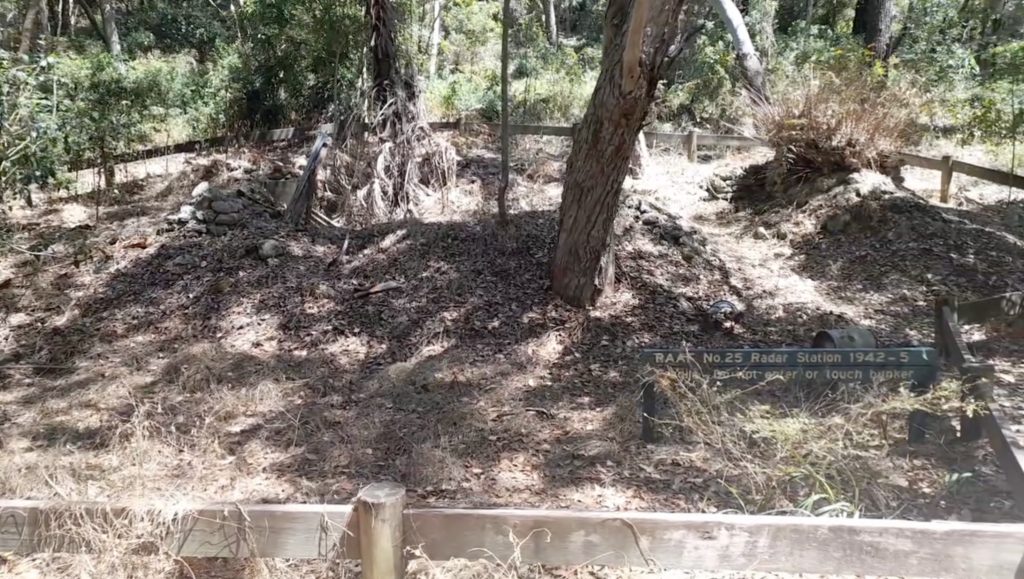
In the early years of the Second World War, long before the crackle of a radar echo became familiar to Australian ears, the remote headlands scattered around the continent’s coastline were quiet, almost forgotten places. They were the domain of lighthouse keepers and fishermen. But by 1942, the steady march of conflict across the Pacific had turned many of these lonely outposts into vital parts of Australia’s early-warning system. Among them was Sandy Cape, the wind-swept northern tip of Fraser Island, where the Royal Australian Air Force (RAAF) set up No. 25 Radar Station.
To the radar operators sent there, Sandy Cape must have felt like the other side of the world. Even in peacetime, the Cape was hard to reach, and during the war, it was even more isolated. Supplies arrived by sea whenever weather and tides allowed, and communication was often unreliable. Yet from this remote corner of the island, young airmen kept a vigilant watch for enemy aircraft and, on occasion, ships moving down the Queensland coast.
The story of No. 25 Radar Station highlights, in many ways, the broader RAAF radar effort during the war. Rapidly set up, often on the fly, and staffed by men and women learning entirely new skills, the radar network was one of Australia’s quiet wartime achievements. It relied on resourcefulness, teamwork and a fair bit of determination from those based where sand, mud, insects and distance were constant hurdles.
Australia turns to radar
When the war started in 1939, radar was still a new technology. The British had led the way in pioneering work, but the scale of the global conflict quickly prompted Australia to assume responsibility for defending its own coastline. Dr David Martyn of CSIR spent months in the UK on a fact-finding mission, and upon his return, the government formed a Radiophysics Advisory Board and established a dedicated laboratory to design and build equipment for coastal defence, gun laying and aircraft-to-surface-vessel detection. At the time, neither the government nor military believed Australia faced any real threat of invasion — only the possibility of occasional enemy raids. Equipment was quietly ordered from Britain for study and research.
With the adoption of the “Hankey Scheme,” Australia officially committed to developing its own radar capabilities. Training began swiftly. Officers studied radiophysics at the University of Sydney under the renowned Professor Victor Bailey, while mechanics received training at the Melbourne Technical College. Recruitment was initially slow. A hundred officer trainees were aimed for, but only half materialised, and the War Cabinet decided that no more than 200 trained radar personnel could be deployed overseas.
To fill the ranks, the RAAF relied on three distinct streams of university graduates; practical “direct entries” from commercial radio, the national broadcasting service, amateur radio circles and the broader radio industry; and finally, general recruits whose aptitude tests made them suitable. The direct entries, often older and with practical experience, quickly became the backbone of the early organisation. Men like Squadron Leader John Allan and Warrant Officer Arthur Field, the latter remembered for his “roving commission” that saw him work on 37 radar stations. Together, these groups provided the critical mass that allowed Australia’s radar network to develop rapidly.
Japan’s swift progress through South-East Asia in late 1941 turned radar from a research project into a key national concern. Suddenly, the danger of an attack on Australia’s eastern cities became very real. Fears, some blown out of proportion, others justified, spread about Japanese reconnaissance aircraft operating offshore, submarines launching floatplanes and bombing raids on Sydney or Brisbane. Many recruits who had joined expecting to serve overseas in England or the Far East now found themselves posted instead across Australia, New Guinea, and the wider Southwest Pacific.
One key point often overlooked is that nearly all the men who staffed Australia’s radar stations, regardless of rank, started their service with little or no prior knowledge of radiophysics. Their technical skills were mainly developed through accelerated wartime training, some at Sydney University, others at Melbourne Technical College, Point Cook, or finally at the RAAF’s own school at Richmond.
The pivotal change occurred with the founding of No. 1 Radio (Radar) School. Initially set up to support the deployment of ASV (Aircraft-to-Surface Vessel) radar, it conducted Australia’s first dedicated radar training course in July 1941. Under Flight Officer M.A. Brown, the RAAF quickly established a purpose-built school at Richmond, beginning training on 4 August for the first group of radar officers. Wing Commander Alfred Pither, who managed all radar operations in the RAAF, relied on insights from a fact-finding trip to Britain and argued that Australia should train radar personnel not only for its own needs but also for the British Royal Air Force (RAF).
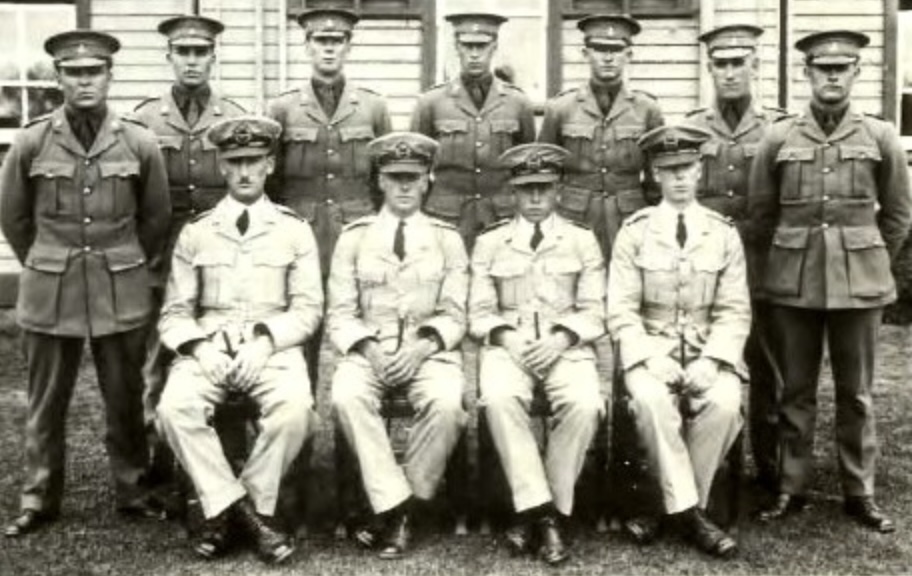
This policy ensured a pool of trained specialists was available when war reached Australia’s doorstep. British instructors and equipment soon followed, including their early warning radar system, Chain Home Low (CHL), which was assembled on site. By the end of the war, the school had trained an impressive 6,196 personnel across 483 courses covering both airborne and ground radar.
Meanwhile, strategic responsibility changed. In late 1941, a joint committee recommended that the RAAF, not the Army, should manage the country’s new long-range warning network, with stations set up at 32 coastal sites across Australia and New Guinea. The Cabinet approved this on 7 November 1941 — just one month before Japan attacked Pearl Harbour — effectively giving the RAAF a massive radar program at a crucial time. Additional CHL stations were approved for the Navy at key locations, including Cape Otway, Wilsons Promontory and Sandy Cape.
Radar stations served two primary purposes. One was early warning of air attacks, with operators scanning the skies for incoming aircraft and passing bearing and distance information to fighter sector headquarters. The other was detecting steel-hulled vessels, including enemy submarines and raiders. Stations were established in New South Wales, Queensland, the Northern Territory and eventually in New Guinea. Initially, equipment was imported from Britain and Canada and was later bolstered by American systems.
Despite the sophistication of the technology, early radar stations were often little more than outposts. Operators trained on cutting-edge equipment found themselves living in canvas tents, rough timber huts, or half-buried corrugated-iron shelters camouflaged under netting. Comfort wasn’t a priority, it was the antenna on the hill and the small groups of determined young men who kept the signals flowing.
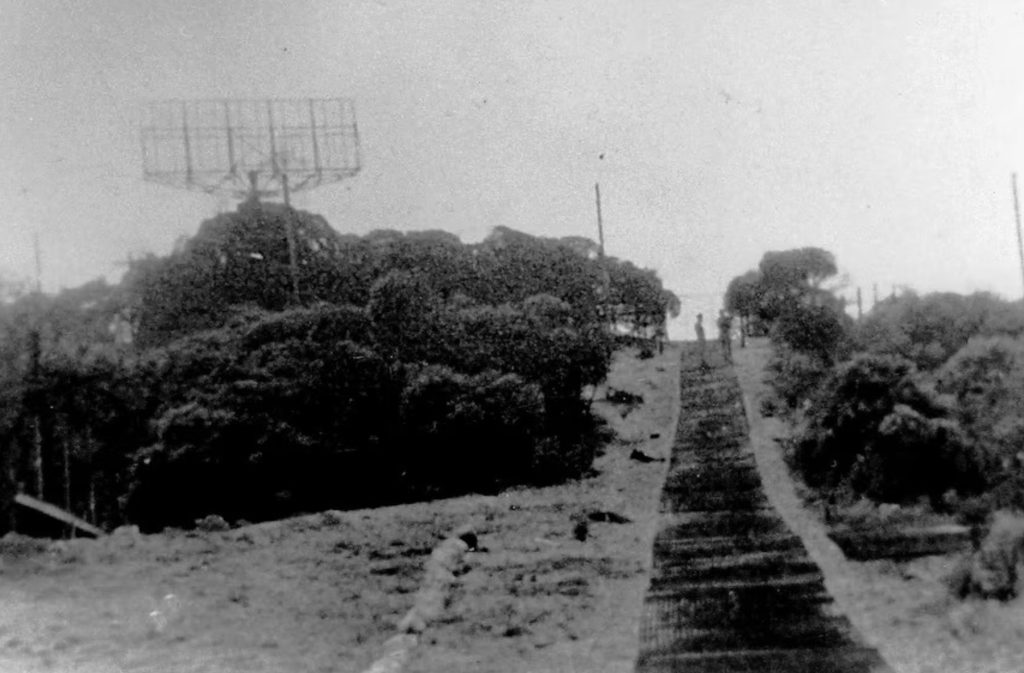
A lighthouse and a radar station
After the attack on Pearl Harbour in early December 1941, the need for radar defences became urgent, and the rush to develop experimental equipment depended on modified components. While initial efforts focused on mobile units mounted on Crossley trucks for rapid coverage, these were eventually replaced by fixed concrete and steel installations at the insistence of the War Cabinet. The first few months of 1942 showed signs of a situation bordering on panic, with intense training, procurement and organisation of a new section of the RAAF.
The first Radar Station was established at Shepherd’s Hill near Newcastle. After a Radar Liaison Officer was appointed to facilitate cooperation with local manufacturers and deliver an Australian-designed air warning transmitter to replace the CHL, prospects improved for the RAAF.
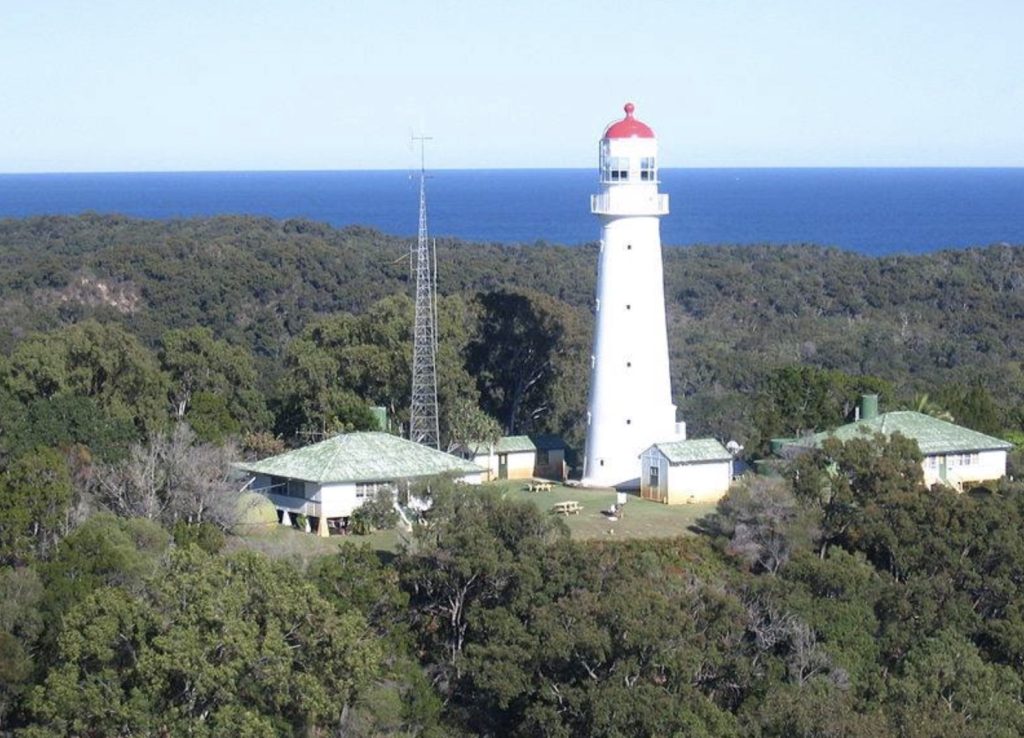
Sandy Cape was approved as the site for one of these new stations in July 1942. The location made sense. As the northernmost point of Fraser Island, it faced directly out across the Coral Sea, offering unbroken views for hundreds of kilometres. Any enemy aircraft approaching the southern Queensland coast from the north-east would likely pass within range of the Cape. The existing lighthouse, lit continuously since 1870, made the site familiar and partly serviced, making it ideal for quickly setting up a radar station.
Nonetheless, Sandy Cape remained astonishingly isolated. The closest town was more than a day’s travel away by boat, and it took even longer if the sea was rough. Tracks through the island’s thick sand in the northern half of the island were barely more than faint suggestions. For the few families living at the lighthouse, life was defined by settlement, distance and self-reliance in one of the most isolated corners of the coast.
The lighthouse keepers at Sandy Cape were used to a quiet life, mainly limited to the arrival of the occasional supply ship and the demanding maintenance of the lighthouse itself. When the Air Board approved the new radar station, their world was about to change drastically. Civilian construction crews from the Department of Works arrived first, bringing a flurry of activity the Cape had never seen since 1870 when the lighthouse facility was first built. Timber was brought ashore, cement was mixed under makeshift shelters and corrugated-iron sheets were carried across the dunes. The workforce operated under Civil Construction Corps conditions, a wartime setup in which men recruited for vital duties worked in remote or rugged areas to support the war effort.
By early 1943, when the station opened, the Cape had undergone a transformation. Buildings sprouted where only banksia and wattles had once stood. The layout followed typical RAAF planning of that era, including a control building, two powerhouses, combined sleeping and first-aid quarters, a mess and recreation hut, an administrative office, a general store, a washhouse, a kitchen and latrines. Two machine-gun emplacements, which were more symbolic than practical in such an isolated location, were placed nearby. Even clotheslines were officially included in the schedule, a reminder that, war or not, laundry still needed doing.
Life at the Cape
Up to thirty men were posted at No. 25 Radar Station at any one time. They lived in huts in a valley behind the lighthouse, sheltered from the worst of the winds that whipped off the ocean with relentless force. Even so, nothing could keep the sand out. It infiltrated uniforms, bedding, equipment, boots, and, most unforgivably, food. One former operator later wrote that eating at Sandy Cape was like developing a taste for:
Eggs and sand, stew and sand, porridge and more sand.
The men followed their routines, as every isolated unit did. A typical day involved maintaining equipment, watching the radar screen, keeping records and doing the small domestic tasks that kept the station running smoothly. The two diesel generators were the station’s lifeblood, their constant hum providing a familiar background noise. When the wind dropped, you could hear the low thrum of the generators from the lighthouse cottages.
Weather shaped life as much as the war. The heat could be oppressive in summer, with humidity clinging like a blanket. In winter, the Cape turned bleak, with strong winds blowing day and night. During storms, the sea lashed the beach and the dunes shifted imperceptibly, rearranging familiar landmarks. One airman remarked that Sandy Cape was the sort of place where you could hang your washing on the line and ten minutes later find it halfway to Rooney Point.
But despite the isolation, camaraderie thrived. The blokes shared jokes, hardships and the occasional win, like fixing a stubborn transmitter, finding a small freshwater spring in the gully, or the arrival of a supply ship with mail from home.
Many operators were young, some just out of school. Suddenly, they were managing equipment at the forefront of wartime technology, interpreting faint winking signals on cathode-ray screens and deciding whether a trace was a friendly aircraft or something more worrying.
The WAAAF and the radar revolution
Across Australia, the Women’s Auxiliary Australian Air Force (WAAAF) had become vital to the radar programme. Trained at Richmond and other bases, WAAAF operators often outnumbered RAAF personnel at established stations. While No. 25 seems to have been staffed by men during its operational period, the presence of WAAAF operators at other stations — such as 131 Radar Station on Ash Island — demonstrates the crucial role women played in the system as a whole.
Their involvement also boosted the professionalism of the service. Radar required concentration, accurate logging and discipline. A single misread echo could cause an unnecessary scramble or, worse, a missed threat. The technology was unforgiving, and the wartime consequences were just as harsh.
Although Sandy Cape never faced a direct attack, the operators knew that other stations had been bombed or had seen enemy aircraft overhead. They were also acutely aware of Japanese submarine activity off the coast of Australia. In 1943 and 1944, Allied shipping endured numerous attacks, some within sight of coastal signal stations. Vigilance was ingrained.
The tragic sinking of the hospital ship Centaur by a Japanese submarine in May 1943 happened in waters just south of Sandy Cape, where other Radar Stations were situated. The issue of radar coverage was addressed in the subsequent inquiry. However, its findings were not made public.
Coastwatchers, Z Special Unit and the Maheno
The war brought more military eyes to Fraser Island. A Coastwatchers station was set up about two miles north of the Maheno shipwreck. Coastwatchers, often working with little support, were tasked with monitoring ships, aircraft and unusual activity. Their reports fed into larger intelligence networks and sometimes provided vital early warnings.
Meanwhile, the Maheno — once an elegant passenger liner retired from service and run aground on Fraser Island in 1935 — found a new, though unlikely, role. Trainee airmen used the rusting hull as a bombing target. You can imagine a group of cadets gathered around an instructor, pointing out the flaking superstructure and explaining how to judge approach angles and release timings. It must have felt surreal to train for wartime drills over a ship that had become one of Fraser Island’s most famous landmarks.
Down at North White Cliffs, a discreet Z Special Unit camp trained small groups of commandos in sabotage, survival and stealth. It was work so clandestine that even the island’s wartime residents rarely knew what the young men were doing on the island. It was a small presence, but it highlighted how highly defence planners valued the island’s remoteness and ruggedness. That story deserves its own telling, which will take place in three years’ time to commemorate 85 years since it began operating.
The radar men
Every radar station had its characters, and Sandy Cape was no exception. Although detailed personal accounts from No. 25 are scarce, stories from similar coastal radar units give insight into the lives of the men who served there.
There was always the practical joker, the guy who placed a sand goanna in a mate’s bedroll, or who swapped labels in the stores so that sugar became salt and vice versa. There was the quiet bloke who wrote long letters home every week, carefully inked in neat handwriting, describing the weather, the fishing and the small wins of making equipment work in conditions far from a laboratory. And there was usually the fellow who took a bit of pride in keeping the generator running smoothly, listening to its rhythm as if it were a musical instrument.
Off-duty hours were spent fishing, reading and occasionally playing cricket on makeshift pitches carved out of the sand. A radar station in Queensland’s north recorded that one match ended prematurely when a massive stingray, hooked by an enthusiastic batsman during a break, dragged the fishing line and the bat into the surf. One suspects similar tales circulated around Sandy Cape.
Occasional visits from the lighthouse families offered brief social contact. The keepers’ children brought cheer, and the operators often tried to entertain them with demonstrations of how the radar worked, though the demonstrations were simplified to keep wartime secrets. One boy reportedly called the apparatus “a machine that listens for planes in the sky,” which, in fairness, was not far from the truth.
Signals in the night
The heart of the operation was the control building, where the radar gear was set up. On quiet nights, the operators sat in near darkness, the glow of the screen lighting up their faces as they tracked echoes across the grid. The sound of the sea outside mixed with the hum of electronics, creating an atmosphere both mesmerising and tense.
Most nights passed without incident. The operators observed routine flight paths and logged the movements of Allied aircraft heading north or south along the coast. Occasionally, they tracked storms or weather anomalies, learning how to distinguish meteorological noise from aircraft signatures. On rare occasions, a suspicious return triggered a heightened alert, though no verified enemy aircraft were ever detected by No. 25.
Their work was important as every small station helped build a chain of security along Australia’s vulnerable eastern coast. Together, they created a vast, silent guard watching the Pacific.
War’s end and retreat of the sand
As the war decisively shifted in the Allies’ favour in late 1944 and early 1945, the importance of many radar stations declined. Japan’s ability to launch air attacks on Australia had greatly diminished, and resources were being redirected to support offensive operations in the northern islands.
By August 1945, when hostilities ended, the radar station at Sandy Cape, like many others, was already being wound down. Charlie Mathison won the contract to remove or relocate the equipment, and the buildings gradually fell into disuse. Without ongoing maintenance, sand began to spread back over the concrete pads and paths. Timber structures sagged, rust spread across metal fittings and the low scrub pushed towards the margins, reclaiming what the war had briefly taken.
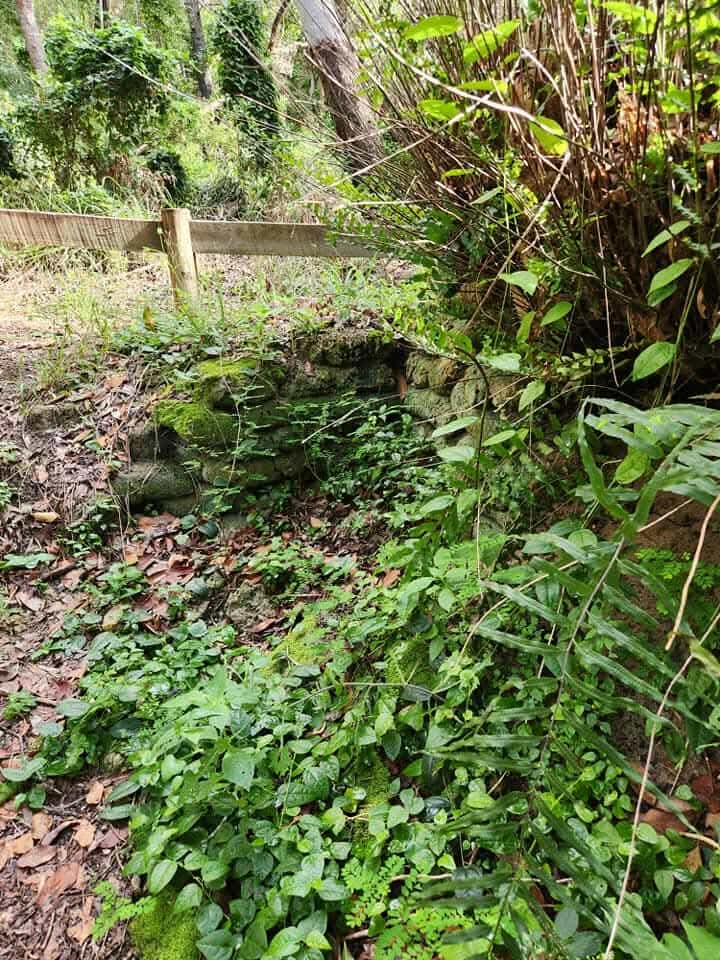
Yet not everything has vanished. Visitors to Sandy Cape today can still spot remnants of the station. In the gully northwest of the lighthouse lie the remains of wells and a couple of bunkers made from sand-filled hessian bags. These “bunkers” were probably defensive positions or blast shelters, simple yet practical. Their preservation is impressive, given the fragile materials and the harsh environment.
The valley, once filled with huts, now sits quietly, but the feeling of history remains strong. The silence that surrounds the Cape feels almost like a tribute to the young men who once looked to the skies, far from the world they knew.
A forgotten chapter of Fraser Island’s wartime past
Compared to the more dramatic wartime stories of New Guinea, Kokoda, or the bombing of Darwin, the radar stations along Australia’s coast are rarely remembered. They did not fire weapons or engage the enemy directly. Their role was preventative, and their successes lay in the threats that never materialised.
But these stations, including No. 25 at Sandy Cape, were crucial. They formed the backbone of Australia’s coastal surveillance during a time of real vulnerability. Their operators learned new technologies quickly in harsh conditions, working long shifts with limited comforts. Their presence reassured military planners and the public alike.
Sandy Cape’s radar story adds another chapter to the rich history of Fraser Island. From Indigenous heritage dating back thousands of years, to logging camps, lighthouse families and shipwrecks like the Maheno, the island is filled with countless human stories. The men of No. 25 Radar Station are part of that proud legacy.
Epilogue: sand, signals and memory
If you stand near the lighthouse today and listen to the wind, it isn’t hard to imagine the murmur of the generators or the clipped radio chatter of operators reporting a sighting. The dune valleys obscure most physical evidence, but the landscape still faintly echoes those wartime months.
One can imagine the scene in 1943: a young operator finishing his midnight shift steps outside to stretch, the sky radiant with stars. He hears the lighthouse slowly turning, its beam sweeping across the restless sea. Behind him, in the control hut, another operator leans towards the green glow of the radar screen. The war feels distant, yet somehow close enough to be felt.
The men of No. 25 Radar Station lived in a place of stark beauty and daily challenge. Their vigil contributed to the safety of Australia’s eastern coast, even if history has seldom paused to acknowledge their efforts. On Fraser Island, where the past is often hidden beneath layers of sand and time, the limited knowledge of their story deserves to be remembered and retold.
You directed a lighthouse beam into a hidden history for me, Robert, and I thank you once again.
Superb story once again, Robert. I was totally unaware that there was a radar post at Sandy Cape. The story of the development of radar is in itself an amazing story – how in just a few years, radar was developed from a comparatively crude low-frequency system with massive towers, to the higher frequency systems with rotating antennae (presumably this iteration was used in the coastal systems) to radar units compact enough to fit into the nose of Pathfinder aircraft.
If I ever visit Sandy Cape (it’s on my bucket list), I’ll be sure to look out for any signs of the radar installation and its operators.
Never knew about the Radar Station Robert. I knew about the Z Force activities at McKenzie Jetty. The Krait, after repairs and refurbishment in the early 70’s made a trip up Sandy Strait and called in at Ungowa and had dinner with my father and mother. Cheers and good work.
My neighbour’s father served at the radar station at Sandy Cape. He told me a story of having to stand to as the radar
had detected a vessel heading towards them. They feared an attack. A landing barge appeared and they were at the ready. The vessel turned out to be a landing craft; the landing gate lowered, and on the deck stood an American smoking a cigar.
It turned out the landing craft had come adrift during a storm whilst under tow to the Battle of the Coral Sea. He told me that the radar station was rigged with explosives set to destroy the radar if they were attacked, to prevent the enemy from obtaining the technology, as Britain and Australia, at the time, were the only ones to have it.
What an extraordinary story, Ian. Thanks for sharing.
That’s a good write-up on the history.
I have looked for the coastwatchers camp north of the Maheno, but had no luck finding any remains.
You mentioned an event in 3 years. What were your plans with that? I was involved in the one at the commando school about 15 years ago.
Hi Ian. I was referring to a blog I will be writing about the Commando School in 3 years to commemroate 85 years.
My wife and I are volunteering for QPWS at Sand Cape. Our accommodation is in one of the old lighthouse keepers’ houses. Our tasks are maintenance around the lighthouse precinct.
Today’s job was weeding at the radar station.
Not much is left now, but one building that remains is still very visible. Worth the trip to the island and Sandy Cape