
This will be seen as one of the great books about Australia. Eric Rolls gives the history of the forest the laconic power of an extended campfire yarn, spiced with the personal vision that comes from a lifetime of acute observation.
Historian Professor Weston Bate, on A Million Wild Acres.
Like the Book of Genesis, with its endless ‘And Joktan begat Almodad, and Sheleph and Hazarmaveth, and Jerah’…There is a walk-on-walk-off cast of thousands, and the detail is numbing – but this is the Pilliga Book of Genesis, and I think the author was right to put it all in.
George Seddon’s book review of A Million Wild Acres, 1982
This isn’t a story about untouched nature. It’s about ecological succession shaped by culture, animals, law, technology and ideology. It focuses on the Pilliga Scrub in western New South Wales, which sits loosely within the triangle formed by the towns of Narrabri, Coonabarabran, and Baradine.
Modern Australia has fallen in love with a dangerous idea — that our forests are timeless, that what we see today has always existed and that human intervention can only harm the natural world. Nowhere is this belief more deeply rooted or more misleading than in the way green activists now talk about the Pilliga Scrub. We are told it is an ancient remnant forest, scarred by European influence and only saved through reservation and national park status. Its cypress pines are depicted as survivors from a primeval age, its koalas as relics from deep time and its fires as unnatural disasters caused solely by climate change.
Yet nearly every serious historical and ecological line of evidence points in a different, less comfortable direction. The Pilliga, as we understand it today, is not as ancient as it’s often claimed to be. It is not a remnant landscape preserved from deep history. In its current form, it is largely a result of European occupation — a forest that grew after settlement, not before.
That idea first reached a wide audience with the publication of Eric Rolls’ A Million Wild Acres in 1981. The book challenged comfortable assumptions and angered those who needed the Pilliga to be ancient to keep it morally untouchable. Rolls did not describe a forest that had been destroyed. Instead, he famously called it “the story of a forest which grew up and drove men out.” With that single phrase, he changed the moral framework of Australian environmental storytelling. For many, it has been unforgivable ever since.
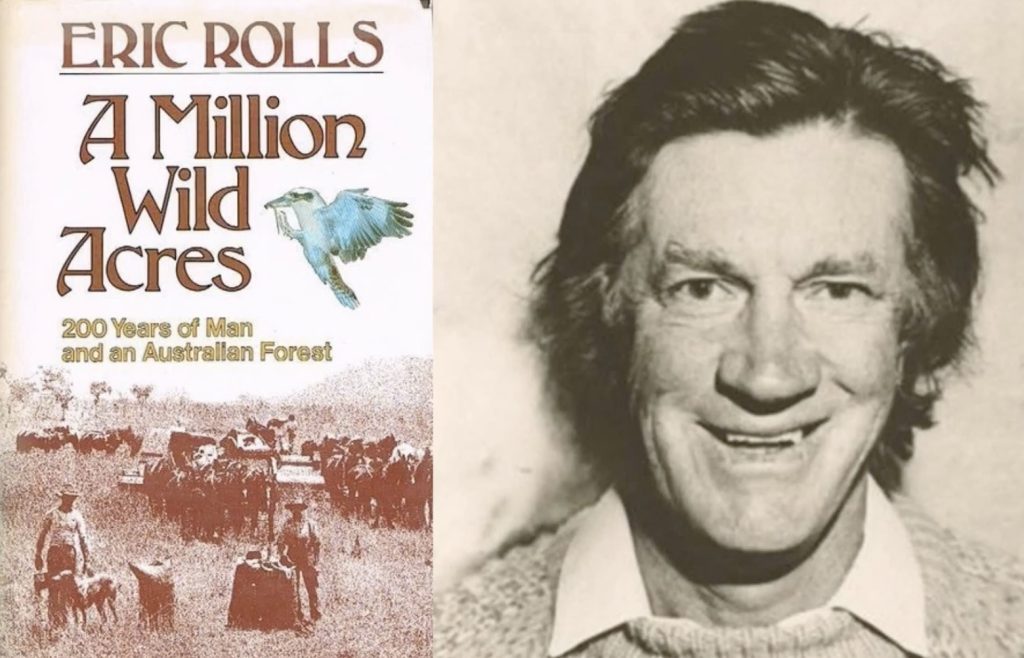
Importantly, Rolls did not reach his conclusions based on ideology. Instead, he built his case using explorer journals, land records, early cattle and sheep returns, forest inventories, forestry files and physical evidence found in the landscape itself. What resulted was not a minor revision to the accepted story but a direct challenge to the core myth.
The landscape the explorers saw
When John Oxley moved across the southern edges of what would later be called the Pilliga in August 1818, he didn’t describe a dense pine forest. Instead, he recorded open country — apple-tree flats on firm ground and sandy soils with scattered ironbark, box and pine. What impressed him most was how easily he could travel across the landscape, except during floods, when the loose sands suddenly turned to quicksand, making travel treacherous.
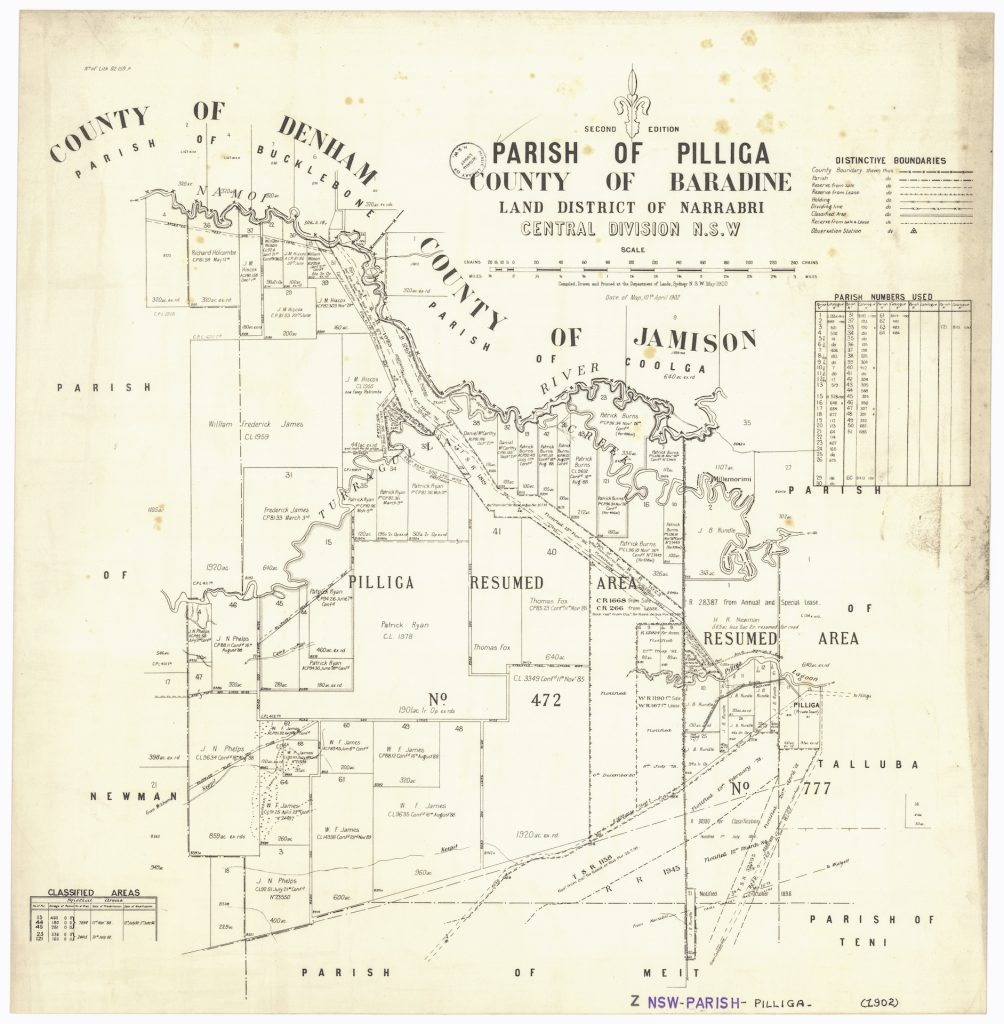
This country later became the Yarragin State Forest, now commonly shown as part of a dense pine scrub. Still, nothing Oxley observed matches today’s locked pine stands. Early parish plans and selection maps verify his accounts. Pastoral runs were established right across the Pilliga. That alone is significant, because instead of leasing thick scrubland, settlers opted for grasslands and open woodlands.
By 1875, government land records show the district supporting about 25,000 sheep, 30,000 cattle and 10,000 horses. Such figures are unfathomable in today’s forests. Trying it now would likely lead to significant losses. Only a landscape mostly made up of native pasture with widely spaced trees could have sustained stock at that level.
In 1877, Forest Ranger James Ward estimated the timber in his district south of Narrabri at one to two mature trees per acre, with about ten young trees — roughly four to twenty-five per hectare. Compare that to modern densities of hundreds, and often thousands, of stems per hectare. The contrast alone is enough to challenge the myth.
Settlers’ lease records reveal the story just as clearly. As the pine spread, the carrying capacity fell. Rather than retreating from grazing, the forest steadily moved across it.
Aboriginal burning and the open woodlands
For tens of thousands of years before Europeans arrived, Aboriginal fire shaped the inland landscapes of New South Wales. Major Thomas Mitchell wrote with surprise at the scale and regularity of Indigenous burning across the western plains. These fires were not destructive, runaway blazes but frequent, cool, controlled burns that kept open woodlands, promoted grasses and kept fuel loads low. Under those conditions, widespread tree regeneration was kept in check.
Historical geographer Denis Jeans later described the vegetation of central western New South Wales as “not natural” in a strict ecological sense, but as actively maintained by Aboriginal fire regimes. What the early Europeans encountered, then, was not a primeval forest, but an open woodland landscape shaped and sustained by human hands through cultural burning.
With European settlement, that system was disrupted. Fire was deliberately excluded or quietly suppressed through intensive grazing, which removed the fine fuels that once supported those low, cleansing burns. With that ecological control gone, the conditions that had kept tree recruitment at bay for millennia were suddenly reversed.
This was the first of the changes that enabled the modern Pilliga to develop.
Sheep, soil and the first pine surge
With the settlement came sheep. Their hard hooves compacted the delicate sandy soils, altered species composition and removed the grasses that once sustained regular fires. The combined effects of reduced burning, altered soil conditions and periods of good rainfall created ideal conditions for widespread pine growth.
By the early 1870s, observers noted dense young cypress pines spreading across the country that had previously been open grazing land. This was something they had never seen before. By 1881, the change was so clear that government surveyors were officially instructed to report on the expansion of pine scrub as part of their work.
Evidence presented to the Western Lands Royal Commission in 1901 left little doubt. Witness after witness described once-open country being overtaken by dense pine forests, and carrying capacity dropping sharply. Scrub clearing became an increasing economic burden. In response, the government even introduced special “scrub lands” leases, requiring tenants to clear the regrowth over six years in exchange for secure tenure.
None of this fits the description of an ancient forest. Instead, it describes an ecological eruption where human disturbance rapidly triggered a transformation.
Then came the rabbits
If grazing and fire removal sparked the first major pine growth, rabbits almost shut it down again.
Rabbits arrived in western New South Wales by the mid-1880s, and the good seasons of 1886–88 caused their numbers to increase dramatically. When drier years followed and grass cover was reduced, the damage became quite severe. In their millions, rabbits ringbarked shrubs, ate seedlings and stripped already weakened pastures down to bare sand. Eric Rolls later documented this destruction in They All Ran Wild, describing rabbits as one of the most damaging biological invasions in Australia’s history.
Later landscape studies by forester Mark Allen confirmed what the historical record had already shown. After the major regeneration surge of the 1870s and 1880s, pine recruitment nearly ceased for the next fifty years. Allen’s sample plots in Nangerybone and Cumbine State Forests showed that about 80 per cent of the pines alive then had established between 1870 and 1890. There were scattered, widely spaced ancient trees — the old grey ones — and then very little until regeneration picked up again after the 1950s.
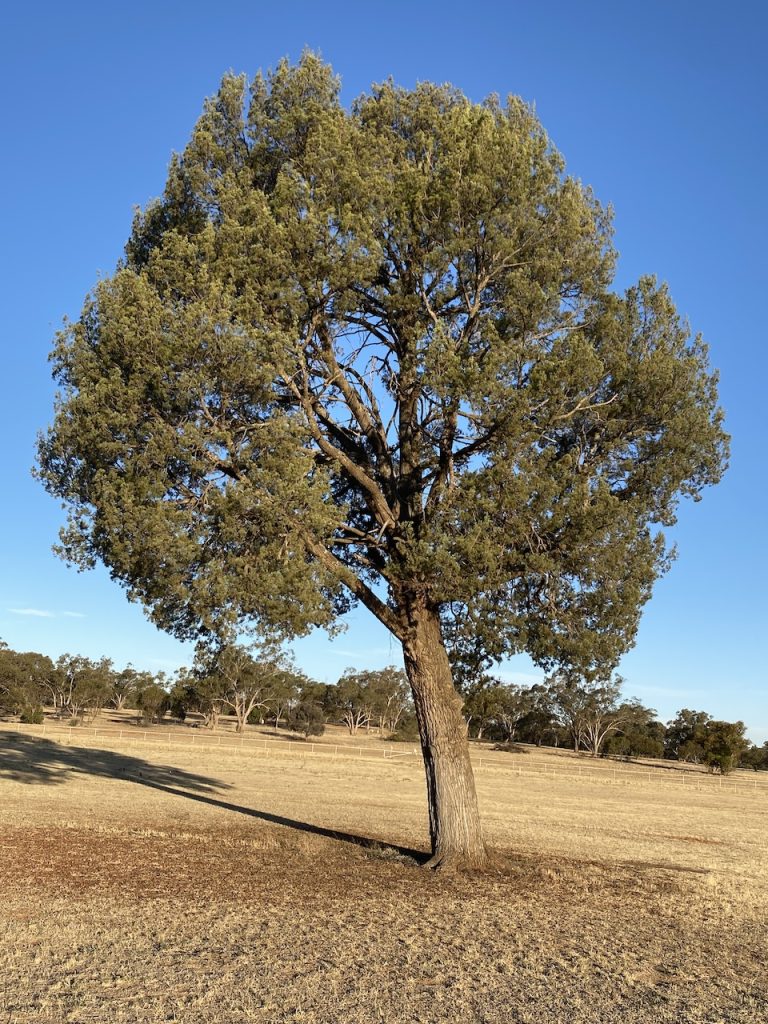
Cypress pine breeds in huge numbers, up to a million stems per hectare in some places. In the crowded, nutrient-poor conditions of the Pilliga, the young trees don’t compete and self-thin as eucalypts do. Instead, they “lock up”. They grow to about two metres high and then stop, only breaking free again if fire, thinning, or disturbance creates space around them. There are pines in the Pilliga over a hundred years old with trunks no thicker than three centimetres.
Forestry enters the Pilliga
By the late 1870s, parts of the Pilliga had already been set aside for timber following the Lands Amendment Act of 1875. Despite this, agriculture still remained a priority over forestry in government policy. Well into the 1890s, new blocks were still being surveyed for clearing and scrubbing within areas already designated as timber reserves.
By the time scientific management finally took hold, the Forestry Commission had inherited a forest already deeply modified. When professional foresters started working systematically in the twentieth century, they found pine in stands so dense that, as one contemporary remarked, “you could not see ten yards through it”.
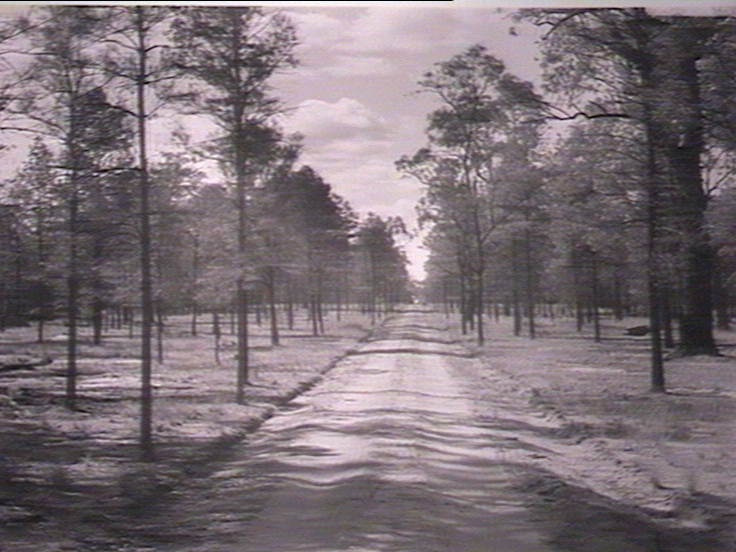
When Edward Harold Fulcher Swain began his role of District Forester for the North-West District at Narrabri in 1911, the forests he inherited had been marked out of pastoral leases in a haphazard, piecemeal manner going back to the 1880s. Graziers were still permitted to lease these forest parcels under the Crown Lands Acts, as long as they thinned the trees to let the remaining ones grow.
Ringbarking left its own peculiar mark on the landscape. Box trees, unlike pines, coppice after being ringed, throwing up multiple shoots from a dying base. The result was a forest of twisted, multi-stemmed forms — living cemeteries that can still be seen across grazing country today.
Swain quickly began establishing order from the improvised setup. The forests were mapped and divided into manageable blocks. Roads and tracks were built, accommodation was provided and fencing was erected to manage stock. Strip assessments were carried out to count trees and measure timber volume by diameter class. Working plans were formulated, with white cypress pine identified as the main commercial species. Thinning prescriptions based on ringbarking were developed, along with calculations for the allowable cut in each forest. By 1921, over 350,000 hectares had approved working plans.
Timber Stand Improvement efforts thinned the dense regrowth and opened the canopies. Defective stems were taken out. Over time, structure, access and a degree of ecological balance were restored. By the mid-twentieth century, the Pilliga supported a sustainable timber industry alongside grazing and wildlife. This transformation was achieved through deliberate, ongoing forestry work.
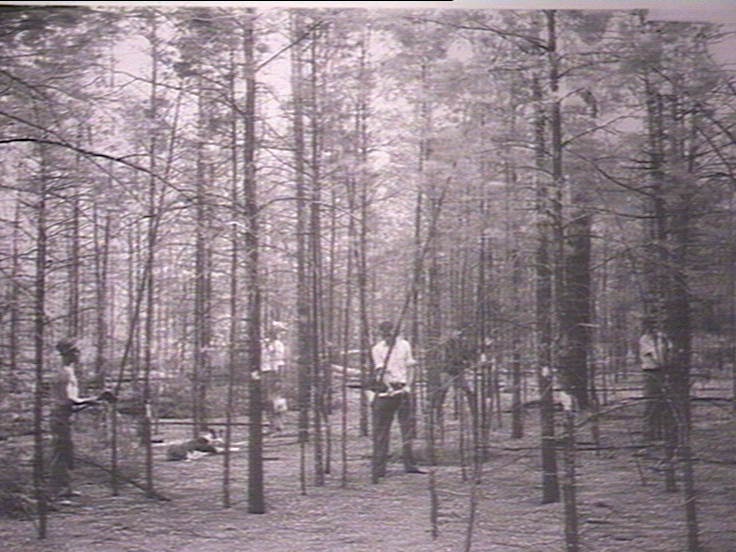
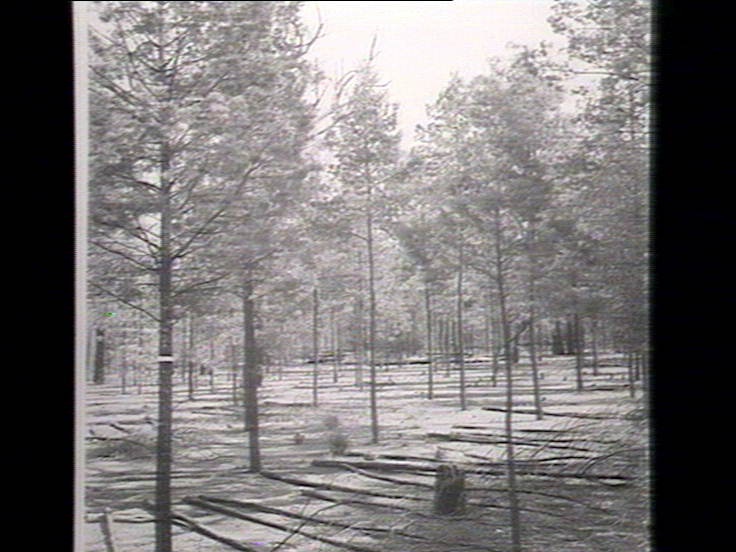
Foresters repurposed what many saw as worthless scrub into a valuable natural resource. One of the deeper ironies of Australian environmental politics is that this very success later became an argument for abolishing forestry altogether.
Even during this period of recovery, uncertainty hung over the future. Throughout the 1920s and 1930s, rabbits pushed the cypress resource to the brink of exhaustion. Regeneration was heavily grazed out, and concern about the long-term timber supply grew.
At the same time, the initial optimism about growth rates was unfounded. In 1914, it was believed that white cypress could increase by about 1.1 centimetres in diameter annually, allowing it to become a commercial tree in under thirty years. By 1918, updated measurements reduced that estimate to just 0.25 centimetres per year.
With little regeneration occurring and growth far slower than anticipated, the immediate outlook for the sawmills appeared bleak.
Geomorphology, sand, and the uneven forest
One key nuance is that the Pilliga has never been a uniform forest. Its structure, productivity and management history reflect how ancient river systems deposited the sandplain. The thickest, deepest sands were laid down towards the north and west, where drainage was freer and soils were better suited for sustained cypress growth. These areas produced the most vigorous stands and, later, the most commercially valuable timber such as white cypress and grey ironbark.
In contrast, the eastern and southern margins of the Pilliga are underlain by shallower, heavier, less stable soils. Cypress still invaded these areas after European settlement, but growth was poorer and timber quality lower, supporting inferior black cypress and narrow-leaved ironbark. As a result, forestry activity was focused on the deeper sand country to the north and west. That’s where roads, firebreaks, working circles and thinning programs were most fully developed.
It was in the poorer areas that forestry practices were limited. Few roads were constructed, access remained poor, firebreaks were sparse and systematic silviculture was uncommon. These regions were considered marginal because they were less productive and more difficult to manage.
When large fires later swept through the east and south, burning fiercely, they were viewed as signs of the climate crisis or as proof of vulnerability. But these were areas of the Pilliga where fuel had accumulated over decades without thinning, access, or mosaic management.
The best forests on the deeper northern and western sands had, in fact, been the most intensively managed, structurally open and biologically diverse. Ironically, they were also the areas that demonstrated most clearly that management was effective.
The second surge: myxomatosis and regrowth
Then came myxomatosis. Introduced in the early 1950s, it caused rabbit numbers to plummet almost overnight and the ecological impacts were immediate and obvious.
Pine regeneration surged once again. In areas where foresters had opened the canopy through thinning, young pines quickly flooded in, filling spaces that had been cleared or degraded. By the mid-1960s, this second wave of regrowth was transforming large areas of western New South Wales, including the Pilliga.
This pattern is significant because if climate alone controlled regeneration, a 50-year gap would be difficult to explain. But once rabbits are brought back into the picture, that long pause becomes completely understandable.
An interdepartmental inquiry later concluded that the emergence of this new scrub was:
A natural feature of the environment occurring as the result of a combination of several factors and accentuated by the absence of natural fires.
In other words, it reaffirmed what the 1901 Royal Commission had already recognised, that the pine scrub was not ancient — it was the result of human and ecological disturbance.
New forest assessments were conducted, and comparisons with previous surveys enabled foresters to update diameter distributions and recalculate growth rates. In some forests, increment plots were set up to monitor tree growth more accurately.
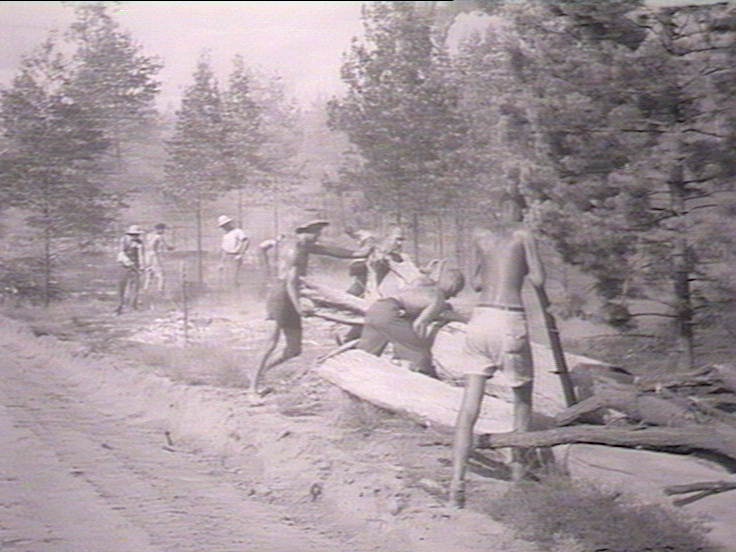
By the 1960s, the assessment and planning system had experienced significant changes. Strip surveys were replaced by ongoing forest inventory plots. Computer models were introduced to predict changes in diameter classes over time, and new allowable cut limits were set, reflecting a more scientific approach to sustainable forest management.
All this was important because a post-World War II boom placed high demands on cypress pine. It is one of the hardest of the softwoods and makes an excellent building material, not just because it looks good. It’s also durable, shrinks very little and resists termites. In simple terms, Australia’s native cypress pine is among the world’s finest construction timbers.
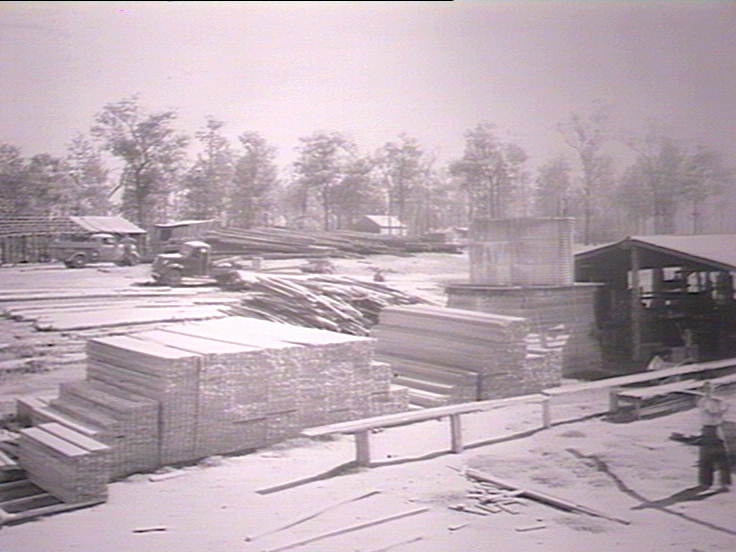
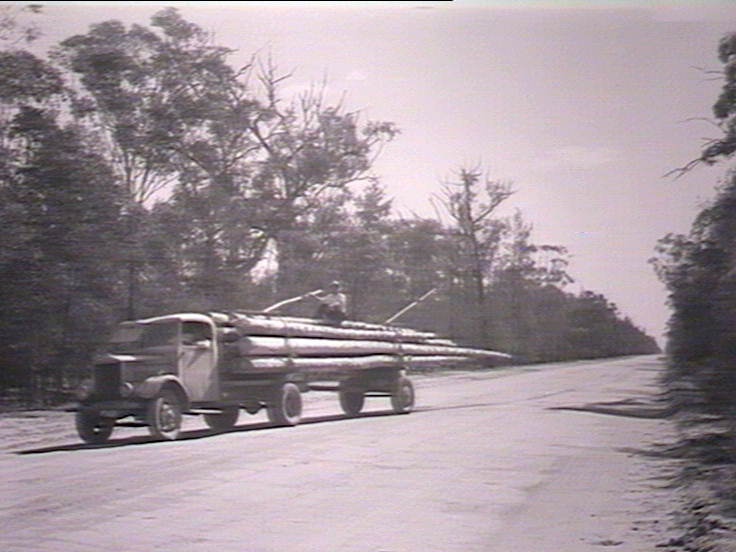
Right up until 2005, the forests of the Pilliga employed 180 locals directly and 140 indirectly, harvesting 50,000 cubic metres of cypress annually, plus about 7,000 cubic metres of ironbark for 12 cypress and five hardwood mills. This was carried out sustainably. Trees were logged selectively, with a minimum amount left standing. While thinning of pines was important, limited funds meant that, from the 1980s, it was restricted to high-production areas.
Reading the forest as an archaeological text
Mark Allen’s true insight was to see forests not just as a collection of trees, but as living historical records. Every feature, from a simple stump to a tall pine, shows evidence of human activity. Stumps indicate axe work, logging and silvicultural thinning, while multi-stemmed eucalypts silently carry the scars of ringbarking by graziers trying to improve pasture. The age patterns of cypress pines reveal phases of regeneration followed by decades of suppression, reflecting grazing pressure, rabbit plagues and changes in fire regimes. Even more subtle clues, like abandoned survey lines, fences and netted rabbit barriers, remain embedded in the landscape, telling their quiet stories.
Allen argued that cypress forests are more than just physical traces of human history. He believed their patterns, density and disturbances served as an archaeological record. In this light, the Pilliga is not a timeless wilderness but a template of human activity and environmental responses over the past 140 years.
George Baur, a longtime silviculturist with the Forestry Commission, reached a similar conclusion after many years of practical experience. Reflecting on the cypress forests, he wrote:
In cypress forests, perhaps more than in any other Australian forests, the stands that we now have are so different from those of pre-European times that the original forests could provide little to guide us in understanding the growth processes of our current stands.
It’s a remarkable observation. The Pilliga, often romanticised these days as “natural” or “wilderness,” is, in reality, quite different from the open woodlands and scattered pines that existed before European settlement. Walking through these dense, enclosed stands without recognising their human-influenced nature is to mistake a recent ecological experiment for something ancient.
Every locked stand, patch of new growth, overgrown track and stump shows the marks of European grazing, clearing, Aboriginal fire suppression, rabbit impacts and later forestry management. The forest is a record, not a relic. It tells a recent story, not a primordial one.
Reservation, rewriting, and the academic struggle for the Pilliga’s past
By the 1960s, the Pilliga was no longer primarily regarded as a working forest shaped by use, disturbance and repair. It was increasingly seen as something to be reserved. The first formal step in that direction occurred in 1967 with the dedication of the Pilliga Nature Reserve in the poorer eastern section of the Pilliga, which had been simply Vacant Crown Land.
The significant political change, however, occurred in 2005 when New South Wales Premier Bob Carr announced a major expansion of forest reservations across the Pilliga region, protecting around 350,000 hectares. This move came after the signing of the National Forest Policy Statement in 1992, which obliged state governments to establish a “comprehensive, adequate and representative” reserve system through regional forest assessments. Cypress forests had never been a primary political focus of that process, yet the Carr government decided to apply it to the Pilliga anyway, as part of Carr’s farewell effort to secure his “greenest Premier” legacy.
It was put to Carr at the time that his reserve targets could be achieved without risking the cypress sawmilling industry. That option was not pursued. Instead, the government agreed to all the demands made by environmental activists and paid around $80 million in compensation to industry.
Public justification heavily emphasised koalas and expanding protected “wilderness.” Meanwhile, the significant compensation was a clear contradiction that was seldom acknowledged. A forest seen as pristine still required payments to those who were supposedly never meant to be there.
It was during this period that the modern myth of the Pilliga as a surviving remnant of pre-European forest hardened into political fact. Preservation groups, such as the National Parks Association and the Western Conservation Alliance, promoted the Pilliga as the largest remaining patch of native forest in the largely cleared Brigalow Belt South Bioregion. They argued it should be officially recognised as a National Biodiversity Hotspot.
The language was reverent and absolute. What was described as a fragile remnant of ancient time was, in fact, something quite different – a young, disturbance-driven forest that had largely formed after European settlement.
Bob Carr became the public face of this transformation. “Wilderness” was applied to a landscape that had been grazed, logged, ringbarked, burnt, fenced, rabbit-ravaged and silviculturally thinned for over a century. It was a strange kind of wilderness — one still riddled with stock routes, loading ramps, fire lines, coupe boundaries and thinning prescriptions beneath the surface. But the term proved powerful. Repeated often enough, it replaced the working history beneath it. For a largely urban public unfamiliar with the forest’s history, the narrative was easy to accept.
It is now widely thought that the reservation “saved” the Pilliga. However, ecologically, it did something far less reassuring. It paused the forest in a temporary, regeneration-focused stage and removed the management practices that had previously stabilised it. Throughout much of the twentieth century, forestry involved thinning dense stands, controlling spacing, reducing ladder fuels and moderating the effects of regeneration pulses.
After the reservation, thinning dramatically decreased and fuels accumulated. Regrowth was locked in once again. The Pilliga, freed from active management but not from disturbance, entered an era of extreme fire behaviour. What was claimed as protection, in reality, amounted to long-term abandonment.
Modern activists still insist that the Pilliga must be “saved” for its wildlife. They highlight the region’s remarkable species list: one-third of all Australian bird species recorded here; about 300 native animals; more than fourteen frog species; thirty-two mammals, including twelve bat species; around fifty reptiles; and twenty-two threatened species — glossy black-cockatoos, regent honeyeaters, turquoise and swift parrots, square-tailed kites, koalas, spotted-tailed quolls, black-striped wallabies, rufous bettongs and others.
It is an impressive catalogue. But it also tells a story that quietly challenges the wilderness narrative. This biodiversity did not survive in a primordial forest. It thrived in a landscape less than 150 years old — a forest shaped, stabilised, opened and diversified by grazing, selective logging, thinning, burning and the systematic silviculture of the Forestry Commission. The wildlife abundance of the Pilliga is a tribute to the success of long-term forest management.
The koala has become the emblem of this narrative. Activists frequently argue that the Pilliga must be locked away to protect it. During the Millennial Drought, a koala study led by researchers at the San Diego Zoo found a decline in population numbers. Severe drought and wildfire no doubt contributed to that downturn.
What is rarely acknowledged, however, is that the koala is an irruptive species. Its populations expand rapidly when young, nutrient-rich foliage becomes available — particularly after thinning, disturbance, or fire. The flush of saplings and regrowth that follows fire can produce precisely the conditions under which koala numbers surge. In other words, the same disturbance processes that are portrayed as threats are often the ecological drivers of recovery and expansion.
By presenting short-term declines as evidence of systemic failure, activists ignore the longer population cycles characteristic of disturbance-adapted species. The koala becomes a symbol, not of ecological complexity, but of selective storytelling.
As this political shift gained momentum, an academic counter-current also surfaced. From the early 1990s, several papers began questioning the historical foundations established by Eric Rolls and later supported by researchers such as Mark Allen. In 1991, a paper by E. H. Norris, Peter Mitchell and Diane Hart, published in Vegetatio, challenged the scale, timing and causes of the pine regeneration described by Rolls, even though the authors called their work preliminary and cautioned against broad generalisations. It has since been widely cited by preservation advocates as proof that dense pine forest had always dominated the Pilliga.
However, that claim does not stand up to close scrutiny. The authors did not recreate pre-settlement conditions in the Pilliga itself. Instead, they extrapolated from explorer descriptions of pine scrub along the Lachlan and Murrumbidgee River systems — landscapes with completely different soils, hydrology and disturbance histories. Oxley, Sturt and Mitchell did indeed describe dense pine along those river corridors. That evidence was then used to imply that dense pine must have been the regional norm across the Pilliga sandplain. However, the reasoning is flawed because pine behaviour in riverine environments provides little insight into what happened on the deep sands of the Pilliga, where the documentary and structural record points in a very different direction.
Rolls himself never denied that dense pine existed in other areas early on. He references Oxley’s 1817 observations of “very thick cypress scrub” near present-day Weethalle, west of West Wyalong. His argument was not about continental uniformity. It was the Pilliga sand country that experienced a specific post-European transformation.
That case rested on evidence drawn from the Pilliga itself, such as explorer journals describing open country where riders could move freely; stocking records showing tens of thousands of sheep, cattle and horses on land now almost impenetrable with pine; early forestry inventories recording one or two mature trees per acre in the late nineteenth century; and regeneration pulses that matched the collapse of Aboriginal fire regimes, the spread of rabbits, drought cycles, rainfall patterns and the suppression of mild burning.
A second challenge arose in 1997 with a paper by botanists John Benson and Peter Redpath. Their critique targeted not only Rolls but also a wider range of writings that depicted pre-European Australia as mainly open woodland shaped by regular Aboriginal fire. Their approach was cautious. They emphasised environmental variability and warned against making broad generalisations across a continent with highly diverse soils, climates and landforms. They re-examined explorer journals, including Oxley’s, and suggested that some references to smoke and fire might have been misunderstood. They also proposed that original woodlands may have been denser than Rolls suggested.
As a general warning against oversimplifying national history, this caution is reasonable. But when applied specifically to the Pilliga, it does not negate the main evidence. Benson and Redpath did not provide direct evidence that most of the Pilliga sandplain was once covered by dense pine forest. Their alternative density estimates were also based on other woodland systems. Their reinterpretation of explorer accounts introduced uncertainty, but uncertainty is not evidence of a pre-existing closed forest.
More importantly, both Norris et al and Benson and Redpath’s papers do not address the most telling local evidence of nineteenth-century stocking figures, early forestry stem counts, the dominance of even-aged pine cohorts dating back to the late nineteenth century, the 1880 parliamentary records describing new pine growth on land disturbed by European stock, Allen’s ecological mechanism linking grazing and fire exclusion to mass pine recruitment, the multi-decade regeneration pause caused by rabbits and the second regeneration surge following myxomatosis. These data come not from impressionistic travel writing but from the forest itself and from administrative records. None of this is refuted.
Benson and Redpath’s treatment of Aboriginal fire is also inconclusive. While they argue against uniform burning, they do not propose an alternative fire-regime model that can explain the sudden and large-scale structural change of the Pilliga following settlement. In contrast, the combined effects of disrupted Indigenous burning, grazing, rabbits and fire exclusion align with the timing and pattern of change quite precisely.
Benson and Redpath correctly remind us that landscapes are never uniform. Their work does not disprove that the Pilliga Scrub, as it now exists, is essentially a post-European artefact. Yet their cautionary tone has since been selectively repackaged to support the modern “remnant forest” narrative. However, when the forest itself is considered as evidence, a completely different picture emerges.
In activist hands, that modest academic caution has been transformed into a political tool. The Pilliga is now almost automatically described as a “remnant forest”, a biological survivor that somehow escaped history unscathed, rather than as a forest that expanded across the plains after European land use began. This rhetorical shift is central to its rebranding as a wilderness icon that must be permanently excluded from management.
Nevertheless, Rolls’ phrase remains true. The Pilliga was not an ancient forest patiently awaiting rescue. It was a forest that “grew up and drove men out.” It emerged from disruption, thrived under changed fire regimes, grazing and pests, and was later stabilised through forestry. The papers of Norris and colleagues, and of Benson and Redpath, have not altered that history. What they do not support is the modern myth of the Pilliga as a timeless remnant of primeval Australia. They simply remind us that nature resists tidy ideological labels.
Fire: from tool to terror
Fire has always been part of the Pilliga. In a land shaped by drought, lightning and wind, no forest exists without it. What has changed is not the presence of fire but how it now behaves. Its size, speed and intensity are no longer what they once were. That change did not arrive solely because of the climate. It also coincided with the slow retreat of active forest management after reservation, followed by a long period of quiet neglect.
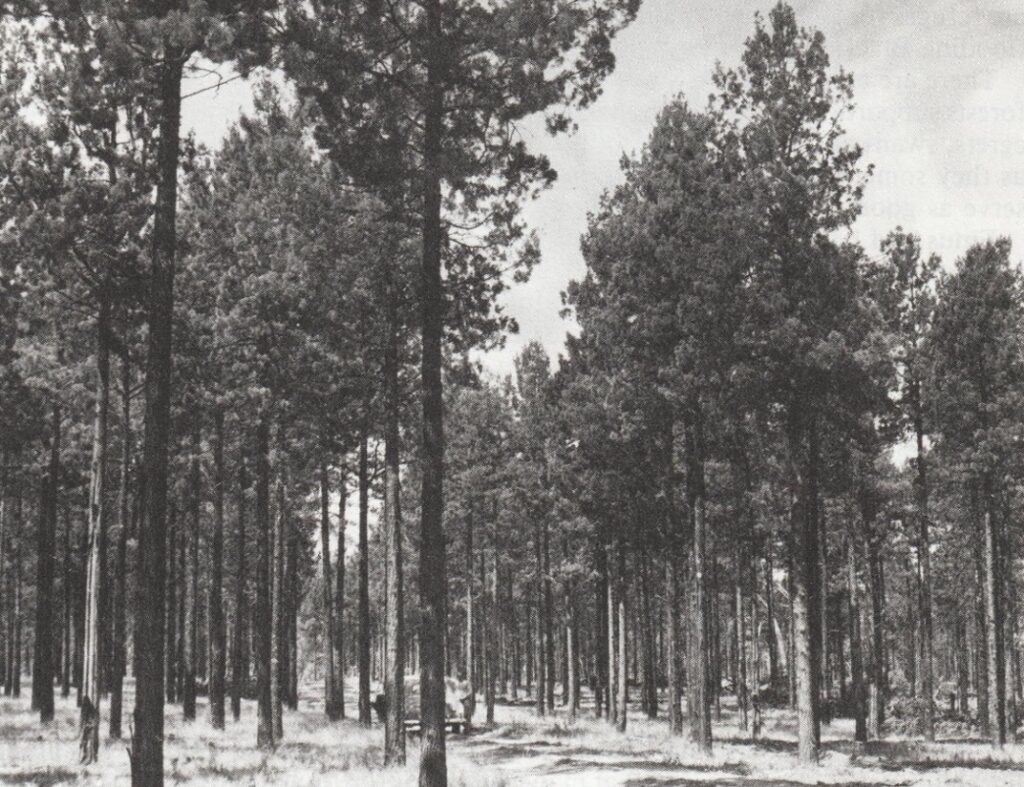
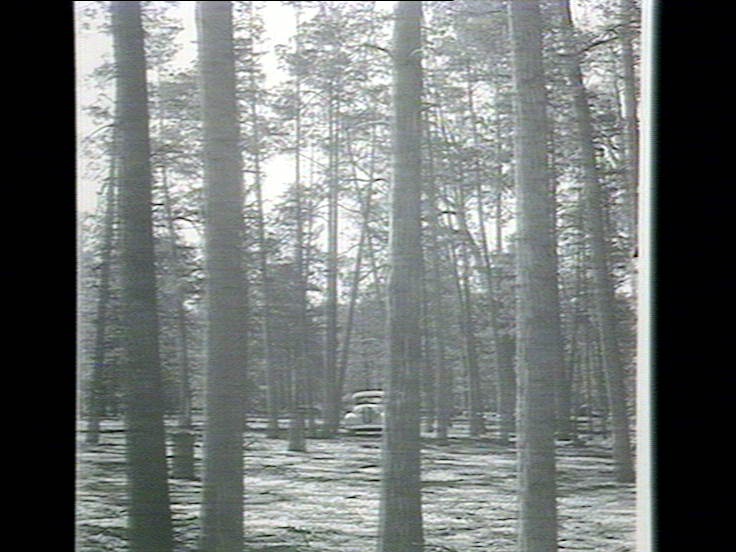
One important but often overlooked factor helps explain the nature of fires before the 1950s. Photos of the Pilliga from the late 1930s show woodlands with clear, open floors — a situation caused by rabbits. Before myxomatosis was introduced, rabbits ate almost all understorey regrowth. Foresters at the time also kept the ground neat, slashing, pulling and tidying as part of their routine work. The combined effect was an artificially low-fuel environment. Under these conditions, fires in the pre-war and immediate post-war years tended to be mild, easy to control and behaved in predictable ways.
That illusion of stability vanished almost overnight. When myxomatosis was released in 1950, rabbits died out at an astonishing pace. Within a single season, the forest floor burst into cypress regeneration — millions of seedlings sprouted into a continuous layer of flammable material, helped by the record rains in 1950, which caused heavy fuel growth across valleys and flats.
Foresters noticed it immediately but lacked any precedent for dealing with a fuel pulse of such intensity. Eighteen months later, in the summer of 1951, the Pilliga experienced its largest fire on record. The 350,000-hectare conflagration that burned for two weeks was not due to poor management but was the predictable outcome of a sudden biological release and an unprecedented fuel load. This event marked a turning point that forced foresters to implement systematic fuel reduction and thinning programs throughout the 1950s and 1960s — practices that were later abandoned under reservation.
In contrast, the fire of December 1982 burned under very different conditions. Sparked by lightning on 3 December during a widespread drought, it was detected on the 5th and exploded in intensity by the 8th. On 6 December alone, it travelled around 35 kilometres eastward and burned more than 62,000 hectares in a single day. By the time it was brought under control on the 10th, about 110,000 hectares had been burnt. Temperatures reached 37 degrees Celsius, relative humidity dropped to 24 per cent, and strong north-north-west winds gusted to 36 kilometres per hour — conditions that guaranteed extreme fire behaviour.
Yet even then, remnants of the old management system still mattered. On the southern edge of the burn, the fire was contained where a fuel-reduction burn had been carried out two years earlier along Delwood Road. That prescribed burn, a practice introduced after the 1951 disaster, proved decisive. The fire still burned fiercely, but it stopped where fuels had been altered. It is a detail easily overlooked today, but it speaks volumes about what deliberate preparation once achieved.
By 1997, the Pilliga had reached a tipping point. The Timmallallee Creek fire, sparked by lightning on 28 November during extremely dry conditions, behaved differently than earlier fires. It regularly broke through control lines, spread across large areas in multiple directions, and directly threatened homes, farms and infrastructure. Several houses and outbuildings were lost across the Shire. Smoke hovered over Narrabri as 143,000 hectares burned.
What set 1997 apart was not just the weather but also the continuity of fuels across the forest. Regrowth had locked up vast areas that were once thinned, grazed and broken by access. Fire controllers eventually adopted a new strategy to replace the unsuccessful options. The so-called “Blue Line” — an emergency containment line outside the eastern edge of the forest in open grassland, where the fire could finally be stopped because the fuels changed. It was an acknowledgment, written onto the ground itself, that the interior of the modern Pilliga had become effectively unfightable under extreme conditions.
After Carr’s massive reservation lock-up, Nationals Jenny Gardiner moved a prescient motion in the State Legislative Council on 30 November 2005, citing:
Hundreds and thousands of hectares of woodlands, which are quite capable of handling fairly infrequent logging, will now be locked up to await the inevitable and frightening firestorms, which will do far, far more damage in a few hours than a century of sawmilling.
By 2006, the warning signs were impossible to ignore. Fires scorched more than 120,000 hectares, including large parts of the newly declared Tinkrameanah National Park and about half of the remaining timber-production forest. Local towns were once again at risk. Anger grew and many locals insisted that the severity of the fires was no accident — that it stemmed directly from converting a working forest into a national park. In a young, regeneration-focused system like the Pilliga, they argued, forestry wasn’t the enemy of biodiversity but one of its regulators.
The official response from National Parks was defensive. The agency claimed that it had continued fire management under the previous Forestry regime. It pointed out that major fires had occurred roughly every decade, regardless of land ownership or hazard reduction efforts. While that may be statistically true, frequency was never the main issue. The real concerns were intensity, scale and how controllable the fires were. Replacing open woodland and lightly thinned forest with dense, locked regrowth in a hot and windy environment does not just preserve a fire regime — it fundamentally alters it. This creates the conditions for megafires. To deny that is to misunderstand how fire actually works.
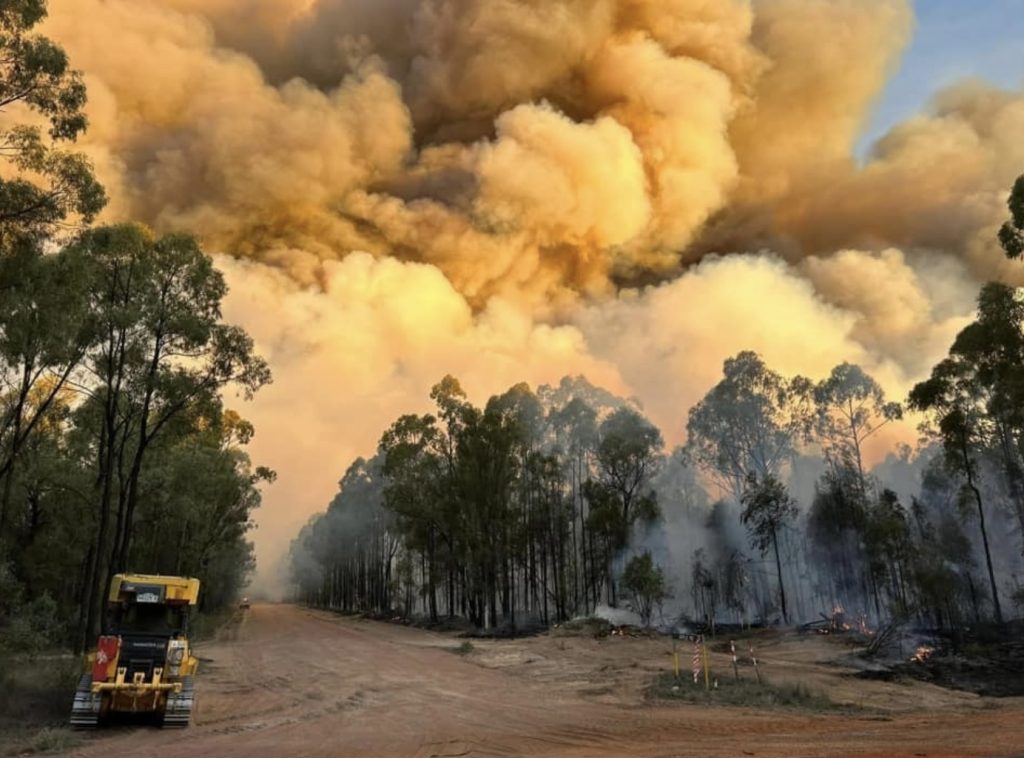
The Duck Creek fire of December 2023 marked the culmination of a long trajectory. After extended drought, high temperatures and persistent winds, lightning started several fires across the Pilliga. The Duck Creek fire moved rapidly through dry, continuous fuels, spreading in multiple directions and crossing over State forest, national park and freehold land alike. Firefighting crews were brought in from all over New South Wales, but containment remained extremely challenging. Evacuations were initiated, and emergency shelters were opened. Smoke and ash travelled far beyond the fire area. By the time the fire was finally contained over the New Year, approximately 130,000 hectares had burned, including more than 79,000 hectares of State forest after the canopy fire broke out of the national park.
This fire did not happen because the forest lacked legal protection. It happened because it had been stripped of ecological preparation. Thinning, fuel management and structured grazing had created a mosaic of defendable country. Their removal, combined with long-term fire exclusion, turned large parts of the forest into a continuous bed of flammable regrowth. What followed was not just another fire, but a fire of a new kind — the sort now called, without exaggeration, a megafire.
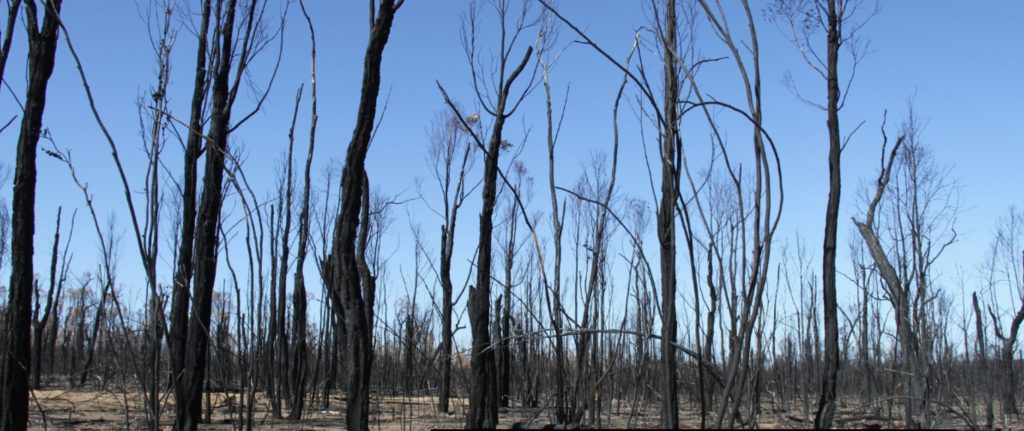
Fire has always been an integral part of the Pilliga landscape. What counts is how the forest is prepared for it. When management is pulled back and fuels are allowed to build unchecked, fire stops being an occasional tool and becomes a source of fear. The modern Pilliga makes that clear.
Most of the severe impacts have taken place in the East Pilliga and the eastern part of the Central Pilliga, including the Pilliga Nature Reserve. In contrast, large sections of the West Pilliga and the western Central Pilliga have remained unburned for over 50 years due to active forestry management.
The sad reality is that the Pilliga will burn again, and again. Not because it is old, but because we keep pretending it is.
The problem of time and the war on Eric Rolls
Historian Tom Griffiths has long argued that Australians find it hard to read time in their landscapes. We compress centuries into moments, and moments into myths. We favour moral clarity over ecological truth.
The Pilliga shows that failure can be precise and merciless. What seems eternal is actually young, what appears natural often depends on circumstances and what looks preserved is often just unmanaged.
Poet Les Murray understood this unease instinctively. His Pilliga is not a cathedral of deep time but a place of uneasy invention. He read and reread A Million Wild Acres soon after it was published and wrote about a forest that feels older than it is, heavier than its years:
With all the delight of one who knows he has at last got hold of a book that is in no way alien to him.
Griffiths strongly believes Rolls has written the best environmental history of Australia and wanted to give the book to any visitor or local to help them understand our country.
Eric Rolls paid a heavy price for sharing this story. Environmental critics accused him of exaggerating his claims, misinterpreting the evidence and absolving Europeans of blame. Yet the real attack was ideological. Rolls challenged the dogma that Europeans arrived, forests disappeared and salvation only comes through exclusion.
Norris et al’s 1991 paper became one of the most cited attempts to dismantle Rolls’ thesis. Yet, its method revealed its fragility. They extrapolated descriptions of pine scrub along the Lachlan and Murrumbidgee Rivers, regions known to have developed dense pine well before the Pilliga. They used these as proxy evidence that the Pilliga itself must have always been dense.
This was a historical substitution, as it bypassed Oxley, stocking returns, forest inventories, settler testimony and Allen’s landscape archaeology.
And yet, in modern academic discourse, Norris et al is politely cited, while Rolls is quietly regarded as an inconvenient eccentric.
The danger of the remnant forest myth
The gravest threat to the Pilliga isn’t the chainsaw. It’s the belief that the forest must be old to warrant protection.
That belief causes paralysis, because it results in the refusal to thin and the rejection of prescribed burning. This leads to megafires and the quiet destruction of the very values activists claim to defend. Veteran birdwatcher David Johnston also emphasised this point. Johnston has lived beside the Pilliga all his life. His main focus was promoting the Pilliga as a bird sanctuary.
If we close off the Pilliga it’ll just go back to dense pine scrub.
He believed the only future for the Pilliga was as a managed forest. Its well-being depended on better forestry practices, which he already saw emerging.
The Pilliga shouldn’t be worshipped, it should be understood. It needs to be recognised for what it genuinely is — a young forest, created by European disturbance, shaped by them and still needing people.
Eric Rolls’ phrase remains the most honest summary of the Pilliga ever written. This was not a forest that was destroyed. It was a forest that spread across paddocks, erased fences, collapsed carrying capacity and forced graziers out.
The tragedy now is that, having observed that transformation throughout recorded history, we refuse to acknowledge it. We rebrand a disturbed artifact as a pristine wilderness. We elevate a legacy of management into an eternal myth because it aligns with the beliefs of those eager to idolise a false wilderness.
Thanks for this article. I first heard about the changes in ecology from a forestry guy, who was my teacher in Conservation and Land Management. This article explains a lot of what he was trying to tell me. I still must read A Million Wild Acres. I have wanted to read this book for a long time. Looking at the history of land use is so important for understanding what is there.
Thankyou, Robert.
I’ve spent my life in the Eastern Riverina, in an ecosystem classified as “Grassy Woodland”. As a young’un, I grew up assuming that forest was the natural condition of any land that wasn’t too arid to sustain timber, and that the clear acres that I looked out on must be the result of over-clearing.
Then I read Eric Rolls.
I also visited Western NSW in areas covered with Gidyea scrub –areas that the locals told me were once open and populated with large, scattered trees. They could point to occasional stumps or ancient logs as evidence.
Rolls – IIRC – attributes the eruption of pines not just to grazing generally, but to severe over-grazing during droughts, exacerbated by government-mandated stocking-rates imposed on lessees and selectors regardless of seasons. In my lifetime, I have witnessed several such events in this Eucalypt-dominated farmland. Not widespread, but excessively dense areas of Box and Gum seedlings germinating in the fine seedbed and zero competition following a drought.
My options are to either clear those areas mechanically or thin them back to a density of 3-6 stems per ha to maintain a reasonable level of grazing and machinery access.
This is ironic, given the emphasis on tree-planting and “Landcare” that was prevalent when I was a young farmer.
Rolls makes sense. You make sense. Keep up the good work.
Peter.
Bob “Ego” Carr’s role in Pilliga Forest history shows how much damage little men with power can cause. Still, he didn`t give it to China.
We live in an era where the misguided environmentalist holds sway. Before he retired, Bob Carr gave a man-made forest to conservation as a “forest icon”.
In more recent years, the river red gum forests became locked up in National Parks. They are now being preserved in a habitat they never experienced before. The river red gum invaded a human habitat about 6,000 years ago. We have now excluded human influence.
Even the professor of forestry was heard to say the red gum would be better managed as parks rather than as State forests.
So well put Robert and thank you for reminding us of Eric Rolls’ lasting contribution. Congratulations on a measured exposition of what makes cypress tick. The same might be said of much of the cypress country heading up into Queensland – anthropogenic eucalypt dominated woodlands transformed into cypress pine forest with changed burning and stock management regimes and rabbit pressures. The huge Barakula State Forest north of Chinchilla is a case in point. 479 square miles (yes) was reserved in 1907 as a hardwood forest to provide timber for the expanding railway network, with a sawmill established there and a railway built to Chinchilla to remove the product. With time the cypress pockets expanded with Barakula becoming essentially the cypress forest as it is today. Swain’s Forest Map of Queensland published in his Forest Conditions of Queensland 1928 for the British Empire Forestry Conference Adelaide shows the juxtaposition of hardwood and cypress forest in western Qld at the time. Unfortunately I can’t reproduce it here but can send to you via email.
Thanks, Ian. I was thinking of writing a Queensland cypress story, but I sense it is so multifaceted that I couldn’t do it justice with my limited knowledge. Maybe I could interview the experienced cypress foresters still around and write their story.
I would love to see that map as a starter at least. I have a few emails from one of the Queensland foresters (I can’t recall who, to be honest) about Barakula that I found fascinating and filed away for future reference.
Eric Rolls is my hero when it comes to environmental writing. My first book recognises his contribution, and I expressed my desire to write environmental histories that go some way to match his efforts.
I loved my email correspondence with him, and it was very sad to hear of his passing.
I had a quick read. I didn’t see mention of the rain events.
I believe the Cypress flourished in wheatfield proportions as a result of a couple of years of exceptional wet weather in conjunction with all the other things mentioned.
Well done, Robert. Beautifully researched, considered and written. Another case proving that greens, academics, politicians, and land ‘management’ departments with book-based theoretical ‘expertise’ should not be allowed to run anything beyond a chook raffle.
Much of the waffle is imagined and promoted by professional, publicly (taxpayer) funded environmental outfits only interested in continuing on the gravy train, and ignoring the real evidence.
It would be good to see a locally based interest group with onsite experience conducting field trips for visitors whilst covering all the positive points in your paper.
Evo
Thank you for another insightful story on forestry in Australia. It is a reminder as to why wilderness worshipping Bob Carr’s legacy will be underpinned by ongoing megafire destruction of forests and biodiversity across NSW. This will not change until conservation reserve managers learn that Aboriginal people did manage their land, including most designated wilderness areas in NSW.
Speaking notes from Carr’s 21st-century wilderness address to the Alex Colley Symposium in July 2014 provide some background on the embedding of the white fella wilderness ideology in NSW legislation. So much for paying respect to elders, past and present. The introduction gives the key ideological background.
“The historic NSW Wilderness Act had its origins on the banks of the Kowmung River. Way back in 1984, shortly after being appointed Minister for the Environment and Planning in the Wran Government, Milo Dunphy persuaded me to join a party of bushwalkers on a walk through the Kanangra-Boyd National Park. Milo took me deep into the wilderness through the Bulga-Denis Canyon. I made many return visits to the Kowmung River, but it was on this first trip that the germ of an idea for a Wilderness Act had its birth.
Striding along the Kowmung River one afternoon with Pat Thompson of the Colong Foundation, Pat burst forth with the suggestion, “What we need Minister is a Wilderness Act!” As a keen student of American History, I was familiar with their 1964 Wilderness Act and the idea seemed a good one. I needed no convincing, after all I was in the heart of the Kanangra wilderness and could hear it calling!
On introducing the Wilderness Act into Parliament in 1987 I said “Australian history is a story of the interaction between immigrant peoples and a continent with unique landscapes, plants and animals. If we lose our feel for the grand old continent in its natural condition, then we lose something of our character as a people. The case for conservation is founded therefore on patriotism. Our commitment to protecting our wilderness is a measure of our maturity as a nation and pride in our identity.” Saving these vast, wild places preserves our rich indigenous cultural heritage. They are reservoirs of scientific and cultural treasures, like the hundreds of drawings discovered at Eagles Reach in the Wollemi Wilderness. So on the 24th of November of that year the NSW Parliament passed a law to enable the protection of wilderness from exploitation by graziers, miners, loggers and high impact recreation.”
One thing the act didn’t protect “wilderness” from was the guaranteed increase in high-intensity mega-fires underpinned by ignorant white fella ideology.
If you have a strong stomach, the speech is available at the link below.
https://www.youtube.com/watch?v=FrAfmmasswA
Thanks, Robert.
One of the depressing things about the transfer of production forests to national parks is the ideological bent to also ignore, or destroy, the foresters’ knowledge base that supported the management actions holding those forests together. And the reduction of forest management to “logging” to justify setting that knowledge aside.
Keep going, man!
I opened your blog, Robert, and was immediately flooded with guaiol, eudesmols and sesquiterpenes. The rich resinous aroma of cypress cannot be bettered.
As an aside, it was as D/F Narrabri that the Don Bradman of Australian Foresters, EHF Swain, cut his teeth in forest sylviculture and marketing. In particular, his development of the residual stumpage pricing system, designed to effect equitable competition on sawmillers located at varying distances from the core cypress resource and key markets, was trialled and operationalised.
This approach was ported into the Queensland Forest Service as Timber Sales Memoranda when he moved north, bringing with him two other future icons, the Trist brothers.
Keep quilling.
Thanks so much for articulating this story, in such a well-written, well-research and objective article. I’m not a forester, but one (of many) key statements has wide application beyond forestry:
“In activist hands, that modest academic caution has been transformed into a political tool”.
I suspect the politics of Carr’s actions was just another example of how of transactional or retail politics has taken over the political spectrum. “Stories” about rural Australia steeped in “moral outrage” win the all important urban votes, regardless of what rural people know or their livelihoods depend on!
What a magnificent story!
As a native-tree & shrub planter all my life & admiring the Piliga Scrub & cypress, I appreciate the author for the truth about this vast area.
Australian builders seem to think Cypress is unfashionable for flooring. Maybe that has caused the decline in the mills. The legacy of Bob Carr creating so many national parks is that there is now no longer enough foresters & managers to care for them, mainly over-run with invasive weeds, pigs & deer.
Robert, firstly, thanks for the article on the cypress forests of the Pilliga. If the current forests are locked up and not managed (be it forestry or national parks managed lands), then following future wet seasons, there will be an absolute massive flush of cypress regeneration, and as it grows, it will “lock up”.
Just a couple of points from the 1983 Pilliga Management Plan:
* The initial stump girth limit around 1910 was 60 cm and this was altered soon after to a 30 cm limit
* Jack Underwood, (a Pilliga sawmiller whose sawmill was at Rocky Creek) stated that “you could ride a horse through the Pilliga on a moonlight night and have no fear of coming off” (pers com. Mary Johnson, daughter of Jack Underwood – 1984). When old timers stated that there were 4 or 5 large cypress per acre, that is what there was over much of the flatter parts of the area. Following big rains in the 1880’s and exclusion of fire, in 1915, Forest Assessor DeBeuzeville described the productive part of the Pilliga simply as “a very old overwood with a very young underwood”.
* The 1930s Depression provided the means for the manual thinning of this thick young underwood.
* Unrestricted removal of cypress sawlogs for World War II ensured that sawmills cut out the “very old overwood”. The big 1950 wildfire did not assist. Forest management from that time on concentrated on bringing forward the cutting of younger cypress stands (1890’s regeneration).
* The Timmallallie Wildfire had a major run under a very strong southerly change in Pilliga East State Forest. It was stopped almost dead in its tracks when it hit a large aerial hazard reduction burn carried out 1 or 2 years earlier. It would likely have reached the outskirts of southern Narrabri without this HRB break. Unless the poorer forests of Pilliga East are not managed with a mosaic of HRB, then wildfires will damage farmlands to the east of the Pilliga.
The most important issue NOW is:
How will these very productive cypress forests be managed throughout western NSSW and western Queensland now that forestry and national parks field staff have been severely depleted?
Forester Peter Male from Dalby in Queensland carried out some trial HRB fires where logging had left a scattering of logging debris AND where there were larger clumps of what NSW foresters termed “1950’s regeneration” in Barakula Forest. Baradine Foresters had done the same in the western parts of Pilliga West State Forest in an attempt to thin out the thick cypress regeneration. It was a limited and variable success primarily due to the relative lack of ground fuels (except for logging debris).
Subsequent to this, as part of the Regional Forest Agreement in 2005, a quite large areas of selected thick cypress (1950’s) regeneration were “chopper-rolled” on State forests from Narrandera through to Inverell, leaving a narrow belt of regeneration standing to grow on.
The big question is what will happen now in those huge areas of cypress forest in both NSW and QLD? These areas of thick cypress regeneration have almost bare ground underneath; thus, aerial HRB will not be the answer for thinning these forests (it may be in limited cases where there is some grassy understorey under the regeneration).
Forest and park managers of the future will face the situation where infrequent major/mega wildfires will be the only means of opening up the cypress forests unless some form of mechanical thinning is devised.
It had better be reasonably soon.
This comparison of Forestry conservation practices in the Pilliga Forest versus Greenie “Lock-it-up and let-it-burn” conservation is enough to make an ex-forestry person despair, because all that work we put into forest improvement has been lost. This story of the loss of productive and sustainable forests to the uneducated conservation movement has been repeated ad nauseam; That is, in our lifetime, we have lost the use of North Qld rainforests, Western Qld Cypress forests, Fraser Island hardwood forests, and SE Qld native hardwood forests.
But never mind, we can import timber from Asia to replace something we once had for free. The myth perpetuated by our over-optimistic Forestry research staff, that Hardwood plantations could rapidly replace all the lost native forest output, contributed to the Greenies’ argument that there would be no net loss of timber.
The Chinese Government in the Solomon Islands is there to take all the lumber, send it back home to be processed, and then export it for the building industry worldwide. When all the trees are dropped, the Solomon Islands can have its country back!
Maybe then our cypress can resume the demand they once had.
Thanks Robert for sharing your wonderful work.
My first ever job out of uni in the late 90s and early 2000s was as a forester in the Pilliga. The best years of my working life.
I marvelled at the wonderful cypress resource, which was sustainably managed to support thriving local communities and industries. Sadly, as these forests are no longer actively managed and largely reserved, all that good management has gone to waste.
The ‘lock up and leave’ mentality removes the forest’s ability to deliver on its fantastic social, economic and environmental benefits. I emphasise the environmental gains, as the forestry debate is too often presented as ‘jobs vs the environment’.
Political decisions to reserve native forests aren’t based on science but rather on activists’ ideology around the false premise that forest reservation ensures perpetuity. As you’ve demonstrated, forests are dynamic ecosystems shaped by both natural and human-induced disturbances.
I live in hope that one day the debate will turn and the broader Australian community will recognise the many true benefits of sustainable production in our beautiful native forests. The alternative approach of importing timber from poorly managed forests and/or using building materials that lack timber’s unique, renewable and carbon-storing qualities should make it a no-brainer.
Great presentation of a global problem, Robert.
I attended the International Association of Wildland Fire Conference in Hobart, 28th-30th April this year, where the science behind the impact of land and forest management in a warming climate on the generation of forest infernos (not just old-fashioned bushfires that could be fought on the ground) was a feature.
Historically, forests have been managed by megafauna for eons, and subsequently by humans through fire and forestry. Allowing forests and regrowth areas to self-manage is folly, and the Pillaga is an unfortunate example. I live adjacent to Morton National Park in NSW, and during the Black Summer Fires, Morton became a pyrocumulonimbus disaster, with massive impacts on flora and fauna in one day (4th January 2020).
The first peoples applied fire to country successfully, without water carriage, safety gear, vehicles or aerial resources for 50,000 years. We need to reapply these old practices on a landscape scale.
The knowledge and analysis of your article need to be emphasised.
Surely there must be a way for forest silviculture and nature to co-exist.
Thank you, Robert
Robert, thanks for an interesting article on the cypress pine. From what I was told by the old timers and photos and research I’ve seen, a similar situation exists with the cypress community along the Snowy River in the Kosciuszko National Park.
That is, the cypress today are found much higher up the ridges than when the country was settled, or when Townsend was surveying in the 1840s, and when the snow lease boundaries were being assessed in the 1920s and observations about the rabbit.
Similarly, the pines are denser with fewer large trees around.
Cheers.