
A Bay in decline
In the mid-1960s, Hervey Bay’s once-abundant fishing waters showed worrying signs of decline. The prawn trawlers still worked the inshore grounds, and weekend anglers from Maryborough and Hervey Bay launched from Urangan to chase mackerel and coral trout. However, old-timers noticed a disturbing trend. There were fewer fish, smaller catches and lifeless stretches of seabed once full of coral and sponges. The bay’s complex system of tidal channels and sand banks, hemmed in by Fraser Island to the east, appeared to be losing its vitality.
Into this scene stepped a passionate diver and fisherman named Roy Rufus, a man whose name would one day be immortalised on the seabed of the Great Sandy Strait.
Roy Rufus – the reluctant pioneer
Roy Rufus wasn’t a scientist or bureaucrat. He was a local bloke with salt in his veins, known among the small but passionate diving community for his energy, generosity and stubborn streak. A conservationist before it was trendy, he spent countless hours underwater exploring the reefs around Woody Island and beyond, documenting the slow disappearance of marine life.
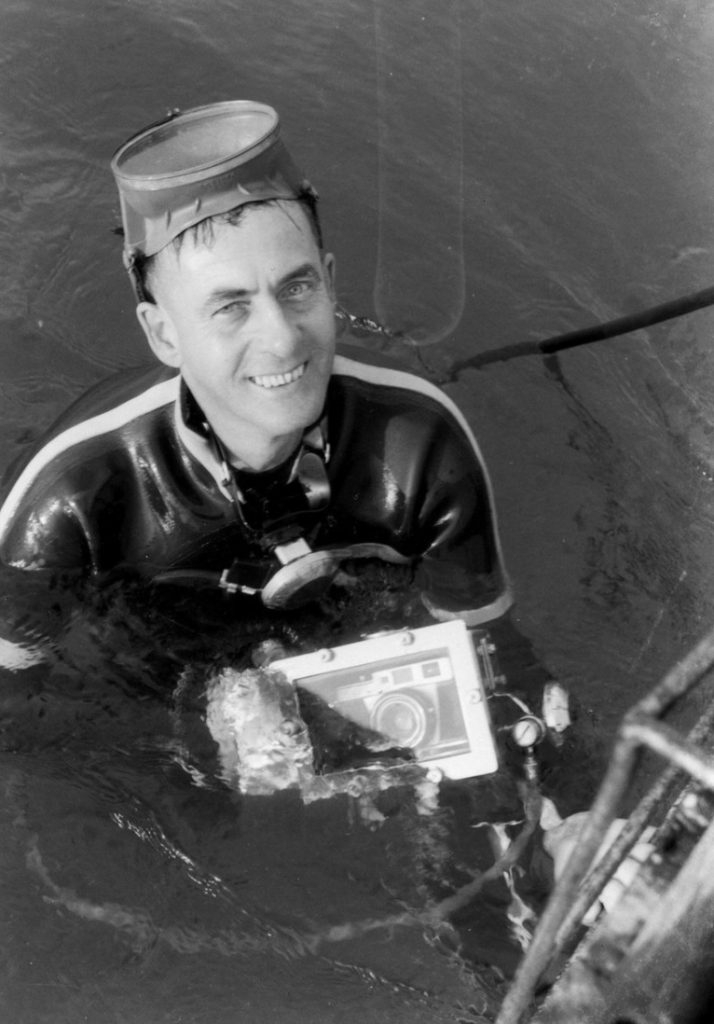
In 1966, as part of the Maryborough Skindivers Club, Rufus began advocating for something that seemed hugely ambitious at the time. The club had employed marine biologists to research whether an artificial reef in Hervey Bay would increase fish stocks.
Rufus believed that building an artificial reef would help restore fish habitats and promote marine biodiversity in the bay. Artificial reefs were nearly unheard of in Australia at the time, and the idea of intentionally dumping scrap material in the sea raised more eyebrows than support.
But Roy was persuasive. He believed the decline in fish numbers could be reversed by adding shelter and breeding structures to the mostly featureless sandy seabed. And he had a straightforward, practical idea for how to build it using old car bodies.
A sceptical beginning
The authorities remained unconvinced. Officials from the Queensland Department of Harbours and Marine saw little worth in what appeared to be a glorified junk heap. “You’ll pollute the bay, not improve it,” some argued. Others were concerned about navigational dangers or the appearance of turning Hervey Bay into a dumping ground.
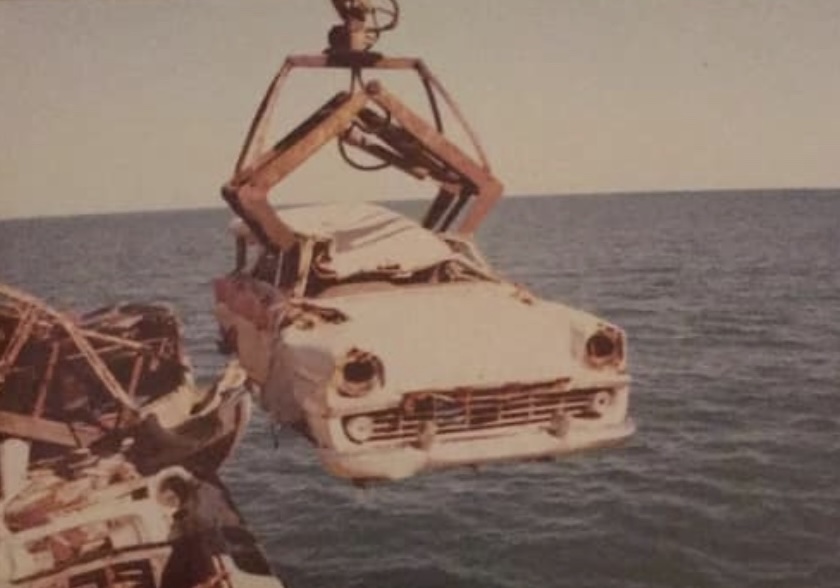
Unfazed, Rufus decided to prove them wrong. He began experimenting on a small scale, sinking individual car bodies in shallow water and returning weeks later to photograph and observe the results. To his delight, fish quickly colonised the structures, using the metal frames as protection from predators. Within months, sponges and soft corals had begun to cling to the surfaces, turning rusting relics into tiny oases of life.
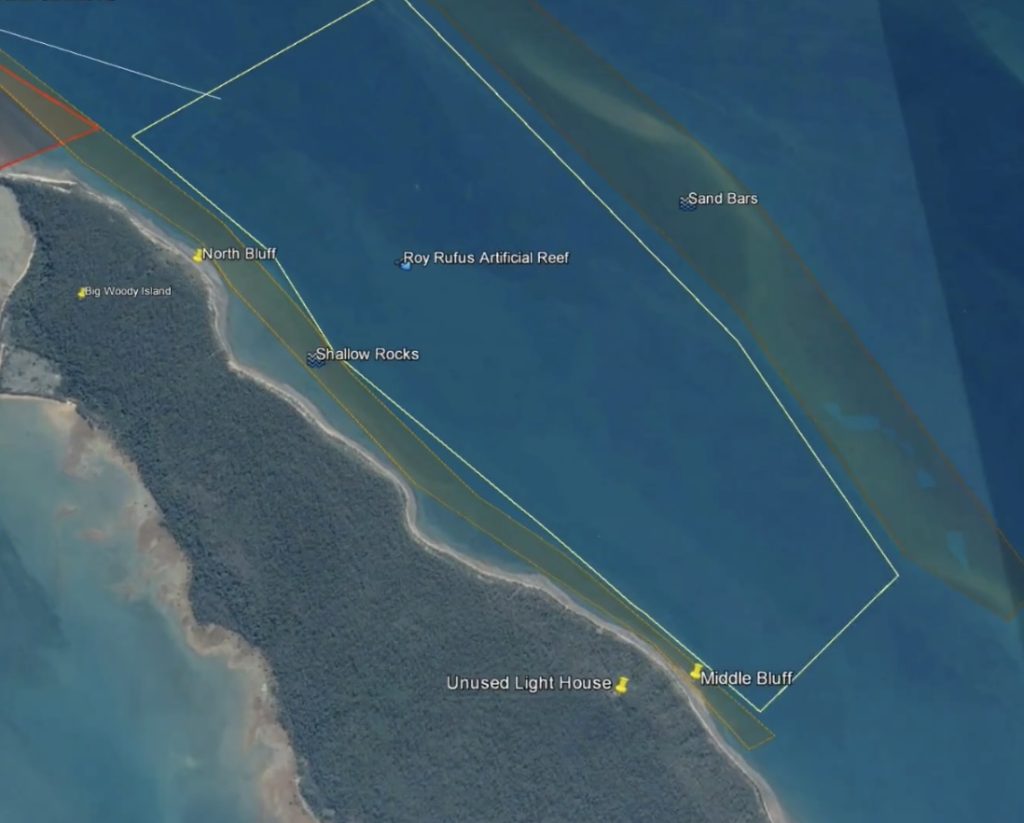
The evidence was sufficient to convince local fishing clubs and eventually the council to support him. A small Artificial Reef Committee was established, and plans for something much bigger began to take shape. After a major search over 12 months, they found what they believed was an ideal site. It was a ribbon channel, approximately 1.5 kilometres east of Woody Island, which was located outside the shipping lanes and had a depth of water and current flow that brought nutrients and plankton to the area.
The first drops
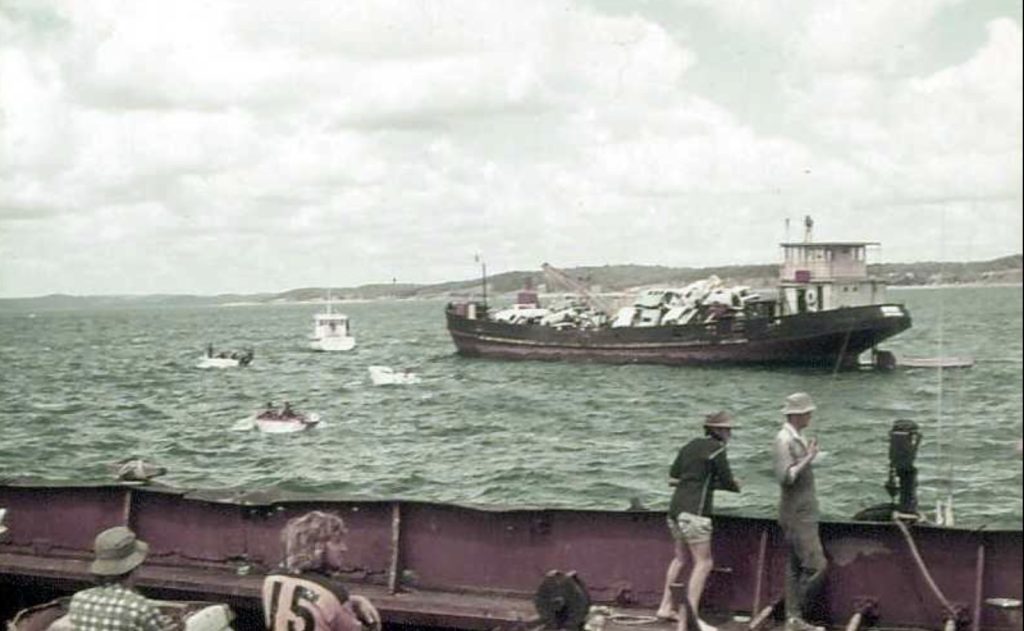
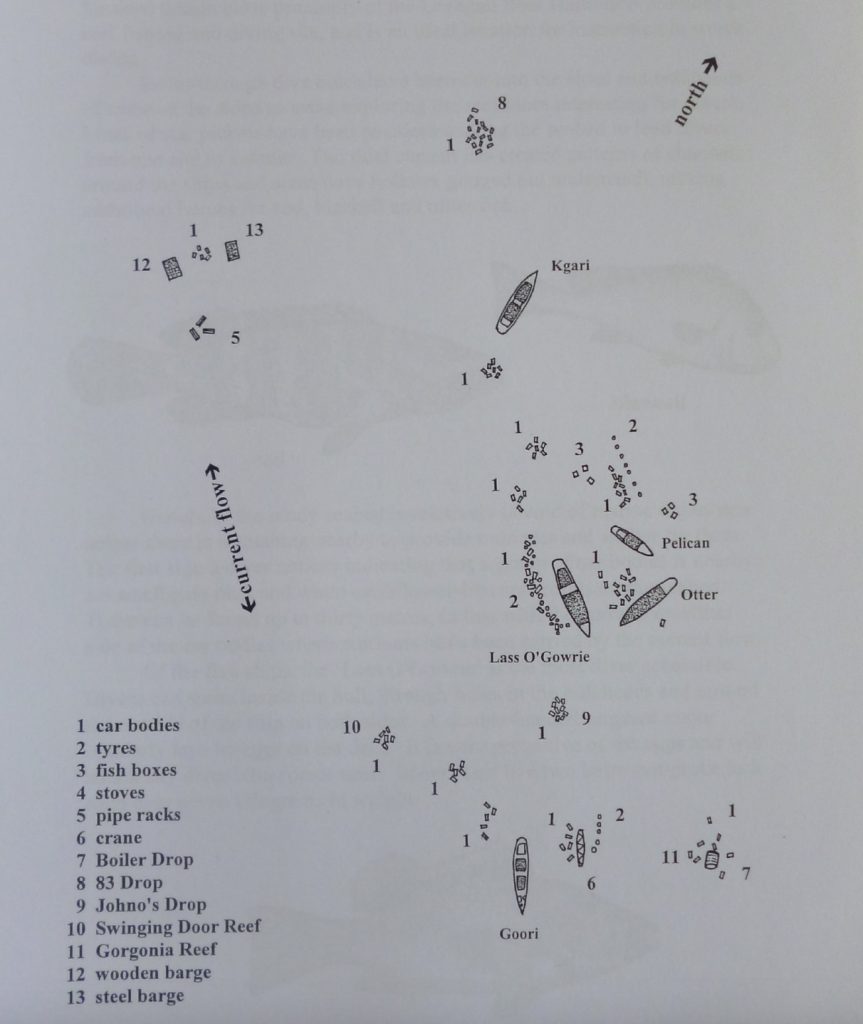
In July 1968, Hyne & Son’s barge K’Gari made the first official “drop,” carrying loads of scrap material — mainly old car bodies, railway wheels and concrete pipes — to a site just off the eastern side of Woody Island.
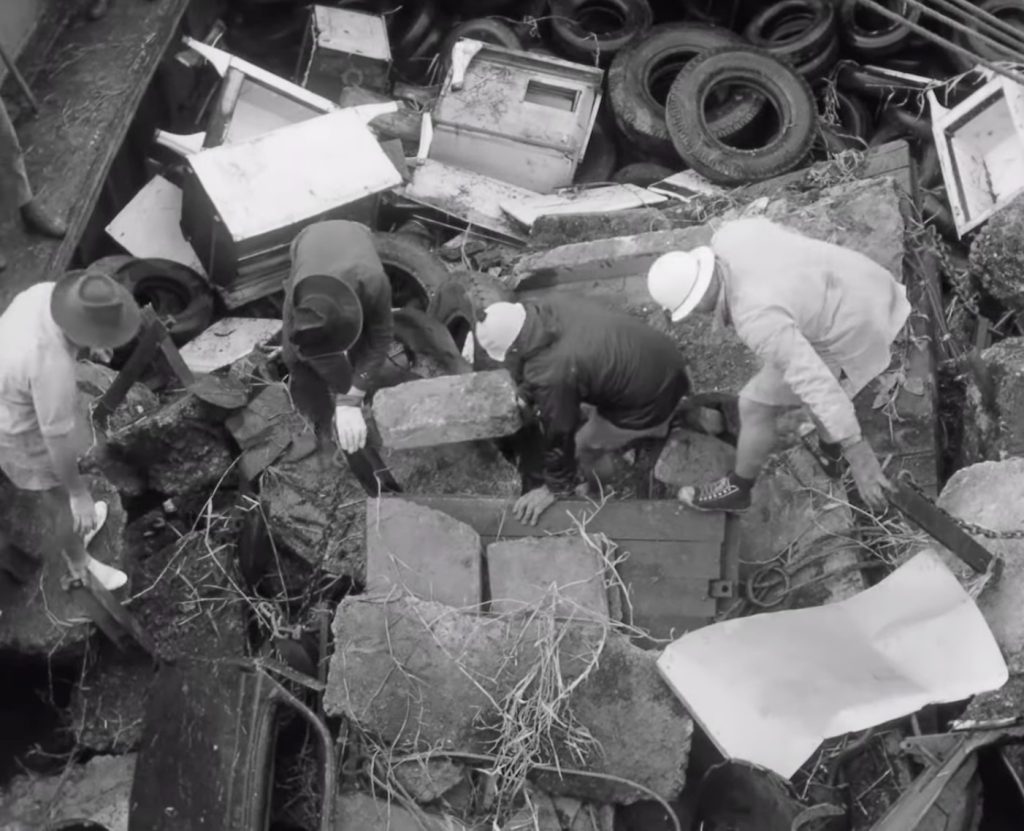
Many local companies offered their services and equipment. Car bodies were sourced from Jim Wright Wreckers in Maryborough, and old stoves were gathered from the Maryborough Gas Company after the changeover from piped to bottled gas. Cane farmers loaned trucks to transport materials to the wharves, and Wilson Hart, Hyne & Son, Noel Mathison and Gordon Elmer loaned their barges to carry the materials to the reef. Roy Rufus used equipment from his engineering workshop to build specialised equipment for loading and unloading materials. Marcotta Tiles donated disused pipe racks and Hume Pipeworks used leftover concrete to fill moulds for specially designed fish boxes.
The chosen seabed was flat and sandy, approximately 10 to 16 metres deep, located about 4.5 nautical miles from Urangan Harbour.
Each “drop” demanded precision and teamwork. Barges were loaded at the harbour or at River Heads with carefully selected material, then towed to the designated spot before the cargo was tipped overboard. Divers like Rufus followed the descent, checking the placement to ensure the material didn’t scatter too widely.
Between 1968 and 1987, at least 63 separate drops occurred, each contributing new life to the expanding reef. Overall, 82 car bodies, 4,500 tyres, 150 tonnes of concrete and countless other recycled materials found a second purpose at the bottom of the bay.
What started as an experiment was turning into an ecological success story.
From scrap to sanctuary
The results were remarkable. Within a year, schools of trevally, snapper, cod and sweetlip appeared in numbers not seen for decades. Coral growth followed, along with sponges, ascidians and sea fans. The structure formed by the car bodies and concrete pipes offered the ideal mix of shelter and surface for marine life.
The reef also became an instant hit with divers and fishermen, who uncovered an underwater world full of life, mystery and history. For many, it was astonishing to think that what had been rubbish heaps on land were now thriving ecosystems beneath the waves.
Roy Rufus’s vision had worked and it was attracting attention well beyond Hervey Bay.
The boats that became the reef
Perhaps the most colourful chapter in the reef’s story was the vessels deliberately scuttled to expand it. Many of these were remnants of the region’s logging and transport history, linking the reef to Fraser Island’s forestry past and the Mary River.
One story often retold among old divers is about the first unauthorised sinking, carried out under the cover of darkness. It was the Otter, a barge abandoned at the mouth of Deep Creek near Ungowa since 1949. When early attempts to sink it on the reef was rejected, an enterprising engineer decided to take action on his own. He patched the holes on the rusting hull, which took months, sealed the propeller shaft tube and towed the vessel out to sea in the middle of the night. By dawn, the barge rested on the seabed east of Woody Island, perfectly positioned.
When authorities realised what had happened, they were initially furious. But when divers reported abundant marine life colonising the structure within months, the mood shifted. The “rogue” action had, in a way, proven Rufus’s point better than any meeting or memo could have.
However, the Department of Harbours and Marine was concerned about navigational safety posed by the high mast still in place. Rufus himself had to cut several metres off the top of the hull to reduce the perceived hazard to passing boats, a process that local historian John Erbacher filmed.
Hydrogen is used instead of acetylene for underwater cutting because it produces a hotter flame, allowing deeper cuts. A survey eventually declared it safe.
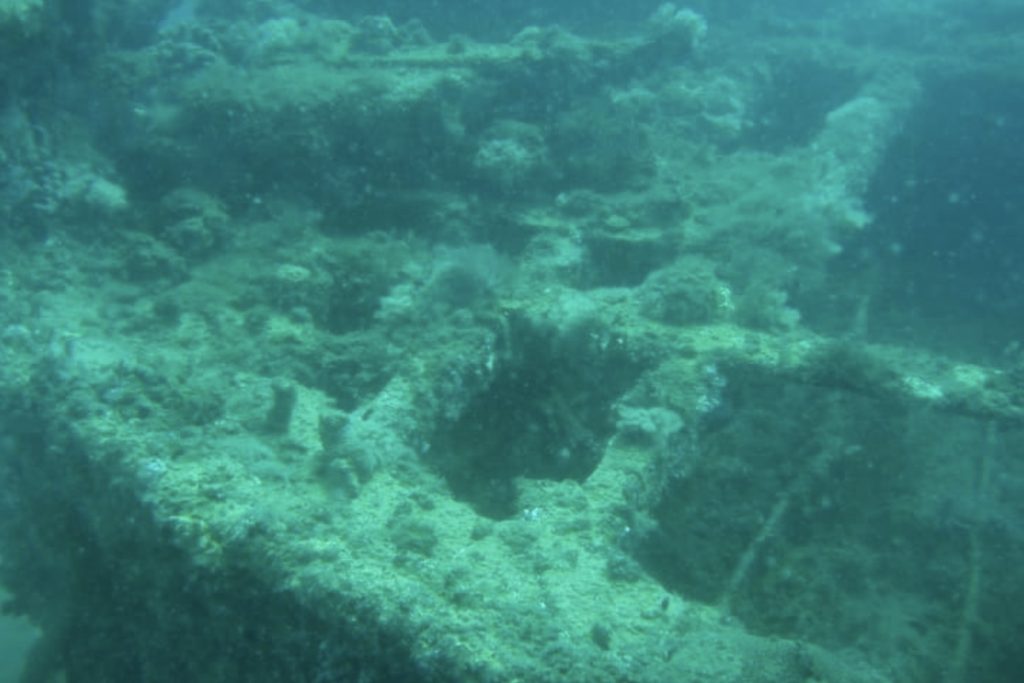
Another addition was the Pelican, sunk in 1971 with a load of car bodies. Unfortunately, it was less successful. The cars were packed too tightly inside the hull, preventing water circulation and causing the barge to fill with sand. However, the lessons learned guided later sinkings.
Over time, other vessels joined them, including the Lass O’Gowrie, originally a gravel punt from the Mary River, and the 46-metre ex-Fraser Island log barge K’Gari in 1976.
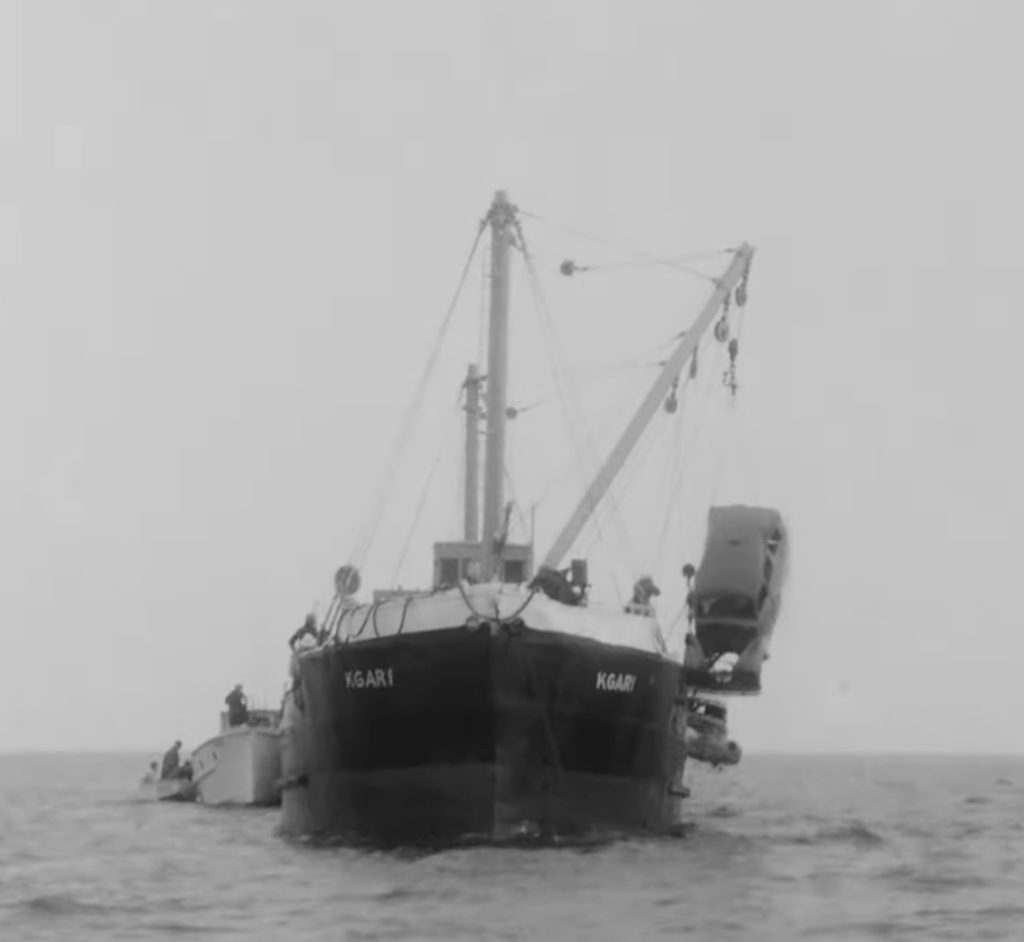
The Goori, another Fraser Island barge owned by Wilson Hart, had played a key role earlier by transporting car bodies to the site, accompanied by the tug Sylvan. In poetic symmetry, it too met its end on the reef, deliberately scuttled after years of service.
The last vessel to join them was the Goori itself, sunk in 1990 by the Department of Harbours and Marine after sitting for years on a mud bank near Brothers Island amid ownership disputes. Thus, the reef became both a graveyard and a memorial, not of tragedy but of renewal.
Building momentum
By the early 1970s, enthusiasm was at an all-time high. Local councils, fishing clubs and businesses began donating scrap materials, and Hervey Bay’s artificial reef program evolved into a community effort. Even the local newspaper, the Maryborough Chronicle, published supportive articles, praising the reef as a strong example of practical conservation.
In May 1970, the Artificial Reef Committee organised what it called the “final reef drop,” loading about 50 car bodies, 4,500 tyres and 150 tonnes of concrete from a Kent Street depot in Maryborough. The logistics were complex. Cranes, trucks, barges and tides had to align, but the result was a vast, well-distributed underwater habitat spanning 2.8 hectares.
The community’s pride was undeniable. For many locals, the reef symbolised not just environmental renewal but also the ingenuity and determination of the people of Hervey Bay, especially one man whose dream had challenged the experts.
Tragedy on the reef
In 1983, tragedy struck. While diving on the reef he had helped create, Roy Rufus lost his life. The details surrounding his death are sparingly recorded, but it had a profound impact on the local diving and fishing community. He was remembered as a man whose enthusiasm, curiosity and faith in practical action had changed the bay forever.
When the 20th anniversary of the first drop arrived in 1988, the reef was officially named the Roy Rufus Artificial Reef in his honour. A commemorative plaque was attached to the barge K’Gari, recognising Rufus’s pioneering role. By that time, the reef had become one of Australia’s largest and most successful artificial reefs, serving as a model for similar projects across the country.
The reef today
Today, the Roy Rufus Artificial Reef continues to attract both divers and anglers. Beneath the turquoise waters of the Great Sandy Strait lies a patchwork of history — car bodies now encrusted with coral, barges draped in soft sponge, tyres inhabited by octopus and crustaceans and schools of fish weaving through the twisted steel and timber frames.
Marine surveys continue to confirm its ecological success. Over the decades, the reef has attracted more than 100 fish species, as well as turtles, dolphins and rays. The area has also become a training ground for new divers and a popular draw for tourists in Hervey Bay, boosting the local economy while honouring the spirit of grassroots conservation.
The nearby Simpson and Hardie Artificial Reefs, which were built later using more modern concrete modules, owe much to the lessons learned from Rufus’s pioneering work. Together, these reefs form a unique underwater habitat corridor that stretches through the Great Sandy Marine Park. They are a living monument to local initiative and environmental restoration.
A heritage set in steel
The story of the Roy Rufus Artificial Reef is, at its heart, about vision, persistence and belief in practical conservation. In an era when environmental efforts were often clumsily undertaken by government departments or scientists, Rufus demonstrated that community-led projects could make a tangible difference.
He transformed rust into reef, scrap into sanctuary and scepticism into success. His name, etched on a plaque and spoken with respect by generations of divers, endures beneath the tranquil waters east of Woody Island.
For those who explore the depths and see the coral-encrusted silhouettes of K’Gari, Lass O’Gowrie, and Goori, there is a moment of quiet awe. It reminds us that the greatest legacies are sometimes forged not on land, but beneath the waves.
I strongly recommend readers seek out John and Sue Erbacher’s excellent booklet Artificial Reef: Where Nothing Was, which tells the story of the reef in rich local detail, and view the many YouTube videos that capture divers exploring this remarkable underwater world.
The unauthorised sinking of the Otter was carried out by Roy with a little help from a friend, Sid Melksham.
Authorities refused to let Roy tow the Otter to the site, so he got Sid to tow it with his launch, the Lady Fraser.
Sid’s role was well known among the divers, and they didn’t forget.
One of the wreaths at Sid’s funeral, more than 50 years after the secret tow, was from the Skindivers.
Disappointing that you got your information from John all wrong, but the bulk of it is ok.
Hi Frank. I knew the facts weren’t quite right.
Hi Frank and Peter
Thanks for the comments. If there are factual errors in the story, please point them out specifically. I relied on a range of sources, including local histories, newspaper reports and information supplied by people familiar with the reef’s development. I’m always happy to correct genuine errors, but it’s difficult to do so when no details are provided.