
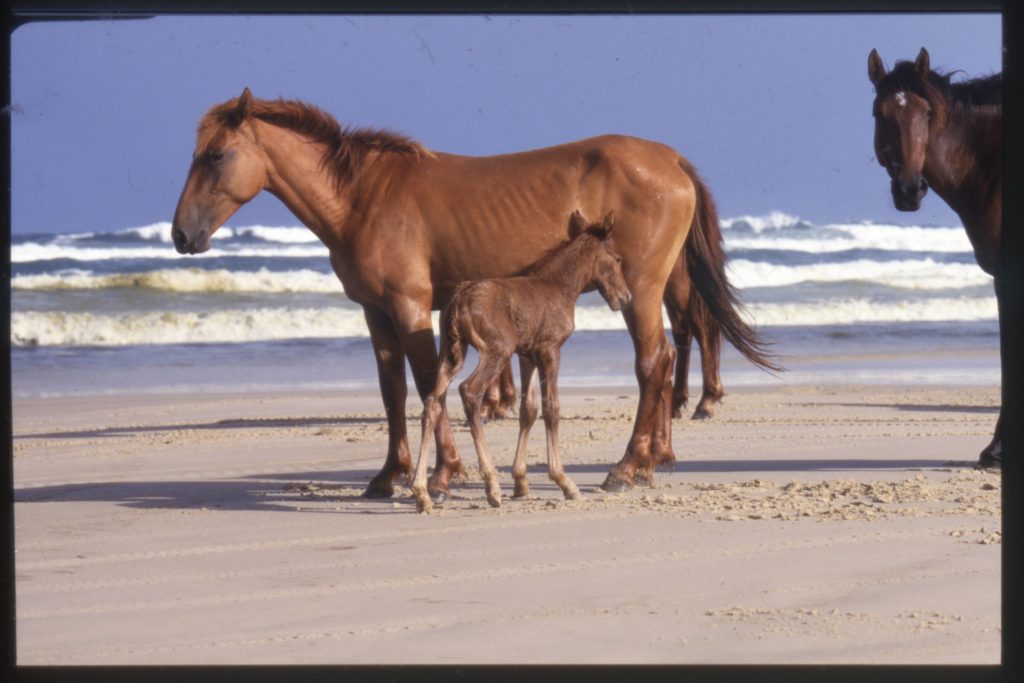
For a long time, the brumbies of Fraser Island sat in an awkward place in the island’s story. They were too visible to be ignored, too inconvenient to be celebrated, and too deeply part of history to dismiss as a recent mistake. As a result, they were often talked about but rarely explained properly.
What follows is not an attempt to romanticise the horses, nor to depict them as ecological saints. It aims to restore perspective and order by placing the brumbies back into the island’s working, managerial and cultural history, and to show how an animal population created by deliberate human decisions was later treated as if it had appeared by chance.
Like most stories about Fraser Island, the brumby tale doesn’t begin with wilderness. It starts with work.
Horses before brumbies
When horses first arrived on Fraser Island in significant numbers, it was purely for practical reasons. The island wasn’t a national park, a World Heritage site, or a place for recreation and reflection. Instead, it was a working island – logged, settled, partially grazed and serviced by crude, seasonal camps, jetties, tramlines and tracks. In that setting, horses were not an anachronism. They were essential infrastructure.
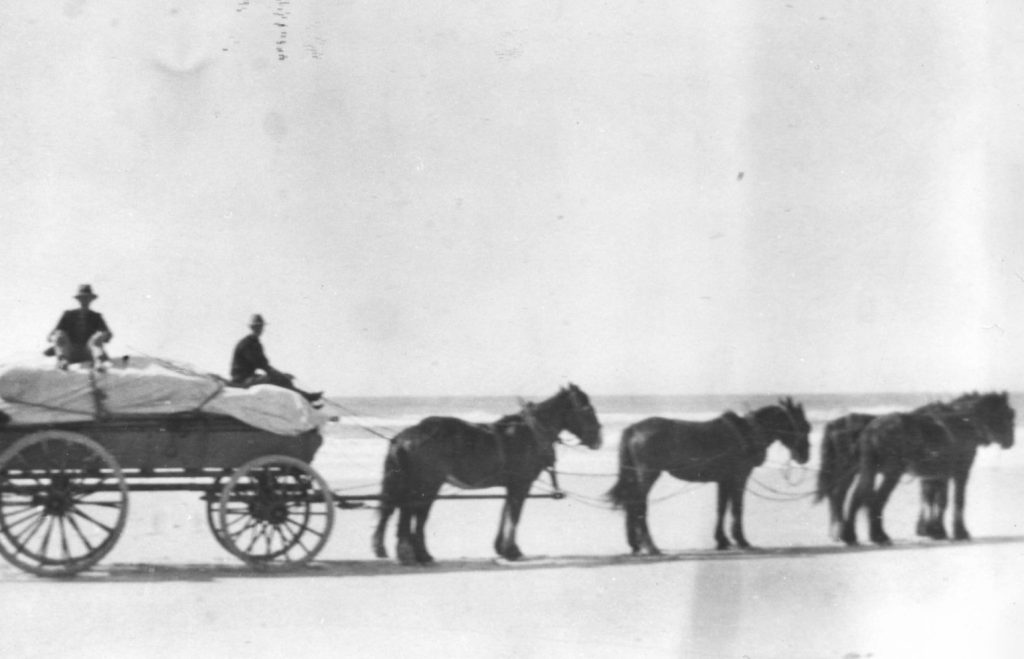
After internal combustion engines became popular in vehicles, deep sand defeated early models. Soft ground bogged down drays. Fuel, spare parts and skilled mechanics were not always available. Horses, on the other hand, required no imported energy, could travel over tracks that hardly deserved the name, and could haul timber and supplies where wheeled transport failed. The Forestry Department used them extensively, as did private operators. Camps depended on them and families relied on them. They were ridden, harnessed, bred and managed with purpose.
This is the context in which the earliest Fraser Island horses must be understood. They were not strays, curiosities or pets that wandered off and multiplied unnoticed. They were working animals in a working landscape.
Aldridge, Dicken and deliberate introduction
One of the clearest early threads runs through the horse-breeding enterprise established by Harry Aldridge and George Dicken on what was known as the Fraser Island Run, near Eurong, on the eastern side of the island.
Aldridge bred Arab horses, not for sport or prestige, but for military supply, particularly for imperial service associated with the Indian Army. These were horses selected for stamina and soundness rather than ornament. Pure-bred Arabs, however, were not always well suited to the broader colonial tasks expected of military remounts and were therefore crossed with heavier utility and draught-type stock to produce Waler-type horses capable of carrying weight, travelling long distances and tolerating hard use.
This cross-breeding was undertaken as part of a breeding enterprise, not as a response to Fraser Island conditions. Aldridge and Dicken were not working these horses in the island’s forests. The hauling of timber and routine labour on Fraser Island would come later, under different hands, using both descendants of this stock and additional horses brought in by the timber industry. This was purposeful hybridisation driven by need.
During the years the enterprise operated, some horses escaped into the scrub. Others were released when they proved unsuitable or surplus to requirements. When Aldridge and Dicken eventually abandoned the venture, a residue remained – animals that had eluded recapture and were left behind, not through neglect so much as redundancy.
Those horses did not disappear. They bred, adapted and over time they became something distinct.
The timber horses: work before wilderness
What is often overlooked when the brumby story is viewed only through the lens of breeding enterprises is the long, hard-working life most horses on Fraser Island actually experienced before they became wild. Fred Williams emphasises this point strongly because he sees the brumbies not as a sudden feral group but as the continuation of a working system that relied on horses for many decades.
From the late nineteenth century well into the twentieth, the timber industry on Fraser Island relied heavily on horses. Logging camps were spread across the island’s interior, often many miles from the coast, connected by rough tracks that shifted with the seasons. In deep sand, early machinery was unreliable and often unusable. Horses, by contrast, were adaptable, mobile and already well understood by bush workers.
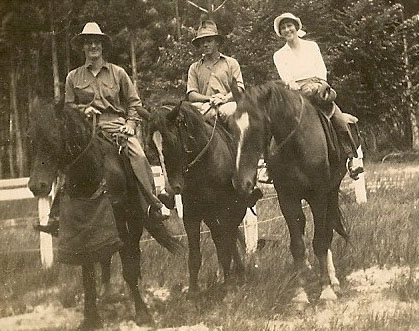
They hauled logs to tramlines and depots, pulled wagons loaded with supplies and carried men between camps, mills and settlements. Forestry officers used them on patrol. Workers relied on them for daily travel, sometimes walking long distances to catch a horse to carry them the rest of the way. In an island landscape where fuel, parts and roads were constant hurdles, horses were vital to how the industry operated.
These timber horses did not come from a single bloodline. Some descended from Aldridge and Dickens ’ earlier stock, while others were imported later from the mainland as needed. Walers, draught crosses and utility horses of mixed breeding were used, chosen more for their strength, temperament and endurance than for pedigree. Over time, this steady flow of working animals added new layers to the island’s horse genetics.
Not all horses were removed when camps closed, or practices changed. Some were deliberately released when they were no longer needed. Others escaped during storms, fires or through simple neglect. A few were too old or too wild to make recovery worth the effort. Each release added working blood to the free-ranging population already forming in the island’s scrub.
Williams points out that many of the horses later called brumbies had spent years, sometimes most of their lives, in harness or under saddle before they ever ran free. They were not born feral. They only became feral after their usefulness ended and responsibility was no longer maintained.
This helps explain both the physical nature of the Fraser Island brumby and its behaviour. These were not animals formed solely by isolation. They carried the legacy of their work in their build, stamina and tolerance for people. Even decades later, observers noted that some brumbies were unusually calm around humans, while others still held the assertiveness of working stallions.
It also explains the unusual mix of blood that later puzzled commentators. Arab influence from Aldridge’s breeding, draught strength from timber horses and successive mainland introductions combined over generations. Once free-ranging, these animals interbred without further human intervention, producing a horse uniquely suited to sand, distance and coastal conditions.
When mechanisation replaced animal power from the mid to late 1930s, the horses were left behind as biological remnants. What had once been an essential workforce became, almost overnight, surplus to needs.
Understanding this long history is key to understanding the brumbies themselves. They were not just a random invasion, nor a romantic curiosity. They are the living remnant of an industry that shaped Fraser Island long before the idea of pristine wilderness was imposed upon it.
Adaptation to sand
One of the most notable features of Fraser Island brumbies, mentioned repeatedly in early accounts, was their hooves. Horses raised on hard, rocky or undulating terrain develop compact, upright hooves suited for grip and impact absorption. Horses raised on soft, wet or sandy ground do not.
On Fraser Island, the brumbies’ hooves spread wider. From about eighteen months old, the base of the hoof broadened significantly, enabling the animal to strike the sand flat-footed instead of digging in with the toe. Mainland horses ploughed through the sand. Island horses skimmed over it. Their hoofprints were shallow and quickly obliterated by the wind.
This adaptation was not merely cosmetic. It changed how the horses moved, fed and travelled. It helped reduce erosion in certain situations. It enabled long-distance travel across dunes and beaches that would tire out or harm shod horses brought from elsewhere.
The same process impacted their musculature and gait. These weren’t animals made for galloping on turf or climbing rocky slopes. They were coastal horses, formed by a flat, shifting landscape.
The cost of that adaptation, however, was significant. Horses raised entirely on sand did not adapt well to hard ground. When moved to the mainland, many experienced acute pain, corns and lameness as their hooves encountered surfaces they had never evolved to handle. The idea that relocation was a harmless or simple solution was always more complicated in practice than it seemed on paper.
Numbers, perception and exaggeration
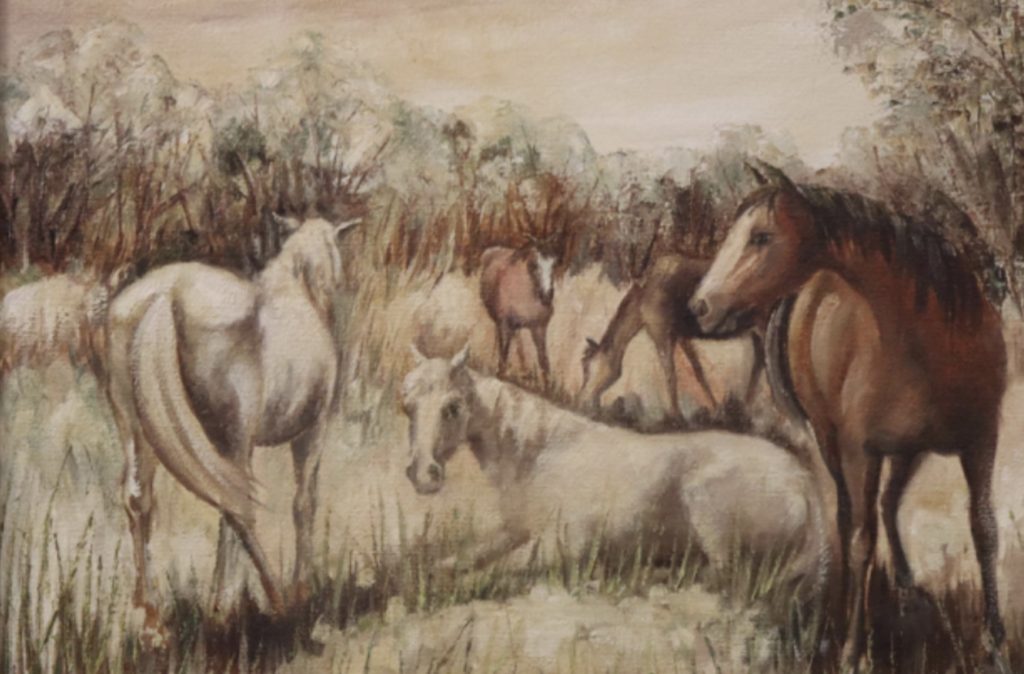
Estimates of brumby numbers on Fraser Island varied wildly, depending on who was counting, when and why.
By the early 1950s, figures of around 2,000 horses were being cited, with concerns expressed about grazing pressure in some areas. Other accounts from the 1930s spoke of far larger numbers – even up to 8,000 – though such figures almost certainly reflect impressions rather than census figures.
What matters is not the precise number, but the fact that the horses were abundant enough to be noticed everywhere they went, grazing on dunes above the back beach, moving down to freshwater soaks, travelling in herds large enough to be remembered decades later.
They were part of the scenery in the same way cattle once were, and in some areas cattle and horses grazed side by side on salt couch grass near the shore.
Horses and people
By the middle of the twentieth century, the brumbies were no longer just leftovers of industry. They had become social animals within a social landscape.
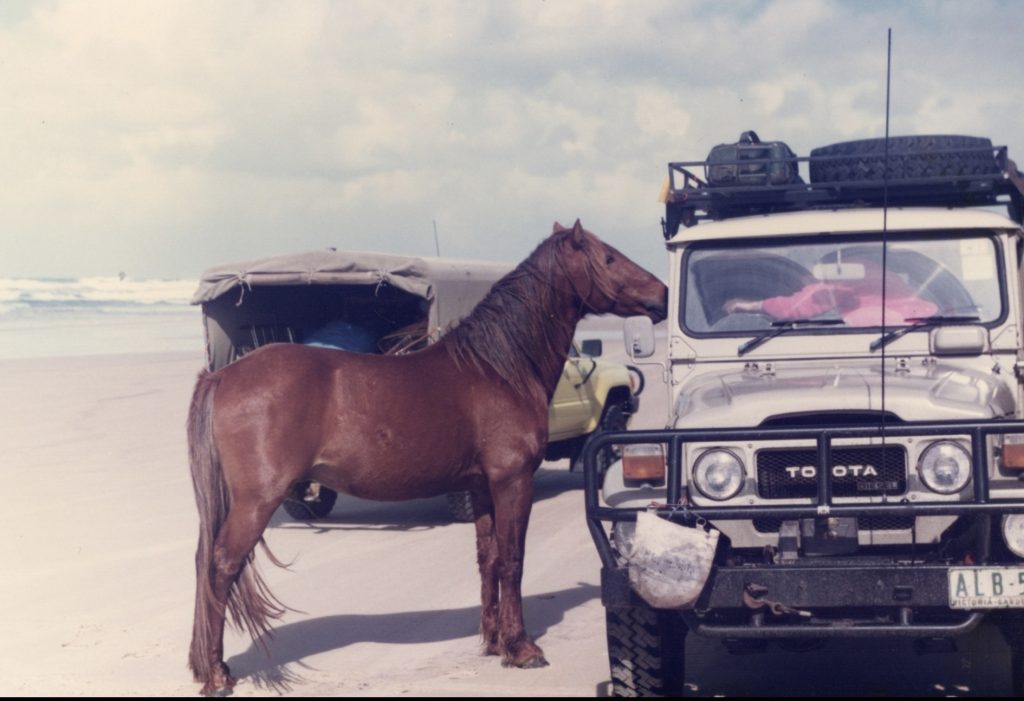
Residents and visitors remembered each horse by name. Packs were recognised and anticipated. Children fed them, watched them and occasionally tried to ride them. Campers awoke to the sound of horses scratching against bull bars and tent poles. They appeared at dawn and dusk on the beach, silhouetted against the sea.
There were informal traditions as well. One of the island’s quirks in the 1930s was the sight of racing a brumby against a motor car along the hard sand of the ocean beach. Sometimes, it was possible to outrun one of the wild horses that came down to the beach to drink at a freshwater spring and challenge a stallion to a race along the sand.
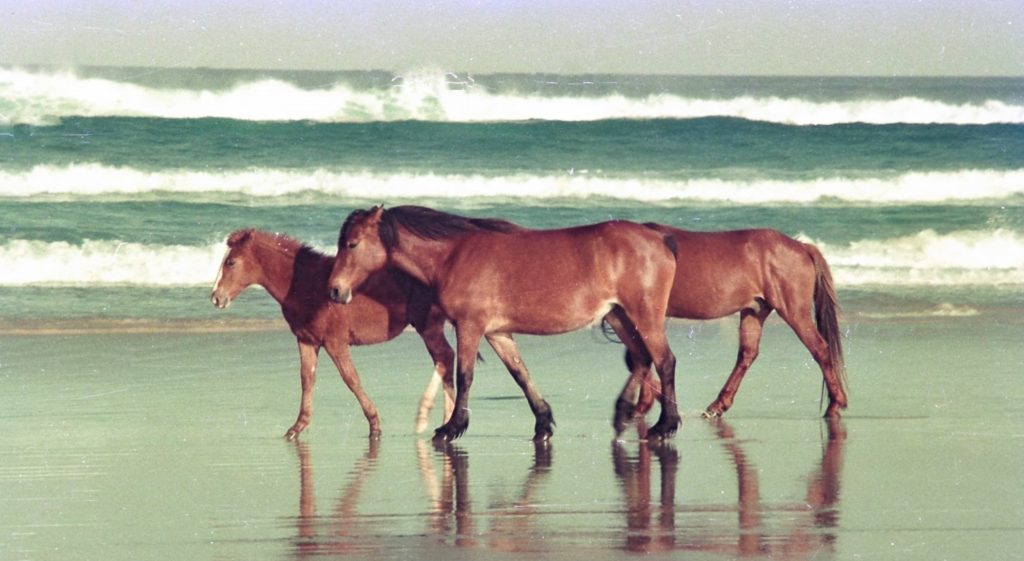
Cut off from its mob and hemmed between vehicle and water, a horse would pace the car over long distances, its stamina becoming part of island folklore. It was said they had rare stamina and could pace it well for the Melbourne Cup distance and beyond!
None of this suggests the horses were harmless, nor that everyone welcomed them.
As settlements grew at Eurong and Happy Valley, stallions became increasingly daring. There were complaints about horses threatening people, damaging property, trampling tents and interfering with vehicles. Injuries occurred, especially when stallions fought near towns, leaving animals wounded or dead. Residents who generally loved the horses sometimes wanted the animals gone in practice.
For long-term District Forester Andy Anderson and his family, brumbies used to wander around their Eurong property, mowing the lawns for them. They didn’t have a lawnmower until the brumbies were finally removed.
Kit Anderson collected their manure to fertilise the trees she planted. For the Andersons, the brumbies were a welcome sight. They had no issue except, perhaps, when they urinated loudly outside their bedroom windows at night!
Perhaps the most worrying interaction was when people offered food to entice them closer for photos.
There is the story of one woman in a vehicle who crunched up a plastic bag and used it to lure a brumby closer, only for it to bite her hand. She reported to the rangers. There were also reports that when brumbies were “spooked”, they galloped along the sand track, making people dodge them.
All these events became ammunition for rangers to plan their removal.
This tension between affection and frustration runs through nearly every honest recollection of the brumbies. They were admired, tolerated, resented and defended, often by the same people.
Brumbies and dingoes
Another common theme in the island’s oral history is the connection between horses and dingoes.
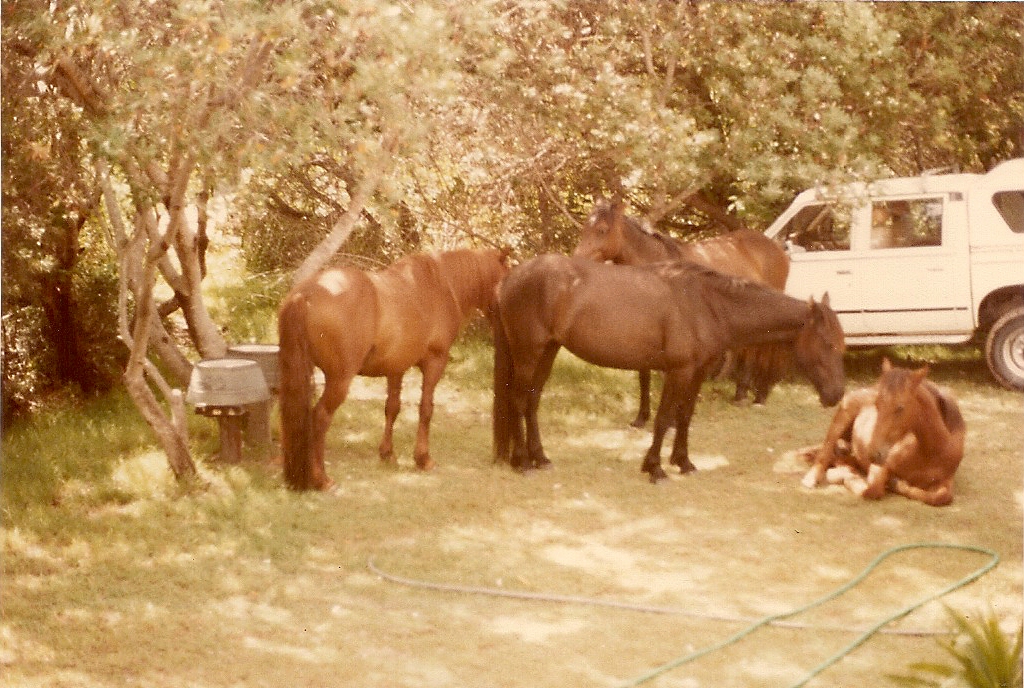
Brumbies lived in small herds, usually led by a stallion with several mares and their foals. Herds occupied territories but often interacted, especially outside the breeding season. When a mare foaled, the herd formed a protective ring around her, with heads facing outward.
Dingoes quickly learned where foals were born. Their attacks were persistent and opportunistic, aimed at driving the young animals into the surf where exhaustion made them vulnerable. Many foals were lost this way, and long-term observers believed dingo predation played a significant role in limiting horse numbers.
This interaction proved significant later when claims arose that removing brumbies would starve dingoes. In reality, healthy adult horses were seldom taken. Foals, injured animals and the old were a different matter.
The shift in thinking
For decades, horses lived alongside forestry, grazing and tourism without prompting a coordinated eradication effort. That shifted as the island itself was reclassified.
From the 1970s onwards, Fraser Island was increasingly seen as a fragile natural system rather than a working landscape. New authorities appeared with a new language. Introduced species became “pests” and historical legacies turned into “impacts”.
In 1973, the Beach Protection Authority suggested removing brumbies due to perceived damage to the dunes. The proposal met strong opposition, which John Sinclair later dismissed as hysterical. On that occasion, the Authority withdrew the proposal.
Monitoring continued. Small, fenced enclosures were set up to compare vegetation growth with and without grazing. Reports were written, but the horses still remained.
Removal by degrees
By the late 1970s, pressure grew stronger. In 1978, a former resident was reported to have removed many brumbies around Eurong and Happy Valley following complaints about their aggressive behaviour. No public record was made of how many horses were taken or the exact methods used. Residents observed sudden disappearances. Stallions were found dead after fighting, possibly sparked by the removal of mares.
Infamously, there was a mob of eight horses based around the Eurong township. Sid Melksham wasn’t a fan of them as they continually grazed and kicked up clods when they ran on his precious lawn at the resort. One even fell into the swimming pool in front of his bar.
A couple of reliable sources told me a story about the origins of Sid’s lawn. Ironically, he owed the brumbies for much of his precious lawn. Sid discovered a large “couch turf farm” at Coopers Camp, south of One Tree Rock, which the brumbies had kept “mowed.” The area received its name because Forestry surveyor Doug Cooper used to set up camp there. It’s a matter of public record that Sid took grass from Coopers Camp and turfed his lawn with it. It was typical of Sid, who never asked for permission, only forgiveness. He was fined for the theft. However, the fine was much cheaper than buying turf from the mainland and transporting it to his property.
Throughout the 1980s and 1990s, removal happened sporadically and often quietly. Some horses were captured and moved off the island by float and barge. Others proved impossible to catch.
But it is the significant, concerted effort to eradicate the brumbies immediately after forestry was kicked off the island in 1992, at which point the record fractures.
The QPWS, under pressure to remove the horses, quietly decided to shoot them. While Sid was never a fan of them, he opposed that measure. He took matters into his own hands and organised a mate to come over, round them up, and take them to his property near Maryborough.
It was a successful operation. However, a mare escaped and was never seen again. It is believed she was a victim of the “official removal program.
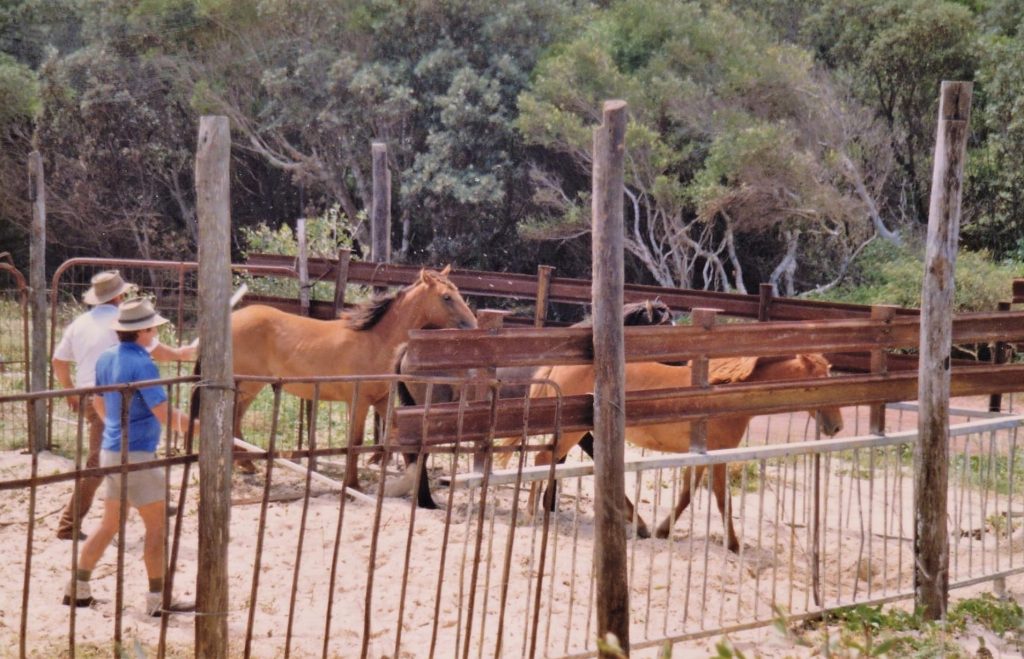
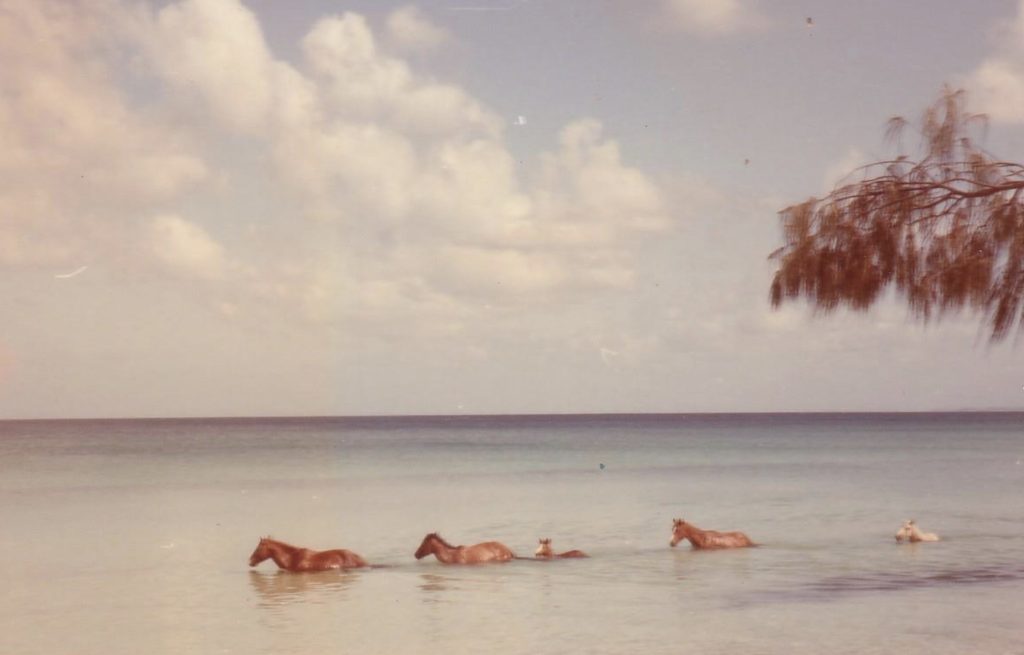
Some insist that no horses were ever shot on the island and that all removals involved humane relocations. Others recall helicopters being used to muster animals that could not be captured, followed by shooting. There are claims of mass burials behind Eurong, while others strongly deny it.
What is beyond doubt is that removals were not carried out transparently, and that silence allowed space for memory, suspicion and anger to grow.
The final campaigns
By the early 2000s, the horse population had significantly declined. Estimates indicated that about thirty animals were still present. In 2003, a formal rehoming program was initiated. By 2005, twenty-eight horses had been moved to the mainland.
For a time, it was thought the brumbies were gone. But they weren’t. In 2013, a single long hair found in a dingo scat prompted renewed surveillance. Trail cameras, initially set up to monitor dingoes, captured images of horses in remote northern parts of the island. Sightings then followed. Tourism operators reported small groups north of Moon Point.
Each reappearance reignited public debate. But one thing remained clear, which was the community sentiment to leave them be. However, the authorities were less sure.
By 2019, the trail cameras captured their last confirmed images of horses. No tracks, scats, or hair were found in the following years. In late 2024, rangers announced that the brumby population had probably died out.
The language was careful. “Likely.” “Believed.” “No evidence.” Their conclusion, however, was unambiguous. The horses were gone.
With their removal, the magnificent, weathered, coloured sand cliffs north of the Maheno at various sites also disappeared, as vegetation has reclothed them. They were a popular tourist attraction right up to the end of the 80s.
What was really removed
It’s tempting to leave the story there – with extinction seen as ecological success. But that overlooks what the brumbies truly symbolised.
They were not an accidental intrusion. They are the biological remnants of intentional choices made by governments, industries and individuals who used Fraser Island as a site of production. When that use fell out of favour, the animals left behind were reclassified as mistakes.
The brumbies complicated a new narrative that sought to make the island seem timeless, untouched and lightly affected. Living animals, visible and emotional, made that harder to sustain than rusting machinery or overgrown tramlines. Removing the horses simplified the story.
Remembering without romance
Saying this doesn’t mean the horses should remain. Landscapes evolve, values change and management decisions are taken. But those decisions deserve an honest description.
The brumbies of Fraser Island were not feral in origin. They were not unmanaged. They were not ecologically naïve newcomers. They were shaped by work, adapted to the environment and ingrained in memory long before they were targeted for removal.
Their disappearance marked the end of a chapter not only in the island’s ecology but also in its cultural history – the last living link to a time when Fraser Island was seen not as a tourist “wilderness” paradise but as a place where people worked, adapted and left traces that didn’t always fade.
If the island is to be remembered honestly, the brumbies deserve their place in that story.
Do you have any memories or memorable encounters with brumbies you would like to share?
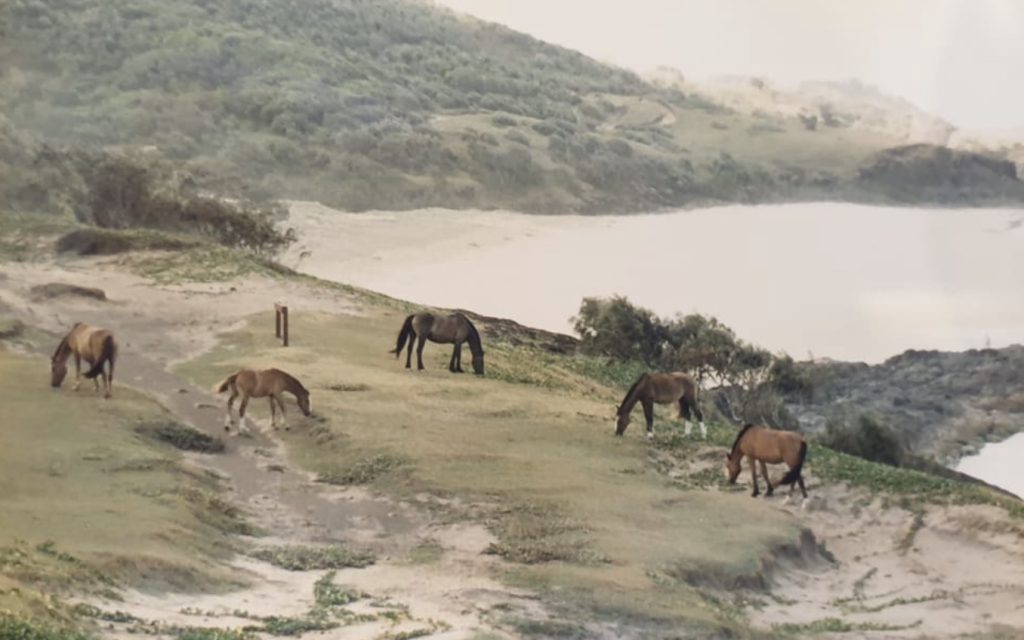
I finish with a poem written many years ago in defence of the brumbies by Clarice Willman from Happy Valley.
With flashing eye and tossing mane, you play from shore to shore
You graced the dunes of Fraser Isle, for three score years and more
The little foals at springtime come, and frolic round the place
They make a happy family group, these creatures of God’s grace
They don’t destroy our coastal plain or dirty up our streams
They don’t destroy like humans do, or shatter all our dreams
Oh! Please don’t kill these noble beasts, or take them far away
Just let them roam upon the isle, forever and a day
The “brumbies” caused far less environmental damage and destruction than that now being suffered as a result of uncontrolled cowboy 4WD access and the hordes of visitors with little or no understanding of the environment and history of Fraser. It has become an antipodean Yellowstone!
So true!
The brumbies were an icon and such an integral part of the Island’s history. Thank you for this great story. It is well written and brings back some of the history and knowledge for others to share and read.
We holidayed on the Island with my family from the early 1960’s right through every year until late 2008. The changes witnessed during this time were significant. The brumbies and the dingoes in the early days were a big tourist attraction, well respected, understood and left alone. And yes, the dingoes definitely only became a concern for people when the brumbies were removed, and the dumps were closed.
We holidayed at Waddy Lodge for many years before moving up to Happy Valley, then Eurong, Second Valley, and loved seeing the brumbies as we’d wake in the morning, grazing around our houses. The dingoes lived amongst them. Both respected, both maintaining their space and yes, beautiful couch grass lawns requiring no maintenance with no weeds. Neither causing harm to us nor others around them.
It was definitely the vehicles and people and lack of knowledge and understanding that destroyed the ecosystem, nature’s balance, sand dunes, and everything in between.
Again, thank you for your well-written account of the history of the beautiful brumbies that lived on the Island. And the importance of being there. A treasure that should be remembered.
I remember the front page of the Observer when the brumby ended up in Sid’s pool, his partner was the editor of the paper…
Who’s that partner was editor of the Observer then?
I didn’t know about her, or there would have been big trouble.
The dingoes were never a problem when the horses were there, as they were never starving, and foals were captured and old horses died, leaving hides and bones to be scavenged for years after death.
Extra valuable for the historical record Robert. I remember the horses well from the 70s on the back beach.
Let’s get the legend right. Sid did take turf from Cooper’s Camp. The head forester did serve a summons. Sid phoned the head of Dillinghams, for whom he had delivered fuel in sand mining days, and asked if he still held sand mining leases along the beachfront. The chap said he did, so Sid asked if he would write a post-dated letter giving him permission to take the turf. When he got the letter, he showed it to the forester. End of the attempt to get Sid before the court. So he was never fined.