
Every few years, usually around budget time, Australians are warned that the nation is not spending enough on science. University vice-chancellors, scientific academies and research organisations point to the decline in research expenditure as a share of the economy, the enormous sums invested by countries such as China and the United States and the risk that talented Australian scientists will take their work elsewhere.
There is substance to that concern. Scientific research has delivered enormous benefits to Australia, including discoveries whose value could scarcely have been imagined when the original work began. Fundamental research is inherently uncertain and a funding system that demands an immediate commercial return from every project would likely ensure that some of the most important discoveries were never made.
Nevertheless, I am still interested in what we are actually getting for the money outlayed, and why it attracts so little attention.
Counting papers, citations, PhD students, research centres, or dollars distributed through competitive grants does not answer it. Nor can we measure the health of Australian science by simply calculating research expenditure as a percentage of GDP. We also need to examine what gets researched, what does not, who decides which areas of inquiry deserve funding and what happens when entire academic disciplines align with government policy.
I am not arguing against governments funding science, because they always have. Nor am I suggesting that scientists routinely fabricate results to please governments. I see the problem as more subtle and potentially far more damaging.
Governments set priorities. Funding agencies translate those priorities into incentives. Universities build research programs around available funding and in turn, academics build careers and research teams in the favoured fields. Consequently, PhD students are recruited and papers accumulate. Those papers are then cited by governments as “the science” supporting the policy priorities that helped create the research agenda in the first place.
Eventually, a circle can develop in which government policies determine priorities, those priorities determine which evidence accumulates, the accumulating literature helps define the scientific consensus and that consensus helps determine where the next round of funding goes.
No conspiracy is required, as everyone merely responds rationally to the incentives in front of them.
When science served a national purpose
Australia has publicly funded science for more than a century. The Commonwealth’s involvement began during the First World War with the Advisory Council of Science and Industry, which became the Council for Scientific and Industrial Research (CSIR) in 1926 and CSIRO in 1949.
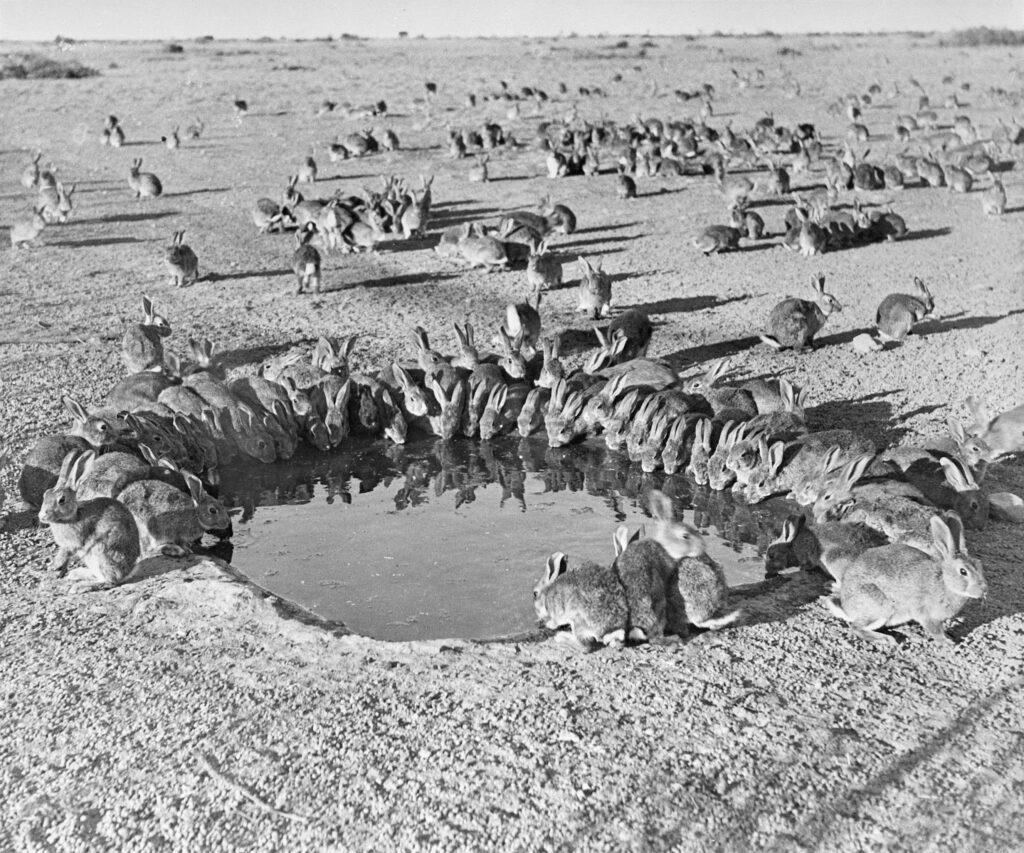
The early organisation was intensely practical. Australia faced agricultural, industrial and environmental problems that could not be solved simply by importing European experience. Scientists investigated prickly pear, animal diseases, insect pests, soils, fuels, food preservation, forest products and agricultural production. Wartime research expanded into radar and other technologies. Over subsequent decades, major advances came in agricultural productivity and animal health, myxomatosis, atomic absorption spectroscopy, radio astronomy, computing, polymer banknotes and the technology underpinning modern wireless networking.
Forestry followed the same tradition. Forest researchers studied regeneration, growth and yield, silviculture, soils, insects, diseases, fire behaviour, timber properties and utilisation. Fire researchers went into forests, lit experimental fires and measured fuels, weather, rates of spread and flame behaviour. Their models were based on observations of actual fires.
As universities expanded and competition for public funding intensified, research increasingly became an industry. Publications, citations and research income became measures of institutional performance. Successful academics built research teams that required ongoing funding, making the next grant increasingly important for sustaining the enterprise created by the previous one.
Australia’s National Science and Research priorities now explicitly include transitioning to a net-zero future, protecting and restoring the environment and elevating Aboriginal and Torres Strait Islander knowledge systems. Researchers contemplating careers, universities establishing research centres and supervisors recruiting postgraduate students can see where government priorities lie.
Nobody needs to instruct a scientist what result to produce. The more subtle influence occurs earlier and helps determine what gets studied at all.
What did taxpayers get for $683,974?
Consider an Australian Research Council (ARC) Future Fellowship awarded in 2012. ARC provided a professor with $683,974 for a project titled Climate-proofing southeastern Australia’s native forests: where, when, and how? The ARC grant number is FT120100715.
The project description was very specific. It said environmental change and forest fragmentation threatened native forest species’ ability to regenerate or migrate. Using long-term datasets and statistical analysis, the project would assess future risks to forest regeneration after logging, bushfires and land abandonment, as we were led to believe.
More than a decade later, however, try finding the research write-up. Search by the grant number and an impressive collection of scientific publications appears. But look at them rather than counting them.
One concerns fire intensity and tree mortality in a species-rich seasonal tropical forest. Another examines the structure and regeneration of deciduous dipterocarp forest in central Vietnam. Another concerns reforestation of agricultural land. Others address carbon sequestration, soil processes, greater glider foraging habitat and northern Australian tree mortality. The Vietnam paper states that the professor was supported by FT120100715, while another researcher undertook the fieldwork and analysis. The tropical-fire paper similarly records the professor’s fellowship support.
Apparently, there is nothing improper about a Future Fellowship supporting a researcher’s broader work and these papers may be perfectly worthwhile science. But acknowledging a grant number on a paper is not the same as demonstrating that the research promised in the grant was delivered.
Where is the answer to the project they funded? Where, when and how should southeastern Australia’s native forests be “climate-proofed”? What did the research establish about regeneration after logging, bushfire and land abandonment? What practical conclusions emerged from the $683,974 investment?
The list of publications associated with the fellowship looks less like the identifiable outputs of a tightly defined research project and more like a bibliography of papers the fellowship holder contributed to over the funding period.
That exposes an important weakness in the grant economy. Before receiving public funding, researchers must explain their objectives, significance, national benefits and expected outcomes. Those promises help determine who receives the grant. But how rigorously do we revisit, at the end of the project, to ask whether the promised research was actually delivered?
Counting publications is not the answer. If the objectives listed in a grant application are important when the money is awarded, they should remain important when taxpayers ask what their money bought. Neither the professor, the university, nor the ARC was willing to answer basic questions about the study. ARC refused to answer questions about how the money was spent on the project, citing confidentiality.
When models replace the forest evidence
Bushfire research provides an even more consequential example because mistakes do not merely affect academic careers. They can affect lives, communities and millions of hectares of forest.
I spent much of my 33-year forestry career in fire management, including operational roles during major wildfires. The fire science I grew up with was heavily empirical. Researchers measured fuels, moisture content, wind, temperature, rate of spread and flame dimensions, conducted experimental burns and observed wildfires. They also tested hypotheses against what happened on the ground.
Neil Burrows, one of Australia’s most experienced bushfire researchers, recently succinctly described the distinction to me:
I spent most of my fire research career in the bush observing and measuring rather than keyboarding.
Burrows is not opposed to models, and neither am I. Statistical models derived from empirical data are indispensable tools. But, as he pointed out, they describe correlations and patterns in the observations from which they were constructed. They do not necessarily explain the underlying mechanism and become increasingly unreliable when extrapolated beyond the range of those observations.
His warning is simple:
So beware of extrapolation.
Computer models introduce additional difficulties because their output depends on assumptions, imperfect datasets and how well they represent enormously complicated physical processes.
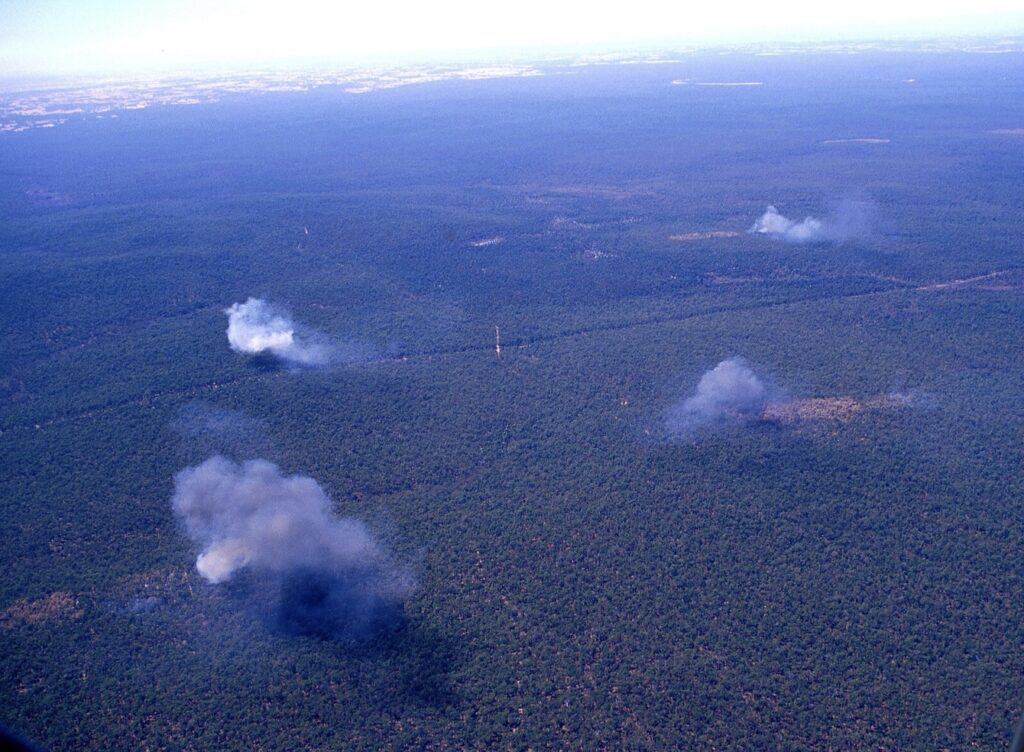
This is crucial to the debate over prescribed burning. Burrows points to more than six decades of experience in south-western Western Australia. When prescribed burning was maintained across a substantial proportion of the forest estate, the annual area burnt by damaging wildfires remained comparatively small. As the prescribed-burning program declined, wildfire area, suppression costs and losses increased.
The key mechanism is that fuel reduction changes what firefighters can do. A wildfire entering younger fuels may become sufficiently less intense to permit direct attack. Crews can work closer to the fire edge, existing tracks become more useful, backburning becomes safer and spotting can decline. The probability of containing the fire before the next period of severe weather can improve.
A computer model that examines whether prescribed burning will stop an extreme wildfire can therefore answer its narrowly framed question correctly while completely missing the operational reason prescribed burning is valuable.
That difference has become central to another argument — the increasingly fashionable claim that native forest logging makes bushfires more severe.
The logging and bushfire debate
In January 2025, I published an article challenging claims that native forest logging was a major driver of Australia’s bushfire problem. This led to a lengthy public exchange with Australian National University ecologist Professor David Lindenmayer here, here and here.
My position was straightforward. If logging changes forests in ways that cause subsequent bushfires to burn more intensely or severely, we should be able to demonstrate the physical mechanism. Measure the fuels and their arrangement, examine moisture content and bark hazard, observe fire behaviour, separate fire intensity from the damage visible afterwards, account properly for weather, topography, stand history, previous fire and fuel treatment and, most importantly and finally, test the proposed relationship in the forest.
Much of the research supporting the logging-severe fire thesis, however, takes a different approach. It uses retrospective statistical analyses of spatial datasets to identify associations between prior disturbance, forest age or structure and the severity of subsequent fire. While such studies can reveal useful patterns, the strength of the conclusions depends heavily on the accuracy of the underlying data and the extent to which mapped variables adequately represent the physical mechanisms supposedly responsible for those patterns.
An instructive example is a 2014 study by Chris Taylor, Michael McCarthy and David Lindenmayer examining mountain ash forests that were burnt during Victoria’s 2009 Black Saturday fires. The researchers investigated the relationship between stand age and fire severity, concluding that the probability of high-severity crown fire was greatest in stands approximately 7–36 years old, declining as forests matured.
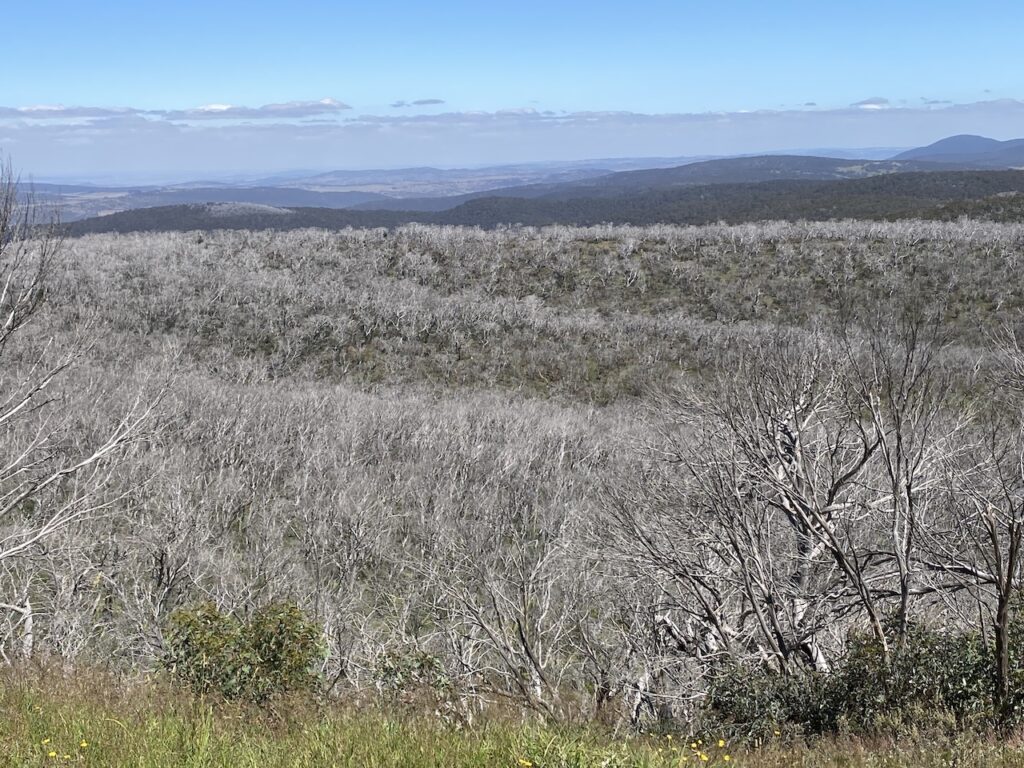
But the disturbance history of one important age class posed a problem. For stands established in the preceding 40 years, logging records provided evidence of their harvesting history. The extensive 70-year-old forests that regenerated after the catastrophic 1939 fires were different. The authors explicitly acknowledged that historical records had not been kept on the timing, location, spatial extent and intensity of post-fire salvage logging. Consequently, they wrote, it was difficult to determine whether particular stands had developed after fire alone or after fire followed by logging.
They attempted to resolve that uncertainty using stand structure. Because most of the 70-year-old stands they examined were even-aged, and because they considered unlogged stands more likely to contain multiple age cohorts, they inferred that post-fire logging had occurred.
That is an important methodological assumption. Severe wildfire in mountain ash forests can create extensive even-aged stands. Mountain ash is an obligate seeder, and intense stand-replacing fire kills mature trees while triggering mass regeneration. The vast 1939 regrowth forests of Victoria are a clear example. Indeed, Lindenmayer and colleagues acknowledged this ecological process in their later analysis of the 2019–20 fires, noting that crown burn and crown scorch in obligate-seeding wet forests typically lead to regeneration and the development of young, even-aged stands.
The issue is how much weight to give conclusions that depend on such an inference, rather than whether the authors were entitled to draw it from the evidence available to them, given that researchers often work with incomplete historical information.
However, a statistical model cannot reconstruct a disturbance history that was never recorded. If the historical treatment of a stand is uncertain, increasingly sophisticated statistical analysis does not remove that uncertainty. Conclusions attributing differences in later fire severity specifically to logging need to acknowledge that limitation.
A later 2021 study by Lindenmayer, Chris Taylor and Wade Blanchard, which examined the 2019–20 Victorian fires, used better documented disturbance histories. The researchers combined government logging records, historical wildfire mapping and forest-inventory information and analysed tens of thousands of spatial points against mapped crown burn and crown burn/crown scorch.
But this study reveals a different problem. The authors acknowledged that “time since previous major disturbance” was only a “crude proxy” for the underlying mechanisms affecting fire severity. They explained that detailed landscape-scale information on pre-fire forest structure, fuel-bed structure and fuel moisture was less readily available.
That qualification goes to the heart of my concern. Time since disturbance is relatively easy to map, but fuel is much harder to measure. But the former is not the latter. A mapped forest age or disturbance class does not tell us about tonnes per hectare of available fine fuel, the quantity and arrangement of near-surface and elevated fuels, bark hazard, fuel moisture, or the continuity of those fuels across the landscape. These are among the characteristics through which vegetation influences fire behaviour.
Nor should fire severity and fire intensity be treated as interchangeable. Fire severity describes the ecological effects left behind by a fire, including canopy scorch, defoliation and mortality. Fire intensity describes the energy released by the fire front and is closely related to fuel consumption and the rate of spread. A dense young stand and a tall mature stand exposed to similar fire behaviour can show different apparent canopy damage because their crowns occur at different heights and individual trees differ in size and susceptibility to injury.
Those differences are extremely important when remotely mapped post-fire effects are used to infer how intensely the fire burned.
I am not arguing that this renders landscape-scale statistical analysis worthless. It can identify associations worth investigating and generate hypotheses that would be extremely difficult to recognise from individual experimental plots. However, an association between stand history and subsequent mapped fire severity does not, by itself, establish the physical mechanism responsible for that association.
That was the central issue in my public exchange with Professor Lindenmayer. I repeatedly returned to the need for direct evidence of the claimed mechanisms. Lindenmayer defended this body of research as empirical and argued that the evidence linking logging to increased fire severity was compelling. My disagreement was not about whether statistically analysed spatial datasets can be described as empirical research in the broad sense. It was about what those methods can establish about fire behaviour when key physical variables, such as fuel quantity, arrangement and moisture, have not been measured directly.
The debate subsequently became more personal than I considered useful. In one of his responses, Lindenmayer framed the broader argument as a choice between listening to forest-industry “lobbyists” and following scientific evidence. I regarded that characterisation as misplaced in an exchange in which I participated as a retired forester, drawing on 33 years of professional forestry and fire-management experience and asking that the proposed mechanisms be tested against measured fuels and observed fire behaviour.
My response in Australian Rural & Regional News therefore returned to the evidence. If the proposed relationship between logging and subsequent fire behaviour is causal, I argued, it should be possible to identify the physical changes responsible and demonstrate them through measurements of forest structure, fuels and fire behaviour, rather than relying primarily on retrospective associations between mapped variables.
Property Rights Australia later captured the problem neatly in one of its Facebook posts on the topic:
Too much is at risk in human life, infrastructure damage and maintenance of forest ecosystems to have ‘academic’ engagement in desktop jousting.
Thus, the adage that models should be tested against the forest applies. The forest should not be required to conform to the model is very applicable here.
Forestry research and the questions nobody asks
The same problem appears in forest ecology. There is now an enormous body of research examining the effects of timber harvesting on wildlife. Much of it is useful and has improved forest practices. But where is the equivalent research effort investigating the ecological consequences of not managing forests?
What happens when prescribed burning declines, dense regrowth ages, shade-tolerant understorey species expand, or food resources change as forests progress through succession? What happens when fuel builds up for decades before an intense wildfire resets the entire system? What happens to hollow-bearing trees when those forests burn?
Reservation is a management decision with ecological consequences. Putting a boundary around a forest and calling it “protected” does not stop succession, competition, mortality, fuel accumulation, drought, storms or wildfire.
However, research agendas often treat human intervention as the disturbance to be investigated and non-intervention as the neutral control, but it isn’t.
Greater gliders: look where the data came from
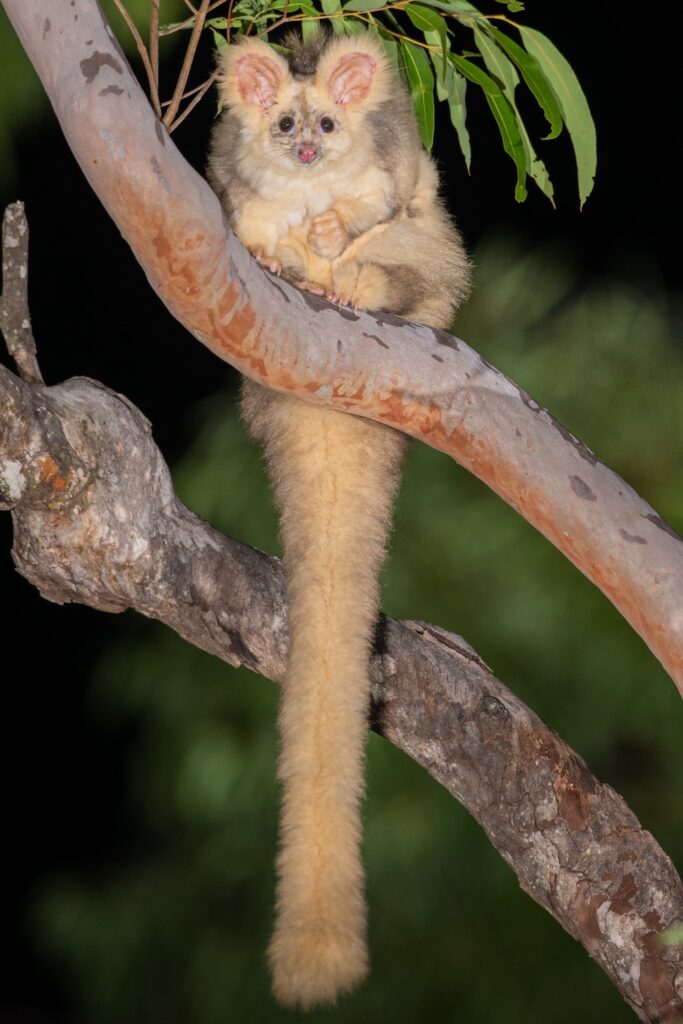
The latest work on greater gliders offers an almost perfect example. In September 2026, the NSW Natural Resources Commission released an analysis of greater-glider trends, drawing on data collected from 1997 to 2024.
Where did that remarkable long-term dataset come from? Primarily from Forestry Corporation pre-harvest surveys in state forests.
The analysis found substantial declines in greater-glider occupancy and abundance. The main drivers were rising temperatures and severe, frequent fires. Historical harvesting contributed, but its influence was smaller. The researchers also acknowledged important limitations in their ability to evaluate the effects of harvesting.
Consider the irony here. Forestry agencies conducted surveys because they were required to search for threatened species before harvesting. Decades later, those records provide researchers with a longitudinal dataset to examine population trends.
Where is the equivalent dataset for comparable national parks? Where is the long-term controlled comparison of actively managed state forest, unlogged production forest and reserved forest? Where is the research that separates the effects of harvesting from severe wildfire, stand development, food-tree abundance, hollow availability, fuel history and forest structure?
If virtually all the detailed historical information comes from forests subjected to forestry scrutiny, researchers need to be especially careful when inferring what is happening across the wider landscape.
The recent analysis demonstrates why bushfire has emerged as one of the dominant threats.
Leadbeater’s possum and the danger of a simple story
Leadbeater’s possum offers another warning against allowing a simple preservation narrative to obscure complex forest ecology. For decades, the public debate has been dominated by a simple proposition that logging destroys possum habitat and therefore that protecting old forest from logging protects the possum.
Logging can unquestionably remove important habitat features, particularly hollow-bearing trees. Severe wildfire can do the same. But the possum’s habitat requirements are more interesting than the political slogan.
The Commonwealth’s own recovery material states that optimum habitat includes young regenerating or mixed-aged ash forest containing wattles, together with old hollow-bearing trees. Regrowth following the 1939 wildfires, combined with old fire-killed trees that provide hollows, produced abundant feeding and nesting habitat. The current national recovery plan similarly records that peak densities occur in regrowth about 15–50 years after bushfire, when hollows remain available and wattles and eucalypt regrowth provide dense feeding habitat. Dense regrowth following timber harvesting can also provide suitable foraging habitat where adequate nesting sites remain within or adjacent to it.
That is a dynamic forest, not a museum. Old trees provide hollows, while younger regenerating vegetation provides dense structure and food. As the forest ages, the wattle component can decline, so habitat does not necessarily improve simply because every tree becomes older.
Improved survey techniques have further complicated the picture. Victorian researchers using arboreal cameras mounted high in trees and baited with honey have now surveyed nearly 500 sites, detecting Leadbeater’s possums at 46 per cent of them. Surveys of atypical habitat have also extended the known range. This demonstrates how improved detection and better ecological knowledge can alter our understanding of a species.
Why has so much research effort focused on the effects of harvesting, while the consequences of succession, changing understories, fuel accumulation and severe wildfire have received less attention?
A forest does not stop changing just because logging stops. Fire, succession and management can each create some habitat attributes while removing others. Ecology loses something important when it treats protection from one disturbance as though the forest thereafter remains unchanged.

The Bureau, homogenisation and the problem of trust
Then there is the Bureau of Meteorology (BoM), where transparency is crucial because its historical temperature record underpins one of Australia’s most consequential areas of public policy.
Historical records inevitably contain problems. Stations move, instruments and observation practices change and the surroundings of weather stations alter. Therefore, there are legitimate reasons to identify artificial discontinuities when constructing long-term climate records. But that does not mean every adjustment should be accepted simply because the process is called “homogenisation” and has been peer reviewed.
ACORN-SAT constructs long temperature series from observations at 112 locations, often combining records from multiple individual stations and statistically compares them with neighbouring stations. When the relationship changes sufficiently, the process supposedly identifies a discontinuity that requires adjustment.
Crucially, documentary evidence of a station move, instrument change or other physical event is not necessarily required. BoM argues that statistical analysis can identify undocumented changes in exposure or observing practice.
If there is no record of any change at the station, how confidently can we determine that the statistical discontinuity is an artificial error rather than a real climatic difference?
The extraordinary computational complexity of the process was revealed during Senate Estimates in 2021. Former Senator Gerard Rennick put it to BoM that homogenisation could involve up to 500 million iterations for maximum temperature and 250 million for minimum temperature at a single station. He then asked how anyone outside BoM could realistically understand such a process and why it was necessary.
Rennick’s questioning goes to the heart of the problem because independent auditability was supposed to be integral to ACORN-SAT. The international panel reviewing the original dataset in 2011 recommended that BoM publish its homogenisation adjustments and the rationale for them, along with the computer code, algorithms and protocols used for quality control and homogenisation. It also recommended implementing proper version control so changes between successive datasets could be traced.
Most interestingly, the panel asked BoM to determine and document why ACORN-SAT produced lower average temperatures before 1940 than those of the wider Australian observational network and of previous international analyses.
More than a decade later, BoM acknowledges that although it provides information enabling a proficient user to reproduce the homogenisation analysis:
Complete replication of every analysis step and analysis decision is unrealistic.
For a dataset of this public importance, why should that explanation be considered satisfactory?
BoM also acknowledges inherent uncertainty in homogenisation and says:
No single method can be considered as the single point of truth.
Successive versions of ACORN-SAT have consequently produced somewhat different results as observations, historical records and methodologies have changed.
The recent citizen audit, conducted by retired scientist Tom Berger and computer engineer Geoffrey Sherrington and championed by independent Tasmanian MP Andrew Wilkie, shows why independent scrutiny is so crucial. As members of the public, Berger and Sherrington obtained historical records, including original paper documents, through Freedom of Information processes and compared them with digitised data. BoM strongly rejects allegations that it has deliberately manipulated its temperature record, but the outsiders did find genuine errors.
After investigating their claims, BoM acknowledged duplicate historical daily temperature observations, including four post-1910 months relevant to ACORN-SAT. The Bureau says fewer than 200 observations among more than seven million were involved, that they had no material effect on Australia’s long-term temperature trend and that the records were corrected in October 2026.
But that is not the key point. Citizens scrutinising an enormously complex government dataset uncovered errors that had slipped through the Bureau’s quality-control procedures. That is precisely why peer review and institutional authority cannot substitute for reproducibility and open scrutiny.
An important distinction also exists between an original observation and a homogenised value. The former records what an instrument reported at a particular place and time. The latter is an analytical estimate of what the temperature series would have looked like after statistical procedures attempt to remove “non-climatic” influences. BoM retains the original observations, but the homogenised series necessarily depends on “breakpoint” detection, neighbouring stations, assumptions about undocumented changes and the methods used to calculate adjustments.
That means the process should be extraordinarily transparent. Most importantly, can an independent researcher start with the original observations and reproduce the resulting series?
BoM asks Australians to place considerable confidence in an extraordinarily complex statistical reconstruction of more than a century of temperature observations. That confidence cannot ultimately rest on the authority of the institution producing it. It must rest on transparency.
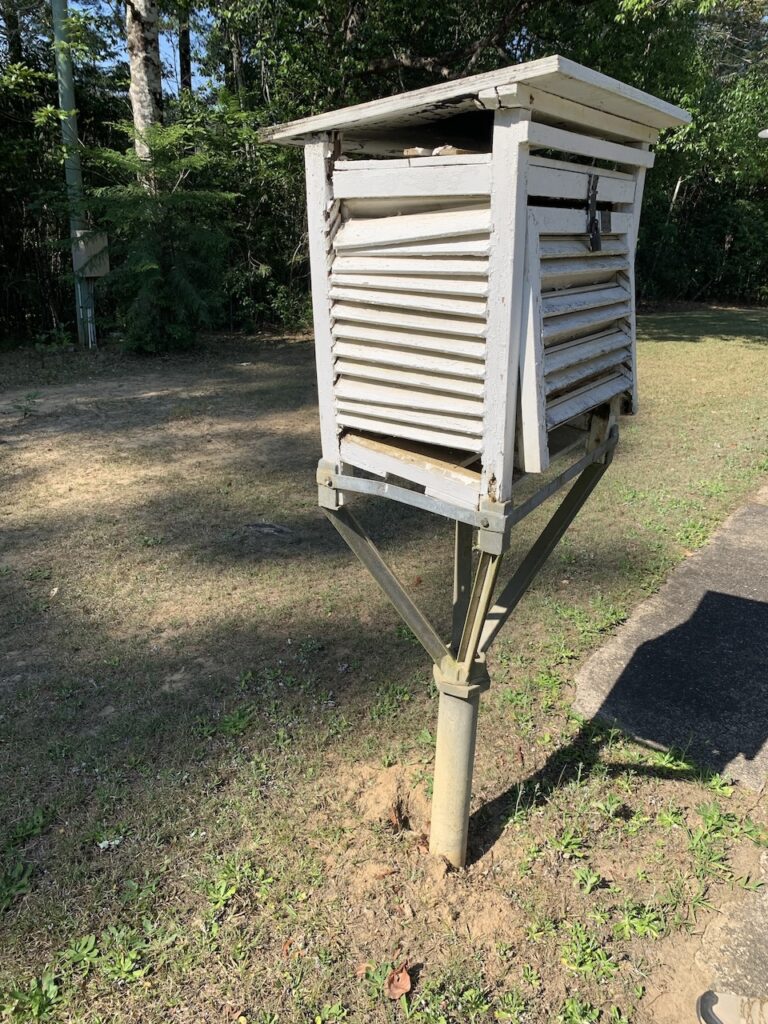
When hundreds of millions of computational iterations, changing versions, undocumented discontinuities and analytical judgements can stand between an observation recorded on a weather sheet decades ago and the temperature series ultimately used to describe Australia’s climatic history, “trust us, it has been peer reviewed” is not enough.
Science must be allowed to discover the wrong answer
These examples point to a problem deeper than the quality of any individual study or dataset. Australian science does not primarily suffer from researcher dishonesty. The greater danger arises when funding structures and institutional priorities progressively narrow the range of issues deemed worth investigating.
Research into the effects of logging on biodiversity is legitimate, as is research into what happens when forests are left unmanaged. Research into climate influences on bushfires is essential, as is research measuring fuels, prescribed burning effectiveness, access, initial attack and suppression. Homogenising historical temperature records may be scientifically justified, but every adjustment should remain open to independent scrutiny.
A healthy scientific culture is tested by whether researchers are encouraged to challenge it. That becomes harder once careers, laboratories, grants, postgraduate programs, government policies and institutional reputations accumulate around a proposition. Challenging it can then threaten considerably more than an idea. This makes intellectual diversity and genuine independent scrutiny more important, not less.
World-renowned Australian mountaineer, author, and outdoor entrepreneur Tim Macartney-Snape AM made this point from another angle when commenting on an earlier article of mine about forestry and bushfire. He argued that locking up native vegetation without the resources or knowledge to manage it had created an increasingly difficult problem, for which the eventual cost of inaction could far exceed the cost of addressing it now.
That raises one of the simplest but most neglected questions in environmental research that I have often pondered — what happens if we do nothing?
Non-intervention is not without management consequences, even though enormous research effort is devoted to measuring the consequences of human intervention, with little comparable effort devoted to the consequences of withdrawing it. Science must be capable of investigating both.
What taxpayers should demand
Australia does not need less science. It needs a research culture prepared to test its assumptions.
If taxpayers fund a project to determine where, when and how southeastern Australian forests can be climate-proofed, they should eventually be able to access the research that answers that question. If researchers propose that logging increases subsequent bushfire severity, they should test the statistical relationship against the physical mechanisms operating in the forest. If wildlife research concentrates on the consequences of forestry, comparable attention should be given to fire, succession and the consequences of non-intervention in reserves. If BoM reconstructs historical temperature series through an extraordinarily complex homogenisation process, independent researchers should be able to interrogate how and why it made those adjustments.
Australia’s great scientific achievements came from giving capable people difficult problems, resources and the freedom to discover answers that were not known beforehand. We risk reversing that relationship when governments identify preferred policy destinations, funding priorities direct researchers towards them, research accumulates around those priorities and governments then cite the resulting literature as independent scientific justification for continuing along the same path.
That is why the most valuable scientist may sometimes be the one who produces an inconvenient result, such as a field measurement that contradicts the model, an experiment that fails to reproduce an accepted finding, a historical record that challenges an adjusted dataset, or an ecological observation that does not fit the prevailing preservation narrative. Science should welcome those challenges rather than defend itself against them.
Most importantly, publicly funded science must retain the capacity to recognise that government policy, institutional orthodoxy, or even a substantial body of published research can be wrong.
Pouring more public money into Australian research without addressing these incentives will not restore confidence in science. It will simply reinforce the system that eroded confidence in the first place. Instead, we should demand a system for funding science that can ask the wrong questions and discover inconvenient answers.
As always Robert, well thought out and written, asking the hard questions.
Thanks Robert, another brilliant paper.
One of the important current problems with bushfire research has been the decline/disappearance of forestry agencies that had a dedicated research branch. Departmental research officers had the enormous advantage of having access to the forest for experiments, a corporate research commitment so that projects continued across generations of researchers, and the ability to harness experienced officers and fire crews from the operations section of the department to carry out experimental work in the bush. There was also the enormous benefit of being able to validate research results against actual outcomes in the real world, and to come back and try again if they didn’t work.
University academics, where most fire research is done these days, have none of these advantages. They have no forest to operate in, they come and go according to whether or not someone gives them a grant, and they have no field staff or specialist equipment. Perforce they become keyboard warriors, their bushfire research being conducted in an office on campus, sitting in front of a screen, making models based on no empirical data. The ideal end result of their research is a paper in a journal, not a works program out in the forest, so their ideas, calculations and models are never tested in the real world. Once the paper is published, they go on to something else, or in the case of research done for a PhD, they go off looking for a job.
The classic example is the theory, developed on a computer and never demonstrated anywhere in the forest, that over time without fire eucalypt forests become less flammable. I have seen one publication where the academic researcher presents a graph that shows that in eucalypt forest left unburnt for 60 years, the likelihood of a bushfire occurring is close to zero. In my experience, that conclusion is impossible to reconcile with observed fire behaviour in long-unburnt eucalypt forests.
In WA we had a proud tradition of field-based fire research for decades carried out by research officers employed by government forest management agencies. This is gradually seeping away, with the department nowadays giving grants to academics to do fire research. This results in short term projects by Masters or PhD students. Basically, all of this “research” is of the keyboard warrior variety, and what is worse, some of it is supervised by academics who have publicly expressed opposition to fuel reduction burning. I believe the likelihood that anything of value to bushfire managers in the forest, or leading to a situation where bushfires are easier to control, is minimal.