
On a summer morning in November 1796, a small merchant vessel slipped quietly from its moorings in Calcutta and began a voyage that would become one of the greatest survival stories in Australian history. Few on board could have imagined that within months they would be shipwrecked on a remote island in Bass Strait, reduced to starvation rations, or walking barefoot along an unknown coastline inhabited by peoples whose lands had never been mapped by Europeans. Even fewer could have known that their ordeal would help reveal Bass Strait and alter the course of Australian exploration.
The story of the Sydney Cove is often remembered as a shipwreck. In truth, the wreck was merely the beginning. The real story lies in what followed — the resilience of a stranded crew, the courage of men who undertook an almost impossible overland journey and the encounters between two worlds at a time when Australia’s south-eastern coast remained largely unknown to Europeans.
A speculative venture to a fragile colony
When the First Fleet arrived at Port Jackson in 1788, the new colony was on the edge of survival. Britain was half a world away, supplies were uncertain, trade networks were embryonic and any vessel willing to undertake the long voyage from India was a lifeline.
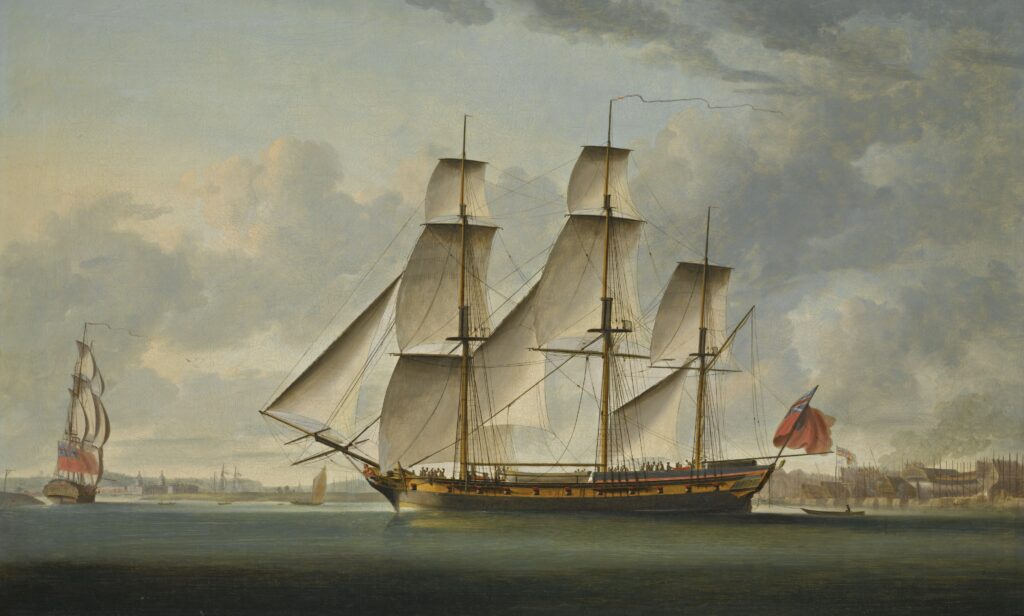
The ship that would become the Sydney Cove began life in India as the Begum Shaw, a sturdy merchant vessel built for coastal trade. Around 30 metres long and of roughly 250 to 300 tons, she had spent years plying routes across the Persian Gulf, India and the Red Sea. After being purchased by the Calcutta trading house of Campbell and Clark, she was refitted and copper-sheathed, then renamed the Sydney Cove in honour of her intended destination.
The venture was speculative. Port Jackson was still a tiny settlement with limited capacity to pay for imports. But opportunity often favours those willing to take risks. If the voyage succeeded, profitable trade between India and the fledgling colony could follow.
On 10 November 1796, Captain Gavin Hamilton, a 37-year-old Scotsman with considerable maritime experience, guided the vessel down the treacherous Hooghly River and into the Bay of Bengal. On board were about 53 men, including European officers and a large contingent of Bengali sailors, known as Lascars. The cargo comprised thousands of gallons of spirits, rice, tobacco, textiles, ceramics, sugar and livestock, destined for the growing colony.
The first month passed without serious incident, but as the vessel pushed further south-east into the higher latitudes, deteriorating weather began to test both the ship and her crew.
Disaster in the Roaring Forties
As the vessel pushed south-east into colder waters, severe weather battered the ship. On 13 December, a leak developed in the starboard bow. Water poured through damaged planking below the waterline at a rate of six inches per hour. The crew fought desperately to keep the vessel afloat.
Traditional emergency measures were employed. The hull was “fothered”, a technique that involved dragging sailcloth beneath the ship to slow the inflow of water through damaged timbers. The effort reduced the leak but could not stop it.
Conditions worsened, and on 25 January 1797, during hurricane-force weather, Second Mate Leisham was swept from the topsail yard into the raging sea and lost. The crew could do nothing to save him.
By early February, the situation had grown desperate. The ship was sinking slowly but inexorably. Hamilton knew he would never reach Port Jackson in its current condition. His only hope was to find land before the ocean claimed the ship.
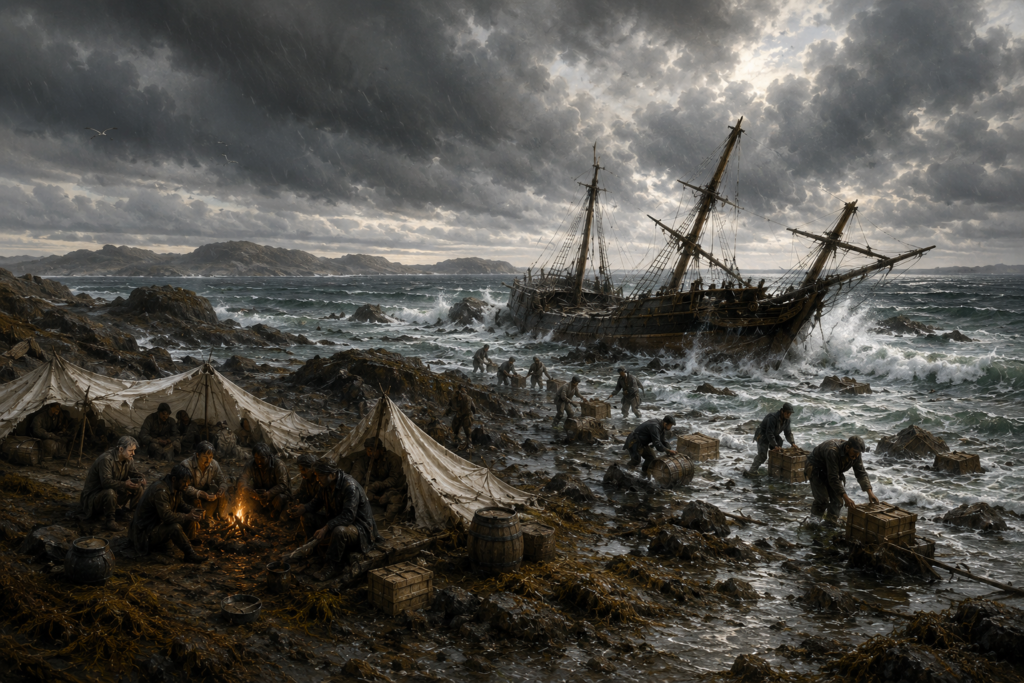
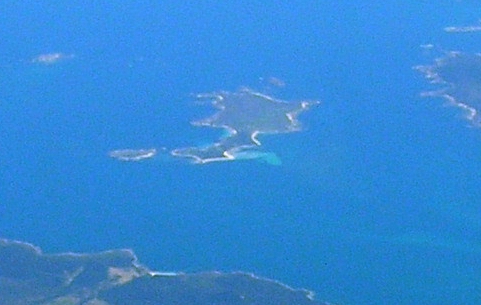
On 9 February 1797, after nearly three months at sea, the captain of the Sydney Cove was forced to run the ship aground off a tiny island in the Furneaux Group, a collection of islands off Tasmania’s north-east coast, some 1,000 kilometres from the vessel’s destination. Although the first recorded merchant shipwreck in Australian waters had occurred, all aboard had remarkably survived.
Preservation Island
Survival, however, was only the first challenge. Preservation Island was remote, windswept and isolated. Immediate rescue was impossible. The ship lay leaking offshore while its cargo gradually disappeared beneath the sea.
Captain Hamilton moved quickly. Water sources were sought and a well was dug. Salvage operations commenced and provisions were brought ashore and tents fashioned from sails provided rudimentary shelter.
But the outlook was grim, as food supplies were scarce. Each man received only a teacupful of rice a day. As winter approached, the weather worsened. Torrential rain and cold winds lashed the camp. During a prolonged storm from late April to early May, the makeshift shelters were destroyed, leaving the survivors exposed to the elements.
However, the castaways did not succumb to despair. Hamilton knew that waiting indefinitely for rescue was not an option. A message had to reach Sydney and a longboat was prepared.
A voyage for help
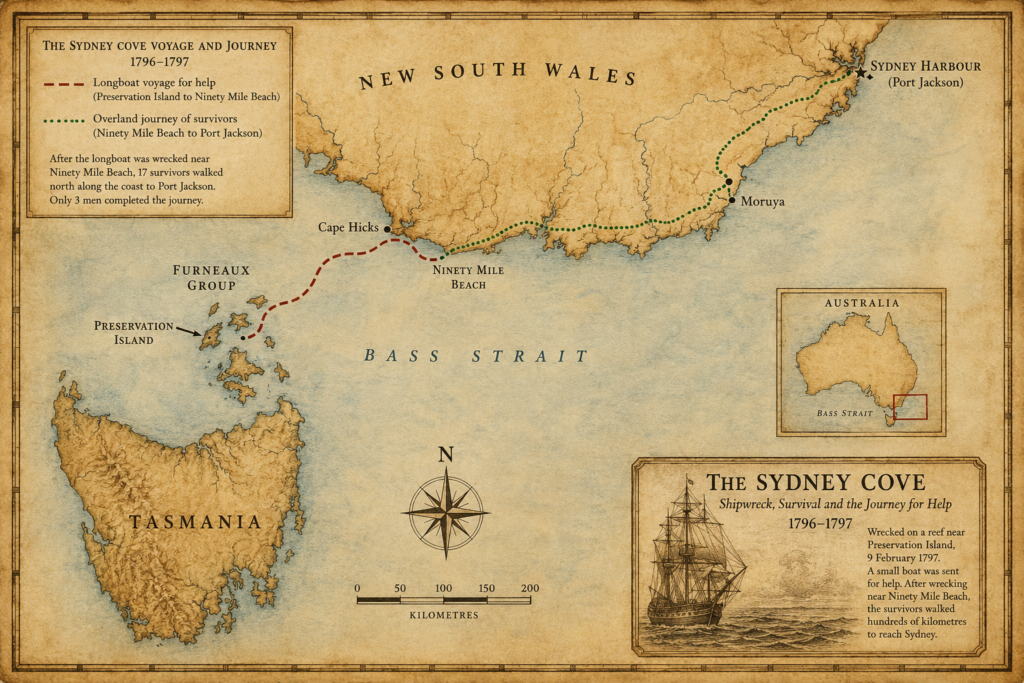
On 27 February 1797, Chief Mate Hugh Thompson, assistant supercargo William Clark and fifteen carefully selected crew members departed Preservation Island in the ship’s longboat, hoping to reach Port Jackson and arrange a rescue for those left behind.
The overloaded open boat offered little protection from the weather as the men made their way northward towards the coast of present-day Victoria. They carried limited provisions and navigational equipment, while much of the coastline ahead remained poorly known to Europeans. Their progress depended upon favourable weather, opportunities to replenish supplies and their ability to find safe landing places along an exposed shore. Back on Preservation Island, Captain Hamilton and the remaining castaways faced dwindling food supplies and the approaching winter, making the success of the expedition increasingly urgent.
The party worked its way along the Victorian coast, keeping close to shore where possible. Progress was slow and physically demanding, with sudden squalls and heavy seas presenting constant hazards to the small vessel. After surviving the loss of the Sydney Cove, the men were now attempting another lengthy voyage in a boat never intended for such an undertaking.
Their progress came to an abrupt end near the eastern extremity of what is now known as Ninety Mile Beach, where the longboat was wrecked, leaving seventeen men stranded on an unfamiliar coastline with little equipment and no immediate prospect of rescue.
Somewhere to the north lay Botany Bay and Port Jackson. Between them and safety stretched hundreds of kilometres of beaches, rivers, forests and headlands inhabited by Aboriginal peoples whose lands and languages were largely unknown to the Europeans. With few alternatives available, the men decided to continue on foot.
Into the unknown
Today, travellers can drive from eastern Victoria to Sydney in a day. In 1797, however, the coastline between those locations was almost entirely unknown to Europeans. The 17 survivors had only a vague understanding of the distance they needed to cover, and their maps provided little guidance beyond Point Hicks. They were entering country that none of them had previously traversed.
The journey took them along exposed beaches, across rivers and headlands and through coastal forests where progress could be painfully slow. Many travelled barefoot, their clothing deteriorating as the weeks passed. Food was scarce and the men relied upon whatever they could gather or obtain along the way. Their greatest uncertainty concerned the people they might encounter, for European knowledge of Aboriginal Australia remained limited and frequently distorted by fear and misunderstanding.
As they travelled north, the castaways passed through the territories of numerous Aboriginal nations, including the Gunai/Kurnai, Bidawal, Yuin and Dharawal peoples, whose ancestors had occupied and managed these landscapes for thousands of years. The surviving accounts describe repeated encounters with local communities, many of whom provided food, directed the travellers towards water and helped them find suitable routes through unfamiliar country.
Fish and shellfish were particularly important to the exhausted men, whose meagre provisions could not sustain them indefinitely. Aboriginal people shared food and knowledge of local resources, sometimes allowing the strangers to remain near their camps. These encounters provided the travellers with opportunities to rest and recover before continuing north.
Relations were not always harmonious. Language barriers, cultural misunderstandings and uncertainty about one another’s intentions occasionally produced tension. Nevertheless, the assistance recorded during the journey reveals how heavily the castaways depended upon the goodwill and practical knowledge of the people whose country they were crossing.
Their experiences provide one of the earliest surviving European accounts of sustained contact with Aboriginal communities along Australia’s south-eastern coastline, offering valuable glimpses of life in these regions before colonial settlement extended beyond the Sydney district.
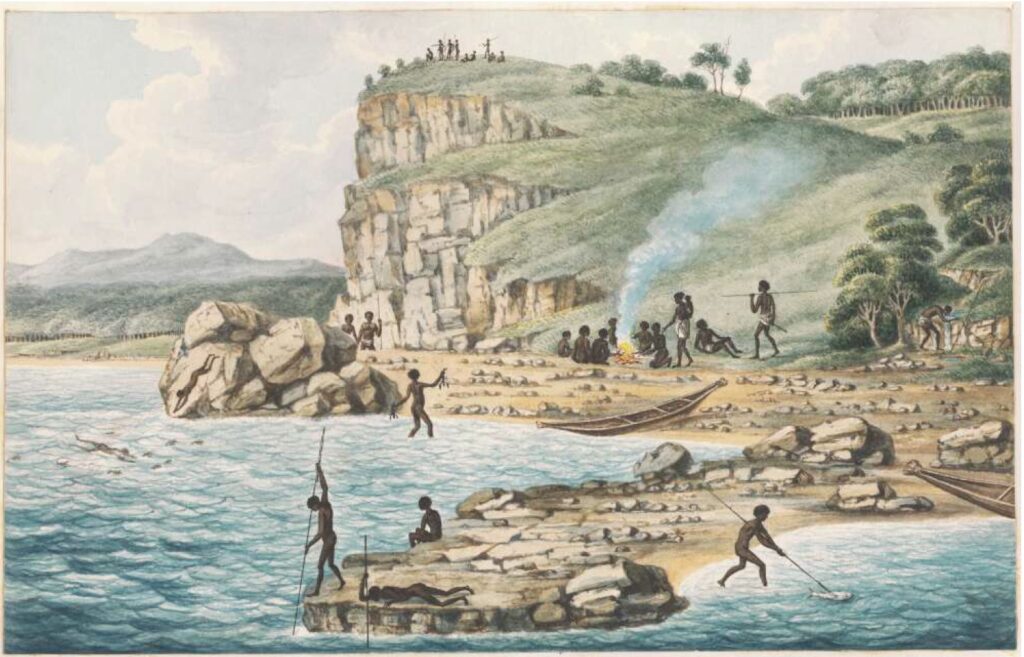
Rather than a story dominated by conflict, much of the journey was characterised by assistance, curiosity and coexistence. Again and again, Aboriginal people provided food, guidance and hospitality. The castaways relied heavily on this support. Without it, their chances of survival would have been negligible.
The records describe repeated encounters in which local people shared fish and shellfish, directed travellers to water and safe routes and tolerated the presence of strangers passing through their country.
This does not mean every interaction was harmonious. Tensions existed, misunderstandings occurred and fear was often present on both sides. But the broader pattern is unmistakable. Far from traversing an empty wilderness, the survivors moved through a complex human landscape, inhabited by people who knew the country intimately and who frequently chose cooperation over hostility.
It remains one of the earliest documented instances of sustained contact between Europeans and Aboriginal peoples along Australia’s south-eastern coast.
Attrition and determination
The journey took a devastating toll. By the time the survivors reached the vicinity of present-day Moruya, the physical condition of many of the men had deteriorated alarmingly. For weeks, they had survived on little more than meagre rice rations occasionally supplemented by shellfish, oysters, mussels and fish generously provided by Aboriginal communities encountered along the way. Fresh water was often difficult to obtain and every kilometre had been travelled on foot through unfamiliar country.
From the outset, there had also been an unavoidable tension between the priorities of the expedition’s two leaders. William Clark, representing the trading interests of Campbell and Clark, was determined to reach Port Jackson as quickly as possible so that Captain Hamilton could be rescued and the valuable cargo salvaged. Hugh Thompson, on the other hand, regarded his foremost duty as safely delivering Hamilton’s letter while preserving the welfare of the men placed in his charge.
As food supplies dwindled, these competing priorities increasingly clashed. Clark’s determination to maintain a solid pace left little opportunity for the Bengali Lascars to rest or forage. One by one, they became so weakened that they could scarcely continue. The main party was repeatedly forced to stop and wait for stragglers to catch up, which in turn frustrated Clark’s desire to press on.
Starvation itself may not have been the only enemy. Some of the men, desperate for food and unfamiliar with Australian plants, are thought to have consumed berries and other native vegetation. The tantalising red fruits of the burrawang, for example, are highly toxic if improperly prepared. It is entirely possible that some of the men were not merely starving but suffering from severe food poisoning as well.
Eventually, the expedition began to fragment. Some of the weakest Lascars could no longer keep pace. Faced with the grim prospect of collapsing on the track and slowing the entire party, several chose to remain behind with local Aboriginal communities who had shown them remarkable generosity and compassion throughout the journey. Others simply disappeared from the historical record, their ultimate fate unknown. Whether they succumbed to exhaustion, died from illness or found refuge among local communities remains one of the enduring mysteries of the Sydney Cove story.
The losses continued. As the party entered the country south of Port Jackson, the strain proved too much even for its leaders. Sometime between 12 and 15 May 1797, Chief Mate Hugh Thompson died, possibly near present-day Clifton south of Sydney. His cause of death remains unknown. Months later, George Bass and William Clark are believed to have located skeletal remains near Coalcliff that were thought to be those of Thompson and the ship’s carpenter.
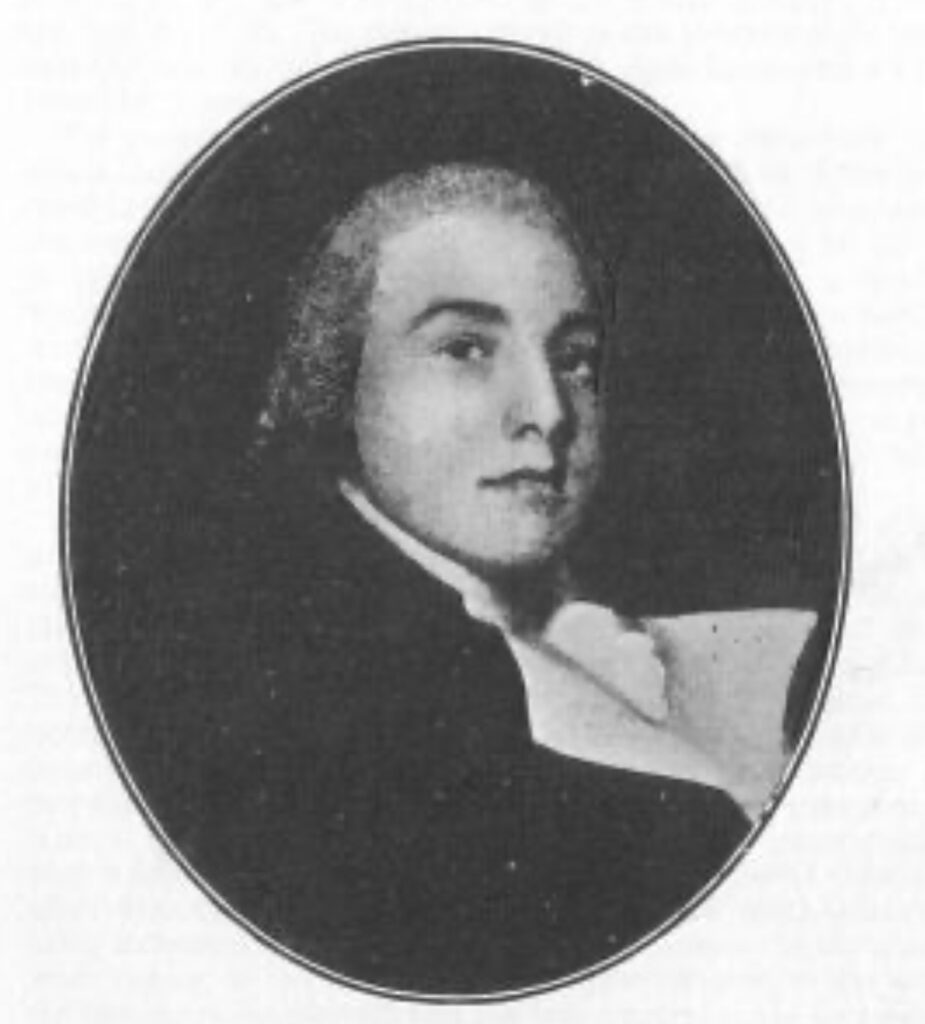
The death of Thompson was a particularly cruel blow. He had been specially selected by Captain Hamilton to command the rescue mission for his leadership and close affinity with the crew. Throughout the ordeal, he had consistently sought to balance the mission’s urgency with his responsibility to safeguard his men’s lives.
In the end, only three members of the original party completed the journey. William Clark, accompanied by two surviving companions, pressed on towards Sydney. By now, they were emaciated, exhausted and carrying little more than Captain Hamilton’s desperate plea for assistance. After almost three months of walking through country largely unknown to Europeans, they finally encountered fishermen near Wattamolla, south of Botany Bay, who carried them by boat to Port Jackson. Their ordeal was over.
Of the 17 brave souls who had departed Preservation Island with such hope and determination, only three reached their destination.
News reaches Sydney
The arrival of William Clark and his two surviving companions at Port Jackson on 16 May 1797 caused a sensation. The three men were scarcely recognisable. After nearly three months of walking from the coast of present-day Victoria, they were exhausted, emaciated and dressed in little more than tattered remnants of their clothing. Despite their condition, Clark had succeeded in preserving the most important item entrusted to him — Captain Hamilton’s letter requesting assistance for those still stranded on the remote island at the eastern entrance to Bass Strait.
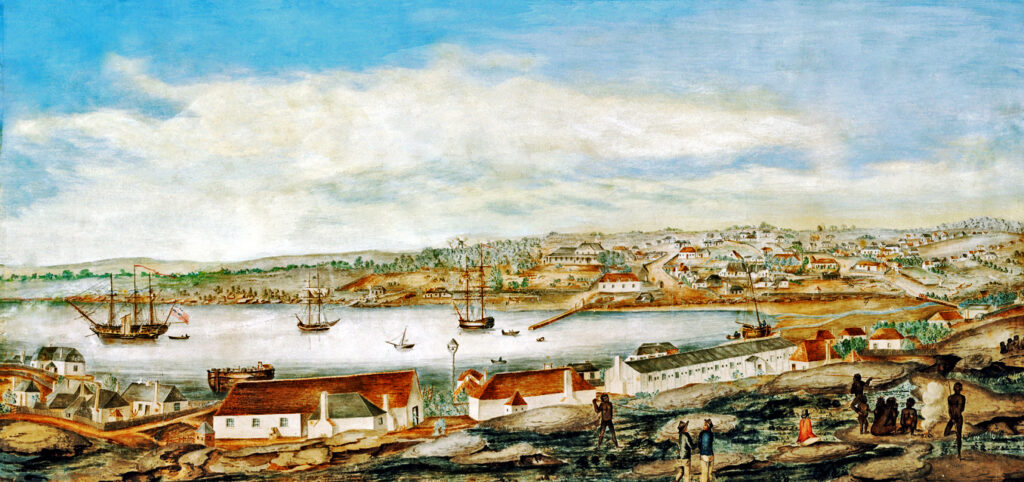
Governor John Hunter listened intently as the survivors recounted their extraordinary ordeal. Their story was almost beyond belief. A merchant vessel carrying a valuable cargo had been wrecked. More than 30 survivors remained marooned on an isolated island with limited food and inadequate shelter. Winter was approaching rapidly and unless assistance arrived soon, many of them would almost certainly perish.
Hunter appreciated the urgency immediately. The Governor also recognised the broader significance of the information that Clark brought with him. The survivors had travelled through country almost entirely unknown to Europeans and had reported indications of a passage separating Van Diemen’s Land from the mainland. They had observed immense seal populations around the Bass Strait islands and even reported coal outcrops south of Port Jackson. Their experiences hinted at opportunities for trade, exploration and resource development that extended well beyond the immediate rescue mission.
Nevertheless, the pressing concern remained the lives of those still stranded. Plans for a rescue expedition commenced almost at once. Suitable vessels in the infant colony were few and resources were always limited. Eventually, the small sloop Eliza under the command of John Armstrong and the government schooner Francis were prepared for the voyage south. The rescue mission itself would prove far from straightforward. The waters of Bass Strait remained poorly charted, weather conditions were notoriously unpredictable and little was known about the precise location of Hamilton’s camp.
Meanwhile, life on the island had become increasingly desperate. Following the departure of Thompson and Clark’s longboat, Captain Hamilton and the remaining castaways continued salvaging whatever cargo they could recover from the wreck. The rice ration remained pitifully small and the weather deteriorated steadily. Constant gales, heavy rain and bitter cold transformed daily existence into a struggle for survival. During one prolonged storm between late April and early May, the tents fashioned from old sails were ripped to shreds, leaving the castaways exposed to the full force of the elements. Even maintaining a cooking fire became almost impossible.
Weeks passed with no sign of rescue. Then, on 8 June, hope briefly flared as a vessel appeared offshore. The castaways hurriedly launched a small boat and attempted to make contact. To their crushing disappointment, the ship sailed away and disappeared beyond the horizon. The emotional blow was immense. Having endured months of privation, many had come to believe that they had been forgotten entirely.
A few days later, salvation finally arrived. The rescue vessels entered the islands and made contact with the survivors. The relief among Hamilton’s party can scarcely be imagined. Four months earlier, they had escaped a sinking ship and struggled ashore with little idea of what lay ahead. Since then, they had endured hunger, exposure and uncertainty while entrusting their fate to a handful of men in an open boat.
The decision to send seventeen men in an open boat to seek assistance had finally achieved its purpose, although at a terrible cost. The remaining castaways boarded the rescue vessels and departed Preservation Island, where they had endured four months of hunger, exposure and uncertainty. The extraordinary chain of events set in motion by the loss of the Sydney Cove had claimed lives and inflicted great suffering, but it had also inadvertently expanded European understanding of south-eastern Australia and set the stage for further exploration of the mysterious waters that would soon become known as Bass Strait.
The discovery of Bass Strait
One of the enduring mysteries facing European navigators in the eighteenth century concerned the relationship between Van Diemen’s Land and mainland Australia. Was Tasmania connected to the continent, or was there a navigable passage between them? The events surrounding the Sydney Cove helped answer those questions.
Information gathered from the wreck, survivors’ accounts and subsequent rescue voyages contributed to growing awareness of a strait between Tasmania and the mainland. The Furneaux Islands became increasingly important staging points for sealers and navigators. George Bass and Matthew Flinders later built on these observations during their explorations.
Within a few years, Bass Strait would be formally recognised and the consequences were profound. Shipping routes shortened dramatically, trade increased and exploration accelerated. A shipwreck that began as a commercial disaster helped reshape Europeans’ understanding of Australia’s geography.
Archaeology beneath the waves
Two centuries later, Sydney Cove would once again capture public attention. The wreck was discovered in 1977 and became one of Australia’s most significant maritime archaeological sites. Archaeological investigations uncovered a remarkably rich collection of artefacts, offering unique insights into eighteenth-century trade, ship construction and daily life aboard merchant vessels.
Thousands of objects were recovered, including Chinese porcelain, glass bottles, ship fittings, rigging components, personal belongings and cargo remains. Together, they painted a vivid picture of the commercial networks linking India, China and the fledgling colony at Port Jackson.
The archaeology also highlighted the wreck’s broader significance. The Sydney Cove represented the intersection of global trade, colonial expansion and exploration at a formative moment in Australian history. Archaeologists came to regard it as one of the nation’s most important early colonial shipwreck sites.
The archaeological discoveries have greatly enriched our understanding of the Sydney Cove, revealing details of its cargo, construction and the trading networks connecting India with the fledgling colony at Port Jackson. However, the human experiences surrounding the wreck provide an equally valuable record of Australia’s earliest colonial years.
The 17 men who left Preservation Island in February 1797 had no intention of becoming explorers. Their immediate concern was reaching Sydney and arranging help for those they had left behind. When their longboat was wrecked on the Victorian coast, they were forced to undertake a journey through country almost entirely unknown to Europeans, encountering Aboriginal communities whose knowledge and assistance frequently sustained them. Fourteen of the seventeen failed to reach their destination, including Hugh Thompson, the officer entrusted with leading the expedition.
Their experiences also contributed to a growing European understanding of the south-eastern coastline, the existence of Bass Strait and the resources of the surrounding country. Much of this knowledge emerged from circumstances that none of the participants could have anticipated when the vessel departed Calcutta.
The story is particularly valuable for the glimpses it provides of early encounters between Aboriginal people and Europeans before colonial settlement had extended along much of the south-eastern coast. The assistance offered to the exhausted travellers forms an important part of that record, alongside the courage and determination of the men who struggled to reach Port Jackson.
The Sydney Cove had sailed from India on a speculative commercial venture. Its loss became part of Australia’s maritime history, but the experiences of those who survived the wreck gave the voyage a significance far beyond its original purpose.
I found this account fascinating. I am from the UK so knew very little about the Sydney Cove. Good to hear about positive interactions between Europeans and aboriginal groups they encountered.
I always find it amazing how brave and inventive original sea faring explorers were. Getting a sail around a ship to slow leaks while at sea always astonished me.
Another castaway story. Good stuff. It has some similarities to Finnigan, Pamphlet, Parsons (and Thompson), 1823.