
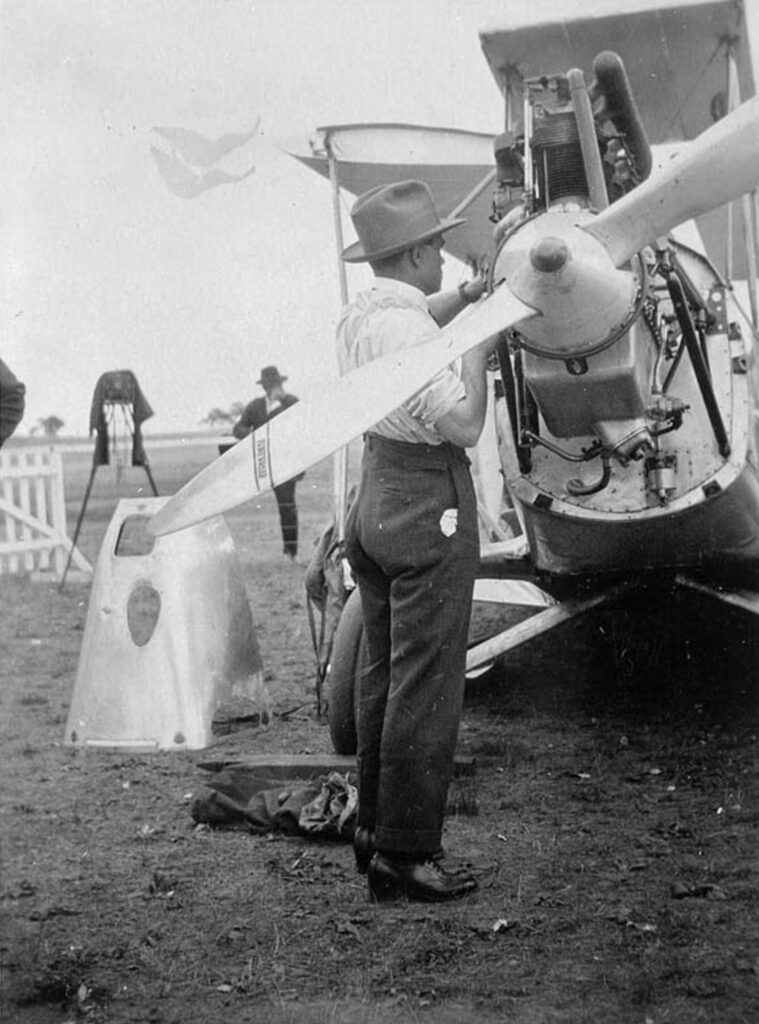
On most mornings at Mon Repos, the sea breeze still arrives much as it did more than a century ago. It begins as a faint stir over the Coral Sea before sweeping across the dunes and coastal flats east of Bundaberg. Pelicans glide effortlessly above the surf, gulls ride invisible currents and the long beach stretches away beneath an immense Queensland sky.
To most visitors, it is simply another beautiful stretch of coastline. For Herbert John Louis Hinkler, it was a classroom.
Long before newspapers around the world celebrated his achievements, before kings honoured him and governments praised him, and before he became one of the most famous aviators on Earth, a young Bundaberg boy stood on these beaches, studying the flight of birds and wondering whether humans could do the same.
It was an age when flight still belonged more to imagination than reality. The Wright Brothers had only recently demonstrated that powered flight was possible. Aircraft were fragile machines made from timber, fabric and wire. Most people regarded flying as a novelty or a dangerous curiosity. However, around the world, a handful of dreamers believed aviation would transform civilisation. One of those dreamers lived in Bundaberg.
Bert Hinkler was born on 8 December 1892, entering a world undergoing extraordinary change. Railways were expanding across continents, steamships connected distant ports, electricity was illuminating cities and scientific discoveries were reshaping everyday life. But Australia remained isolated from the world’s great centres. A voyage to Britain took weeks at sea and news travelled slowly. International travel was beyond the reach of most people.
For ambitious Australians, distance was a constant reality. Ironically, it would be distance itself that eventually made Bert Hinkler famous.
A Wide Bay dream
Growing up in Bundaberg, Hinkler showed a fascination with mechanics from an early age. He enjoyed understanding how things worked and had an instinctive talent for solving technical problems. At the same time, he was captivated by the natural world around him. The beaches and dunes of Mon Repos became a source of endless fascination. Watching seabirds soar and wheel above the ocean, he became convinced that the principles of their flight could be understood and applied.
While many other future aviators watched birds, few built flying machines as Hinkler did. By his late teens, he was designing and building gliders. Family members and friends helped transport the components to Mon Repos Beach, where steady sea breezes provided ideal conditions for experimentation. There, among the sand dunes east of Bundaberg, the young inventor tested increasingly sophisticated designs.
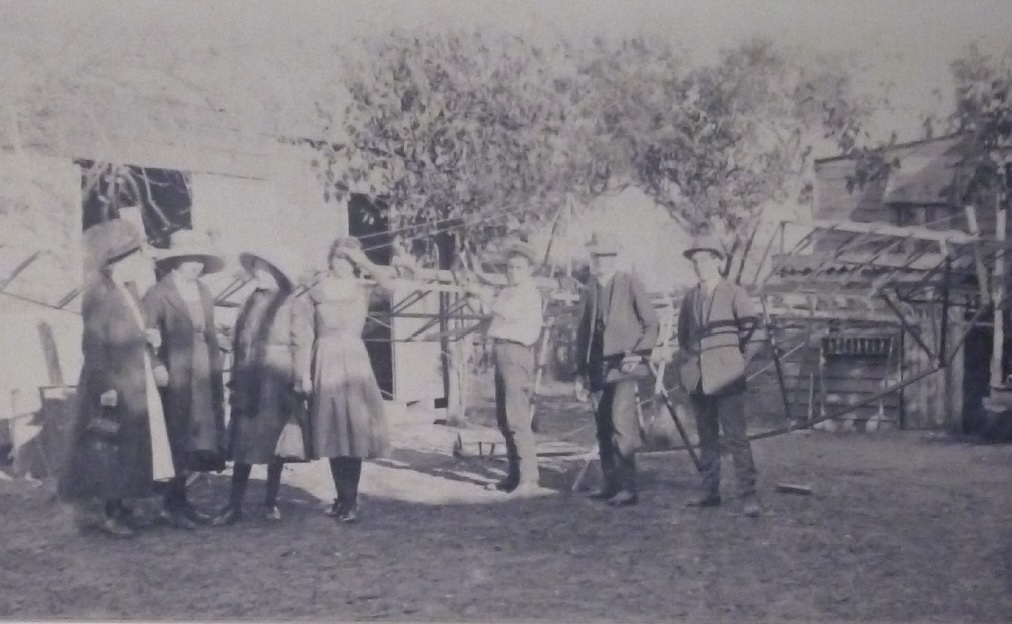
Success did not come immediately and early attempts failed. Others produced only brief hops above the sand. Nonetheless, each failure taught valuable lessons. Gradually, his understanding of aerodynamics improved and eventually, the glider flew.
The achievement attracted little attention beyond the local district, yet it was remarkable. Less than a decade after the Wright Brothers first took to the air at Kitty Hawk, a young man from Bundaberg was conducting successful glider experiments on the Queensland coast. The experience convinced him that his future lay in aviation. But Bundaberg offered few opportunities for a young man determined to fly.
The breakthrough came in 1912, when an itinerant aviation show visited Queensland. The famous American aviator Phillip “Wizard” Stone toured Australia, demonstrating his aircraft to enthusiastic crowds. Aviation displays were still a novelty and thousands attended simply to see a machine take off.
Hinkler was fascinated and, more importantly, knowledgeable. After observing problems with Stone’s aircraft, he reportedly suggested modifications that improved its performance. Impressed by the young Queenslander’s technical expertise, Stone offered him employment.
For Hinkler, it was the opportunity he had long been waiting for. Leaving Bundaberg behind, he entered the world of aviation and began learning from those helping to build a new industry.
The experience dramatically broadened his horizons. Aviation was advancing rapidly and Hinkler quickly recognised that the true centre of innovation lay overseas. If he wished to pursue a serious career in aviation, England was where he needed to be. In 1913, he travelled first to New Zealand and then to Britain.
It was a courageous decision. He had little money, few contacts and no guarantee of success. But, like many ambitious young Australians of the era, he was prepared to take risks in pursuit of opportunity.
England was a revelation. The aviation industry was expanding rapidly and aircraft manufacturers competed to improve their designs. Pilots tested increasingly capable machines and public fascination with flying was intense. Hinkler immersed himself in this world and secured employment with Sopwith Aviation, one of Britain’s leading aircraft manufacturers.
His mechanical skills quickly earned respect. Initially employed as a fitter and mechanic, he soon gained experience with some of the most advanced aircraft of the day. The timing proved fortunate, as Europe descended into war within months.
Learning to fly in a changing world
The First World War transformed aviation. Aircraft evolved from fragile experimental machines into essential military tools. Reconnaissance, aerial combat and bombing emerged during the conflict, and the pace of innovation accelerated dramatically.
Hinkler soon gained experience with some of the most advanced aircraft of the era. The timing proved significant as aviation was transformed from an experimental curiosity into a military necessity.
Hinkler enlisted in the Royal Naval Air Service and initially served as an Observer and Air Gunner, flying operational missions over France and Belgium. These early years exposed him to some of the most dangerous conditions of aerial warfare. Aircraft were fragile, navigation was rudimentary and air combat was still developing its tactics and traditions. Hinkler distinguished himself through courage and resourcefulness, qualities that would define the rest of his flying career.
In December 1917, his service was recognised with the Distinguished Service Medal. The decoration recognised not only personal bravery but also his growing reputation as an exceptionally capable airman. Rather than remaining solely in the observer role, Hinkler continued to broaden his skills and, in 1918, qualified as a pilot.
He was subsequently posted to No. 28 Squadron in Italy, where Allied forces were fighting Austria-Hungary in the war’s final stages. Flying above the mountains, valleys and battlefields of northern Italy posed a different set of challenges from those he had faced over France and Belgium. The experience further sharpened his skills as an aviator and exposed him to long-distance flying over difficult terrain. By the time the war ended, Hinkler had evolved from a mechanically gifted young Queenslander into a highly experienced military aviator with a reputation for technical competence, courage and innovation.
Those who survived the war emerged with extraordinary skills. Hinkler not only survived but also thrived, earning a reputation for technical competence, courage and innovation. During one mission, he reportedly improvised a method to drop bombs by hand after mechanical failures left conventional equipment unusable. Such stories reinforced his growing reputation as a resourceful and determined aviator.
When the war ended in 1918, aviation entered what historians now call the “Golden Age of Flight”. Across the world, pilots sought new records and pushed into new frontiers. Long-distance flights captured the public imagination, newspapers devoted extensive coverage to aviation achievements and aviators became international celebrities.
The names remain familiar today — Charles Lindbergh, Amy Johnson, Wiley Post, Charles Kingsford Smith, Charles Ulm, Ross Smith, Jean Batten. Among these celebrated figures stood Bert Hinkler. What distinguished him from many of his contemporaries was his preference for flying solo.
While others relied on crews, navigators and large aircraft, Hinkler often preferred small machines and solo flights. He had extraordinary confidence in his abilities and was willing to accept risks many considered unreasonable.
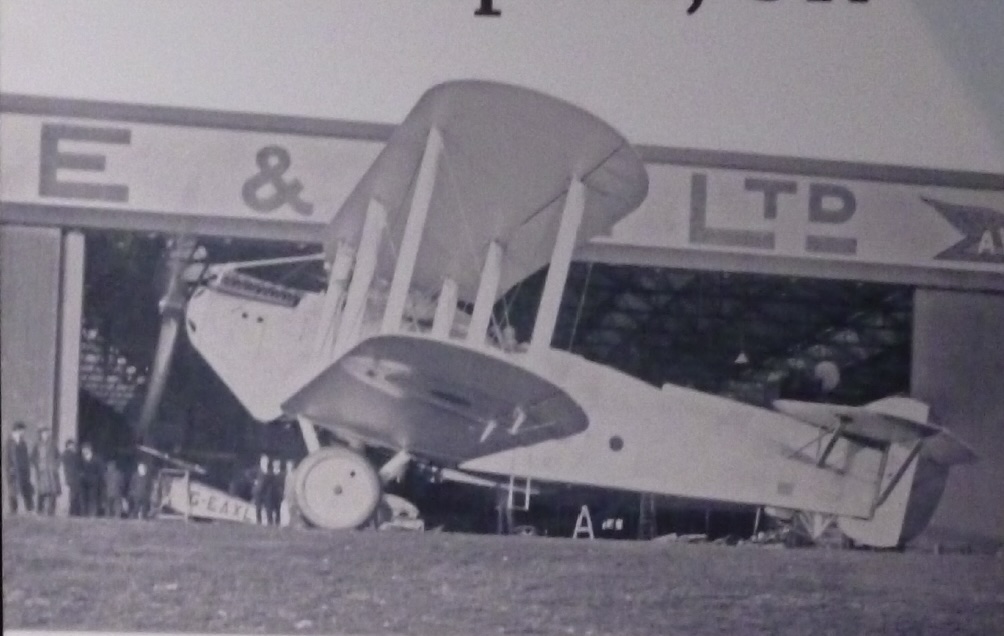
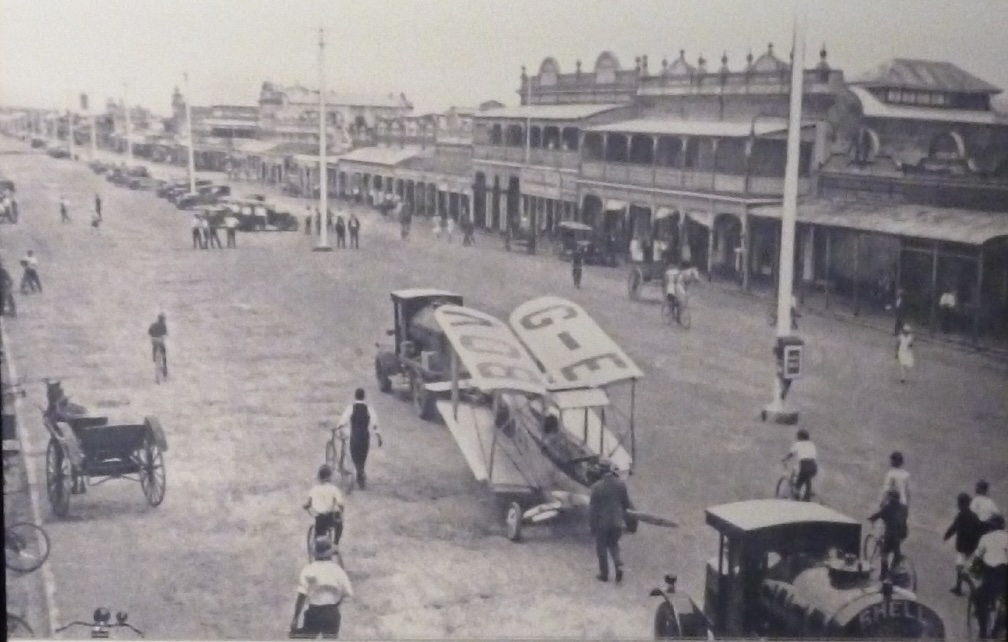
The results were remarkable. In 1920, he flew from London to Turin in a small aircraft, setting a new long-distance record. The feat demonstrated both his flying skill and the growing capabilities of aviation technology. The following year, he set another record that resonated even more strongly with Australians. Departing Sydney in April 1921 in a tiny Avro Baby aircraft, Hinkler set course for Queensland.
Flying conditions were far from ideal. Pilots of the era relied on maps, railway lines, rivers and landmarks. Engines failed with alarming regularity and landing grounds were often little more than paddocks. Nevertheless, Hinkler pressed northward. Following the Great Dividing Range, he crossed into Queensland, then turned towards the Wide Bay district. As Bundaberg came into view, he flew over the town and circled the family home. His parents had not seen him for years.
According to local accounts, his father was in town when he spotted the aircraft overhead and hurried home. His mother reportedly burst into tears upon realising her son was flying above the house. Hinkler dipped low, greeted her from the cockpit, then continued to his landing site. The story became part of Bundaberg folklore.
The flight itself was extraordinary. Covering the distance from Sydney to Bundaberg in just over eight hours, Hinkler set a new world record and demonstrated that aviation was beginning to conquer Australia’s vast distances. The local boy had returned home a hero. He was only beginning to establish himself on the world stage.
Throughout the 1920s, he worked extensively as a test pilot for Avro. This aspect of his career receives less attention than his record flights, but it was equally important. Test pilots held one of the most dangerous roles in aviation.
Every new aircraft carried unknown risks. Structural weaknesses, engine failures and design flaws could prove fatal. Test pilots were responsible for uncovering these problems before aircraft entered service and Hinkler excelled.
His technical knowledge enabled him to understand aircraft in ways few pilots could. He flew everything from racing aircraft to giant experimental bombers. Colleagues respected his ability to identify faults and assess performance. This knowledge showed he was not merely a pilot. He was an engineer in the cockpit and his reputation continued to grow.
Then came the flight that would make him famous worldwide.
The man who shrank the world
The challenge was simple to describe and extraordinarily difficult to achieve. Fly from England to Australia alone.
The route stretched across Europe, the Middle East, India and Southeast Asia. Weather conditions varied dramatically and navigation remained difficult. Suitable airfields were often scarce and mechanical assistance could not always be guaranteed. Previous attempts had required crews and extensive support, but Hinkler intended to do it alone.
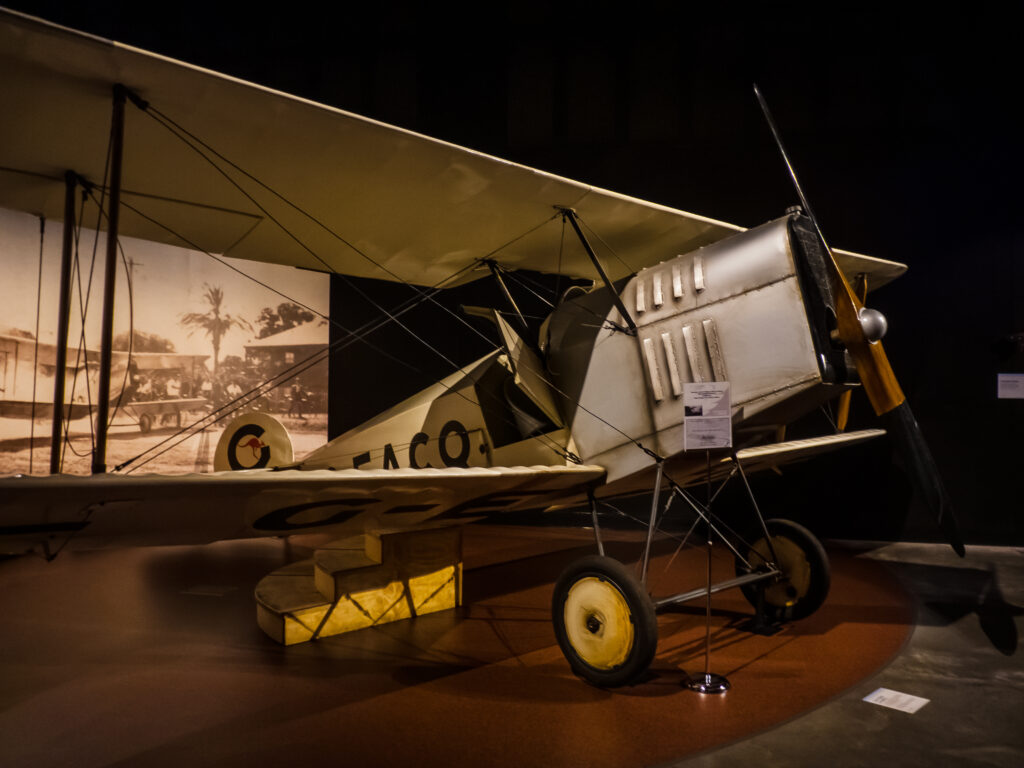
On 7 February 1928, he departed England in an Avro Avian biplane. The aircraft was small, lightweight and exposed to the elements. Compared with modern aircraft, it was primitive, but Hinkler trusted both the machine and his own abilities.
Over the following days, he crossed continents. He flew above snow-covered mountains, deserts, jungles and oceans. He navigated through unfamiliar landscapes and changing weather systems. Every landing brought new challenges and every take-off carried new risks.
The world watched and as reports of his progress reached newspapers, public interest intensified. Readers followed his journey across Europe and Asia. The possibility that a single pilot might fly from England to Australia in little more than two weeks captured imaginations everywhere.
On 22 February 1928, Hinkler landed in Darwin. The achievement was extraordinary. He had reduced the England-Australia record dramatically and demonstrated that long-distance aviation had entered a new era. The journey took just over 15 days. Newspapers celebrated the feat, with one headline christening him “Hustling Hinkler.” And the nickname endured.
More importantly, the flight transformed public perceptions of distance. Australia no longer seemed impossibly remote as aviation promised to connect continents in ways previously unimaginable.
Today, when international flights are routine, it can be difficult to appreciate the significance of Hinkler’s achievement. In 1928, his flight helped convince governments, investors and the public that aviation represented the future of long-distance travel. In many respects, he helped shrink the world.
Comparisons with Charles Kingsford Smith are inevitable. Both men became aviation legends, both inspired Australians and both demonstrated extraordinary courage, even though their achievements reflected different strengths.
Kingsford Smith excelled in large-scale expeditions involving crews and extensive planning. His trans-Pacific flight aboard Southern Cross remains one of aviation’s greatest accomplishments.
However, Hinkler represented something different. He embodied the solitary aviator confronting immense challenges alone. If Kingsford Smith was aviation’s great captain, Hinkler was its lone adventurer. Neither diminished the achievements of the other. Together, they placed Australia at the forefront of world aviation.
For Hinkler, however, the quest for new challenges never ended. In 1931, he completed another remarkable achievement, becoming the first person to fly solo across the South Atlantic. Once again, he demonstrated the skill, endurance and determination that had become his trademarks.
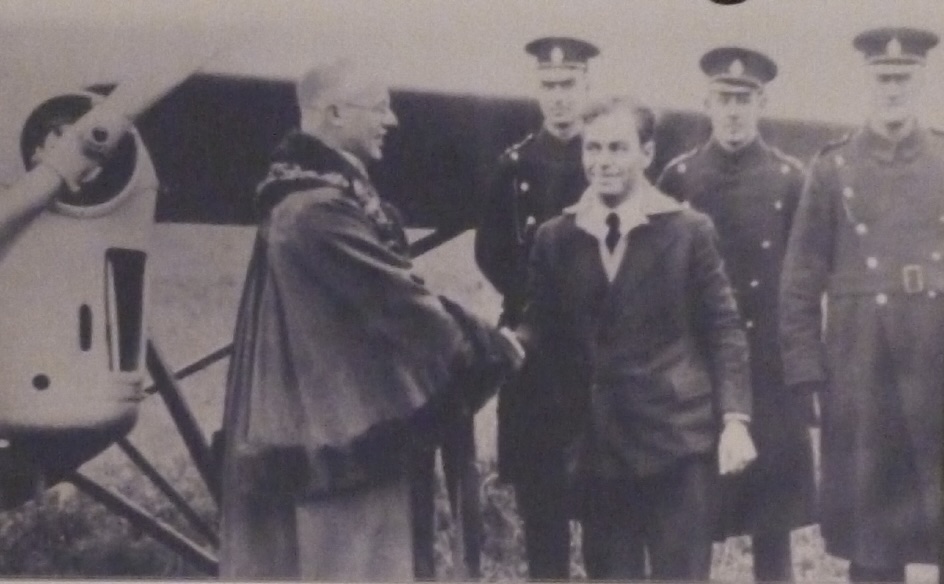
By this stage, he stood among the world’s elite aviators, with his reputation extending far beyond Australia. He was celebrated throughout Europe and North America. A boy from Bundaberg had become one of the most famous pilots alive.
Notwithstanding those achievements, aviation remained dangerous. Despite advances in technology, aircraft were still vulnerable to weather, mechanical failures and navigational errors. Every long-distance flight involved significant risk. Even though Hinkler understood this better than most, it did not stop him.
The last flight
What is often overlooked is that Hinkler’s final flight was not simply another record attempt. By 1932–33, he was increasingly concerned about remaining relevant in an aviation world that was changing rapidly. The era of the lone pioneer was beginning to give way to commercial aviation. Airlines were growing, aircraft were becoming larger and more reliable, and aviation records that once captivated the public were becoming harder to achieve. Hinkler had built his reputation by pushing boundaries and he was already contemplating new ways to demonstrate what aircraft could accomplish.
By late 1932, he had developed a plan to fly once more from England to Australia. The route was familiar, but the objective was ambitious. He hoped to establish a new record and further demonstrate the practicality of long-distance air travel. True to form, he intended to undertake much of the journey alone and with minimal fuss. The flight reflected the same qualities that had defined his entire career, such as independence, confidence in his own judgement and a willingness to accept risks that others might avoid.
On 7 January 1933, Hinkler departed England in his Puss Moth, a modern high-wing monoplane that represented a significant advance over the fragile biplanes of the 1920s. Friends and supporters expected another successful journey. After all, this was Bert Hinkler. He had crossed continents, flown the South Atlantic alone and repeatedly succeeded where others hesitated to try.
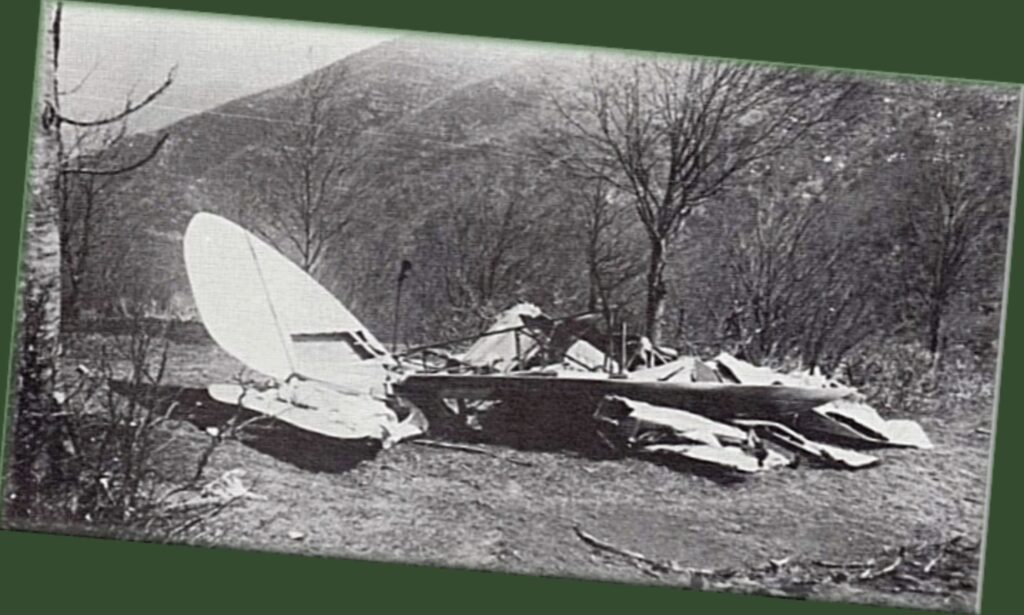
The flight proceeded normally across Europe until poor winter weather set in over northern Italy. Conditions in the Apennine Mountains were deteriorating rapidly. Snow, clouds and strong winds created a dangerous environment for any pilot, particularly one navigating without the sophisticated instruments available today. At some point, Hinkler encountered severe weather and became disoriented among the mountains south-east of Florence.
When he failed to arrive at subsequent destinations, concern quickly mounted. Search efforts began, but winter conditions hampered attempts to locate him. For several anxious days, the aviation world waited for news. In Australia, newspaper readers followed developments closely, hoping that the famous Bundaberg flyer had merely been delayed.
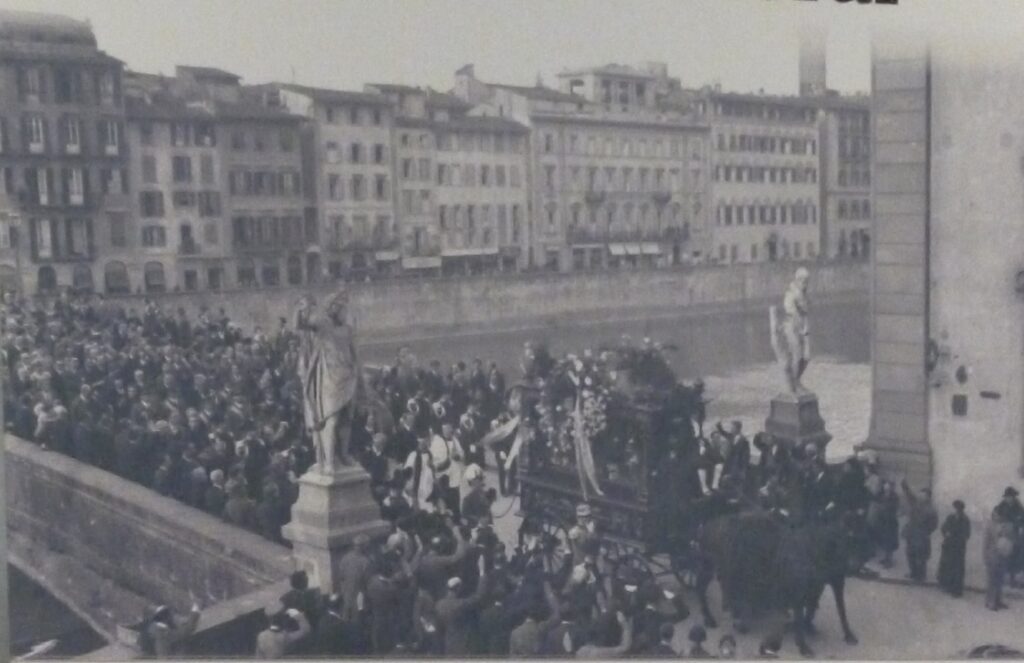
The reality proved far more tragic. Several weeks later, a local shepherd discovered the wreckage of Hinkler’s aircraft high in the mountains near Pratomagno in Tuscany. The aircraft had struck the mountainside during poor visibility. Hinkler’s body was found some distance from the wreckage, suggesting he had survived the initial impact only briefly before succumbing to his injuries and exposure. He was 40 years old
Bundaberg’s place in aviation history
There was a cruel irony in the circumstances of his death. Bert Hinkler had successfully crossed deserts, oceans and continents. He had survived wartime flying, mechanical failures and some of the most demanding long-distance flights ever attempted. But his life ended not over some remote ocean or tropical wilderness, but in the mountains of Italy, only a short distance from the continent where his aviation career had begun two decades earlier.
For Bundaberg, the loss was deeply personal. The boy who had once launched homemade gliders from the dunes at Mon Repos had become one of the most famous aviators in the world, only to be lost while still pursuing new horizons. His death marked the end of a remarkable chapter in aviation history, but it did little to diminish his reputation. If anything, it cemented his status as one of the last great pioneers of the heroic age of flight.
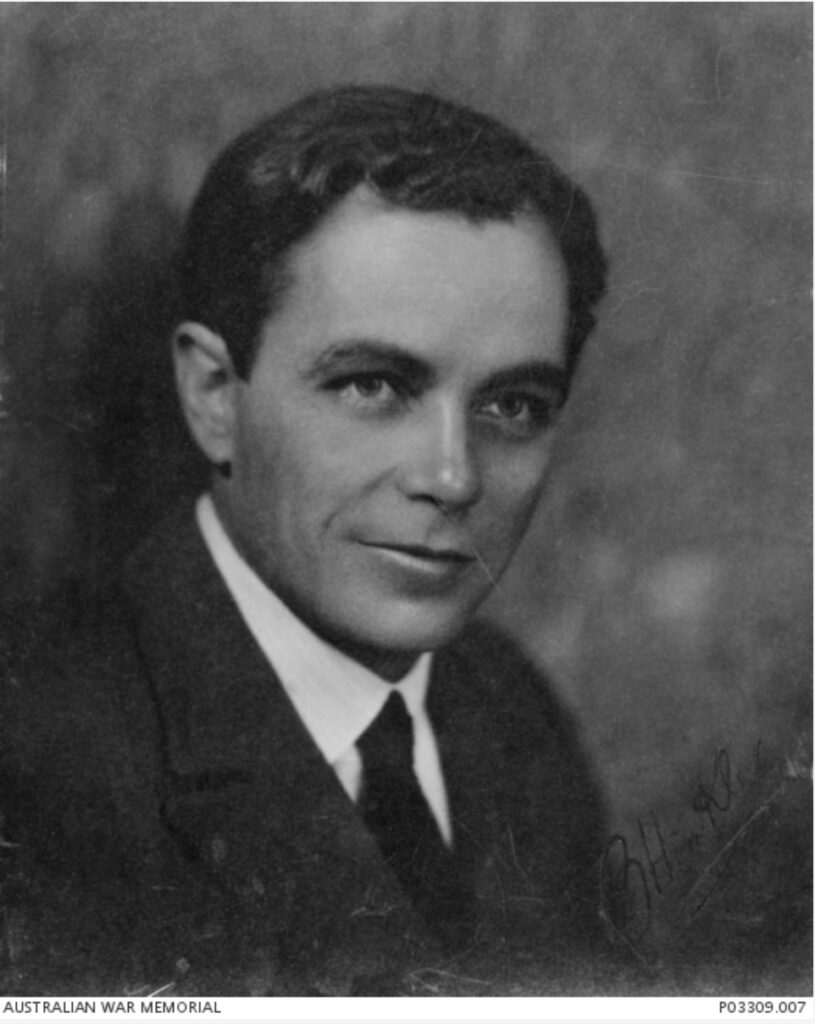
His death added a tragic dimension to an already remarkable story. Like many pioneers, he paid the ultimate price for the very pursuit that defined his life.
More than 90 years later, Bert Hinkler remains one of the most significant figures in Australian aviation history. His achievements extended far beyond record-breaking flights. He not only demonstrated what aviation could become but also helped prove that continents could be linked by air. He showed that determination, technical skill and courage could overcome obstacles once thought insurmountable.
For Bundaberg and the wider Wide Bay region, his story holds particular significance. Hinkler never forgot where he came from. The district shaped his character. The beaches of Mon Repos inspired his earliest experiments and the curiosity that eventually carried him across oceans first emerged in the landscapes of coastal Queensland.
Today, visitors can explore the Hinkler Hall of Aviation in Bundaberg and learn about the life of the region’s most famous son. While the museum provides an excellent historical account of his aviation career, it tells only part of the story. The rest is written across the landscape itself. It lingers in the dunes of Mon Repos, where a young man once launched homemade gliders into the sea breeze. It endures in the memory of a community that watched one of its own rise from a local experimenter to an international celebrity.
And, more importantly, it endures in the broader history of aviation. When historians discuss the great pioneers of the Golden Age of Flight, the names of Lindbergh, Kingsford Smith and Amy Johnson rightly command attention. Bert Hinkler belongs in that company. His achievements were no less daring and his influence no less significant.
Indeed, I think there is a strong case that Hinkler was among the most versatile aviators of his generation. He was a designer, mechanic, engineer, test pilot, air racer and record-breaker. Few of his contemporaries could match his breadth of experience. While others specialised, Hinkler seemed capable of mastering every aspect of aviation.
Perhaps that is the most remarkable aspect of his story. At a time when Australia seemed distant from the rest of the world, a boy from Bundaberg helped bring the world closer. He did not merely cross great distances, he changed how people thought about them.
The sea breeze still blows across Mon Repos, pelicans still glide above the shoreline and visitors still walk the beaches where a young Bert Hinkler studied birds in flight and dreamed of taking to the air himself. More than a century later, those dreams still resonate.
For Bundaberg, there is no doubt he remains far more than a famous aviator. He proves that remarkable achievements can emerge from unexpected places. In an age when aviation was still in its infancy, a young man from the Wide Bay district helped redefine what was possible.
In doing so, Bert Hinkler earned his place among aviation’s giants and secured a legacy that continues to inspire long after the roar of his engines faded from the Queensland sky.
A great read Robert, once again you have provided me with an itinerary for our next trip to Qld.
Nice piece Robert on our local boy. I recall as a kid visiting the Qld Museum many times to see his baby plane. Is this the one now in the Mon Repos museum or is it buried somewhere in a Brisbane warehouse?
Ian, it is on display at the Hinkler Hall of Aviation in Bundaberg (not Mon Repos), on loan apparently, from the Queensland Museum.
Thanks
Thanks, Rob. I knew of Hinkler, but of not what was his real claim to fame.
Allan .
Nice piece Robert. Intrigued by your closing suggestion “that [he] secured a legacy that continues to inspire.” What evidence is there that supports this?
Mark, that’s a fair point and perhaps I should have been more specific about what I meant by “continues to inspire”. I wasn’t suggesting that Hinkler has some easily measurable influence on today’s aviators. I meant that his achievements have continued to inspire people to preserve, commemorate and tell his story.
There is actually quite a trail of evidence. After his death, trees were planted at Australian schools in his memory and memorials were erected. Fifty years later, a group of Bundaberg people went to extraordinary lengths to save his English home from demolition, dismantling it brick by brick and bringing it back to Bundaberg. That community effort ultimately helped give us the Hinkler Hall of Aviation, which continues to introduce new generations to his achievements. His memory is preserved even in Italy, where a monument and walking trail now mark the mountain where he died.
Perhaps the strongest evidence I can provide is that, nearly a century after his great flights, we are still visiting his museum, writing about him and discussing what this quiet Bundaberg boy managed to achieve. I think it’s genuinely inspiring that a young man from regional Queensland, with no privileged background, taught himself about flight and eventually became one of the world’s great pioneering aviators.