The Postans of Poyungan: timber, tenacity and the cost of persistence

Some families pass silently through history, leaving little more than a name on a record or a fading photograph in an archive. Others become forever tied to the lands they helped shape, like the Postans, later Postan, whose story on Fraser Island is not just about timber extraction but also about endurance, ingenuity, conflict and ultimately reinvention.

Their journey begins not on Fraser Island but in Western Australia, where two young brothers, Andy and Laurie Postans, head off in search of work. Led north into Queensland’s timber and cane fields, they meet the Smith brothers, logging contractors on Fraser Island, and through that encounter find the opportunity that would shape their lives.

By 1935, Andy had crossed to the island, stepping into a world that was just as tough as it was full of promise.

Building a life in the forest

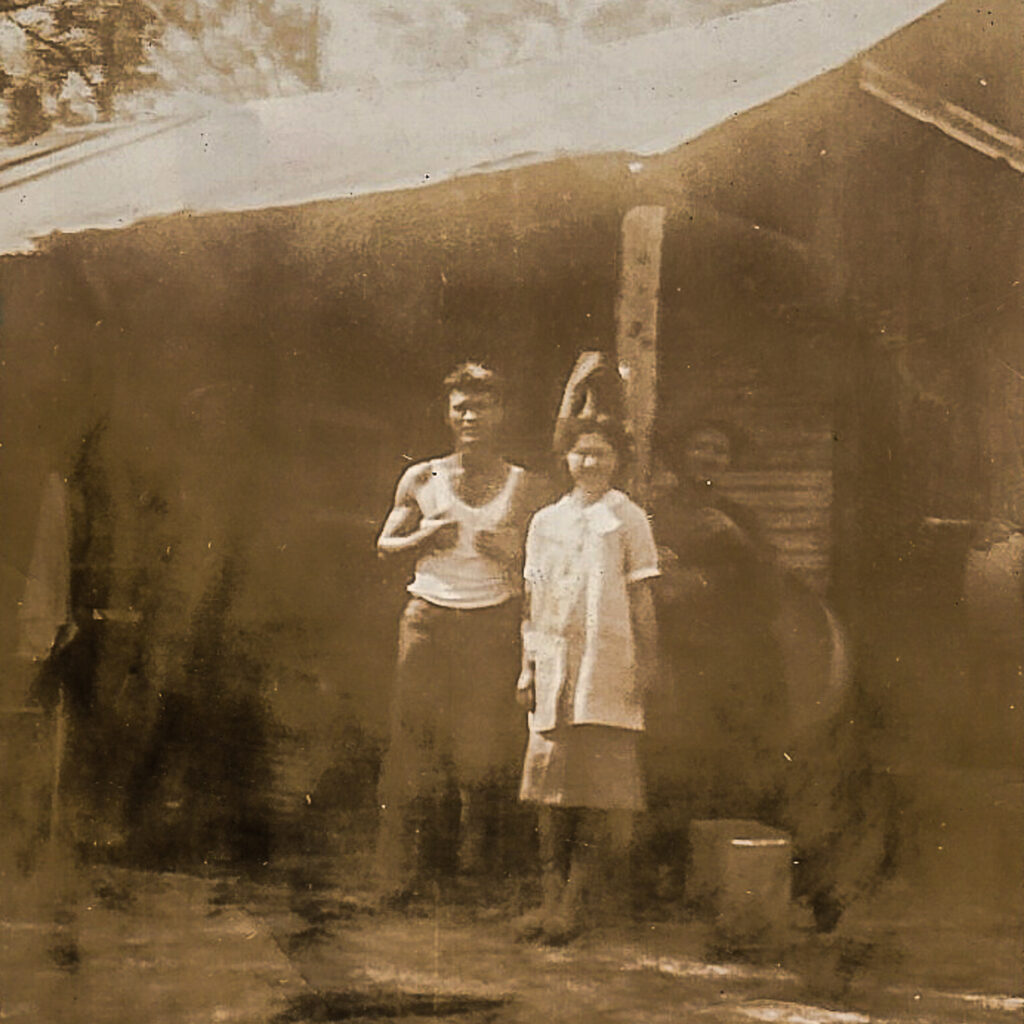
Fraser Island in the 1930s was no place for the faint-hearted. Camps were basic, carved out of dense forests and often located where work demanded rather than where comfort allowed. The Postans’ early camp, beside a swamp along the Smith–Poyungan Road, was plagued by mosquitoes to the point of misery. The solution was simple but effective. They moved to higher ground, where a breeze might provide some relief. From that elevated spot overlooking Poyungan Creek, the foundations of a family enterprise were laid.

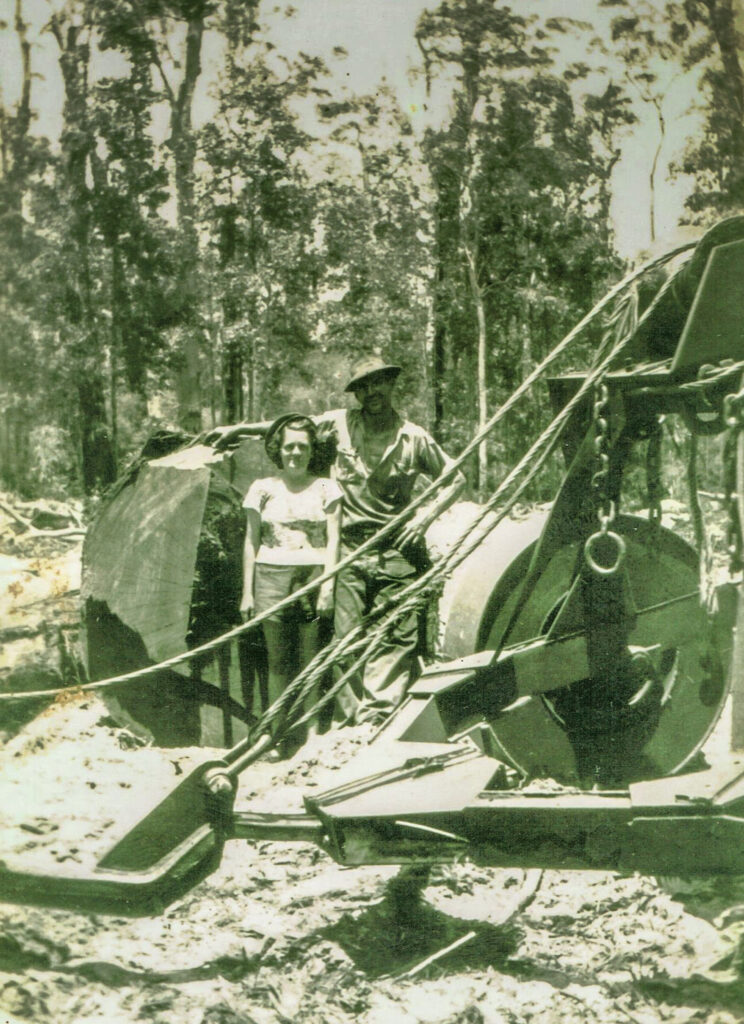
Andy and Girlie at their first camp on the Smith Poyungan Road. Photo courtesy David Postan.

Andy married Ruby, affectionately known as “Girlie”, in 1938. Their eldest son, Andrew, was born in 1939, and he lived on the island as a child. He moved to the mainland with his grandparents at Point Vernon for schooling at Pialba. The other siblings were Gordon, Gloria born in 1944 and Robert in 1946.

In 1940, Andy bought the Smiths’ business, machinery and contracts. While doing so, he accidentally dropped the ‘s’ from his surname when signing the paperwork and later formalised the change by deed poll. It was a minor administrative detail, but it marked the start of the Postan name that would become well known for logging on the island.

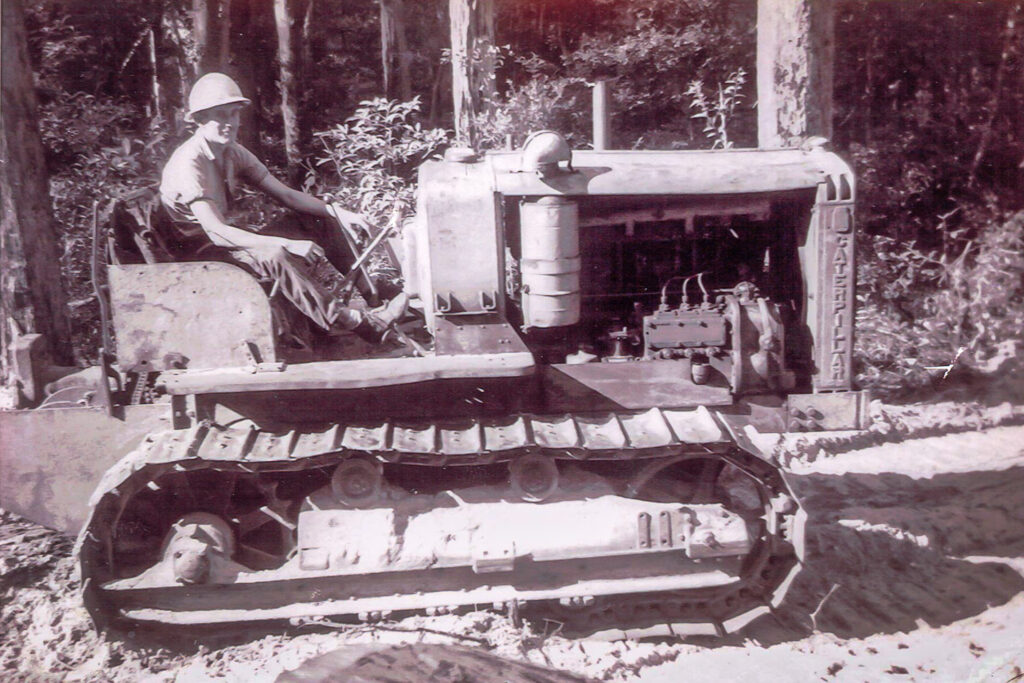
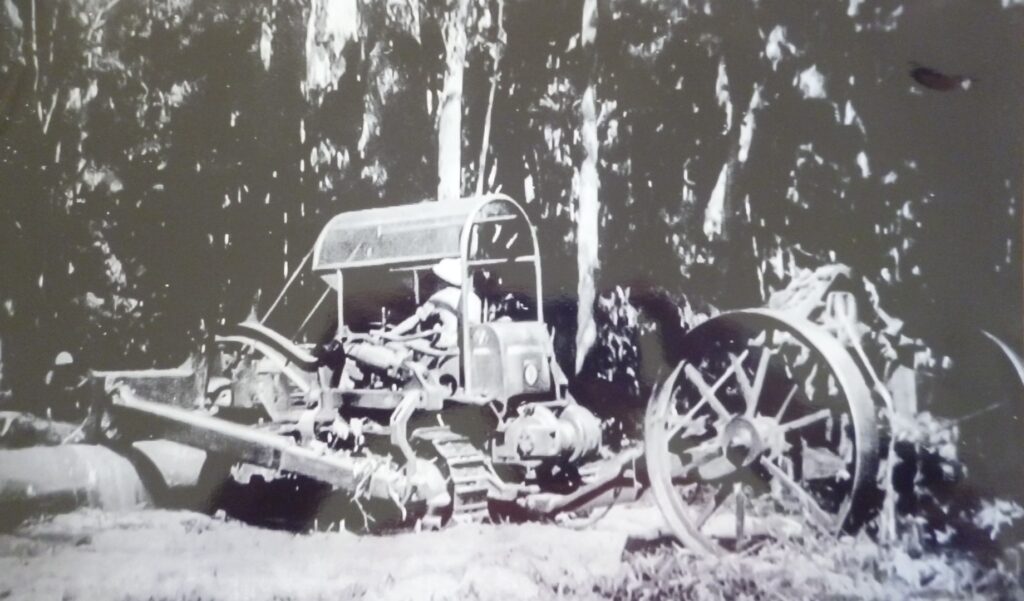
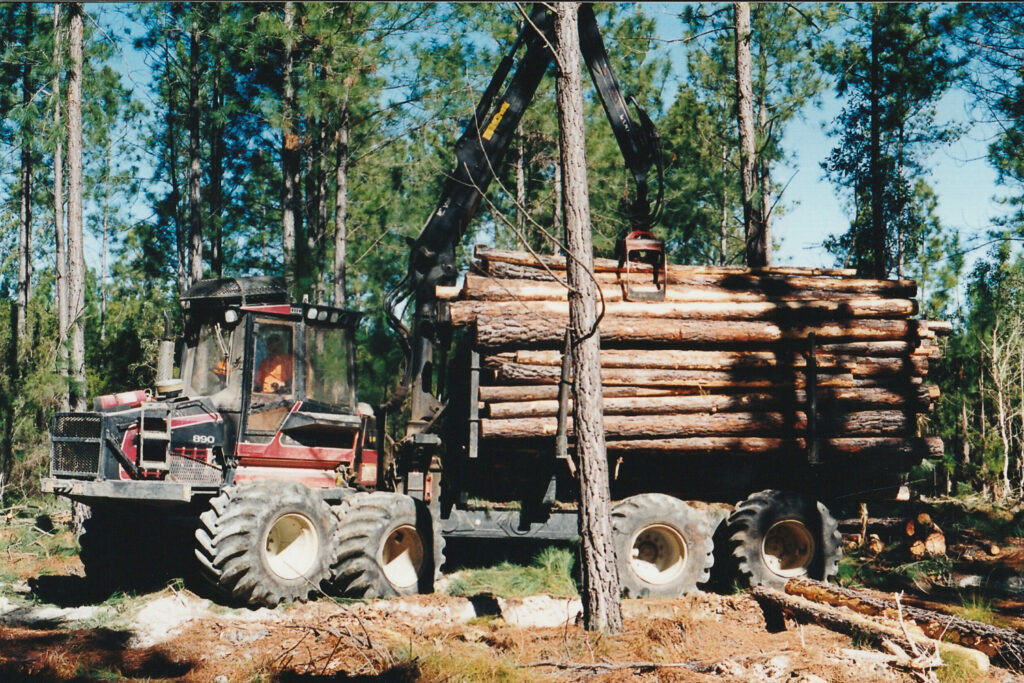
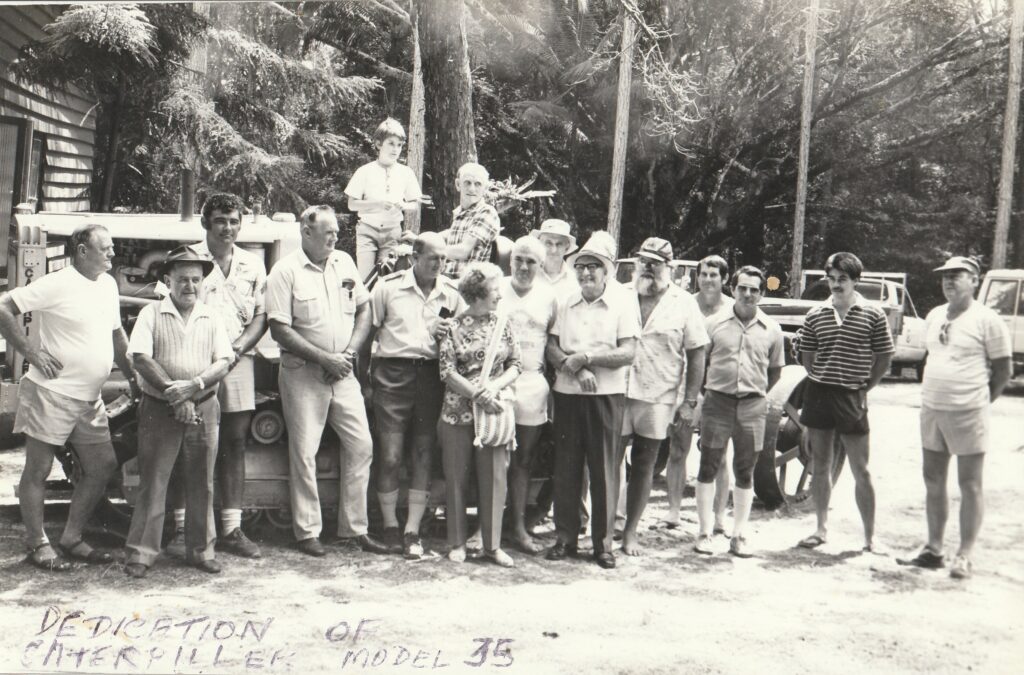
The operation itself was modest in scale but demanding in execution. A 35-horsepower Caterpillar crawler tractor hauled logs using a bobtail to lift their leading ends, dragging them along sandy tracks to landings by the creeks. Trucks then ferried them to barges for transport to the mainland. It was tough, physical work, relying on skill, judgment and a deep understanding of the terrain.

Rob Postan on the Cat 35 dozer. Photo courtesy David Postan.

Andrew moved back to the island and joined the business in 1954, and by 1964, they formalised their partnership as A. R. Postan and Son. Over time, Andy expanded his operations and became the main logging contractor in the northern part of the island.

Andrew brought a practical, forward-thinking mindset. Where earlier camps consisted of rough timber huts with galvanised iron roofs that baked in summer and offered little protection from the weather, he built proper homes with septic systems and showers, creating a level of comfort that was rare in such remote locations. It was necessary, born from the need to support a family and a workforce in isolation.

TD9 dozer with bob-tail. Photo courtesy David Postan.
Strength, skill and tragedy

If Andy was the architect of the enterprise, his brother Laurie embodied its physical spirit. A champion woodchopper who competed successfully across Australia and an accomplished heavyweight boxer, Laurie was a formidable figure both in and out of the forest.

He arrived on the island in 1944, buying the contract and machinery from the Berthelsen brothers to start his own logging business at the eastern end of Central Station.

His logging achievements were equally impressive. His crew felled what was reputed to be the largest tree on Fraser Island, a towering tallowwood near Lake Birrabeen measuring 98 feet to the first limb and yielding around 14,000 super feet of timber. It was a feat that demonstrated both the scale of the resource and the skill needed to harvest it.

But the dangers of the industry were always present. Logging at that time relied on methods with little margin for error. The use of bridles to load logs onto trucks, in particular, was notoriously dangerous.

Laurie and Laura Postans. Photo courtesy David Postan.

Laurie himself survived a near-fatal accident in the early 1950s when he was pinned against a tractor by a falling tree, breaking his back in two places. Remarkably, he freed himself and drove back to camp for help, later returning to work once he had recovered.

But on 26 January 1963, his luck ran out. While loading a log using a bridle system, the log rolled off the truck and crushed him. He had been preparing to leave the island that day with his wife, Laura, for a family engagement on the mainland, but decided to do one more load. That decision cost him his life.

His death was a devastating blow, not just to the family but to the wider timber community and a stark reminder of the risks that shape the industry.

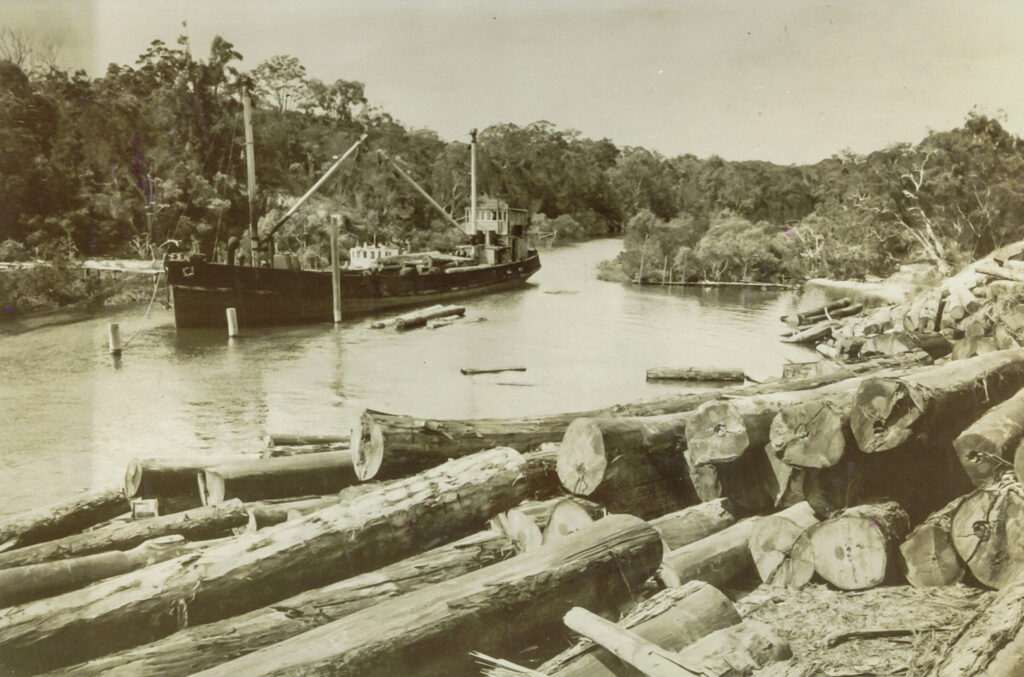
Poyungan Creek log landing. Photo courtesy David Postan.
Strength behind the scenes

While the early years of the Postan story are often told through the lens of the men who worked in the forests, it is impossible to fully understand it without recognising Helen McKewen’s role.

Born in Maryborough in 1937 and raised in Cairns, Helen faced hardship early on. She contracted polio during the 1951 epidemic and later lost her father, a Rat of Tobruk, whose health had been affected by his wartime service. These trials built a resilience that would prove invaluable in the years ahead.

Her connection to the timber industry started in Maryborough after the family returned in October 1953, when she worked at Wilson Hart for logging manager Gordon Ponting. Her growing familiarity with Fraser Island developed through weekend trips with friends—trips that 19-year-old Andrew made possible by transporting them across in the Postan launch, the Maralon. What began as casual visits soon turned into something more permanent.

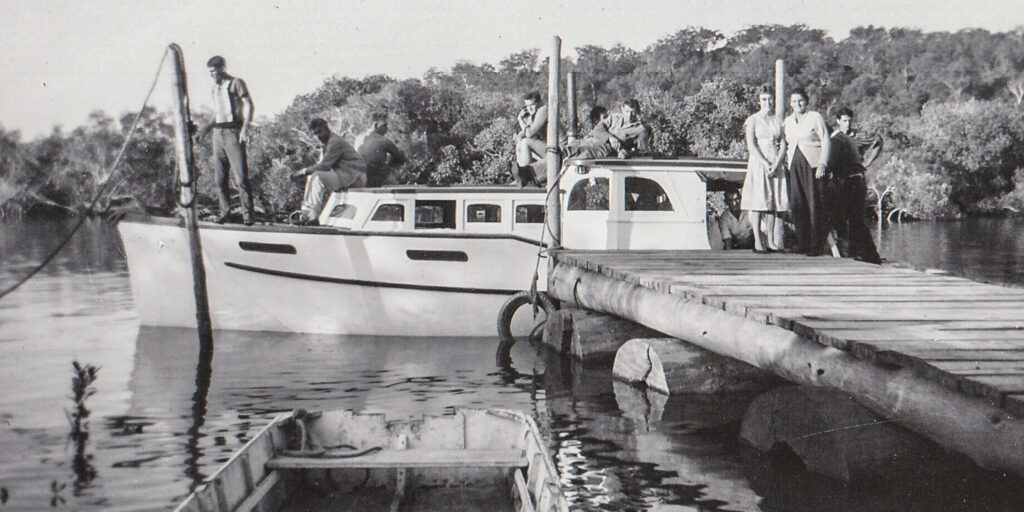
The Maralon in Poyungan Creek loaded ready to head to Urangan. Photo courtesy David Postan.

Helen and Andrew married in 1961, and she became an essential part of the operation, raising two sons, David and Richard, while managing the challenges of life on the island. Her role went well beyond domestic duties as she was involved in the business, the community, and, eventually, the wider political struggles that would impact the industry.

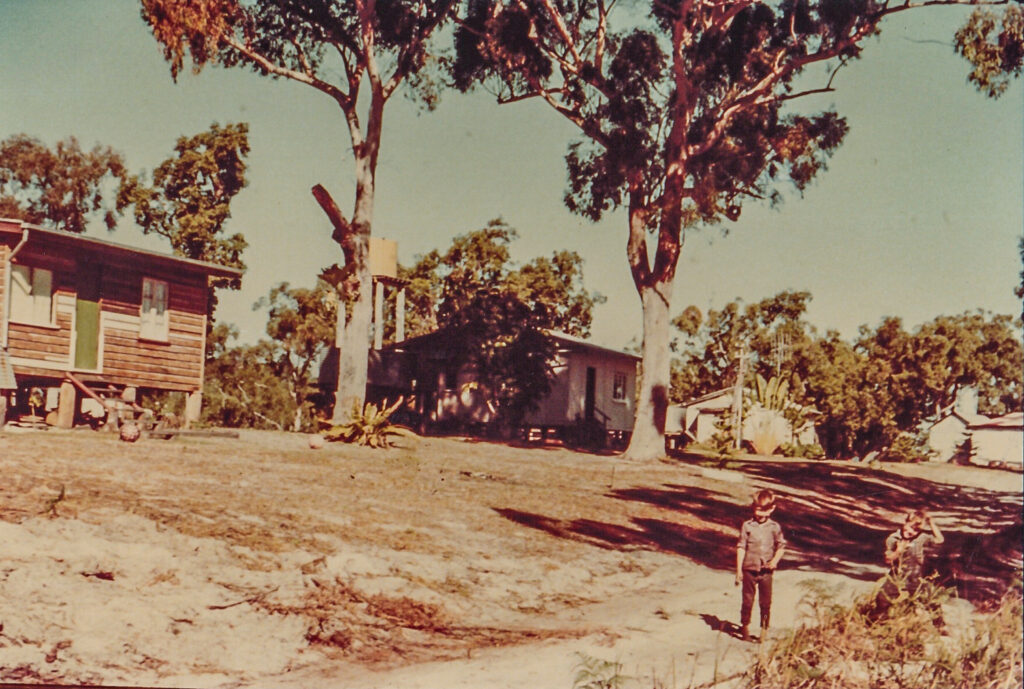
David and Richard on the road in front of Postan's Camp. Photo courtesy David Postan.
Innovation and survival

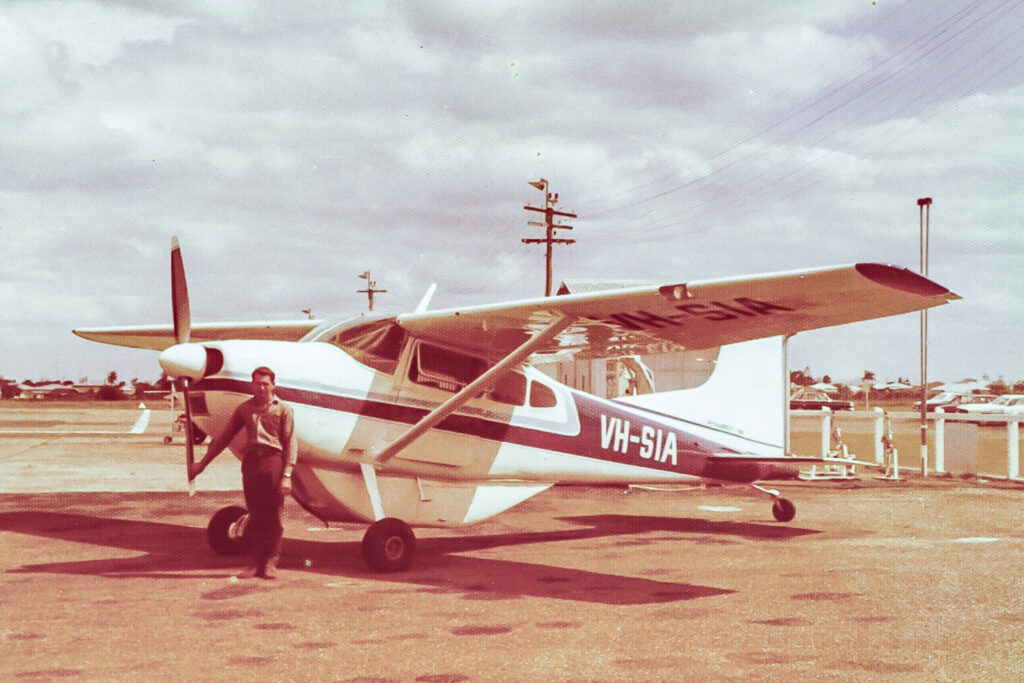
Surviving on Fraser Island demanded ongoing adaptation to tough and shifting conditions. Andrew’s decision in the late 1960s to learn to fly and get a Cessna was a key adaptation. Relying on tides for transport had long limited operations, and the ability to travel independently between the island and the mainland in much less time changed both business and family life.

Andy with his first plane - a Cessna 185. Photo courtesy David Postan.

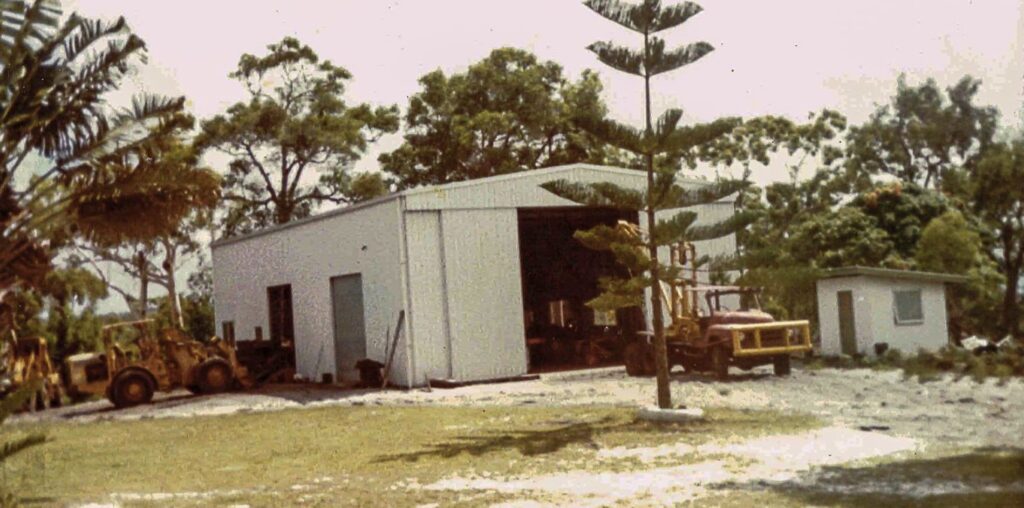
Similarly, advances in machinery and logging techniques reflected a continuous effort to improve efficiency and safety. Andrew was known for his skill in building and modifying equipment in his own workshop, solving problems with practical ingenuity, and constantly refining his operation.

By the mid-1970s, through a mix of acquisitions and attrition, the Postans had become the only logging contractor on Fraser Island. It was a position earned through persistence and adaptability, but it also came at a time when the industry’s future was becoming more uncertain.

Workshop at Postan's Camp 1980s. Photo courtesy David Postan.
From satinay to softwood

Even as they reached their peak on Fraser Island, Andrew and Helen were already looking beyond it. By 1988, with political pressure mounting and the future of logging on the island in doubt, they secured contracts in the pine plantations at Tuan and Toolara, initially working for Laminex. It was a pragmatic decision, reflecting both foresight and an understanding that the industry was changing.

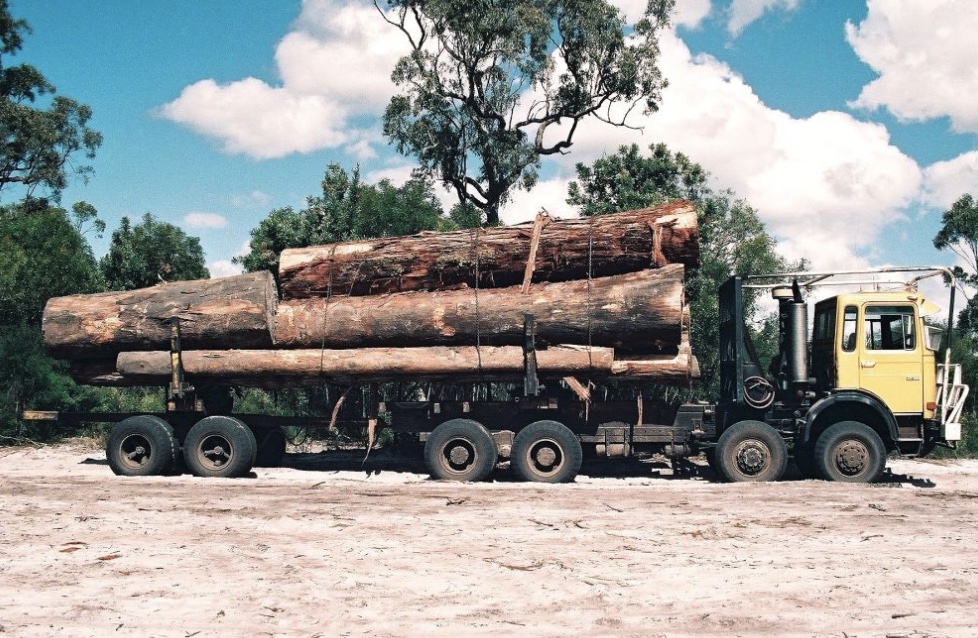
Load of logs on M.A.N 8 x 8 truck. Photo courtesy David Postan.

The transition was not simple. Plantation forestry was fundamentally different from the hardwood logging they had known. It was high-volume, tightly scheduled and focused on efficiency rather than the selective, skill-intensive approach needed on Fraser Island. Still, as they always had, they adapted. David ran that business.

Later, when Hyne & Son and Sumitomo secured major thinning contracts across the Cooloola plantation estate, the Postans became key players in the harvesting side, operating at scale from the mid-1990s until 2006. It was a different type of logging, but it kept the family involved in the industry for another 20 years.

Under siege: the camp raid and its aftermath

While shifting to pine offered a way forward, the final years on Fraser Island were characterised by conflict.

The growth of environmental activism in the 1980s led to the 1990 blockades, turning the debate over logging into a direct clash with those working in the forests. For the Postans, this confrontation became very personal.

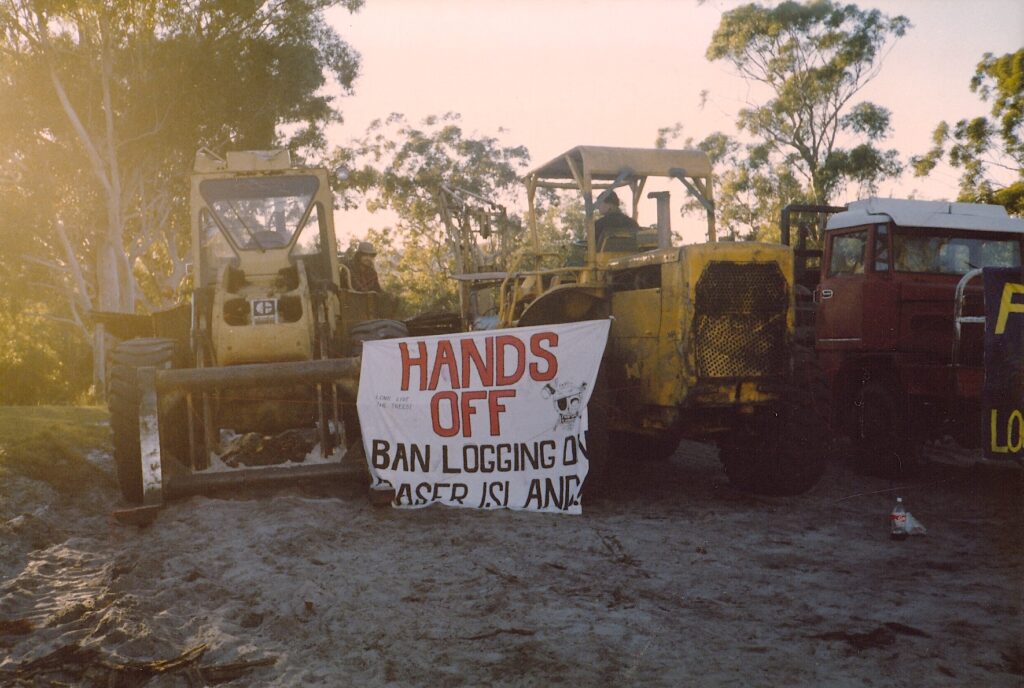
After initiating protests in the forest in June 1990, a group of activists escalated their actions in the early morning of 6 August 1990 by launching a coordinated raid on the Postan camp in order to drum up media support that was lacking for their insipid and stupid actions. They occupied structures, climbed onto the tank stand and aerial, and chained and glued themselves to equipment. The noise — chanting, drumming and shouting — was relentless, amplified by strobe lights and the presence of media helicopters that had clearly been tipped off in advance.

They woke up Andrew and Helen. No police were on the island at the time, so Andrew slipped away through the bush to seek help from the mainland, leaving Helen to handle the situation with support from puntman Larry Shillig, who was alerted by Andrew while sleeping aboard his punt on Poyungan Creek. For hours, she faced the activists and the media, managing the intrusion into her home with a composure that belied the tension of the moment.

Logging protesters on machines. Photo courtesy David Postan.

When police eventually arrived, their response was cautious and arrests were few. Those affected felt that the law provided little protection.

The aftermath brought more stress, including a false charge from one activist against Andrew that was later dismissed in court. The incident only worsened the feeling that the system had turned against those who had worked lawfully and honestly on the island for decades.

Helen takes the fight to Canberra

It was during this period that Helen emerged as a leading advocate for the timber industry.

As President of the Queensland branch of the Forest Protection Society, she took on the role of representing timber workers and their families at a time when their livelihoods were increasingly under threat. Her advocacy extended beyond Fraser Island, encompassing communities across Australia who were facing similar challenges.

Helen in her role as Queensland President of the Forest Protection Society with then Mayor Allen Brown. Photo courtesy David Postan.

She took the fight to Canberra, drawing from personal experience of life in remote camps, the realities of logging and the impacts of policy decisions made far from the forests themselves. She brought with her the voices of those seldom heard in the wider debate, emphasising that forestry is not just an environmental issue but also a social and economic one that affects real people and communities. It wasn’t an easy role, but she took it on with determination.

A forced diversion

When logging stopped on Fraser Island in 1991, the impact on the Postan family was immediate and profound.

The transition was difficult, with compensation delayed and uncertainty everywhere. Machinery was valued and auctioned off, and the family had to deal with a bureaucratic system that often felt disconnected from their reality.

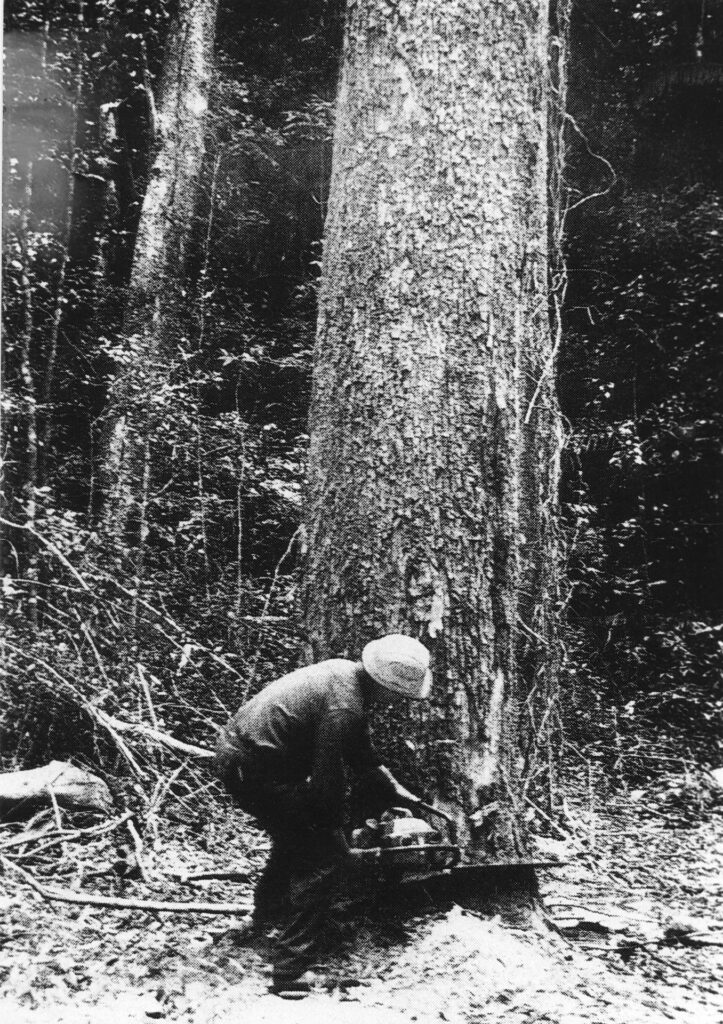
Graham Brady falling the last tree in November 1991. Department of Forestry, courtesy MWBBHS.

As part of the adjustment process, they were given the chance to buy the Bearing Service Centre in Maryborough and Hervey Bay, both managed by the other son, Richard. It was a practical way to stabilise their financial situation, but it also marked a clear break from the life they had known.

They took it on, ran it successfully for many years, and eventually sold it in 2023. But it remained, in many ways, a reminder of how suddenly their original business had been cut short.

A business closed, not failed

The final chapter of their logging story came in 2013, following the government’s sale of plantation timber rights to Hancock. The industry’s structure then changed once more. For the Postans, who had always operated with a degree of independence working for sawmillers rather than forest owners, the new arrangements offered neither certainty nor alignment with their way of working.

Harvesting in Tuan State Forest for Canterwood chip mill. Photo courtesy David Postan.

After careful consideration, they decided to step away and relinquish their contracts.

With that decision, nearly 78 years of continuous involvement in the logging industry came to an end. It was a remarkable achievement spanning three generations of a local Maryborough family, whose contribution had largely unfolded outside the spotlight.

Legacy in the sand and timber

Today, the forests of Fraser Island bear the imprint of over a century of forestry, much of it influenced by families like the Postans.

Visitors drive and walk through these landscapes, often unaware of the lives that were lived there — the camps, the work, the hardships and the achievements. The legacy remains, embedded in the forests themselves and in the stories of those who were part of that world.

The Postan story is about endurance, adaptation and quiet persistence. It is not a story of fanfare or recognition, but of a family who built a life in the bush, faced its challenges and ultimately adapted to its changing fortunes.

Over 78 years in the logging industry across three generations is no small achievement. For a humble local Maryborough family, it is remarkable in every sense.

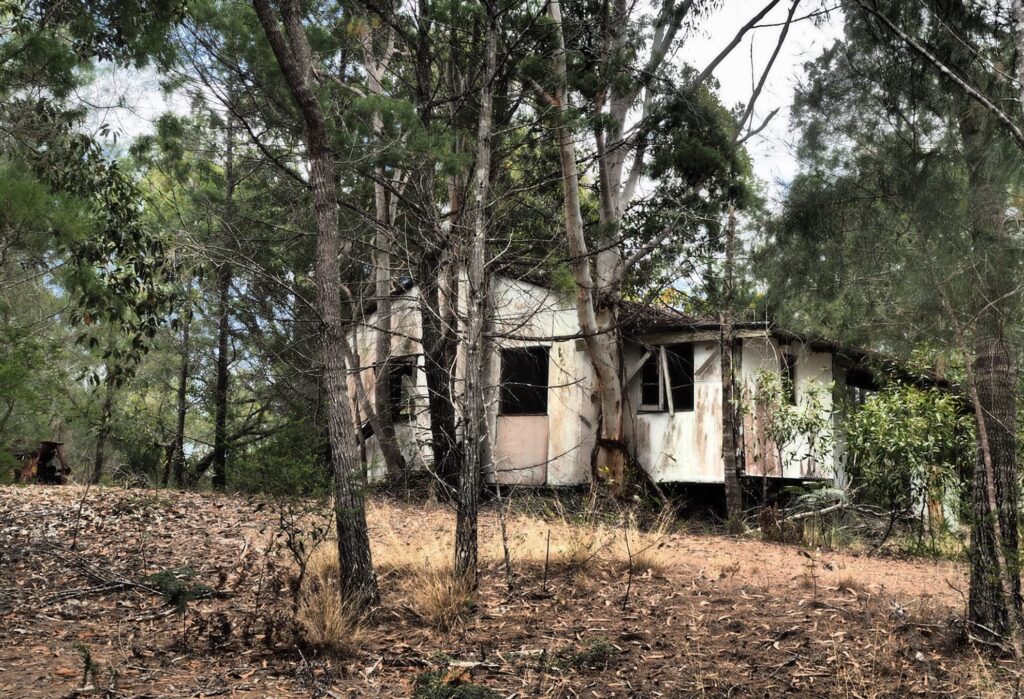
Remains of Postan's Camp. Photo courtesy Stacey Bax

If you travel to the western side of the island, near Poyungan Creek, you can still find what remains of the Postan Camp. Once the centre of a remarkable family enterprise, it was at one stage earmarked for listing on the Queensland Heritage Register, but today it sits largely abandoned — left to wither under the sun and stars, its machinery rusting and its buildings slowly consumed by white ants.

It is a quiet but telling example of how certain histories are allowed to fade. Where heritage does not align neatly with contemporary narratives, whether framed through selective interpretations of environmentalism or other priorities, it too often slips from view, neglected rather than preserved.

In that neglect lies an uncomfortable question about what, and whose stories are deemed worthy of protection.

8 thoughts on “The Postans of Poyungan: timber, tenacity and the cost of persistence”

  1. Enjoyed the read. My father commenced working for Andy Postan in 1962 and on school holidays we would travel on their launch from Urangan. The Postans were a great help to our family when Dad had a accident and was flown from the island. I have such great memories of those years of Island holidays and the Postan families.

  2. Great work Robert. My father Ron Sutton worked as logging manager in bringing the last allocations off the island with Andrew

  3. Bernard Trembath

    Good morning Andrew.
    When with Qld Forestry @ Gympie I worked with a Ron Sutton (it was an interesting relationship) who was the logging coordinator for the hardwood mill at Cooroy. Same person?

  4. Thanks Robert. A good read.

    At around Christmas time in 1968 there were some biggish fires on the Island that, as a young trainee, I was involved in fighting. On at least one occasion, the Forester in charge at the time (John Alcock) whistled up the Postans to help us out with a log skidder. I suspect that this is another important aspect of their Fraser Island history.

  5. Interesting read. My husband Darrell Kopp cut timber on Fraser Is also and fought those fires. His father Eddie Kopp worked cutting timber there also years before but with a cross cut saw and dummy. He tells me they used to stamp their initials into the big stumps and float the logs back to the mainland behind the boat. Don’t know if they worked for the Postons though – may have been another contractor.

  6. My dad cut timber for them, his name is Harry Warren. We also built a house on the back beach. It was paradise then but not now.

  7. John William Muller

    Very much enjoyed the read, thanks Robert. I was badly injured when with my brother, Joe Cunningham on Fraser, when I was 11 (1957). At that time, no communication available with the mainland, only a launch coming into Deep Creek (I think) every Monday morning, carrying supplies and workers etc. I was lucky because the accident happened on the Monday.

    My late Niece Janette (Netty) Butcher was involved with Helen in the fight for the industry on Fraser.

    Lots of memories, thanks.

Leave a Comment

Your email address will not be published. Required fields are marked *