
In Chapter 13 of my book Paradise Preserved: a history of forestry on Fraser Island, I outline one of Queensland’s earliest efforts to restore a forest resource that was already showing signs of depletion. In the early 1880s, the colonial government quietly funded a modest trial to plant kauri pine on Fraser Island, a venture that foreshadowed the development of scientific forestry in Queensland many decades later.
Historical accounts of that plantation often focus on the importance of the experiment itself — the planting methods, the survival of the young trees, and the broader question of whether the colony could sustain its valuable timber supply.
However, those reports say very little about the man who actually did the work, alongside some Aboriginal workers. His name was Ronald Mitchell, a timber-getter familiar with Fraser Island’s forests, and his son, Alexander, worked alongside him and whose life would later become the subject of a bitter political row in the Queensland Parliament.
Their story, largely forgotten today, brings a deeply human element to the early history of forestry on Fraser Island.
The first kauri planting experiment
By the early 1880s, the timber industry centred on Maryborough had already transformed Fraser Island into one of Queensland’s most valuable forest resources and the island became the backbone of the emerging town’s timber industry. The island’s rainforests contained large stands of kauri, hoop pine, tallowwood, blackbutt and other timbers that were being harvested and shipped to the sawmills along the Mary River to support the growing colonial economy.
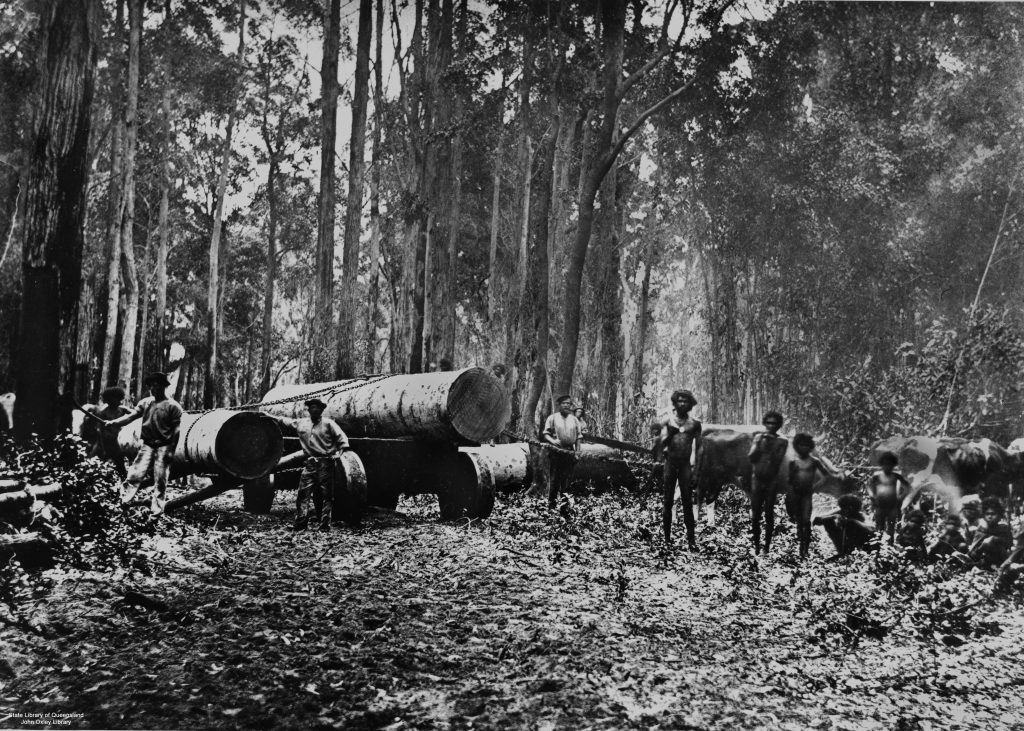
The scale of the resource was immense, but even then, keen observers could see it was not endless. Timber-getters were venturing further into the forests and the great pines that had once been scattered in the island’s scrub forests and adjacent tall wet forests were gradually vanishing.
Concern about this loss eventually reached the colonial government. The Lands Department allocated a modest sum of just £350 to try planting kauri pine on Fraser Island, which would become one of the earliest forestry experiments in Queensland.
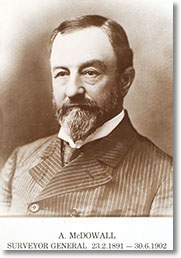
Responsibility for initiating the work was assigned to the district surveyor, Archibald McDowall, who then hired two men to carry out the practical tasks. One was John Ingham, an experienced gardener who had previously helped set up the public gardens in Maryborough. The other was Ronald Mitchell.
Mitchell wasn’t a government official or a trained botanist. He was a timber-getter who had spent years working in the island’s forests. His familiarity with the terrain, the scrubs and the great kauri trees made him an obvious choice for the job. There is little evidence to suggest Ingham was involved beyond setting up the initial trial.
Little is known about Mitchell. He was a Scottish or British-born bush worker from the old timber frontier generation. The Queensland Department of Agriculture’s history states that in 1891, he was working as a Crown Land Ranger when the Department paid his son, Alexander, £65 to look after the plantation. This indicates Ronald had become the local government-linked man on the ground at the nursery and plantation area, rather than just a former contractor.
Unfortunately, some sources, including several tourism publications, continue to claim that the plantation was established by the “Mitchell brothers.” This assertion appears to have originated in a newspaper article and has since been repeated uncritically without careful examination of the historical record.
Establishing the Bogimbah nursery
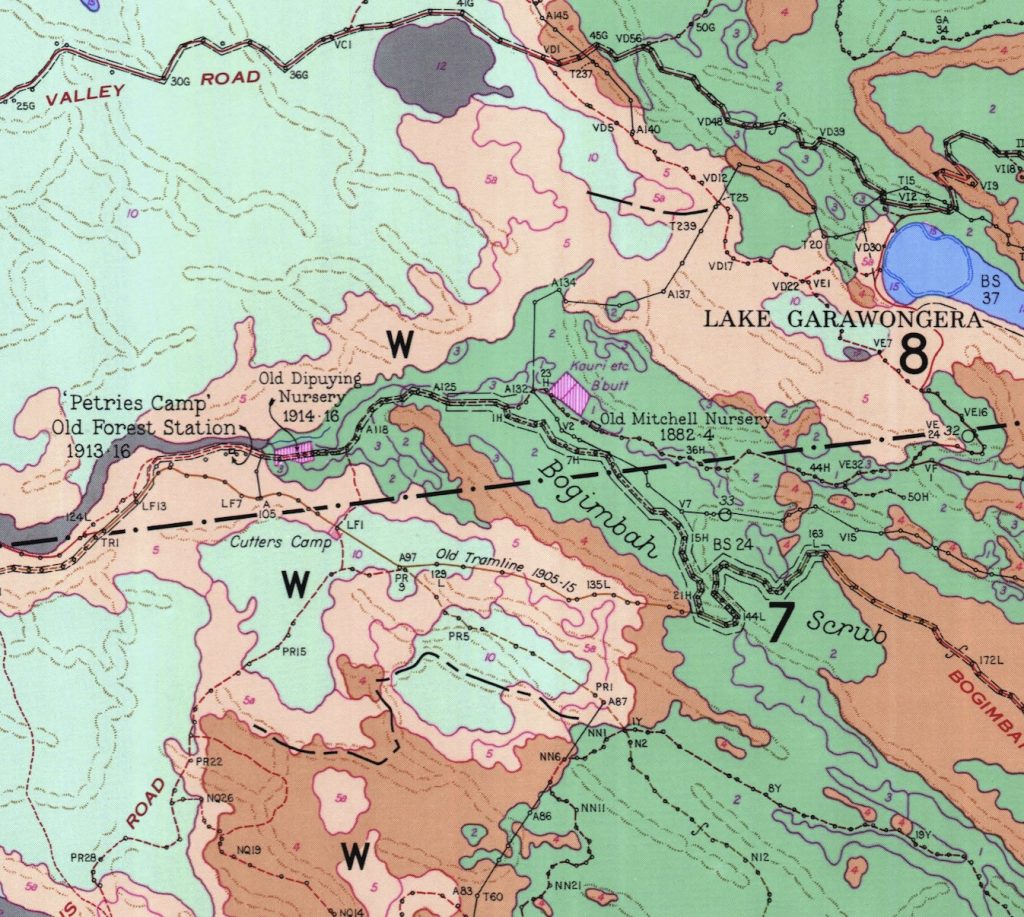
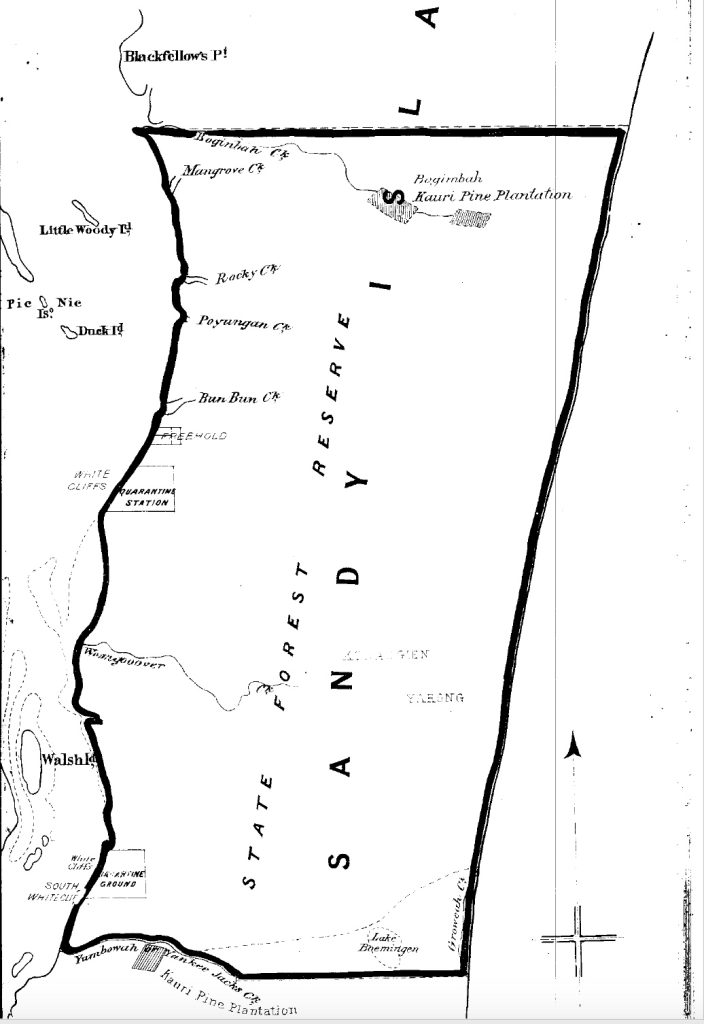
The plantation was set up in a sheltered valley near the head of Bogimbah Creek, well within the island’s rainforest scrub and safely away from the risk of bushfire. Mitchell had already felled trees there, including large kauri.
The work started early in 1882. Seedlings were gathered from beneath mature kauri trees across the forest and moved to a prepared nursery site. Nearly 20,000 young plants were collected and replanted during the initial phase of the experiment, while another 10,000 smaller plants stayed in nursery beds, waiting to be transplanted.
The nursery was carefully prepared. A narrow strip of land about 90 feet wide was cleared, but most of the large trees were left standing to provide shade and shelter. The young kauri were planted a few feet apart in rows, forming a protected plantation within the natural forest.
The work was entirely experimental. At that time, very little was known about the regeneration of kauri pine in Queensland. Observations were made regarding how much sunlight the young trees needed and how they responded to transplantation. Even the question of how the seeds germinated remained somewhat of a mystery.
One report noted that the seeds sometimes lie dormant in the forest floor for years before germinating. In some cases, seedlings appeared where old kauri trees had been felled nearly a decade earlier. It was painstaking work, but the early results were encouraging.
Within a short time, thousands of young trees were growing vigorously in the nursery beds and along cleared timber tracks, where they received a balance of sunlight and shelter.
Early results indicated the experiment was promising. The study showed that kauri pine could indeed be cultivated, a finding that held significant implications for Queensland’s future timber supply.
Later plantings were also undertaken further south near Yankee Jack Creek, as timber cutting moved there, broadening the scope of the experiment.
The family behind the plantation
Most accounts of the Bogimbah nursery mention Ronald Mitchell only in passing and usually briefly.
Nevertheless, Mitchell didn’t work alone. His wife and son, Alexander, who helped with daily chores on the plantation, lived with him on the island. They worked together among the young trees, clearing vines, protecting seedlings and caring for the nursery beds set up in the forest. Mitchell also built a house, partly at his own expense, next to the old plantation and nursery site.
Alexander’s life, however, was far from ordinary. Contemporary reports were often harsh, reflecting the limited understanding and compassion of the time. They described him as severely deformed and intellectually impaired. His condition made him a figure of curiosity and sometimes concern in the district, especially as he grew older.
In a time when medical knowledge was limited and social services were almost non-existent, families were mostly left to manage on their own. For the Mitchell family, Fraser Island served both as a workplace and a safe haven. Despite these challenges, Alexander seems to have genuinely contributed to maintaining the plantation.
The death of Ronald Mitchell
Ronald Mitchell did not live to see the long-term outcome of the experiment he helped create. He passed away, aged 56, in March 1893, ending the life of a man who had spent many years working among the forests of Fraser Island. His death notice states he died in Maryborough at his son, Archibald’s, residence in John’s Lane.
His death was acknowledged in the local press with genuine respect, highlighting his long connection to the island and his efforts to establish the kauri nursery. The report spoke fondly of his hospitality and the friendships he built with visitors to the timber camps. He left behind his wife and several children, including the two sons we know of.
Like many of the men who helped build the early timber industry, Mitchell died without leaving a substantial written record of his life. His legacy was instead woven into the forests themselves, much like the young kauri trees he helped plant and nurture.
Government concern and the Meston controversy
After Mitchell’s death, the plantation didn’t simply fall into official neglect. His son Alexander stayed at the forestry site and, according to later parliamentary evidence, continued living there with his mother in the family’s own house.
Government records later show that Alexander was paid by the Department of Agriculture to continue tending the kauri plantings during the early 1890s, indicating that he had effectively taken over much of the responsibility for the work. For several years, the young man carried on his father’s task.
The quiet routine of tending seedlings in the forest might have gone on forever if it hadn’t become linked to another event on Fraser Island, and Alexander’s condition came under official scrutiny.
In the mid-1890s, the Queensland Government started reorganising its management of Aboriginal affairs in the Wide Bay area. In 1897, Archibald Meston, who had been appointed Southern Protector of Aborigines, urged the Home Secretary to urgently relocate the “unwanted” Aborigines from Maryborough to Fraser Island. He inspected the island the previous year and identified at least two sites he considered suitable for Aboriginal reserves, choosing North White Cliffs, occupying the deserted Quarantine Station buildings. He believed the remaining Aborigines in these areas should be relocated to a place free of European contact, allowing them to practice their traditional lifestyles.
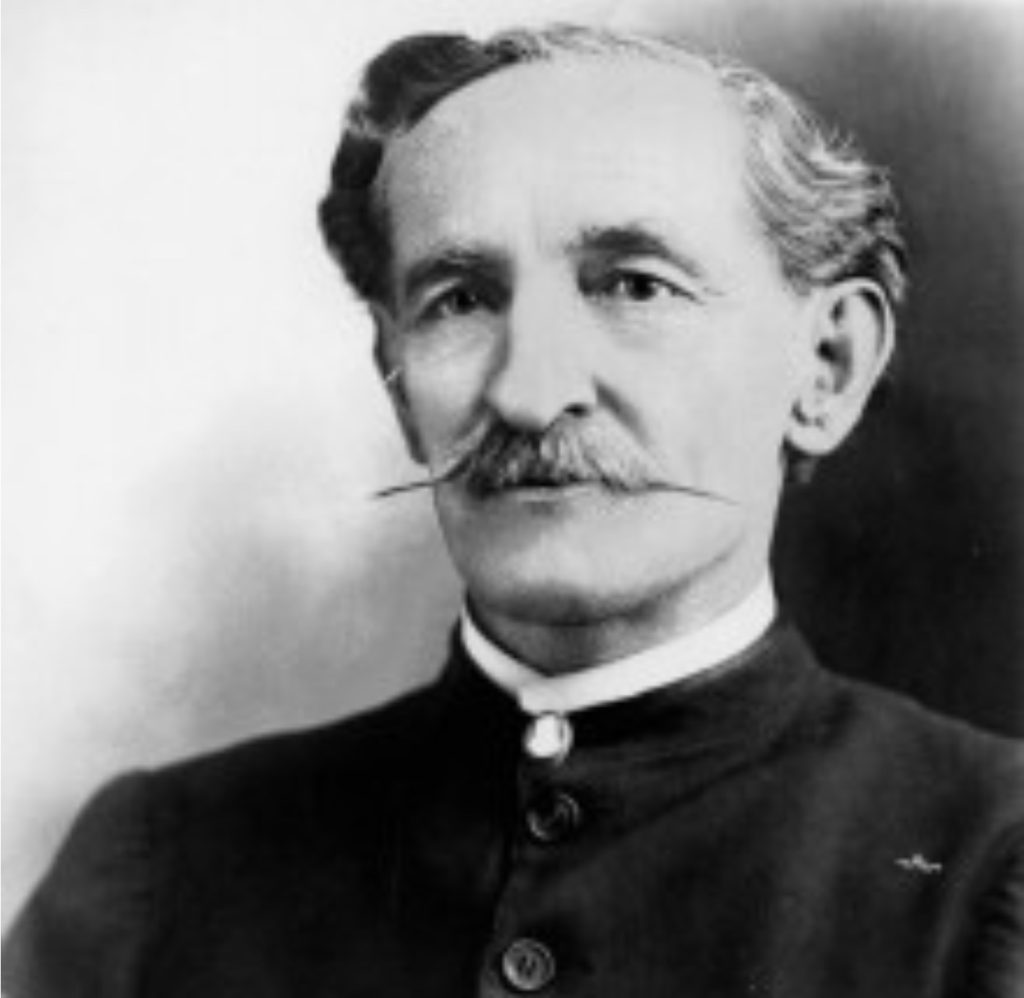
However, the reserve site was a favourite site among local settlers who enjoyed sailing from Maryborough. A couple of tense incidents with visitors and picnickers caused conflicts. During subsequent legal actions, public petitions, and meetings, it emerged that the Lands Department had gazetted North White Cliffs as a public reserve in 1894, which was overlooked when the Aboriginal reserve was established. Meston had no authority to expel holidaymakers and visitors and the public demanded that the Aboriginal reserve be relocated to a more remote part of the island.
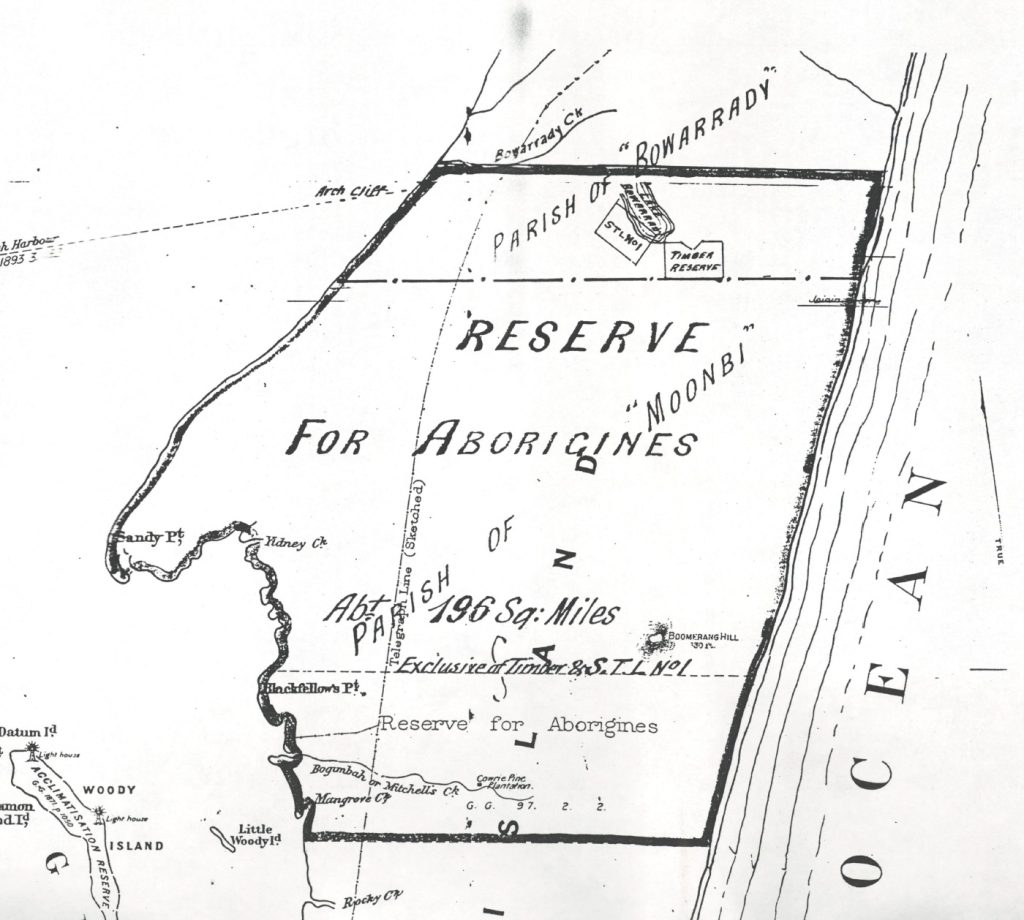
McDowell suggested Bogimbah Creek because it was near the kauri pine nursery and could help get them to do some forestry work. Despite Meston’s objections, the Home Secretary ordered the creation of an initial reserve of 43 square miles at Bogimbah, which Meston reluctantly accepted. However, this decision put him directly at odds with the Mitchell family.
By this time, Alexander had been managing the plantation for several years and according to statements later given in Parliament, he and his mother still lived at the site in the house their family had built there.
Supporters in the Maryborough district claimed that Alexander could run the plantation and that removing him would undo years of effort. They argued that the young man had effectively assumed the role his father had previously held. However, Meston saw things very differently.
In correspondence that later became public, he dismissed the proposal to keep Alexander as the plantation caretaker, describing him in crude and deeply offensive terms as “a deformed dwarf” who had none of the necessary qualifications for the role.
The dispute quickly made its way to the Queensland Parliament, where members debated the treatment of the Mitchell family and the management of the reserve. One speaker defended Alexander, saying he had overseen the forestry work for years and that his mother still lived there with him. The house, he argued, had been partly built at the family’s own expense and was their home.
Government ministers, however, supported Meston. The Home Secretary explained that the welfare of the Aboriginal population had become the department’s main focus, and that the Mitchell property had been acquired by the government as part of the reserve arrangements and relocated it to the mouth of Bogimbah Creek to serve as the superintendent’s house.
Alexander’s services were no longer needed, and with that decision, the Mitchell family’s long connection to the kauri plantation effectively came to an end.
The case highlights the limited options available at the time. Queensland had few institutions capable of caring for people with severe disabilities, and there was significant uncertainty about the appropriate course of action. Officials debated whether Alexander might need institutional care, but such arrangements were complex to organise and seldom straightforward.
A forgotten chapter of forestry history
The Bogimbah kauri experiment eventually faded into the background of Fraser Island’s forestry history, overshadowed by later advances in timber harvesting and forest management. However, its importance still remains significant.
It was one of the first efforts in Queensland to replace what had been cut, marking a small but significant step towards the idea that forests could, and should, be managed sustainably.
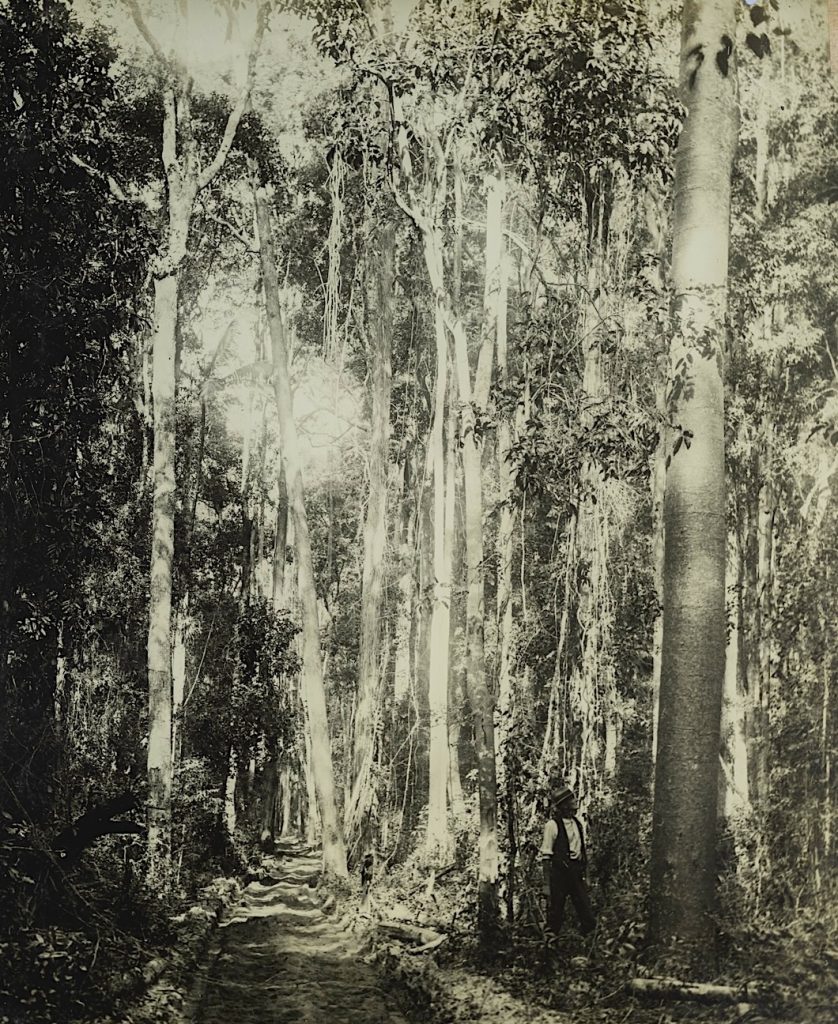
Behind that milestone lies the largely forgotten story of Ronald Mitchell and his son Alexander. Ronald was the practical bushman who helped establish the plantation in the forests of Bogimbah Creek. After his death, the task quietly passed to his son, who for several years continued tending the young trees despite the severe challenges he faced.
Their work laid the early foundations for forestry thinking in Queensland. Today, their names are only remembered in scattered newspaper reports and bits of parliamentary debate. But when those fragments are put together, they reveal more than just a forestry planting trial. They show a family living and working in the forests at a time when the future of those forests was still uncertain.
And in the shaded valleys of Bogimbah and Yankee Jack Creeks, where the first kauri seedlings were carefully planted in the early 1880s, the legacy of their efforts once stood in the form of thousands of young trees that held the promise of a future for Queensland’s forests.