
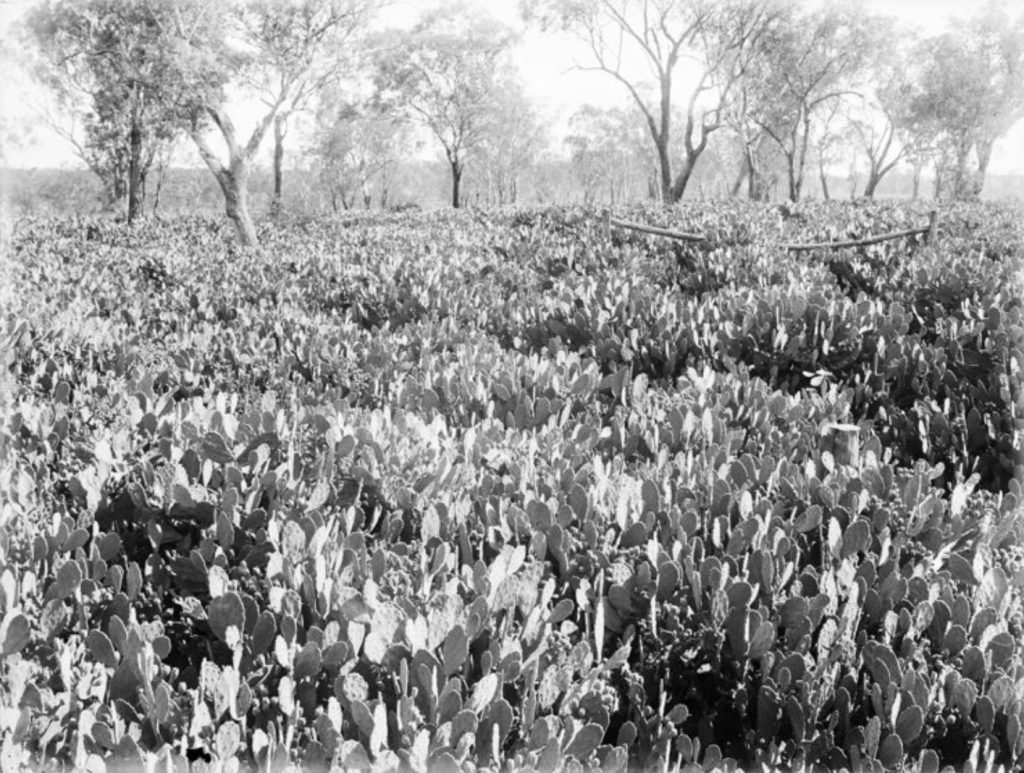
When Australians today drive through the rich farming country of the Western Downs, it is nearly impossible to picture the landscape as it was a hundred years ago, when it was covered by a living, spiny mass. From the horizon in every direction, vast plains of prickly pear stretched like a green-grey ocean, consuming homesteads, fences, paddocks, creeks and entire townships. The memory was agricultural and existential for those who lived through the worst years of the infestation. Farms were abandoned, livelihoods disappeared, and families faced what seemed like a slow-moving natural disaster that no plough, poison, fire or human effort could halt. The greatest known plant invasion in human history had no boundaries.
Among those who first endured this hardship were the ancestors of historian Megan Martin, whose family properties on the Western Downs were overwhelmed by the disaster. Their memories of fruit trees vanishing behind towering patches of cactus, of stock being pushed onto ever-diminishing patches of pasture, of children weaving through spiny walls taller than a horse, illustrate the depth of despair that statistics alone can never fully capture. Their story adds human depth to what was, at its worst, a national tragedy.
By the early 1920s, prickly pear covered more than 60 million acres across Queensland and New South Wales. Homesteads disappeared from sight and entire regions became unrecognisable. Surveyors had to carve tunnels through the cactus just to reach boundary markers. A Queensland inspector famously said that the pear moved forward:
Like a green flood — slow enough to watch, but impossible to stop.
And yet, in one of the most remarkable turnarounds in environmental history, the same nation that seemed doomed to lose millions of acres to a voracious invasive cactus would, within a decade, see its lands reclaimed by a small grey moth from Argentina — Cactoblastis cactorum. The story of that transformation is one of science, persistence, missteps, unexpected heroes, including one man in particular, whose name deserves far more recognition than it receives today. He is entomologist Allan Pankhurst Dodd of the Commonwealth Prickly Pear Board.
Dodd’s career had only just begun to take shape through his detailed investigations into the cane beetle when he was pulled away and thrown into the far more urgent battle against the prickly pear. His beetle work, had it continued, might have guided Australia toward very different decisions in later decades. It invites the tantalising thought that if Dodd had stayed with the cane-beetle problem, would the country have taken the fateful step of releasing the cane toad?
How it all began: Opuntia comes to Australia
The prickly pear problem started quietly, well before the Western Downs were established. When the First Fleet arrived in 1788, one of the lesser-known botanical passengers was Opuntia monacantha, brought on board with colonies of cochineal insects. Joseph Banks, known as a keen imperial agricultural pioneer, believed the British Empire should tap into the profitable cochineal trade. For centuries, these tiny parasitic insects had produced the world’s brightest and most sought-after red dye, colouring the robes of cardinals, the uniforms of British redcoats and fetching high prices across Europe.
But the Brazilian cochineal insects, which fed on prickly pear to survive, soon perished in the unfamiliar Australian conditions, leaving only the cactus behind. In a foreign land, it proved to be a hardy, adaptable and increasingly troublesome plant.
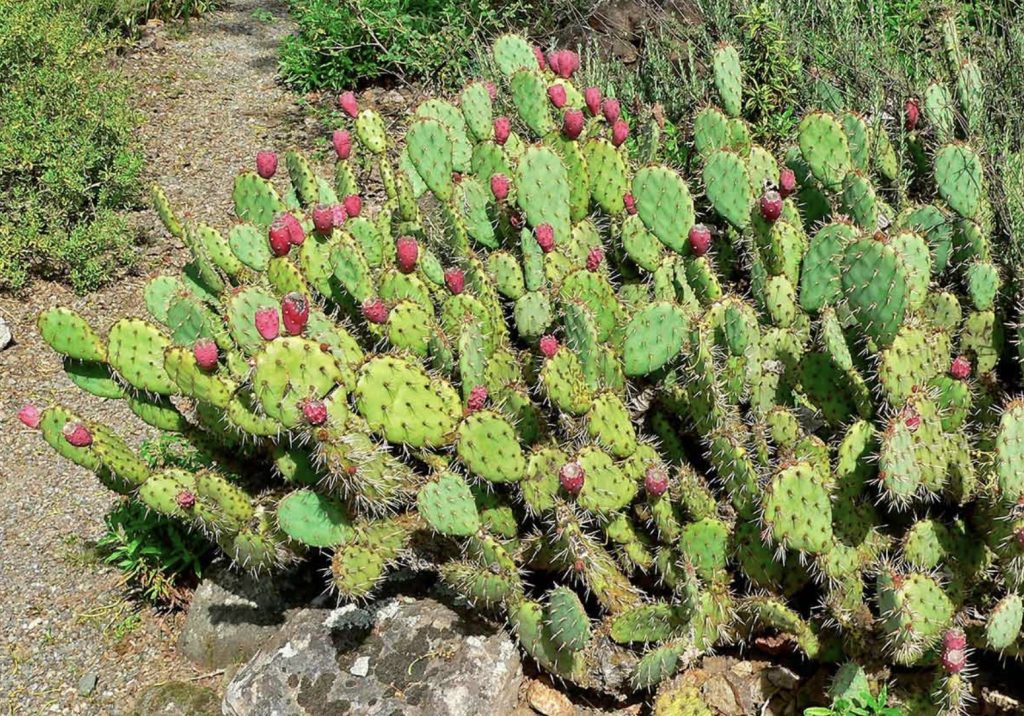
Through the 1800s, settlers introduced various Opuntia species, planting them in gardens, along boundaries, or as drought fodder. This turned out to be a disastrous mistake. The common pest pear (Opuntia inermis) and the spiny pest pear (Opuntia stricta) thrived in the hot, dry inland conditions west of the Great Dividing Range. Unchecked and unchallenged by natural predators, their spread was rapid.
By the time Megan Martin’s ancestors claimed land in the Western Downs, prickly pear was already widespread, though no one back then could foresee the disaster that lay ahead.
The human experience: what it meant to live through the pear
Accounts preserved by families like the Martins capture a vivid picture of a landscape under siege.
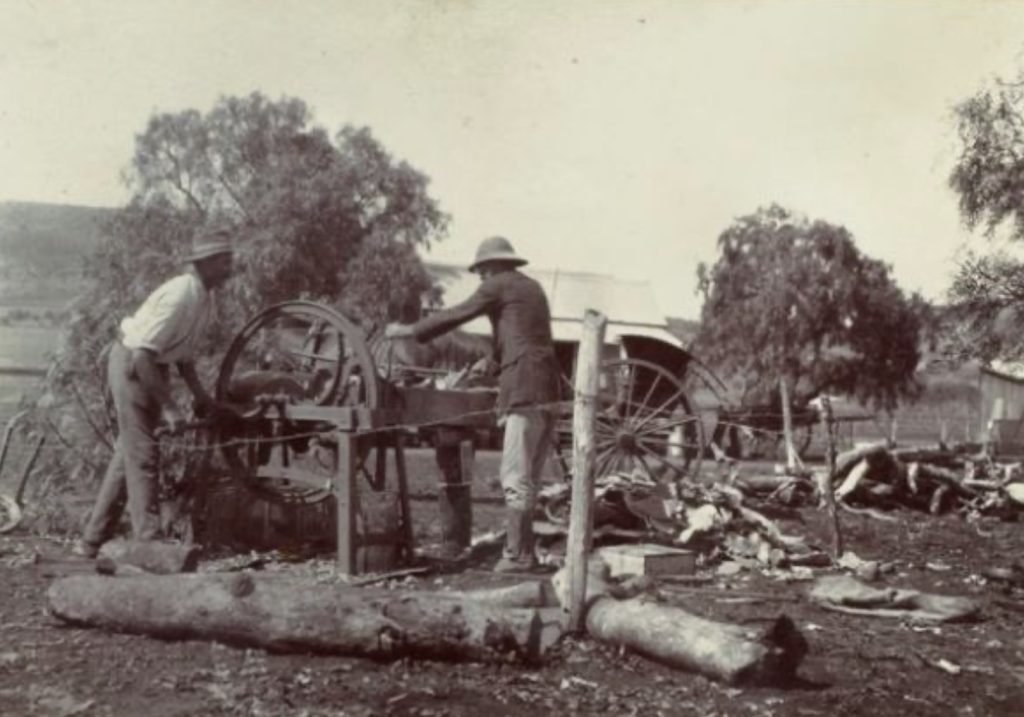
The pear encroached and devoured their land as fruit trees vanished behind walls of cactus, fences became pointless and stock tore themselves on spines as they tried to reach dwindling patches of grass. Kids walked narrow tracks cut between the pads, the oppressive walls leaning above them like the ramparts of a fortress. Even simple household routines were reshaped by the invasion. Activities like gathering firewood, mustering and going to school all became daily struggles against the prickly tide.
Neighbours shared similar stories. A farmer near Chinchilla reportedly resorted to carving steps into the packed walls of cactus to climb high enough to see his own homestead. In the longer-settled districts, elderly pioneers wept at the transformation of the land they had cleared by hand half a century earlier, now overrun by a hostile botanical invader.
These accounts do more than simply embellish the historical story. They remind us that the prickly pear infestation was far from just an environmental issue. It was a catastrophic agricultural, economic and emotional crisis that threatened whole communities.
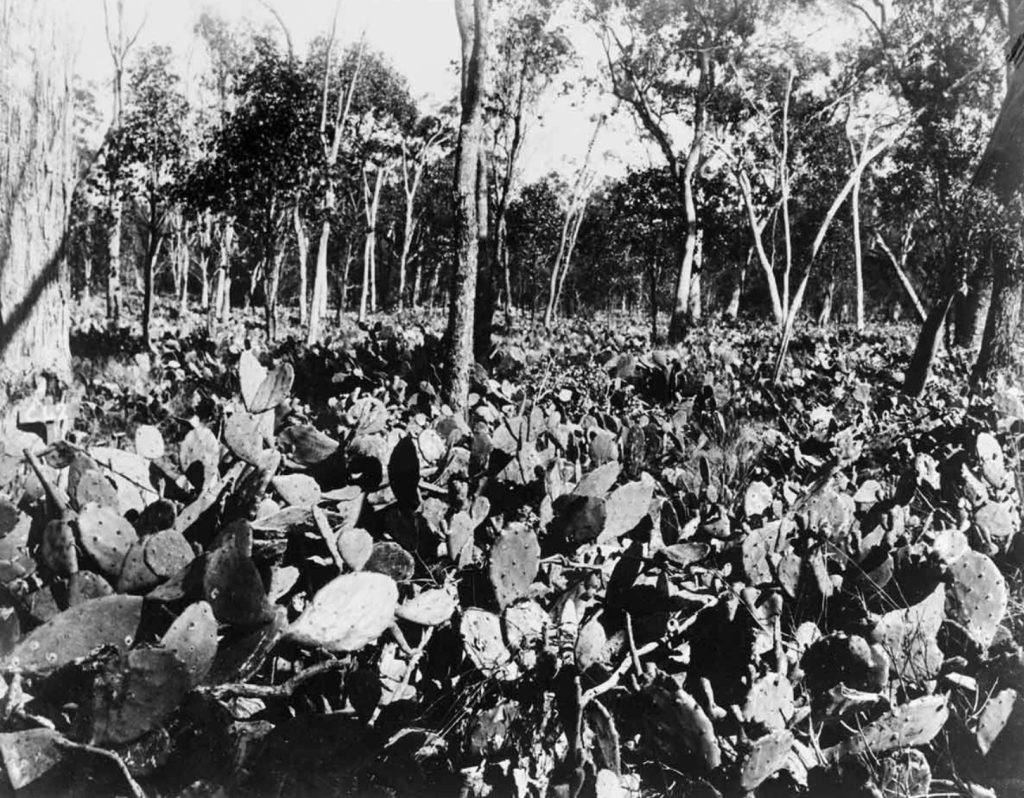
At its peak, the infestation formed a thick mass of cactus, usually four to six feet high and sometimes towering over 20 feet. More than 60 million acres were covered — an area larger than all of Great Britain and a huge chunk of Australia’s productive farmland. Even more concerning, the pest was spreading at about a million acres annually.
Government tries and fails to stop the green tide
By the late 1800s, governments were scrambling for solutions. New South Wales passed the Prickly-Pear Destruction Act 1886, establishing inspectors and requiring landholders to eradicate the pest. Queensland followed with similar legislation and, in 1901, offered a £5,000 reward (equivalent to half a million dollars in today’s money) for any workable method of destroying the crippling plague. Six years later, they increased it to £10,000. Hundreds of people applied, proposing schemes involving steam ploughs, crushing rollers, burning, arsenic pastes and sulphuric-acid brews. None proved successful. The pear grew faster than men could kill it.
Megan Martin’s family endured the despair that came with their properties, where men worked in teams digging, burning and poisoning only to see new patches emerge weeks later from unburnt roots or overlooked fragments. One relative wrote that no sooner had an area been cleared than:
The cursed stuff sprang back like resurrection weed.
The Australian Prickly Pear Experiment Station was founded in 1912 at Dulacca, Queensland, to explore chemical methods for controlling and eradicating prickly pear. Over four years, they carried out 10,000 experiments testing every affordable chemical substance.
In 1916, Director Dr Jean White announced, as a result of their experiments:
For poisoning prickly pear by either injection or spray methods there is no doubt that arsenic pentoxide is superior to all other chemical specifics.
A Royal Commission on Prickly Pear was conducted in 1923, and it highlighted that:
Arsenic pentoxide as a proven, unique-value prickly pear destroyer.
The 1926 Queensland Prickly Pear Land Commission Annual Report documented the immense scale of their efforts. Tens of thousands of tins of arsenic pentoxide and acid-based poisons were used each year.
One popular poison was Roberts Prickly Pear Poison, made in Wallangarra using locally sourced arsenic. It contained 20 per cent arsenic pentoxide and 80 per cent sulphuric acid. It was considered effective on large, old plants because the sulphuric acid broke down the outer tissue, allowing the arsenic to penetrate.
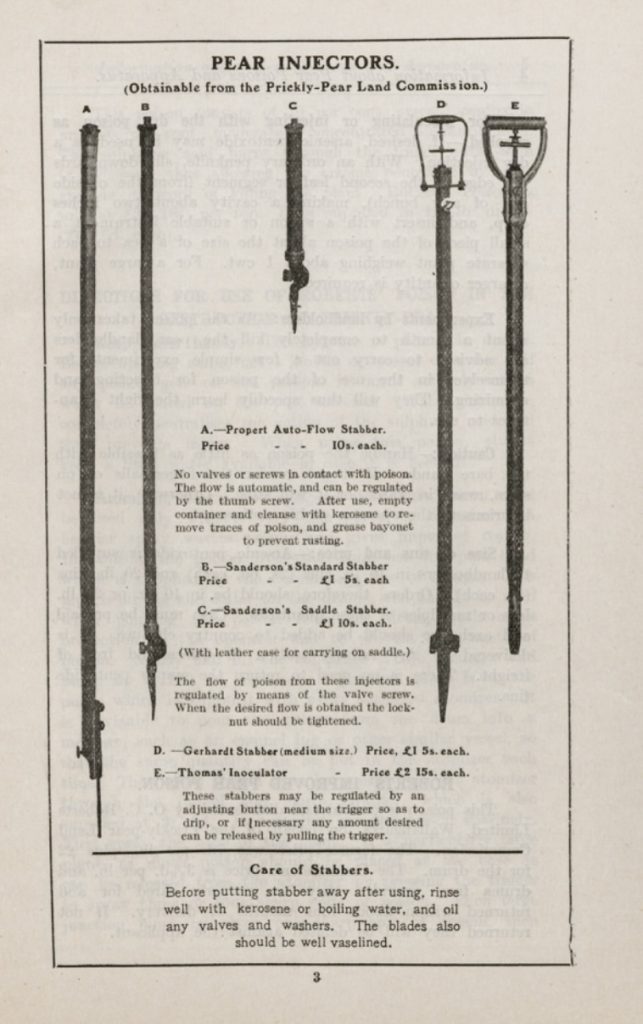
The poisons were either sprayed on by hand or using a formidable-looking “pear stabber” or spear to inject the chemical. A significant number of patented variations of the stabber were marketed, and the government subsidised their price. All had a terminal blade, an arsenic reservoir and a means of releasing arsenic when the blade was stabbed into the plant. More than 5,500 were sold in Queensland before 1930.
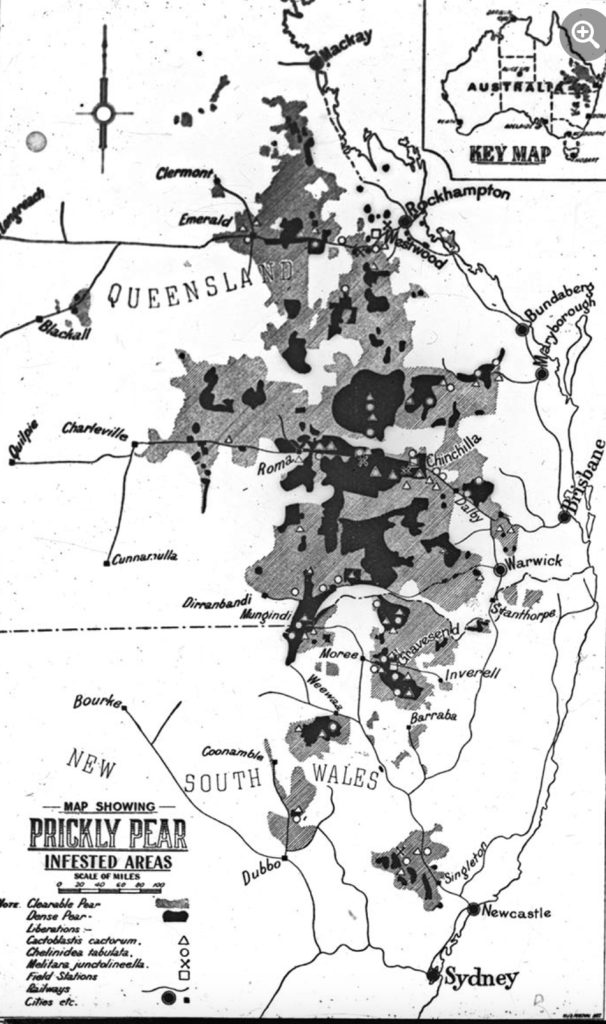
The government made it compulsory for landowners to try to clear their land of prickly pear. This was enforced through regular inspections by the Prickly Pear Land Commission. The penalty for failing to remove the pear was the loss of the land. However, it didn’t matter much, as many settlers voluntarily abandoned their allotments because of the hopeless outlook for controlling the pear. They were forced to resort to desperate measures that hardly slowed the spread, as the infestation outpaced all efforts to stop it.
A new idea: biological control
The turning point was not caused by poison or plough, but by science.
In 1913, the Queensland Government sent a travelling commission to South America, the native home of many Opuntia species. The Commissioners were surprised to discover that prickly pear in Argentina and Brazil did not take over the landscape at all. Instead, it was kept in check by borers, fungi and insects.
The promising observations were set aside when the First World War started in 1914, but after the war, the idea was revived. In 1920, the Commonwealth Prickly-Pear Board (CPPB) was established. Their main aim was to find a biological agent capable of controlling Opuntia stricta without harming other plants.
To lead the search, the Board appointed a young entomologist who would soon become synonymous with the entire enterprise.
Dodd’s mission and the search for a predator
Alan Percival Dodd and his team travelled extensively through Argentina, Mexico and other regions where prickly pear naturally grows. They studied insects and fungi that attacked the cactus and evaluated their suitability for Australian conditions. Dozens of candidates were identified, but one species stood out. It was the small cactoblastis moth (Cactoblastis cactorum), native to a small region of northern Argentina.
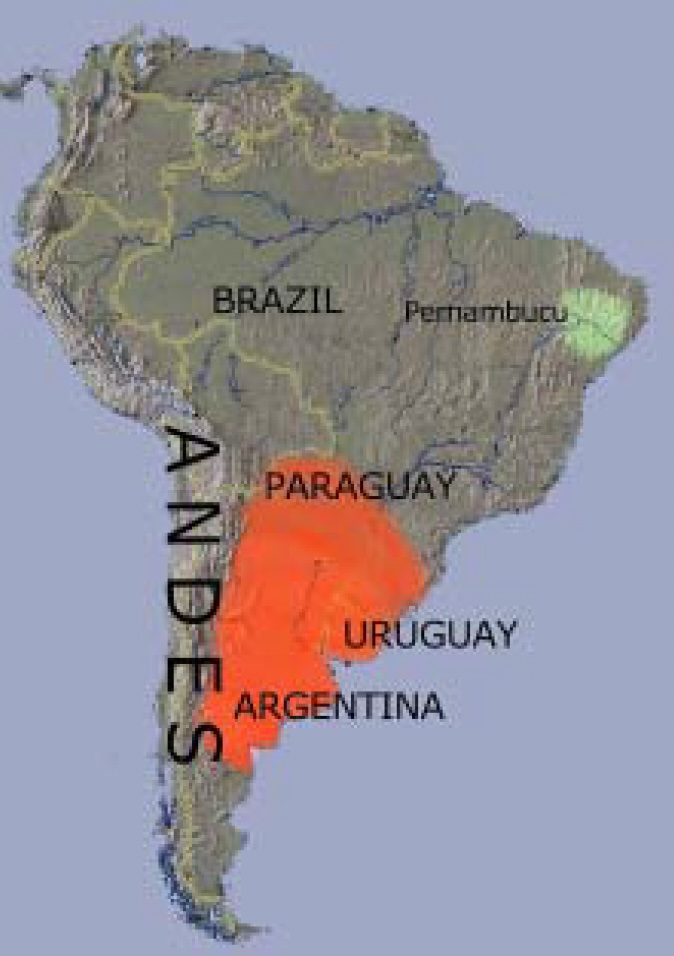
The female moth laid its eggs in neat “eggsticks” on the cactus pad. When they hatched, the caterpillars burrowed inside the pad and consumed it from within. More importantly, their host specificity was remarkable as they ignored nearly all plants except Opuntia stricta.
Dodd believed this was the moth Australia required.
Breeding the army: the Chinchilla Experimental Station
The CPPB established breeding facilities in Brisbane and at Chinchilla, which would soon become legendary in the history of biological control.
The initial attempts in the early 1920s were disappointing. Imported moths struggled to establish themselves, and mortality rates remained high. The breakthrough in Australia’s biological control effort occurred with the third introduction of Cactoblastis cactorum in 1925. In northern Argentina, at Concordia in Entre Ríos Province, scientists collected fully grown larvae from Opuntia delaetiana and a related species now classified as Opuntia paraguayensis. Their offspring — 30–50 eggsticks containing around 3,000 eggs — were shipped from Buenos Aires to Australia in March 1925. A small backup colony was removed during the stopover in Cape Town, though South Africa never released them. About 2,750 larvae arrived safely in Australia in May, and through careful breeding, Dodd and his team developed a thriving population that produced an extraordinary 2.54 million individuals within a year.
At Chinchilla, the moths underwent thorough host-specificity testing. They were offered dozens of alternative plants, including native succulents and economically important species. They would eat none of them.
By 1926, the scientists were confident enough to begin releasing.
The great release: 1926–1930
Beginning at carefully selected infested sites, the CPPB handed out eggsticks to farmers, landholders and field officers. They were manually attached to cactus pads, where the larvae would emerge, burrow into the plant and start their work.
The first field releases began in February–March 1926, and the program grew rapidly. Within 18 months, the team had mass-reared about 10 million eggs, and they soon no longer needed to depend on laboratory production as field-collected eggsticks became plentiful.
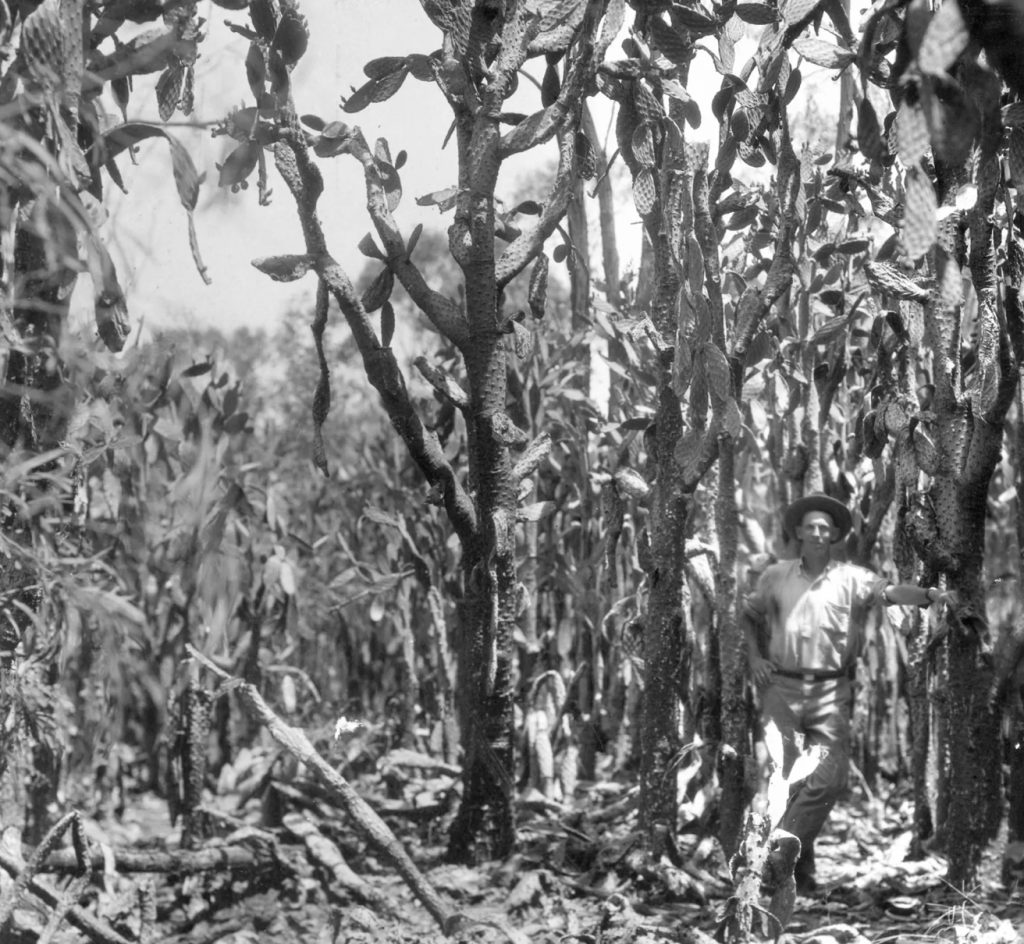
Between 1926 and 1930, an estimated 30–40 million eggsticks (containing 2.75 billion eggs) were distributed across Queensland and New South Wales. The scale of the task was enormous. Approximately 25,000 larvae were needed to eradicate Opuntia stricta infestation on each hectare. Yet the results were striking. By 1930, nearly all the original prickly-pear thickets had been wiped out to ground level, except for a few resistant varieties, in which only the tough, lignified trunks remained.
The results were beyond even Dodd’s optimistic expectations.
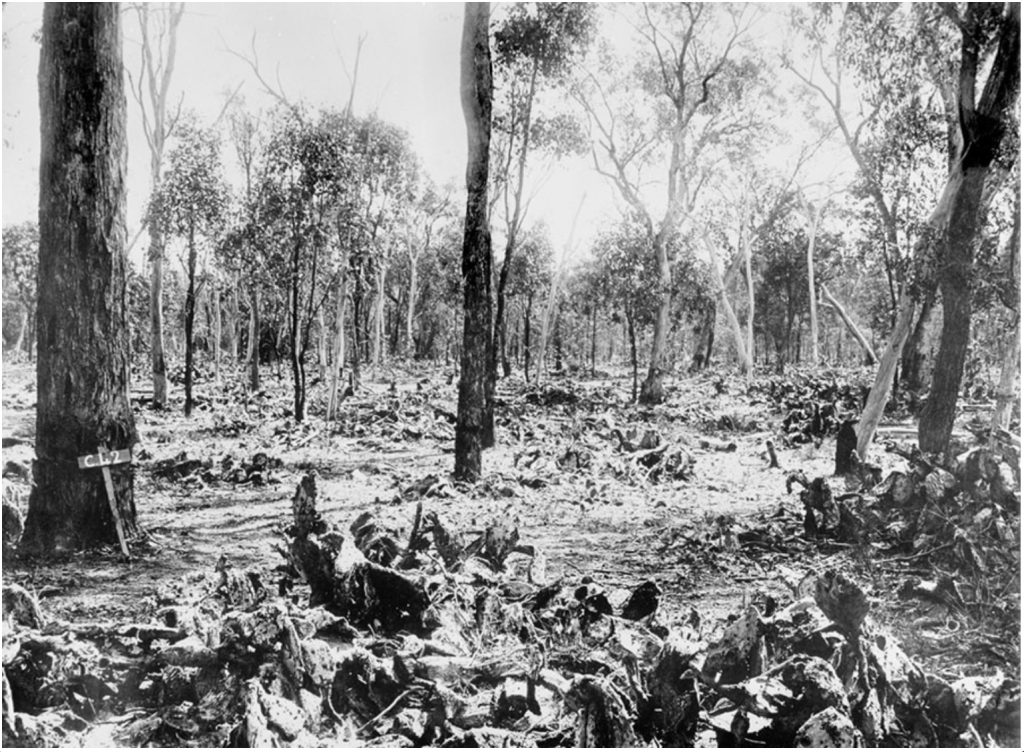
Within weeks, the pear at release sites turned into soggy, rotting masses. The caterpillars bred at astonishing speed. At the height of the program, Chinchilla was dispatching up to 14 million eggs daily across Queensland and New South Wales.
As the cactus collapsed, the cactoblastis population also dropped sharply, triggering a natural boom-and-bust cycle. During 1932–33, the pear experienced widespread regrowth, which then spurred a rapid resurgence of the moth.
Megan Martin’s family captured the moment the moths reached their property. A sea of cactus, which had withstood years of labour and chemical attacks, suddenly wilted and collapsed in a single season. Within two years, entire paddocks were cleared. The psychological relief was immense. One neighbour described the arrival of the moths as:
Like rain after a drought — life returned.
By 1935–40, the moth had effectively brought the major pest pear species under sustained, long-term control — a situation that has persisted since. Only certain environments, particularly coastal districts and parts of southwestern Queensland, remained challenging because local conditions, such as stressed, high-mucilage cactus pads, woody growth, or extreme summer heat, hindered larvae from penetrating pads or reduced adult moth fecundity.
By 1933, 80 per cent of Queensland’s infested land and half of New South Wales’ had been cleared of the prickly pear problem. In Australia’s history, no biological control has ever achieved this level of success.
Dodd wrote in 1940:
Although the introduction of this insect was expected to bring beneficial results, the most optimistic scientific opinion could not have foreseen the extent and completeness of destruction. The spectacle of mile after mile of heavy pear collapsed en-masse and disappearing in the short space of a few years did not appear to fall within the bounds of possibility.
Even today, the overall picture remains the same. Across most of the continent, cactoblastis continued to be one of the most successful biological control agents in world history.
Australia’s victory and the world’s cautionary tale
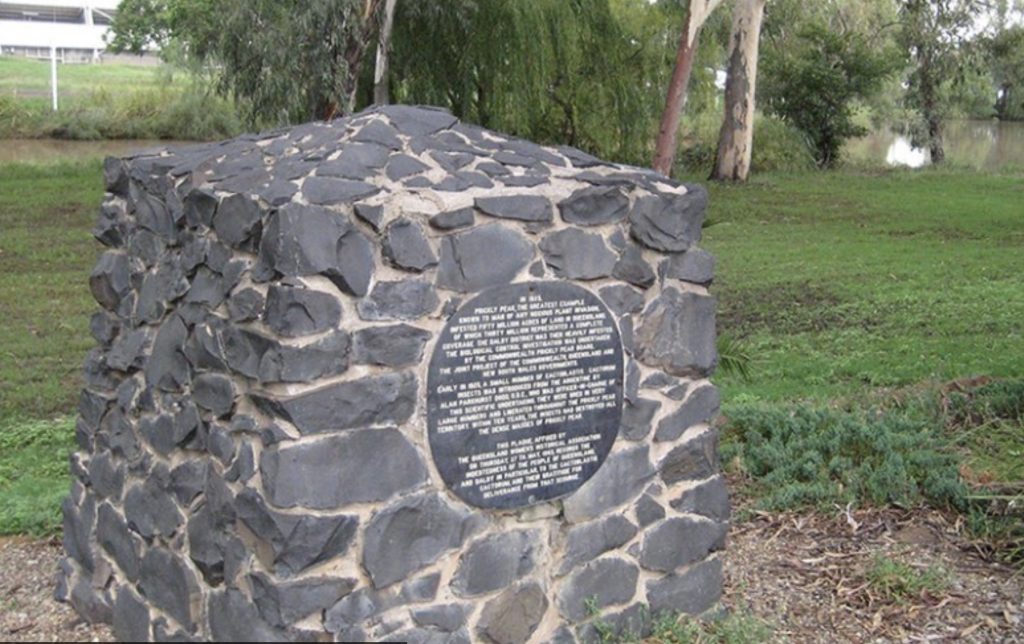
The cactoblastis campaign became an international success of applied science, to the point that Dodd was celebrated worldwide. Yet in later decades, the moth was exported to the Caribbean, where its lack of natural predators allowed it to attack native Opuntia species. From there, it spread to Mexico, threatening commercial cactus crops. It serves as a reminder that biological control can be effective but not without risks.
In Australia, however, prickly pear remains a controlled weed, and some non-host species still cause problems. But the devastation of the early 20th century has never returned. Indeed, by the end of World War II, the problem with the “pear” was just a memory. It had been brought under control and the people of Australia soon forgot about the battle with cactus in the chaos of post-WWII recovery.
Superb article Robert. I knew the broad outline but I’ve learned much from this blog. Only incidental item missed IMHO. Boonarga Cactoblastis Hall just east of Chinchilla commemorating that incredible moth and the sterling research work carried out. “Cactoblastis Memorial Hall is a heritage-listed memorial at Warrego Highway, Boonarga, Western Downs Region, Queensland, Australia. It was built in 1936 by Jack Schloss. It was added to the Queensland Heritage Register on 21 September 1993”. https://en.wikipedia.org/wiki/Cactoblastis_Memorial_Hall
Wonderful story that is almost forgotten. Those were the days when biologists were employed to help agriculture rather than stop it.
Great work Robert.
I remember visiting the hall called Cactoblastus Hall in Qld. This was some of Australia’s best science.
Alan Dodd’s work and the work of the Qld and Commonwealth control organisations needs to be better acknowledged in Wikipedia, it would be great to link your article in to that.
Thank you Robert, for your incredible article!
Thank you, Robert, for your last two articles – dugong because of Fraser Island and prickly pear because of the Dodd family.
I went to Foxdale State School with three Dodd siblings (one named Alan) who were grandchildren of Frederick, the Kuranda butterfly man.
Thanks, Rob.
As a Victorian originally (now a Tasmanian), I had only ever heard the phrase “Prickly Pear” but not what lay behind it.
Now I do. WOW, what a story!
Many, many thanks!
Allan
There is, in addition, a plant physiology angle, Robert.
The moth Cactoblastis cactorum locates its host, prickly pear (genus Opuntia ), primarily through highly sensitive chemoreception. Adult females detect specific volatile organic compounds released by the cactus pads (cladodes), effectively “smelling” suitable plants from a distance.
This nocturnal host-finding is likely enhanced by the physiology of the cactus itself: under Crassulacean Acid Metabolism (CAM), the stomata of the cactus open after dark, allowing uptake of CO₂ and subtly altering the boundary-layer chemistry around the plant—often increasing local CO₂ flux and modifying humidity and scent plumes.
These night-time changes may sharpen the chemical signature and make host plants more detectable to the moth. Once near, females rely on contact cues—surface chemicals, texture, and microclimatic signals—to confirm suitability before laying eggs in characteristic stick-like clusters (egg sticks) on or near the spines.
After hatching, the larvae act gregariously, entering the plant collectively through a weak point or by boring directly into the pad, guided by both chemical gradients and the cactus’s physical structure.
Full marks on your continuing knowledge sharing.
Gary
Good one Robert. The problem still lurks with a number of Harrisia cactus species, declared pests that can potentially infest similar soils and habitats to prickly pear. And tiger pear is still out there too. Yet people still grow these pest species to harvest the fruits as a source of dye for cottage crafts.
An excellent article, Robert. So few people know about this miracle that I was surprised anyone would know it was 100 years since the insects were first released in trials.
We plan to recognise the Centenary of the first pear plant in Australia to be destroyed by Cactoblastis cactorum in September [12/13] this year. As several of my family members were directly involved at the time, I would like to contact you next week after Easter if that would be convenient for a chat.
Hi Margaret. Look forward to the chat. I will email my contact details.
Excellent article, Robert, and rightly celebrates Alan Dodd’s efforts.
Reading the basics of the Cactoblastis in a school science book in 1972 put me on the path to a career in biology!
But the reports from those living through it made this much more interesting.
Robert, a great article, a timely reminder of the many disasters visited upon us via the unthinking/deliberate importation and establishment of various botanical and animal species.
As a sidebar, I recall as a Qld forestry cadet in western Qld cypress forest, being dispatched in a work gang to inject Harrisia cactus with arsenic pellets. A time of very casual WH&S constraints. The pellets came loose in a 20-litre drum from which we hand-loaded the injection guns.
The rolling of cigarettes and the consumption of food were conducted without scrupulous hygiene. They were different times.
Another outstanding piece of research and delivery, Robert. Well done.
Like so many, I knew of the prickly pear challenge and how it was eventually overcome, but not to the extent that you have presented so well in this article.
What I found particularly interesting was the care the scientists took to evaluate the potential negative impacts of introducing a foreign control agent into a new environment, remembering that this work was done nearly a century ago. Great quality science.
Thanks also to Gary Bacon for your contribution to plant physiology.
Most interesting, and a great article Robert. Thank you.
Especially interesting to me was the comment by Gary Bacon. The plant still just persists on the Double Island Point headland, where, according to old Forestry files, lightkeepers were fighting a losing battle to keep the pest from overrunning the headland and actually endangering lighthouse operations in the post-WW1 era.
With limited availability of fresh water for use with poisons, the lightkeepers were throwing the plants over the cliffs, helping spread the plants into inaccessible places and around the foreshore – until the arrival of successive releases of the Cactoblastis insect.
The 1923 Cleminson maps of the Cooloola area record infestations of the cactus also in the dunes from the Freshwater area to the DIP headland and near the old Tewah Creek crossing. One local pointed the finger at emus spreading the plant, but said nothing about the annual grazing of the area by hundreds of cattle.
Interesting, thanks, Ron. I have information about attempts to control the pear on Fraser Island near the Sandy Cape lighthouse. Their battle probably mirrored their counterparts at Double Island Point.
I will be writing a blog about that topic in the future.
Hi again, Robert. We have just returned from a tour in South Australia where I was surprised to see prickly pear in a number of locations.
Of the 25 people on the tour, none had heard of the prickly pear problem from the early colonial days. I always carry a copy of the booklet “The Last One Standing- The Shed”, a poem prepared for a celebration we had for the 90th year of the shed’s existence.
The short history at the beginning and the map of the distribution astounded those who read it. I also told them about the current problem with coral cactus in the Longreach/Winton area.
Part of our tour was a flight over Anna Downs station [Kidman country], which covers 5,000,000+ acres and “larger than all of Wales “, the pilot informed us.
On back on the bus, I must confess that I told the group the area covered by pear in Queensland was more than 60,000,000 acres and there was more over the border in NSW. Of course, it is hard to imagine.
I have just re-read your article as our Centenary celebration/recognition -12/13th September is drawing near. There will be some guests from the retirement village present who would be most interested in reading it, and some who will have family stories to contribute. Since so few people know little more than “an insect was brought from Argentina and it cleared the pear” or this extract from a young journalist who wrote, “then an unassuming entomologist by the name of Alan Pankhurst Dodd tried a different tack, sailing to Argentina in 1925, where he collected 3,000 eggs from the tiny cactoblastis cactorum moth. By 1927, he had multiplied that sole shipment into 1,700 eggs.”
This prompted me to prepare a book – “There is Much More to the Story than a butterfly net- An insight into the work behind the scenes.” This will be introduced at the gathering, as several will have had family members involved in collecting both cocoons and eggsticks. On the tour bus, there was a lady from the family of Schloss – the builder of the Cactoblastis Memorial Hall! Small world.
As I did not have your contact with me, I will forward the information. [They have continued on to kangaroo Island.]
Thank you again for your wonderful article.
Pingback: Fallen Forms & Feathered Friends: Weranga in July – mod conned