
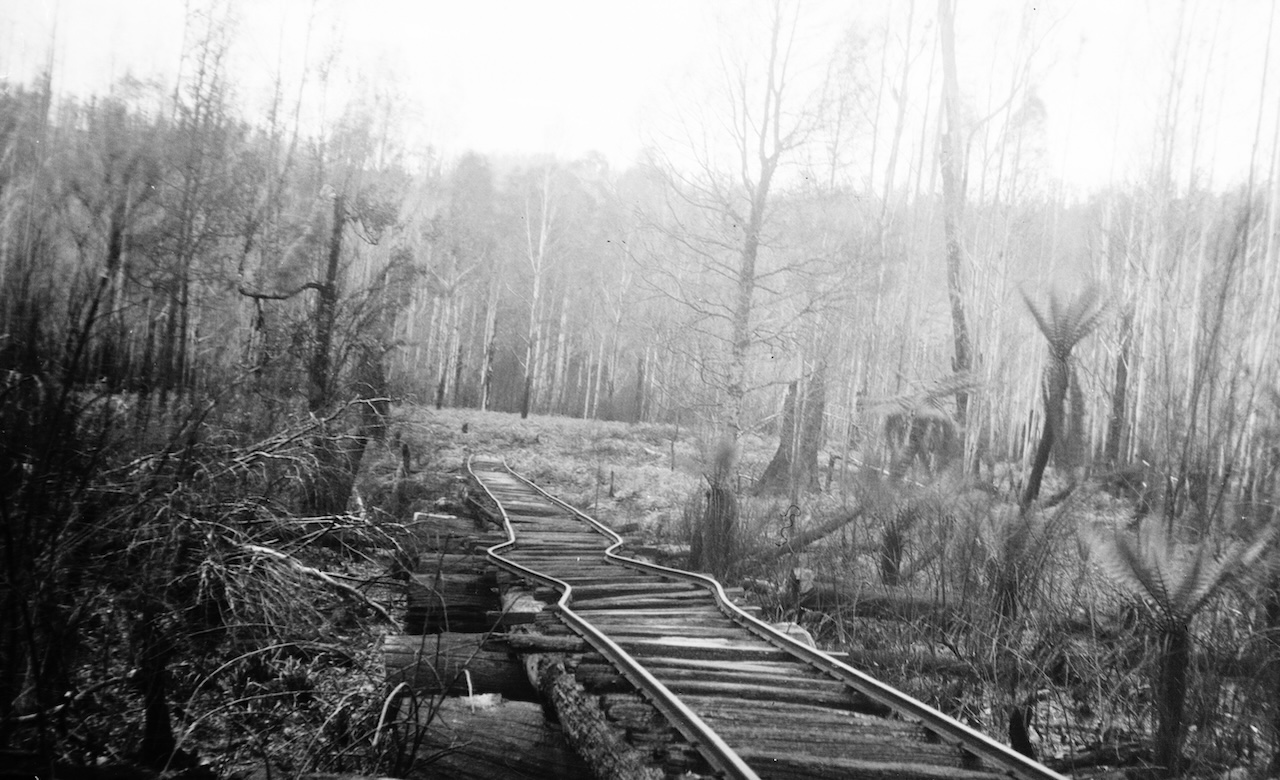
The bushfires that swept across Victoria in 1926, a hundred years ago, are not as ingrained in Australian folklore as Black Friday in 1939 or Black Saturday in 2009. There are no monuments, no school references and no shorthand name etched into the national psyche. One reason is that there was no royal commission or formal inquiry to investigate what went wrong and how to prevent it from happening again. Without an official report, the story of those fires faded into obscurity. Yet they were among the most significant in Victoria’s history because they occurred at a time when those responsible for managing the bush were engaged in debate about how fire should be handled.
Foresters, trained in European ideals, were determined to exclude fire altogether from the forests, believing it was the enemy of good forestry and a destroyer of valuable timber. Graziers held the opposite view, arguing that without periodic burns, the bush became overgrown with underbrush and fuel. Their burning, however, was often opportunistic, aimed not at preventing future fires but at opening land for pasture.
The tragedy of 1926 was that neither side fully recognised how dangerously high fuel levels had become, or how quickly the dry forests of Victoria could turn into a blazing furnace.
The 1926 fires did not emerge from nowhere. Victoria had already experienced several disastrous bushfire seasons that should have acted as warnings. The so-called “Black Thursday” fires of 1851 burned nearly five million hectares across the colony, driven by scorching northerly winds and an abundance of dry fuel after years of pastoral burning and clearing.
Almost half a century later, the “Red Tuesday” fires of 1898 swept through South Gippsland, destroying over 2,000 buildings and claiming over 12 lives. Then, in January 1906, another significant blaze spread across the Dandenongs, Warburton and the Otways, again under extreme heat and drought.
Each of these fires showed the same pattern of heavy fuel build-up, widespread land clearing, careless burning and a lack of coordinated management. Still, despite these lessons, little changed.
By the 1920s, fuel levels in the forests had increased again, and the expanding patchwork of settlements made controlling them even more challenging. The fires of 1926 were therefore not unusual but the outcome of decades of neglect. It served as a wake-up call that Victoria could no longer ignore if it wanted to manage its forests safely and sustainably.
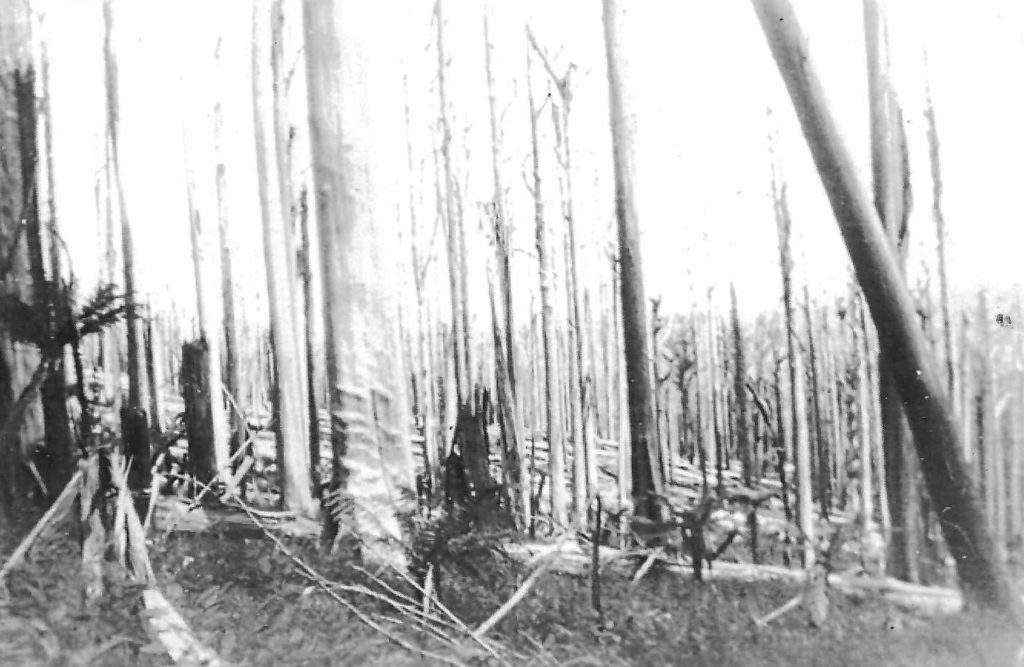
A land once tended by fire
To understand how the 1926 fires started, it is essential to look back to a time before European arrival, when Aborigines carefully managed the Australian bush through fire. They used firesticks for thousands of years to hunt, protect camps, promote new growth and shape the landscape into a patchwork of fuel and regrowth. Regular, low-intensity burns prevented heavy litter buildup and kept the land open and park-like, with gentle, predictable flames becoming the norm rather than destructive disasters.
That balance broke down when Europeans arrived. Indigenous fire practices were halted, as they were displaced, and the bush – no longer regularly burned – became thick, fuel-heavy and unpredictable. As fire historian Stephen Pyne put it:
Much of Australia had effectively become fallow, like a field gone to weed. Once tended by the firestick, it now lay sullen, ready for a spark.
Without the guidance of Aboriginal fire, large blazes became both more likely and more destructive. By the early twentieth century, Victoria’s forests were stacked with heavy fuels from decades of fallen branches, bark, bracken and leaf litter. As the population expanded into forested valleys, the risk of catastrophe grew.
Foresters and the imperial creed of fire exclusion
When Victoria established the Forests Commission (FCV) in 1918 and employed professional foresters, it inherited a mindset from the imperial forestry schools of Europe and India. In that belief system, fire was regarded as the enemy of good forestry: something to be suppressed rather than understood. The new FCV concentrated on protecting the state’s valuable timber reserves. It started building firebreaks, lookout towers and patrol roads in the hope that vigilance and quick response could keep the forests safe.
However, Australia’s bush was not a European pine forest. Eucalypts need occasional fires to regenerate. The understorey, if left unburnt, would quickly accumulate. Some foresters – such as Western Australia’s Stephen Kessell and Queensland’s Edward Swain – recognised this and began advocating for controlled burning as an essential tool. Yet in Victoria, where the professional culture was based on the idea of “fire exclusion,” this approach faced resistance. Controlled burning was seen as crude and risky, and a throwback to the “wasteful” habits of graziers and settlers.
A settled land, an unsettled fire policy
In the years after the First World War, Victoria opened millions of hectares of Crown land to soldier settlers. By 1921, around two million hectares had been allocated. These new farmers and graziers were required to clear land for pasture, often relying on fire as their main tool. Many lacked experience in the unpredictable conditions of the Australian bush. They built fences and boundaries that made large-scale controlled burning difficult, turning what was once a continuous forest into a patchwork of private holdings with varied fuel loads.
Sawmilling expanded in the forests at the same time, especially in Gippsland and the mountain ash forests of the Central Highlands. Mills left behind heaps of bark, offcuts and sawdust, providing perfect tinder for summer fires. Local laws banned fire lighting during certain seasons, but prosecutions were rare. When drought gripped Victoria in the summer of 1925–26, the stage was set.
While it is true that much of the country burned in 1926 lay within wet sclerophyll forests around Warburton, Powelltown and Noojee – ecosystems usually too moist to support regular, low-intensity fires – the human story surrounding them was anything but passive. These tall mountain ash forests were being steadily encroached upon by settlers and sawmillers, attracted by rich soils and valuable timber. Places like Powelltown epitomised this frontier. Legislation encouraged settlers to “improve” their selections, which in practice meant ringbarking and clearing. Each summer, they gathered to burn the fallen trees and the previous year’s dry slash, often under dangerously hot, windy conditions.
At the same time, pastoralists grazing the adjoining drier foothills and open country saw the thickening understorey as a threat to grass growth. Their solution was burning too frequently, often indiscriminate fires meant to clear the land rather than prevent larger blazes. They used the dry conditions to conduct effective burns, clearing scrub, blackberries, and other weeds to focus on their own needs without considering their neighbours.
Between these two forces, the bush was either overburnt at the wrong times or left to build up fuel. Foresters watched with concern as these uncontrolled burns spread into state forests. Yet their refusal to adopt prescribed burning left them with little practical way to respond. The result was a combustible stalemate – an uneasy coexistence of overzealous settlers, anxious graziers, and cautious foresters – each contributing, in their own way, to the conditions that made the fires of 1926 so devastating.
For foresters, this reckless burning conflicted with their belief in forest protection through fire exclusion. The 1926 fires only strengthened their determination to keep fires out of the forests. They realised that to achieve their aims, they had to somehow stop the fires that mysteriously appeared on their boundaries, dividing the forests from the neighbouring private or leased land. What made this more difficult was that these fires were lit under conditions that made them almost impossible to control.
The fires of 1926
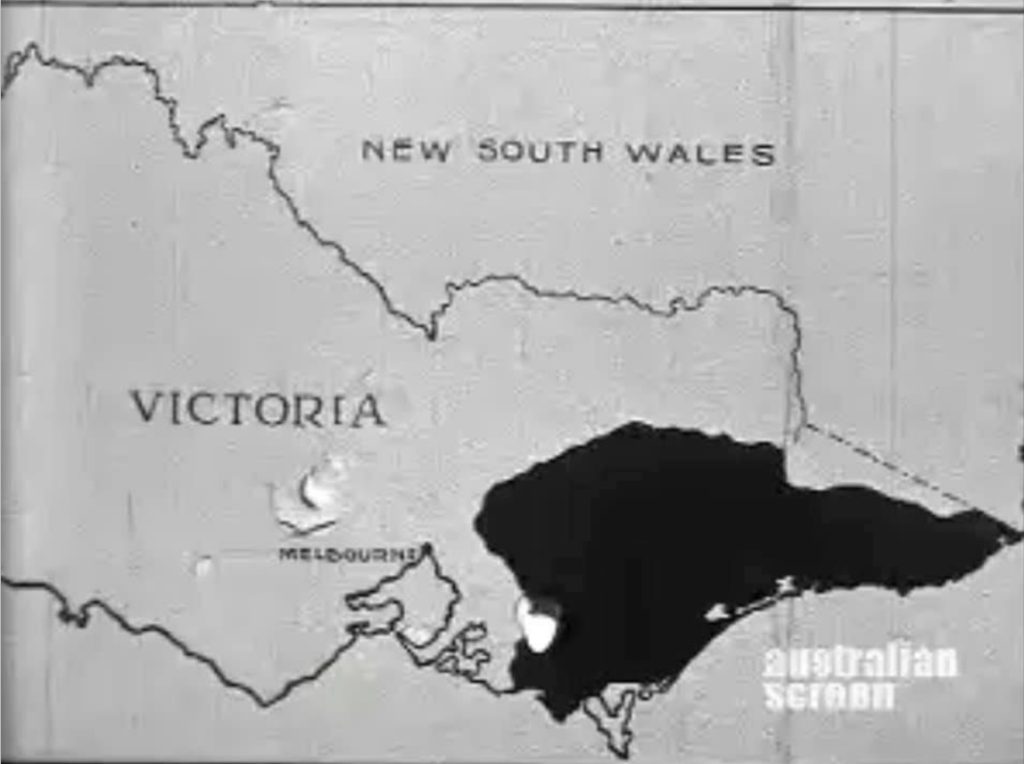
The fires that began in late January 1926 spread through February and March, peaking on Sunday, 14 February – known locally as “Black Sunday.” According to official figures, about 390,000 hectares of forest and farmland were destroyed across Gippsland and the Yarra Ranges. Sixty people lost their lives, a thousand buildings were destroyed, and entire towns were under threat or wiped out.
In the period leading up to February 1926, the forests and foothill country east of Melbourne faced a dangerously unfavourable combination of conditions. Many forested areas, especially around Warburton, Powelltown, and the Dandenongs, had accumulated heavy layers of understorey litter, dead bark, branches, and logging residue. This served as fuel that had built up over years of limited fuel-reduction burning and increasing settlement. For instance, heritage surveys report that fires started in late January on the slopes of Mount Donna Buang. By February, “small individual fires had come together as well as winds of up to 97 km/h” in the region.
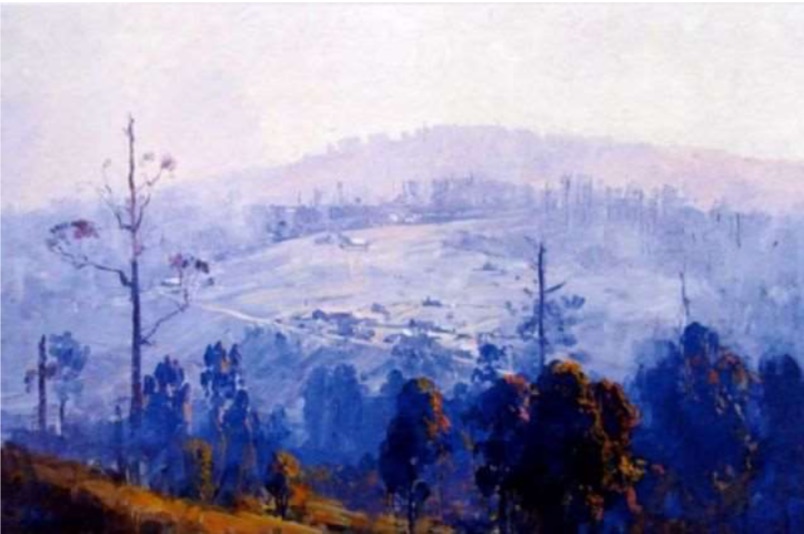
The settlement pattern around Powelltown and Warburton had become increasingly complex, with sawmills and timber tramways penetrating deeply into the bush. Powelltown had tramways serving remote mills, holiday or cottage developments, farms and grazing areas fringed by dense bushland. In many of these places, local burning by graziers and settlers for pasture occurred under relatively informal regulation but was often poorly managed.
Meanwhile, the official forestry and fire-protection agencies still mainly followed a “fire exclusion” doctrine rather than a systematic fuel management approach.
These conditions left the bush country vulnerable with multiple potential ignition sources, high fuel loads, steep terrain and limited access. The fire weather leading up to February 1926 had been dry, setting the stage for a major event.
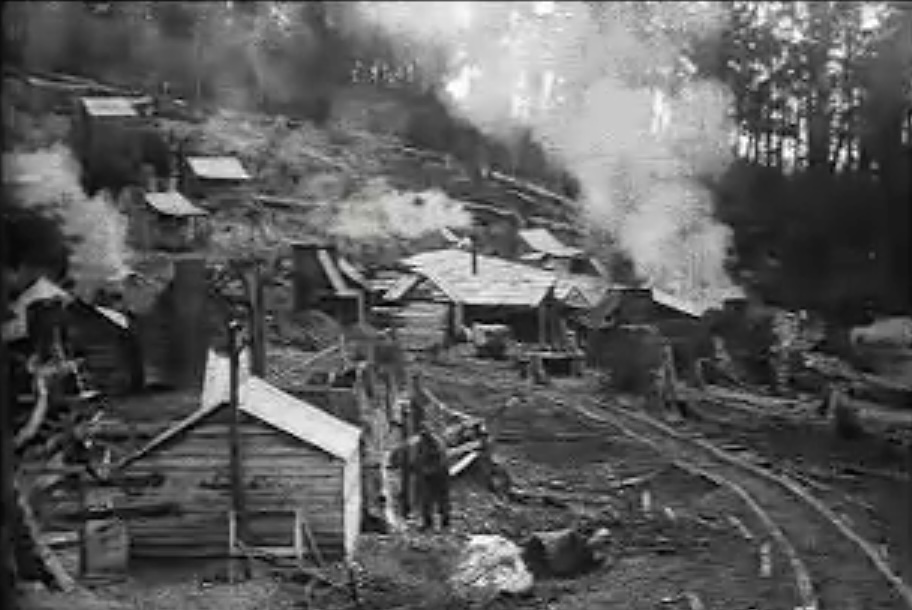
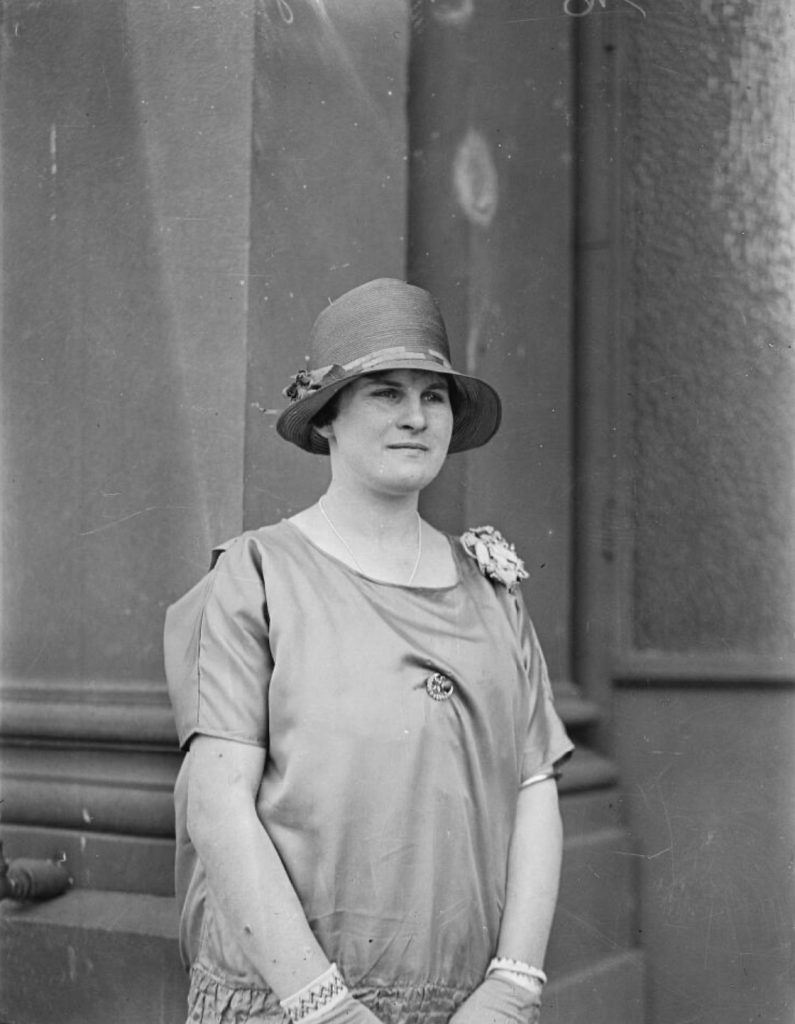
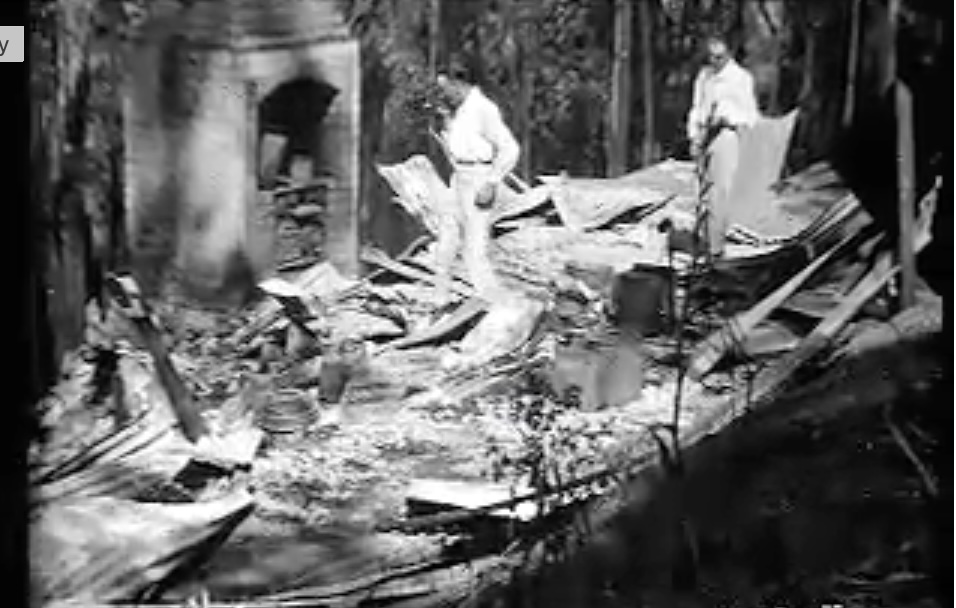
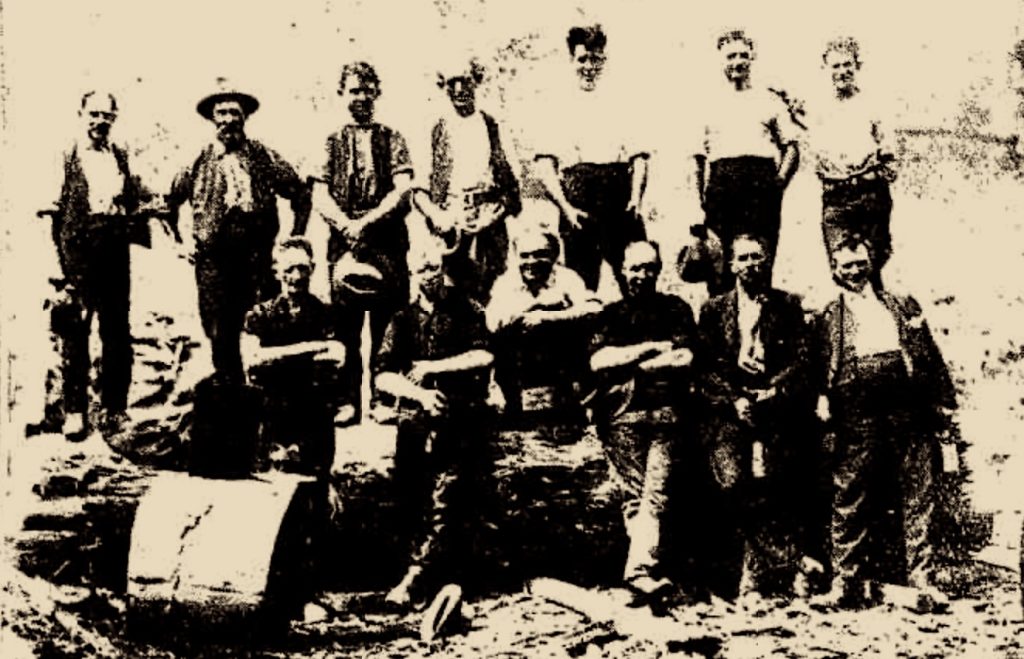
In the Powelltown valley region, the fire’s behaviour was stark and brutal. In the steep, forested country around Gilderoy, Big Pats Creek and Powelltown, sawmills and settlements lay directly in the path of the flames. A detailed case study recounts how the sawmill camp at Mackley’s Creek, the Horner & Monett’s mill, was engulfed when the fire front passed. Fourteen-year-old Florrie Hodges, working at the camp, helped carry two young children to safety through burning scrub and creek beds, with her legs badly burned.
Photographic and archival sources indicate that every house in the settlement was destroyed, though the mill itself was spared. The tramway network supplying the mills in the Powelltown area reportedly lost at least a dozen sawmills.
The terrain here is steep and remote, with narrow timber tram tracks, limited road access, and heavy timber loads, including leftovers from previous logging. When the fire front arrived, it moved quickly. One account describes the family fleeing along the tram track, the fire overtaking them and forcing them to seek refuge in a creek bed. The high winds, steep slopes and continuous fuel made escape and suppression extremely difficult.
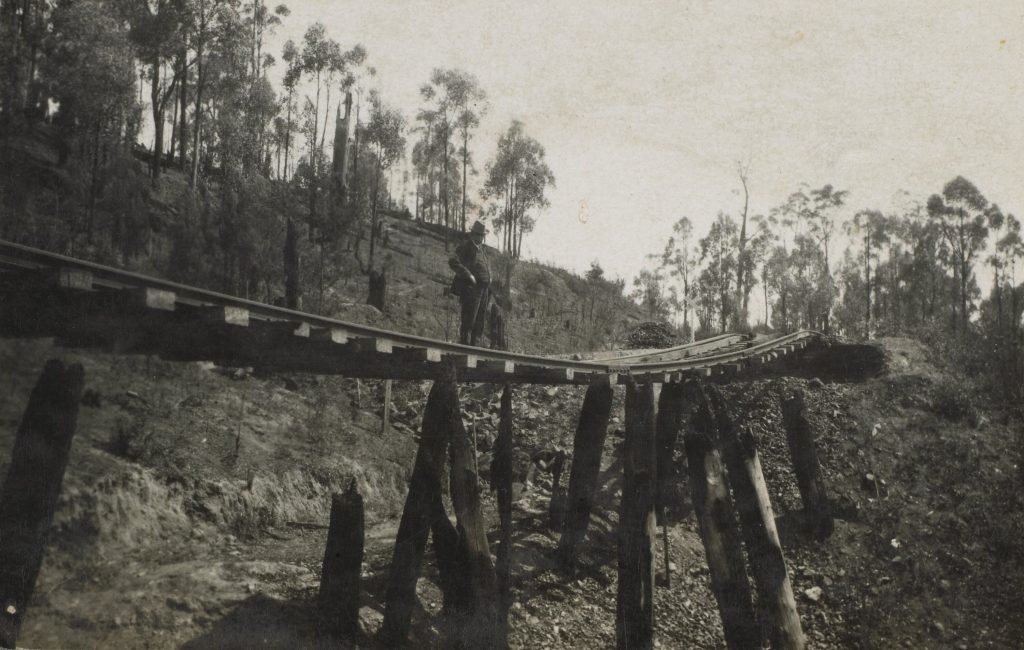
At Worlley’s At Gilderoy, fourteen men lost their lives when fire overtook the sawmill. Others perished while trying to escape down the forest tracks towards Warburton. A further six died at Big Pats Creek. In total, thirty-one people were killed in the Warburton district alone. Further east, the timber town of Noojee was nearly wiped out. A relief train sent from Warragul had to halt when a burning bridge collapsed underneath it. Telegraph lines were down, roads blocked, and for days, the outside world remained unaware of the devastation in the hills.
In town after town, the pattern was the same with people trapped in sawmills, homes reduced to ash, bridges destroyed, fences gone and hundreds of livestock lost. When rain finally arrived in early March, the fires eased, leaving behind a blackened forest and an exhausted region.
An accurate and consistent tally of those killed remains elusive. An accurate tally of those who lost their lives remains elusive. Assessments range from 30 to 60, but the official figure from the state government’s relief fund in November 1926 put the toll at 30, though 31 is also commonly quoted.
The Dandenong Ranges also suffered from severe fires. On “Black Sunday,” fire fronts driven by gale winds swept through the area, destroying buffer vegetation around Melbourne’s foothills. A clip of the event from archive footage shows cars driving along smoke-filled roads with bush on fire on both sides. FCV made the film to raise money for the bushfire relief efforts. Unfortunately, during the filming, the commissioners and the minister were caught in the flames near Morwell and were lucky to escape.
Heritage survey reports indicate that the fires devastated the Dandenongs, with limited access for suppression, significant property losses, and runs of fire sweeping downhill towards populated fringe areas.
In one inquest into deaths in the Warburton and Powelltown districts, the coroner recorded that many of the victims had attempted escape but been overtaken by flame or had collapsed in the forest. In Noojee, also part of the fire zone, the entire town was destroyed, except for a few buildings, such as the Methodist church, the hotel and the motor garage, which survived.
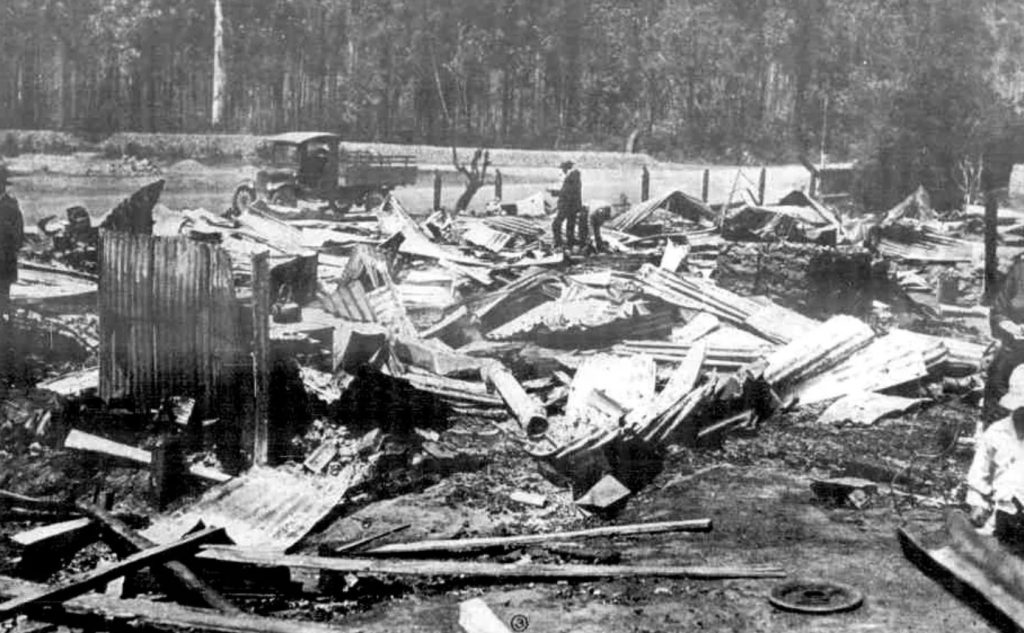
The industrial impact was also severe. Sawmilling operations were disrupted, tramways destroyed, and logs lost. The timber industry in that part of Victoria, which heavily relied on these mills and transport networks, faced prolonged setbacks. For example, at Powelltown, the loss of a dozen mills supplying the tramway system highlights the fire’s economic toll.
From a fire-management perspective, the 1926 events in these districts highlight several interconnected failures.
The build-up of dead timber, understorey, logging slash and remaining forest debris meant that when the fire ignited, it had plenty of continuous fuel. The fact that the mill settlements were surrounded by thick bush worsened the risk. Many fires were started by human activity and then merged during the extreme wind event of 14 February. Many small fires on ridges merged into large fronts under gale-force winds of up to 100 kilometres per hour. Powelltown and Warburton are both in rugged country with narrow roads or tramways; fires in such terrain are harder to fight, escape is more difficult and spotting and early suppression are challenging.
At that time, local firefighting resources were limited. For example, firefighters were typically equipped with only damp hessian sacks and beaters. The ability to coordinate a suppression effort across the terrain of Powelltown, Warburton and the Dandenong Ranges was weak. The settlements were situated within forested areas, sawmill camps were exposed and the interface between human settlement, industry and forest was high. This exposure increased both the loss of life and the loss of property.
The local debate between foresters who wanted to exclude fire and graziers who burned for pasture led to no unified fuel management strategy. The mill communities, the graziers, the settlers and the forestry authority were not acting as a coordinated system.
In the Powelltown example, the fact that the mill survived while houses were lost suggests the mill might have had some protection or luck, but the wider settlement was left extremely vulnerable. The death tolls at Warburton (especially among mill workers) indicate that industrial operations in remote bush settings were particularly hazardous when the fire front arrived unexpectedly and under high wind.
The combination of flames during extreme weather conditions with very strong wind gusts transformed what could have been smaller, localised fires into a disastrous “mega-front” blaze. The human toll, property damage and industrial disruptions were substantial, yet there was no official investigation or major policy change in the immediate aftermath.
The 1926 fires illustrate that they were not simply natural or inevitable. While the terrain and climatic conditions may have been preconditions, the scale of the disaster was heavily influenced by the build-up of fuel, settlement patterns, industrial presence and limited fire management strategies. They also emphasise the importance of access, evacuation planning, industrial site fire safety, local coordination between forest and settlement areas and the necessity of fuel reduction or planned burning before the event.
These local cases illustrate the deeper story behind the 1926 season and help explain why this event should be seen as a turning point in Victoria’s bushfire history.
An uneasy peace
Although there was no royal commission, the 1926 fires subtly shifted attitudes. They revealed the shortcomings of the current fire-exclusion approach and highlighted the risks of uncontrolled burning by settlers. Each camp blamed the other. Foresters complained that graziers’ “careless burning” had destroyed valuable forest. Graziers argued that the exclusion policy had allowed dangerous fuel loads to build up. Both perspectives held some truth. FCV increased its focus on constructing access roads, firebreaks and lookouts, but its core philosophy remained reactive – fighting fires when they broke out rather than managing fuels beforehand.
The years after 1926 were marked by slow progress in learning. FCV expanded its fire-protection network by constructing lookout towers, installing telephone lines and establishing patrol tracks through the high country. It conducted minor burns in logged coupes and near settlements, but large-scale fuel reduction was uncommon. The policy of total exclusion, aimed at keeping fire out of the forest, still dominated government thinking. By the summer of 1938–39, Victoria’s forests were primed for another disaster. When intentionally and carelessly lit fires merged during a hot, dry summer in January 1939, the Black Friday tragedy burned nearly two million hectares and claimed seventy-one lives.
After Black Friday, Victoria could no longer look away. The government appointed Judge Leonard Stretton to conduct a Royal Commission into the causes and management of the fires. His report condemned both the careless burning of settlers and the complacency of forest managers who had allowed dangerous fuel to build up. Stretton’s recommendations transformed fire management, calling for systematic fuel reduction, coordinated fire control across land tenures, improved access, better communications, and education for landholders.
In hindsight, some of the clearest insight into what went wrong came not in 1926 but 13 years later, when Commonwealth Forester Charles Edward Lane-Poole told the inquiry that the nature of Australian fires had changed profoundly since European settlement. He stated that:
Fires in the blackman’s country were very small in comparison with those in our day.
He added that they had been less frequent and less intense. Drawing on tree-ring studies, peat deposits and other research, he concluded that modern fires were both more frequent and more destructive.
Yet, while this evidence pointed to the moderating influence of Aboriginal burning, Lane-Poole did not accept that the prevailing forestry doctrine of fire exclusion was at fault. On the contrary, he told the Commission that the common belief in dangerous fuel accumulation under fire exclusion was “incorrect,” and argued that repeated burning actually caused thick regrowth, whereas forests protected from fire would, over time, become more open and less susceptible to severe fire. He also noted that Australian fire laws had been largely borrowed from overseas systems and needed adaptation to local conditions, but he remained firmly committed to the principle that forests should be protected from fire rather than regularly burnt.
Stretton’s recommendations for the Royal Commission transformed fire management, calling for systematic fuel reduction, coordinated fire control across land tenures, improved access, better communications, and education for landholders.
The legacy of a forgotten fire
The 1926 fires have largely faded from public memory, overshadowed by later disasters. However, in many ways, the infernos that swept through Warburton, Powelltown, Noojee and the Dandenongs marked a turning point that Victoria failed to learn from. They vividly revealed the consequences of neglecting fuel buildup, ignoring Aboriginal knowledge, and trusting imported European forestry doctrines unsuited to the Australian bush. Essentially, it was the result of neglect.
When the flames died, so did the urgency. Without a royal commission or formal inquiry, the lessons were neither formalised nor debated. FCV, exhausted by the season, concentrated on rebuilding mills and restoring tramways. Sawmillers were left to sift through the ashes, replace equipment and salvage what timber they could. Local councils and newspapers lauded the bravery of firefighters and mourned the dead, but within months, attention shifted elsewhere. What could have been a crucial moment in bushfire reform instead became a missed chance.
The fires exposed a philosophical split between those who aimed to keep fire out and those who used it freely. It remained unresolved. Foresters kept trying to protect the bush from flames, while graziers burned when it suited them, often without coordination. The idea of “light burning” as a planned management method still lacked official support. It would take another thirteen years and a further tragedy before Victoria would bring those opposite views together under the practical leadership of Judge Stretton.
In hindsight, 1926 functions like a dress rehearsal for Black Friday. The patterns were the same: years of drought, dense fuels, dispersed settlements, limited equipment and a reactive suppression approach. The foresters’ fear of fire had created conditions ripe for its most destructive form. As historian Stephen Pyne later noted, fire is neither inherently good nor bad. It is a process that must be understood and managed, not simply fought. The 1926 fires showed that misunderstandings can have devastating consequences.
The human aspect of the disaster also influenced local memory. In communities like Powelltown and Warburton, stories of heroism and loss were quietly handed down. Families like the Hodges, who survived the firestorm at Mackley’s Creek, exemplified both the danger and resilience of those living near the forest. However, beyond these districts, the wider state appeared reluctant to face what the fires revealed: that settlement, forestry and grazing could not safely coexist without a shared, science-based approach to fuel and land management.
The legacy of 1926, therefore, lies not in legislation or inquiry, but in the long shadow it cast. It was the moment when Victoria’s forest managers could have embraced an Australian understanding of fire — one grounded in ecology rather than ideology. Instead, that opportunity slipped away, and the cost was paid in 1939.
What I find truly frightening is that a hundred years on, as we face more frequent catastrophic fires that test our resolve, the ghosts of 1926 still whisper from the ash a warning that fire cannot be banished from this land, only understood and respected. The real tragedy is that we keep forgetting what history has already taught us, and the real danger is not the flame, but our stubborn refusal to learn those lessons, as we allow the bush to return to the fateful conditions of high fuel loads seen a hundred years ago.
Well researched. Highlights again how we continue to fail in fuel and fire management.
Great article. In south east Australia in particular, we are still in a megafire cycle, because of inadequate levels of prescribed burning and strong advocacy for reliance on rapid detection and suppression. There’s a false belief that we can ‘technology’ our way through the bushfire threat with fire detecting satellites and cameras, water bombers, etc. This alone has and will continue to fail, because firefighters will eventually be completely overpowered by fires burning in heavy fuels under bad fire weather conditions. As you note, Lane-Poole foresaw this almost 100 years ago.
The Stretton Report, following the 1939 fires, underlined the comments made here. Interestingly, Stretton held one of many public meetings at the Kinglake hotel, which had been rebuilt.
As stated before, the recommendations of the Stretton Report have been repeated in almost every inquiry or report since, yet they continue to be ignored or forgotten.
1926 bushfires were not restricted to the ash country of eastern Victoria. SA (Mount Pleasant) also had bad fires in February 1926, but the worst in NSW and Qld were later in October – over 2 million ha burnt in NSW from the north coast to Albury and out to Dubbo (forest, grazing and farmlands), and the blackbutt regrowth forest at Mapleton behind the Sunshine coast also resulted from these 1926 October fires.
Australia has never, and probably will never, come to terms with its severe fire climate.
No amount of technofix with boys’ toys controlled by urban cowboys nor limited prescribed burning by rural brigades will make this country fire safe, particularly now that the forest services have been disbanded, methinks irresponsibly by state governments, and their fire management infrastructure effectively dismantled.
Increasing areas of peri-urban development abutting forest areas all along the east coast will continue to exacerbate the problem as this is not matched with concomitant investment by governments in the critically necessary fuel and fire management to protect these areas, let alone the forests and rural areas that increasingly are being affected by wildfire, e.g., the recent Victorian fires around Longwood.
As the song says, “when will they ever learn?”