
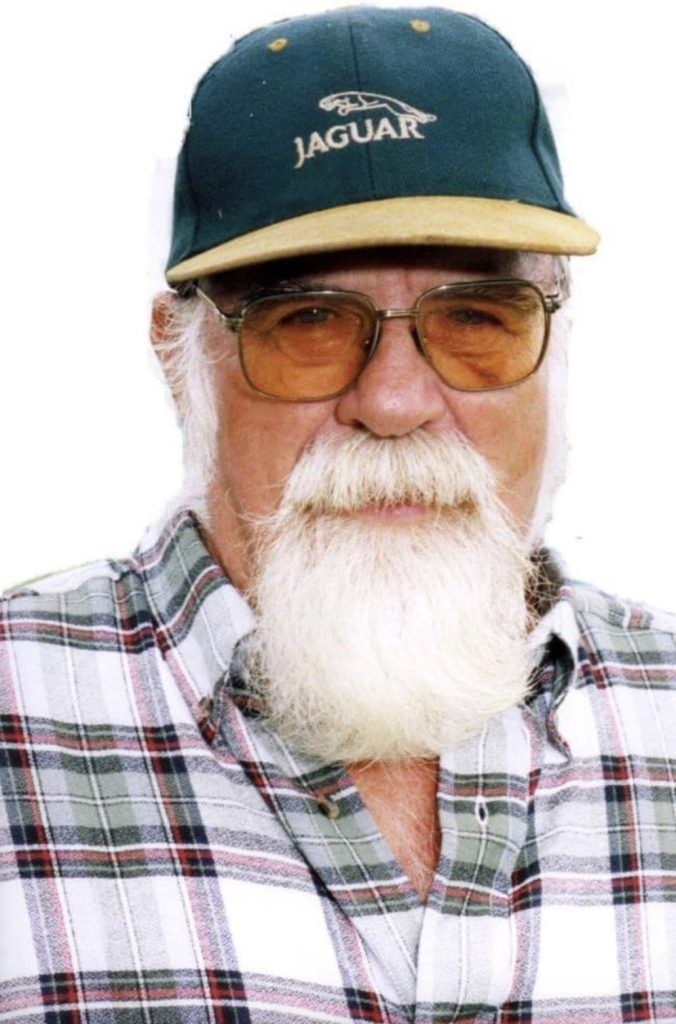
Early struggles and bare hands
In 1959, a young newlywed named Sid Melksham visited Fraser Island for his honeymoon. Back then, for most people, the island was wild, sandy, and remote. There were no resorts, no four-wheel-drive buses, and no ferries full of tourists running back and forth. Getting there was tough, facilities were minimal, and unless you were a fisherman, a forestry worker, or one of the few locals making a living, the place wasn’t on many people’s radar.
But Sid wasn’t like most people. While others saw isolation, Sid saw opportunity. While others felt the hardships, Sid felt potential. That honeymoon trip planted a seed that would shape the rest of his life and, in time, the very future of Fraser Island itself.
He wasn’t a wealthy entrepreneur with deep pockets. What he did have was determination, a gruelling work ethic, and a stubborn streak that wouldn’t let him walk away from a challenge. So, bit by bit, he started to build a life and a business on the island.
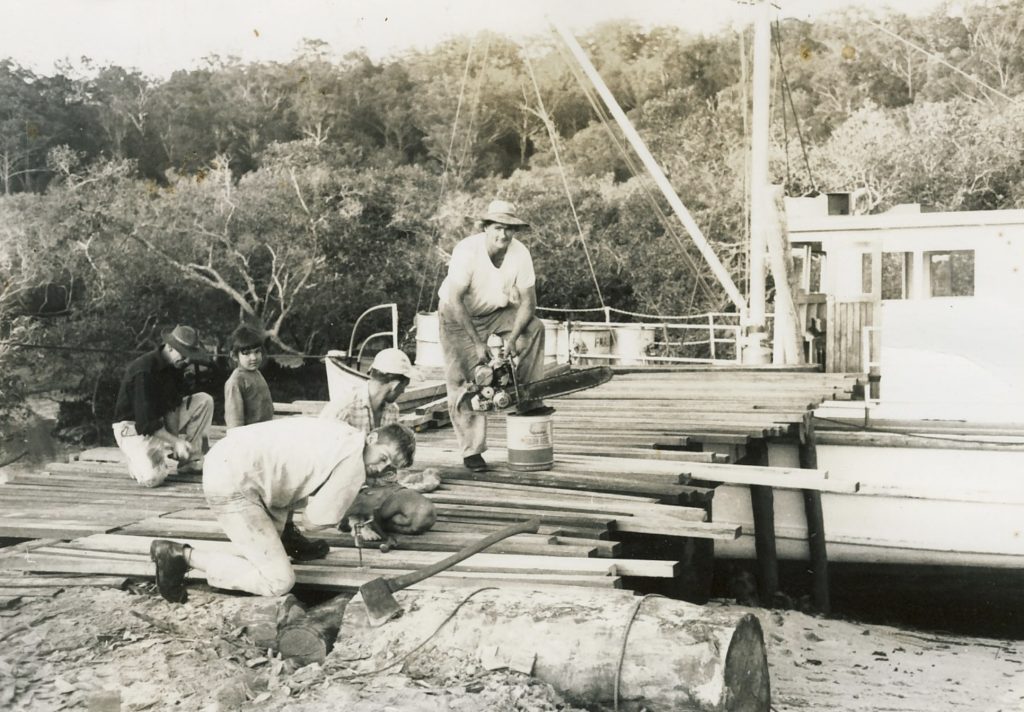
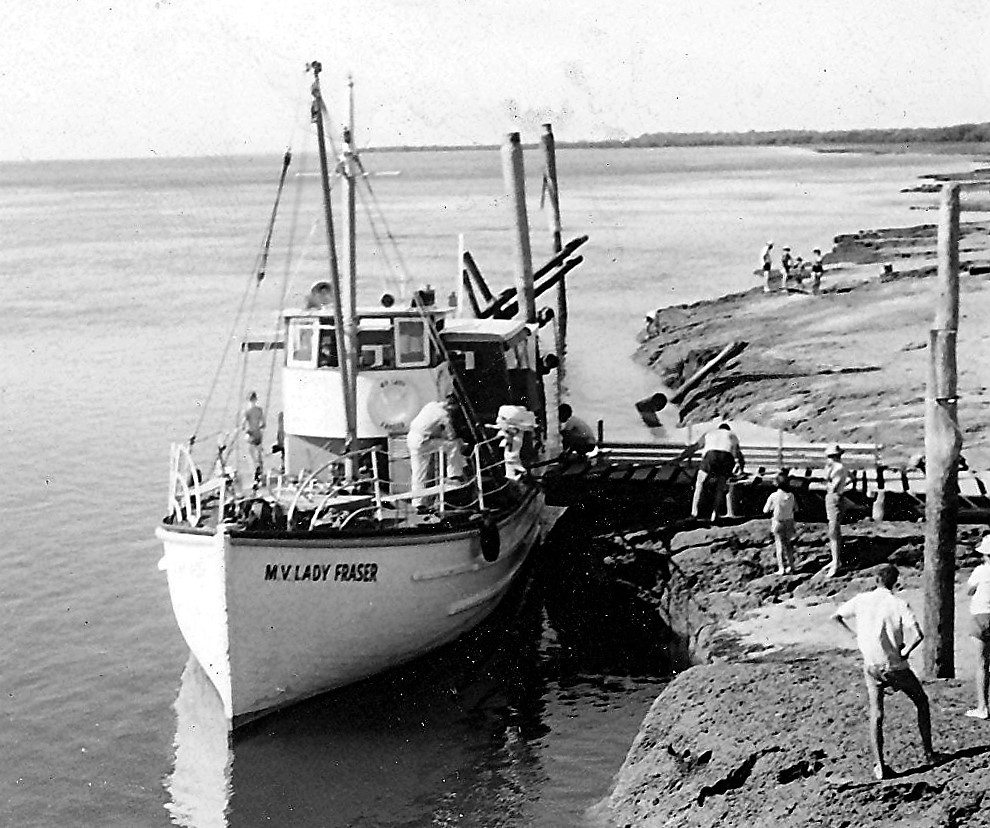
Those early years were tough. Materials had to be hauled all the way from the mainland, often by boat. There were no streamlined systems or logistics chains. It was just sweat and hard work. Sid often ran these trips himself, transporting everything needed to start building on the island. The loads were heavy, and the work never let up.
Those who knew him well tell stories of his almost superhuman strength. He thought nothing of lifting a whole 44-gallon drum – close to 200 kilos – and shifting it around like it was a sack of flour. Alone, he’d muscle-build supplies off the boat and wrestle them through soft sand to where they were needed. His body was the crane, the forklift, and the wheelbarrow, all rolled into one.
As he said himself:
I didn’t have enough education to know it couldn’t be done, so I did it.
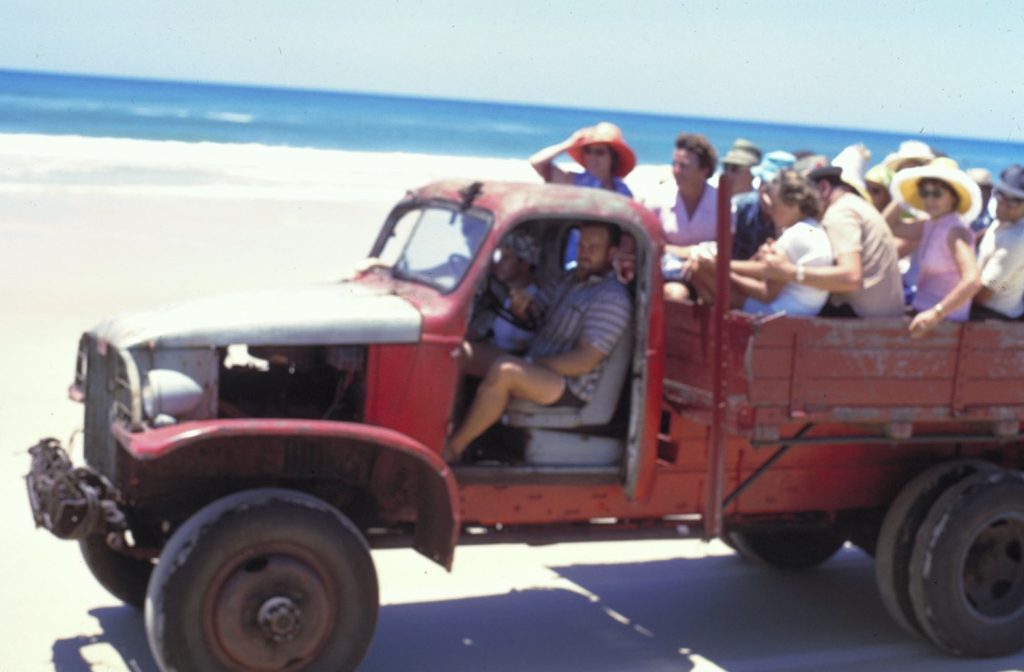
As his long-time partner Angela Burger wrote in her book The Last of the Barefoot Tycoons, when he bought his first boat that was stranded in a muddy creek for £60, it was:
The start of a tourism empire, that 43 years of persistent hard work later, comprised a holiday resort with accommodation for 600 people, restaurants, bars, shops, five vehicle and passenger ferries, two large commercial catamarans and the largest 4WD coach fleet in Australia.
A quiet character with steel inside
Sid wasn’t a flashy bloke. He shunned the limelight, rarely sought recognition, and preferred to let his work speak for itself. He wasn’t one for long speeches or loud opinions. He was quiet, often reserved, and gave little away.
But behind that quietness was steel. He valued loyalty above all else. If you worked hard for him, Sid would look after you. Many of his employees stayed with him for years because they knew he’d stand by them. But if you crossed him, you’d definitely feel it. His temper, when stirred, was formidable and unforgettable.
He earned the nickname “Savage Sid” when misfortune struck. His short but fierce temper flared when his old gear failed him, requiring a hefty repair in the remote environment. But, as Burger notes, his outbursts were quick and soon forgotten, as he managed to channel his frustration into a strength that enabled him to achieve what others could only dream of.
One of his habits became legendary. When he was ruffled or angry, Sid would first bite his finger, and if that feeling persisted, he would move towards his forearm. It wasn’t just a playful nip. He’d clamp down hard, sometimes until he drew blood. Forestry employees, who often had tense dealings with him, began to “rate” their encounters based on the bite. A small dent in his finger? Just irritation. Teeth marks and a bruise on his forearm? Sid was furious. Blood running down his arm? You’d better start worrying.
It was both terrifying and, in hindsight, darkly amusing. Stories of “how hard Sid bit” spread through the ranks like a secret code. It was his way of venting his fury without unleashing it on someone else, although the message was always loud and clear.
Sid wasn’t all fire and fury, though. Those who worked closely with him remember a man whose kindness ran just as deep as his temper. His staff remained fiercely loyal to him, not because they feared him, but because they knew he cared.
One example came years after Sid and Angela left the island in 2002. A former employee rang him in distress, worried about another long-time staff member who was struggling badly. Without hesitation, Sid said, “We’ll take him on Route 66.” And that’s precisely what happened. Together they set out on a month-long drive from Los Angeles to Chicago. By the end of it, the man turned to Sid and said,
You’ve shown me there is life after what I was going through.
The trip inspired him to write a book about the adventure and share his story with groups around Hervey Bay. For him, it was nothing short of life changing.
Building an island empire
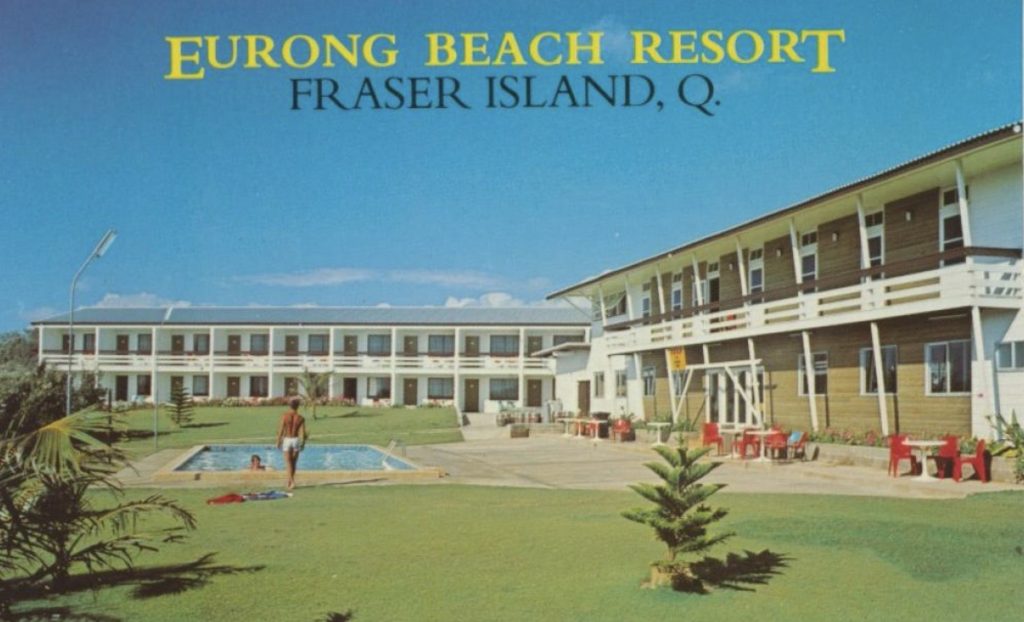
Bit by bit, load by load, Sid’s efforts grew into something far greater than anyone could have imagined. From scratch, he built Eurong Resort, which became the heart of tourism on Fraser Island. What started as a few rough buildings turned into a proper resort that could welcome visitors and provide them with a base to explore the island.
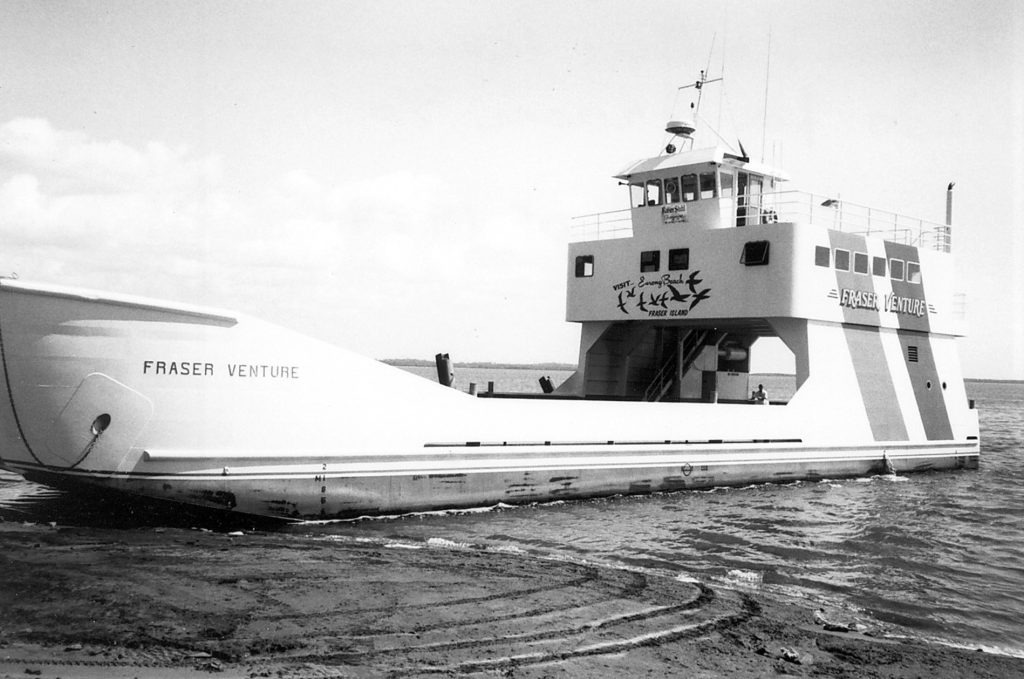
He built ferries to carry cars and people across from the mainland, breaking down the isolation that had always defined Fraser. Suddenly, visiting the island became possible for everyday holidaymakers, not just the hardy or adventurous.
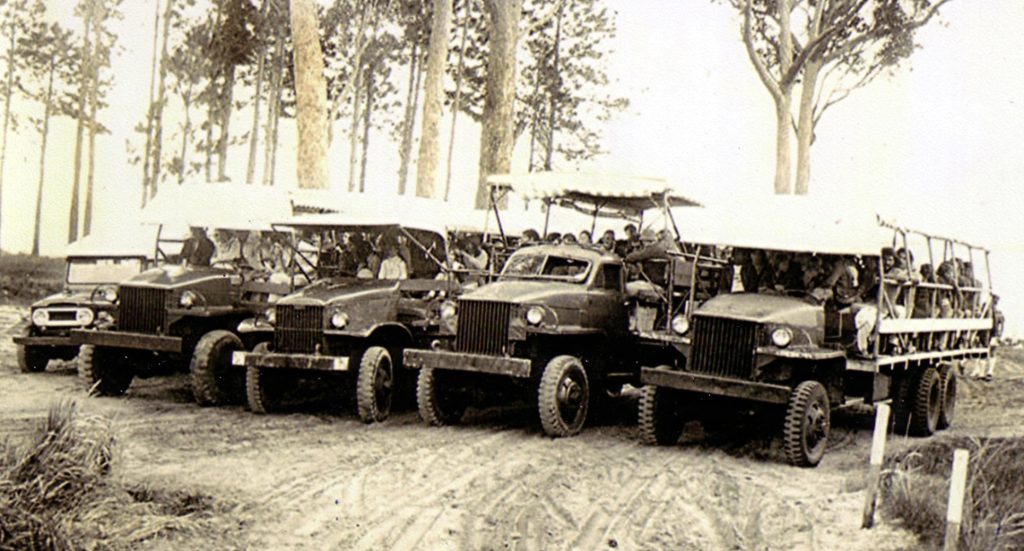
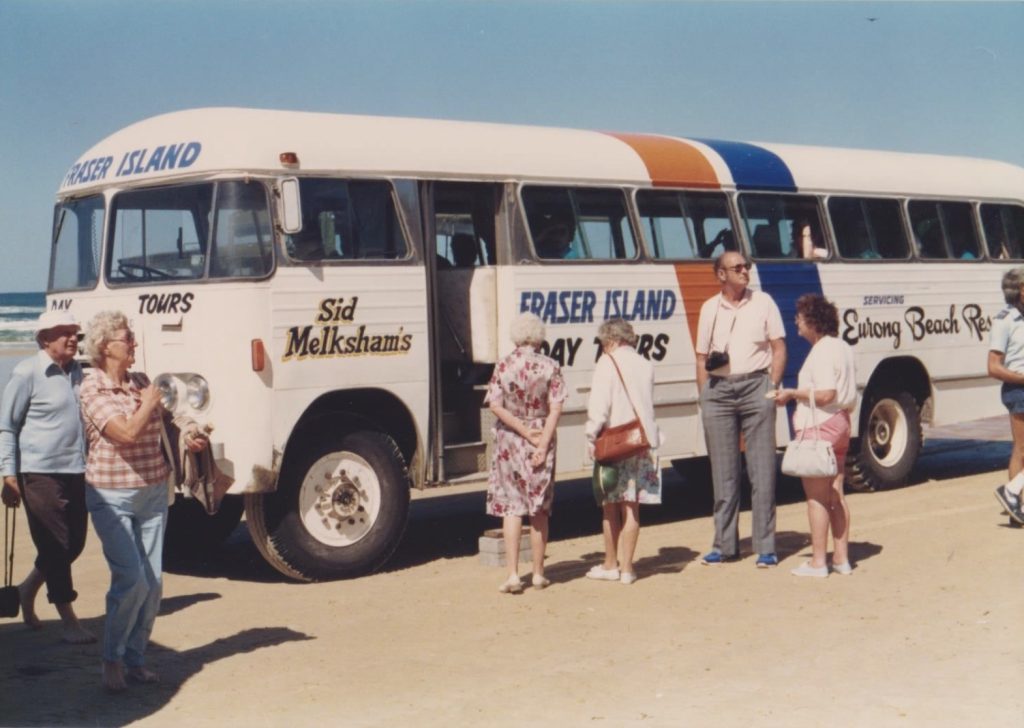
Then came the fleet of four-wheel-drive buses. Sid expanded this operation into one of the most recognisable features of Fraser Island tourism. Those massive buses, bouncing along the beach highways and inland tracks, became iconic. For many visitors, their first experience of Fraser was from the “windows” of one of Sid’s buses, the sand flying beneath them as they rattled toward Lake McKenzie, Eli Creek, or Indian Head.
He turned a wild idea on his honeymoon into a thriving business that opened the island to the world.
Sid the fighter
Perhaps the most iconic story about Sid involves Cyclone Dora in February 1971. When the cyclone threatened to tear apart one of his first buildings at Eurong, most would have run for cover and hoped for the best. Not Sid. He climbed onto the roof, was tied spreadeagled for 15 hours in the pouring rain, and held on physically through the howling winds to stop the iron sheets from ripping off. It was reckless, maybe even crazy, but it worked. More importantly, it revealed the man he was. A stubborn, fearless bloke who wouldn’t let go of what he fought to build.
As Burger writes:
The incident illustrated Sid’s utter determination in pioneering a tourism industry…it was just one of many astonishing feats in a lifetime of working against the odds in near isolation that made Sid a legend, and changed the face of Fraser Island.
Of course, none of this was easy. Sid’s journey was a constant struggle with authority. He had little patience for red tape and bureaucracy, and the foresters on the island often found themselves at odds with him. He wanted to get things sorted quickly. They wanted forms and approvals. Sid’s temper and resolve usually saw him push through, though not without leaving a trail of arguments behind.
Then there were the environmental battles. John Sinclair, the passionate and unyielding activist, became Sid’s most well-known adversary. Where Sinclair saw a fragile wilderness to be safeguarded at all costs, Sid saw an island that could support tourism if appropriately managed. Their clashes became legendary as two strong personalities collided over the future of Fraser Island. For years, their disagreements shaped the debate, influencing not just the island’s history but also the broader conversation about preservation and development across Queensland.
But Sid wasn’t a man who backed down. He fought for his vision, no matter who stood in his way.
Sid’s quirks: the man and his habits
Sid wasn’t the sort of bloke who faded into the background. He was a bundle of contradictions – a sharp businessman one moment, an eccentric bushie the next.
And then there was his style. Sid wasn’t one for suits. He might turn up to a business meeting in shorts, thongs (a significant improvement on his usual bare feet!), and a shirt that hadn’t seen an iron in its life. But no one mistook him for a fool. Behind the quirks and temper was a sharp operator who always seemed to be three moves ahead.
The barge war
If one episode encapsulated the boldness and utter chaos of Sid Melksham’s business career, it was the notorious “barge war” of the 1980s.
In 1986, Sid launched the Rainbow Venture, a double-ended barge built to cater to the increasing demand at Inskip Point. This brought him into direct competition with local operator Gordon Elmer, who managed the Eliza Fraser II and Dawn Fraser III.
Initially, the rivalry was friendly. They agreed to charge the same fee and let customers decide. But the peace didn’t last. Elmer cut his return fare by $5. Sid undercut him even more. Soon, prices dropped to as low as $5 on Sid’s side, while Elmer stayed at $10.
The barge captains, caught up in the feud, jostled for beach positions like seagulls fighting over a chip. Barges cut across each other’s bows, racing to land where the sand was firmest, and the customers waited. Complaints poured in about safety risks. Officials eventually had to step in and assign landing areas to keep things civil.
But “civil” was never quite the right word. Stories abounded of mooring ropes mysteriously extending to funnel vehicles one way, of malicious complaints, even of shots being fired across the strait. Workers alleged assaults, beer and cigarettes went missing in mysterious break-ins, and all the while, fares kept dropping.
Eventually, the madness came to an end. Elmer, exhausted by losses, sold his barges, and Sid moved in to buy him out. The “war” had cost a fortune, but Sid came out on top. It was pure Melksham. Chaotic, risky, and just on the edge of madness, but somehow, it worked.
A man of contradictions
Sid’s life was full of these contradictions. He could be generous one moment, then undermine a competitor the next. He could terrify his staff with a sharp comment, then share a beer with them that same evening. He believed strongly in Fraser Island’s future, yet often seemed happiest stirring up a storm in the present.
What set him apart was that he was never dull. A chat with Sid could leave you shaking your head in disbelief one minute, inspired the next. Even his harshest critics agreed that without him, Fraser Island’s tourism industry would have taken longer to grow.
The legacy
Today, Eurong Resort continues, though now under new management and with a more polished brand. The barges run smoothly, and the barge wars are a thing of the past. Fraser Island has been rebranded as K’gari and recognised as a World Heritage site.
But woven into the island’s modern identity are Sid’s fingerprints. The boldness to try big things, the willingness to take risks, the sheer eccentricity that makes Fraser what it is, that was Sid.
Ultimately, his most remarkable legacy is the stories. The tales of finger-biting tantrums, price wars, and a resort built purely out of determination. Stories that staff, tourists, and locals still share, sometimes with laughter, sometimes with awe.
Sid Melksham wasn’t just a businessman. He was a character. And like the island he loved, he was wild, unpredictable, and impossible to ignore.
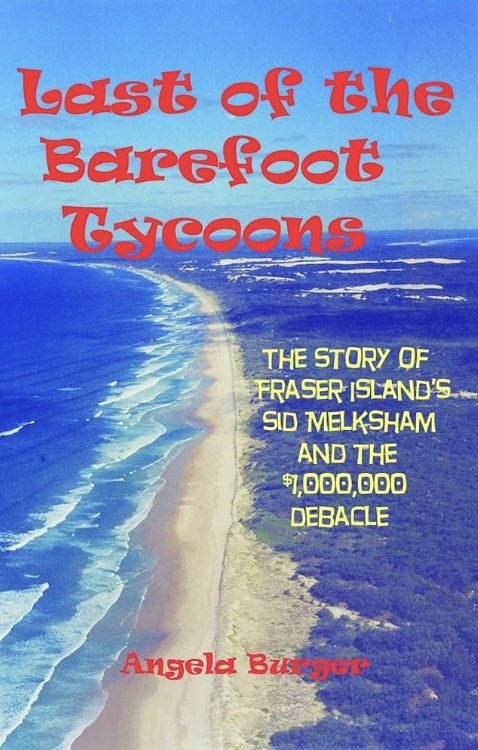
I haven’t even scratched the surface in terms of telling his story, as there is so much to write about. If you want to read more about Sid, his life and what he built on the island, I recommend Angela Burger’s excellent book “Last of the Barefoot Tycoons: the story of Fraser Island’s Sid Melksham and the $1,000,000 debacle”.
I enjoyed reading this and your other writings. Thank you.
Peter
I enjoyed the read, thank you.
There was and never will be anyone like Sid.
I commend your attempt to describe Sid. I knew him for more than 50 years, and had a house at Eurong for 40 . I know a lot of his family as well. I always enjoyed our private conversations and marvelled at his ability. I worked out that he mostly knew the answer to any question he would ask. There were many instances of his generosity that will never be told. I understand you would be time poor, but I’ve got a lot of information about the island, not just Eurong.
My late father-in-law was another pioneer of sorts on the island. If you ever want to, I can be reached on 0427211621. I’m still in contact with Angela, and we reminisce whenever we meet. The day they sold the resort, the island changed forever. Have you read Reg Barnwell’s book? It’s a good read. Sadly, another one of the ordinary people who were associated with the island passed away recently, which makes books like yours more important.
Thanks.
Klaus Falk
Klaus, I would love to hear your stories. I will be in touch.
Robert
I worked for Sid on his whale boat The Islander for a season with skipper Donny Caswell and Elaine Toy.
Don sailed Sid around the world after he left the island. I witnessed the fist biting and a warning to run if he reached his elbow.
The weekly staff work pay packet was literally an envelope with cash each. With the resort, barges and whale boats, that was a lot of cash envelopes.
There were a few stories there. Sid was always good to talk to, but it was Angela who was scary.
Sid went to school with my Grandfather in Maryborough. Bevan Whittaker of the same era is another local trailblazer worth looking into.
Dear Robert, that’s a great story.
You have a wonderful way with words, as well as doing the hard yards with research in all your writing.
Thank you very much.
Angela
Angela, we thought this article about Sid was great.
We had a good working relationship with Sid through our business, and like others here, knew him before that. Our big memory was of the Lady Fraser, when we strapped the old ’47 Chev across the front deck at the wharf in Maryborough, and drove it off at the wharf at Ungowa. How we didn’t end up in the drink at either end, I don’t know. lol.
On one of those trips, we saw Sid lift his 44 gal drums. I was in awe.
I have to thank you also for your article in the Australasian Post re the 50th anniversary of the Maheno grounding.
Because of your article, my mum was contacted by Cyril O’Dwyer from Z Force, who met mum as a teenager living on Woody Island, when Z Force were “training”, but in reality, were having tea and scones with my Nana at the lighthouse.
We’ve lived the best times on the Island.
Cheers, Kaye Coulch
Robert
You have captured the man perfectly.
I first met Sid in the early 1980s, when I was working on the island as a young forester.
He could certainly be challenging at times, particularly when raising the legality of some of his activities, but was definitely passionate about the island.
He was a very generous “likeable rogue”!!!
I worked for Sid for 12 years from 1989 till 2001 as a bus driver come yard worker. I know about his temper as I saw a few tourists cop it.
I had some great times on the island, including Christmas parties, when the drivers dressed up and served at the table.
Unknown to many, this man had an incredible sense of humour. I worked for him over a period of years.
History is written, but the background isn’t with Sid overcoming all in his path.
Supported by Angela through all of this. The timber was being barged a bit earlier up to the mills in Maryborough. The iron barges were hulks kept afloat by constant patching. Fraser is one of the last great adventure islands.
I have walked from Wathumba to Orchid Beach in 1978. Camping for a week was one of the big adventures for me.
Allen Crosthwaite
Great read.
Remember him well and Les Roper. 👍👍
Great story Rob. It was a pleasure having a chat with you prior to publishing your book.
I first met this great man when I drove tours from Tin Can Bay and Rainbow Beach. On the first of our overnight camping trips, Sid came over for a chat around our campfire. After our BBQ dinner, I pulled out my guitar and started singing. Sid asked if I’d mind if he told his guests so they could come and enjoy it. Of course, it wasn’t a problem. When I went to pay our camp fee the next morning, he wouldn’t take any money.
With the result, every time I had an overnighter at Eurong, his guests would gather around the campfire, and he NEVER charged me a camp fee.
The day after my partnership fell apart, Sid phoned my parents, who owned a shop at Tin Can Bay and left a message to call him. He offered me a job. I took my new bride with me, and she finished up working in his shop.
That was the start of a decades-long friendship that lasted right up until his passing. Angela is still a great mate and makes sure she contacts me every time she comes to Hervey Bay.
I, too, was often a recipient of Sid’s temper, but I was also blessed with his generosity.
It upsets me when those who have never met Sid say how mean he was. I defend him every time.
If ever you are at K’gari Beach Resort (Eurong Beach Resort), have a look at the memorial wall in the main resort restaurant/hotel/reception building.
Sid looked after those who looked after him. That’s the sign of a good boss, and a great mate.
Oh!!! How wonderful that Sid, a man from such humble beginnings in Maryborough, had friends like Richard Branson to call upon to purchase a barge. I am sure Richard jumped at such a wonderful opportunity.
I don’t know if anyone remembers me. I worked for Sid and Marie at Eurong Beach. I also cared for their daughter when she was born.
There was a framed house, a shed and a toilet block. I shared the shed with Lloyd.
There was a blanket separating the shed lol
I remember Angela as well.