
Australia’s only outbreak of pneumonic plague
On a damp May night in 1905, the O’Connell children coughed and wheezed in their cramped weatherboard cottage at the corner of Sussex and Pallas Streets, Maryborough. Their neighbour, Mrs Letetia Edwards, heard the rasping sounds through the thin walls and crossed the street to help. She held the eldest boy’s hand, soothing his fever, never knowing that in those moments she was walking into the deadliest disease known to humanity.
It was the only time the pneumonic plague, a form of the Black Death, appeared in Australia, and within weeks it claimed five children, a neighbour, and two young nurses. Yet, thanks to the diligent efforts of Maryborough Hospital’s Medical Superintendent, Dr Henry Lee Garde, Dr Graham Patrick Dixon, the ten nurses on staff at Maryborough, the specialised “plague” nurses sent from Brisbane, and the workers from the council, they all managed to stop the epidemic from spreading.
The shadow of an ancient killer
For centuries, the plague haunted humanity. The Black Death of the 14th century may have killed about a quarter of Europe’s population. The bubonic plague was the most common type, spreading through fleas from rats and causing grotesque swellings called buboes. Septicaemic plague poisoned the blood within hours. But the rarest and most terrifying strain was pneumonic plague, which attacked the lungs and spread through the air by breathing.
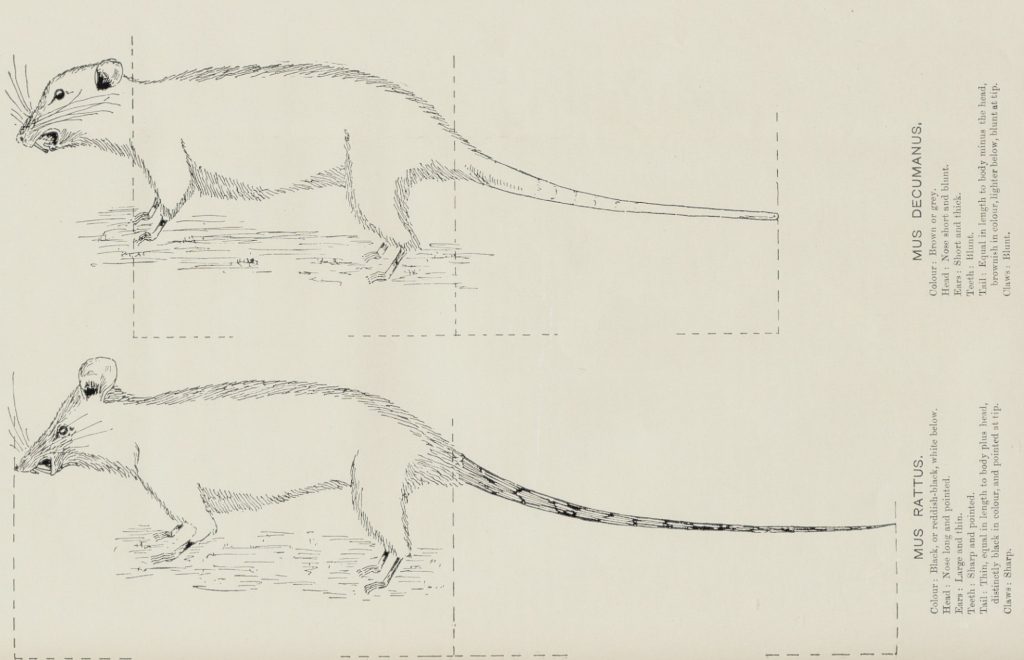
Unlike the bubonic form, pneumonic plague spreads directly from person to person through coughs and droplets. It was, as health authorities well understood, the form that could turn a local outbreak into an unstoppable epidemic.
Australia had faced plague before. The first case of bubonic plague was recorded in Sydney in January 1900, and over the following years, ports across the country went on high alert.
The state’s response was quick. Special plague hospitals were set up, and in Queensland, the Health Act 1900 was passed to introduce sanitary reforms, including isolation, inoculation, treatment, the destruction of infected areas, and rat extermination. The Maryborough Council, preparing for disaster, bought the abandoned Dundathu sawmill village in 1900 for £450 and quickly turned it into a plague hospital and quarantine station. It was considered an ideal site because it was an isolated location where patients could stay for long periods if needed.
But in 1905, Maryborough, which was Queensland’s second busiest port after Brisbane, became the site of something much darker.
Early alarms
The town had already faced fears of the plague the year before.
On 3 June 1904, the Maryborough Ambulance Transport Brigade took a man to hospital suffering from a fever with suspected symptoms. Within five days, doctors confirmed the alarming diagnosis of the plague. The Maryborough Chronicle reported:
…first case of plague that has occurred in Maryborough since the disease first made its appearance in Australia some four or five years ago, and there is reason to believe that the man brought the disease with him from Bundaberg, whence he arrived in Maryborough last Thursday week. On the death of the Chinaman the cause was certified to be phlebitis and adenitis, but the Government Medical Officer, Dr Penny, having a strong suspicion that the primary cause was plague, acted on that assumption and took the utmost precautions.
Those precautions were swiftly implemented. The deceased’s house was fumigated, his clothes disinfected, and the ward at Maryborough hospital was isolated. A second case, a baker named John Rillie, soon appeared. He was taken to Maryborough hospital, and it wasn’t until he was diagnosed with the plague that he was placed in isolation. His shop was locked down, co-workers quarantined, and police were stationed at the doors.
The Chronicle, seeking calm, wrote:
Although the outbreak of plague, if two cases may be regarded as such, is deplorable, we hope that calm vigilance will take the place of the alarm, and we have no doubt that if all ordinary precautions are taken, the town will soon be clean again.
Interestingly, the hospital set up to treat such patients at Dundathu was never used. It was considered too distant! The Government Medical Officer in Maryborough, Dr J. A. Cairns Penny, sought permission from the Commissioner of Public Health in Brisbane, Dr Nathaniel Burnett Ham, to establish a plague hospital at a “more suitable location.” The cottage at the old immigration depot on Alice Street (now the Fire Station) was chosen and furnished from Dundathu. It became known as the Depot plague hospital.
However, when Penny arrived at the new site, he found it in a filthy condition and was told by the caretaker that it was infested with rats! He quickly organised cleaning crews and rat gangs to tidy the place up. Not surprisingly, the mayor received a petition from concerned residents opposing the use of the Depot as a plague hospital.
When it was ready, Rillie was moved there. Two plague nurses from Colmslie plague hospital in Brisbane were sent to Maryborough to care for Rillie, replacing a wardsman. Rillie received a curative serum, which helped him recover and survive the plague.
With no more cases, Maryborough finally breathed a sigh of relief. The plague hospital stayed with the land title, transferring to a reserve for a hospital.
The town thought the danger was over. It wasn’t.
The O’Connell tragedy
In May 1905, the plague hit again in its deadliest form.
Richard O’Connell, a wharf labourer known for his drinking, once brought home a sack from the wharf for his kids to sleep on. A Hong Kong freighter, where plague was widespread, had recently docked at Maryborough. Whether the sack carried infection remains unknown, but what followed was certain.
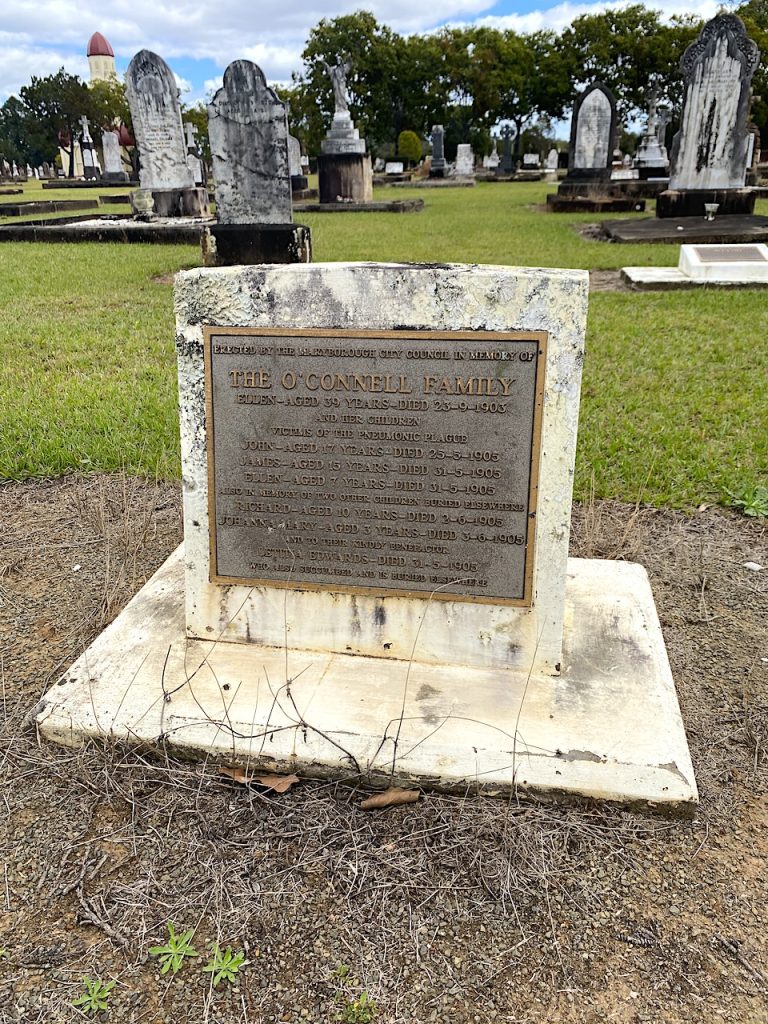
The O’Connell family lived in dire poverty. Richard’s wife had passed away eighteen months earlier, leaving seven children to fend for themselves. John, the second oldest at 17, worked as an assistant in a fruit shop, but his wages barely covered their food. His siblings, Kate (aged 20), James (aged 7), Ritchie (aged 10), May (aged 9), Ellen (aged 7), and little Mary, sometimes called Johanna (aged 3½), survived on scraps, neighbours’ charity, and scavenging from rubbish tips.
John was the first to fall ill on 19 May, and the family delayed calling a doctor because they had no money. Initially, it was thought that John had died from food poisoning, as the children:
Were in the habit of picking up fruit thrown from the streets, and especially near the sewer at the rear of the shop where John worked.
By the time Dr. John Crawford Robertson examined him, six days had passed. With dengue fever spreading through Maryborough, he diagnosed the illness.
In the early hours of 25 May, his older sister Kate hurried to fetch neighbour Letitia Edwards, who went to the house and stayed for about an hour and a half, during which the dying teenager passed away. His cause of death was recorded as ordinary pneumonia. Soon after, more O’Connell children began to cough and weaken.
Three days later, James and Ellen were desperately unwell, while Kate and May also showed signs of illness. The doctor ordered that they be taken to hospital, and the other two, Ritchie and Mary, were cared for by a kind neighbour, Miss Schafer, for a day until they were also admitted to hospital, as Mrs Edwards was also unwell.
One after another, the children succumbed. Within three days, James and Ellen had died, and Mrs Edwards also passed away at her home. Ritchie and Mary soon followed. Dr Dixon, who was called to treat Mrs Edwards, was asked by Penny to withhold issuing a death certificate until a post-mortem was carried out. However, when Penny arrived at the house to conduct the post-mortem, he found friends of the family returning from her funeral.
Diagnosis and panic
Maryborough’s doctors initially remained unsure what was affecting the patients. Their symptoms resembled those of dengue, pneumonia, or even influenza. However, according to Garde, he first suspected the plague:
I beg to state that the six cases of the O’Connell family were diagnosed as plague, by me on May 31st, and duly reported to the local authorities here and in Brisbane on that date. The case of Mrs. Edwards (another of the plague victims), was diagnosed and similarly notified by Dr. Dixon on the same date. The Health Officer arrived from Brisbane on June 2nd, and saw the cases immediately on his arrival, but would not admit them to be plague in the face of Dr Dixon’s and my diagnosis until June 6th.
A thorough search for rats near the sewer was carried out, but no signs of plague were found, although many of the rats were quite large and looked very lively.
Based on his initial diagnosis, Garde started isolating the infected on 31 May to help prevent the spread of the disease, since the O’Connell children and Bauer were in the east wing – the hospital’s main inpatient area. Post-mortems on 2 June initially confirmed the plague suspicions; however, a few days later, microscopic examination in Brisbane confirmed it was pneumonic.
Once the plague was confirmed, the two surviving O’Connell children and their father were taken to the plague hospital.
At the Maryborough hospital, every patient, nurse, and even the medical superintendent, Dr Garde, was placed into quarantine. A temporary hospital was set up in the recently closed Lunatic Reception House, located on Albert Street, the current site of Eskdale Park.
Rumours spread that more nurses were falling ill. The Chronicle published every whisper, many of which were inaccurate. This helped fuel the panic that ensued. On 3 June, the O’Connell home was doused in kerosene and set alight by the fire brigade. Reports stated that half the town gathered to watch the fire, feeling frightened yet captivated.
Around the same time, on 2 or 3 June, someone entirely separate fell ill with the bubonic plague and was sent to the plague hospital a few days later.
The nurses and the containment
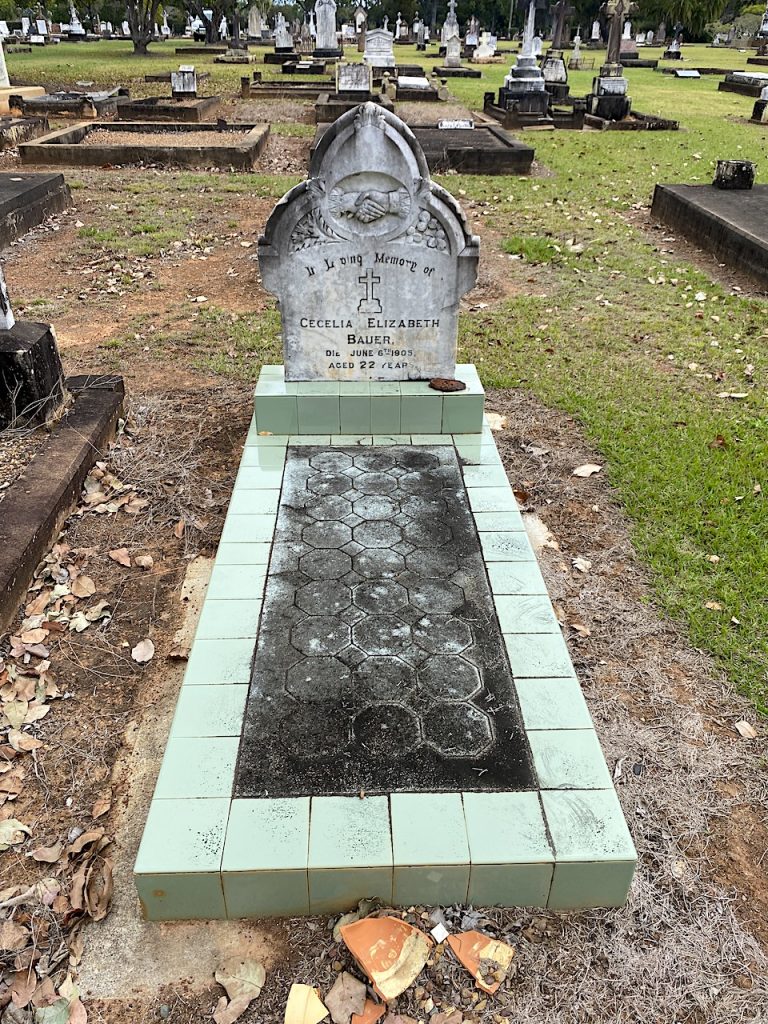
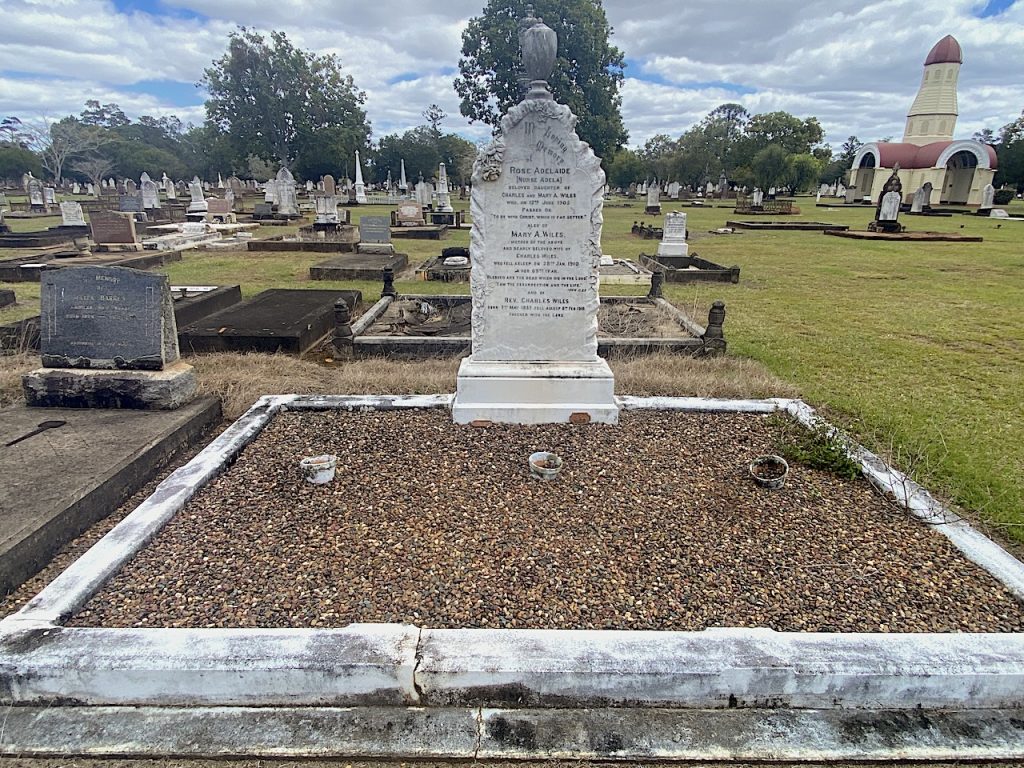
Into this fear stepped two young women whose names deserve to be remembered: Nurse Cecelia Bauer, aged 22, and Nurse Rose Adelaide “Adela” Wiles.
As nurses, without knowing what disease was affecting them, they carried out their duties caring for the O’Connell children, unaware of the risks. Within days, both began coughing.
Bauer was the staff nurse on night shift and was responsible for caring for the O’Connell family members from their admission until 30 May. She became ill on 3 June, exhibiting chest symptoms and coughing up phlegm and mucus. She died three days later.
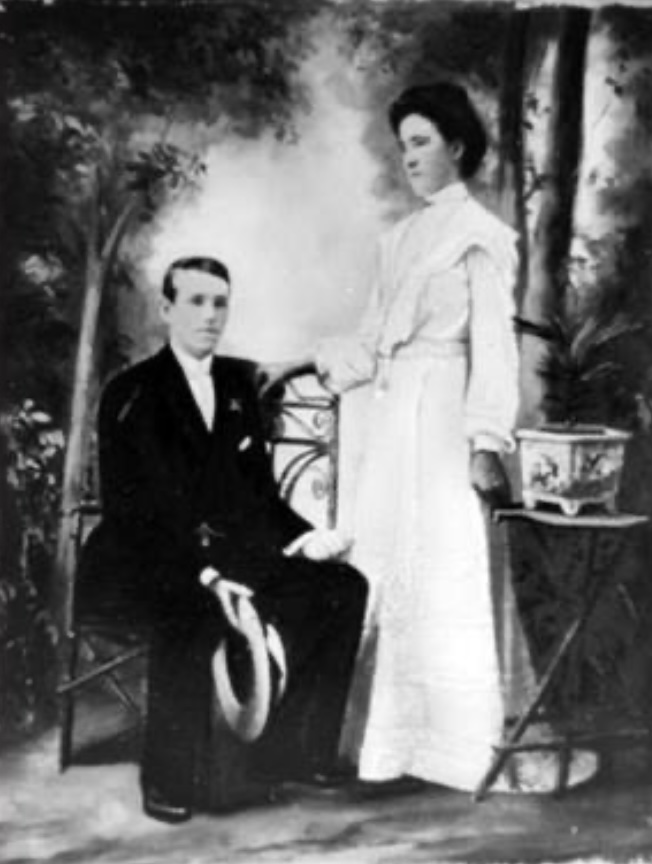
Wiles also attended to the O’Connell family at the hospital and fell ill on 5 June, displaying symptoms of a type of pneumonia that affects smaller, patchy areas of one or both lungs. She was coughing with excessive discharge of watery mucus from her lungs.
Unfortunately, Bauer and Wiles contracted the infection before the true nature of the problem was identified. On 31 May, Penny telegrammed Ham with concerns about the sudden deaths and their similar symptoms, requesting a post-mortem on Mrs Edwards.
However, Mrs Edward’s husband refused the post-mortem, and her body was buried without a death certificate, contrary to legislation. Nevertheless, a medical certificate was finally issued on 5 June confirming “primary pneumonia” as the leading cause of death.
On 2 June, a post-mortem was performed on Ritchie O’Connell at the hospital morgue, which showed the typical signs of the plague, including numerous bacteria known as Yersinia pestis, the cause of plague in humans. Samples were sent to Brisbane overnight but were delayed by two days over the weekend, arriving on 5 June.
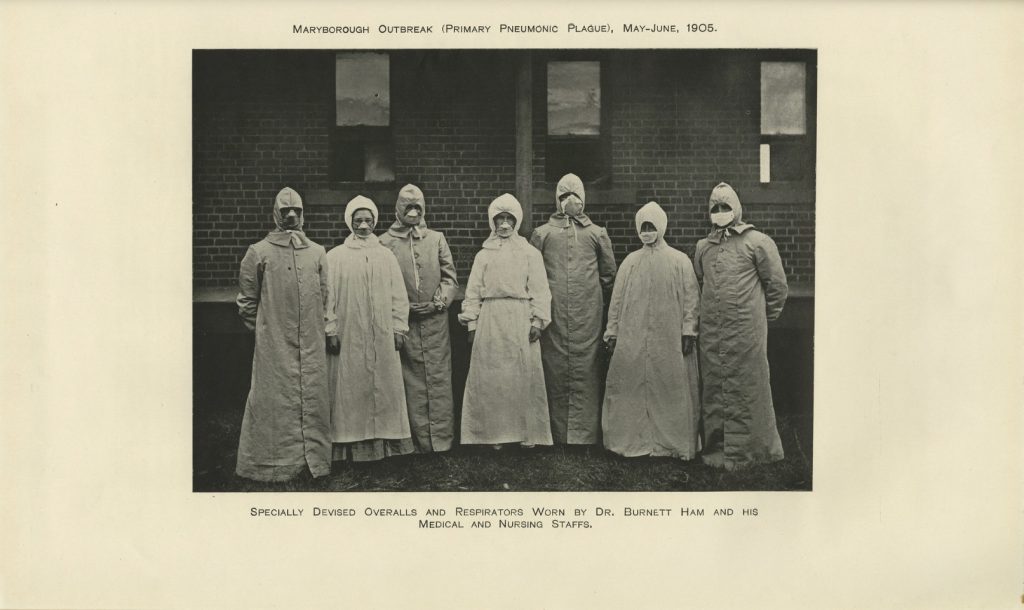
On 5 June, two plague nurses were dispatched from Colmslie plague hospital to support the nursing team at the hospital. A further two arrived a few days later to care for Wiles in the less active west wing of the hospital. All medical staff attending the quarantined hospital received the preventative inoculation of Yersin’s serum and wore specially designed uniforms and respirators.
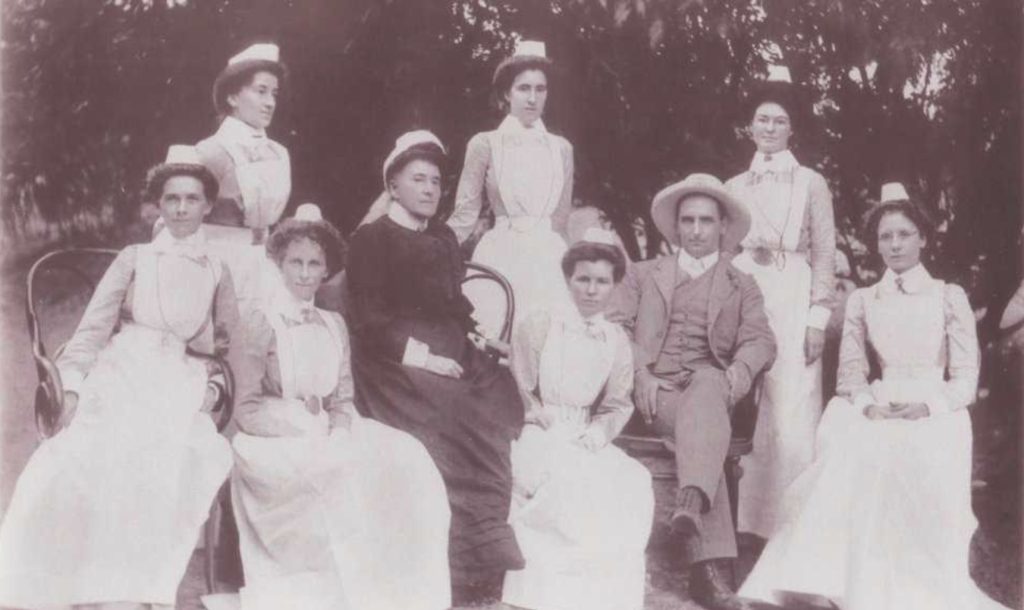
On 10 June, a third nurse, Eliza Sprague, who was caring for Wiles, also fell ill, and two days later, Wiles died. Fortunately, Sprague recovered and was released from hospital on 23 June, mainly owing to receiving Yersin’s serum, although she initially refused to take it.
The authorities’ response—quarantine, fumigation, and destruction—helped end Australia’s only pneumonic plague outbreak. The measures taken certainly supported efforts, including disinfecting clothes, the hospital, and homes, as well as conducting cleansing operations and removing rats. However, it was unfortunate that these actions were only put into place after the death of the seventh victim.
The Depot plague hospital stayed on standby after the pneumonic plague affected the town, but was never used again. After new health laws changed the requirements for infectious diseases, an isolation ward was built on the Maryborough hospital grounds in 1919, making the plague hospital unnecessary. The Dundathu site was dismantled in 1907.
Legacy and memory
For decades, the unique plague incident in Maryborough was forgotten as the town moved on.
It wasn’t until 1966 that the city officially honoured two nurses who had died. The Junior Chamber of Commerce commissioned a memorial fountain, built by Bert Piling, which was unveiled outside City Hall on 13 August that year. Its inscription reads:
This fountain was presented to the city by the Maryborough Junior Chamber of Commerce to honour the memory of nurses Bauer and Wiles, who gave their lives nursing the victims of an outbreak of pneumonic plague, “the black death,” in June 1905. This outbreak was the third recorded in history.
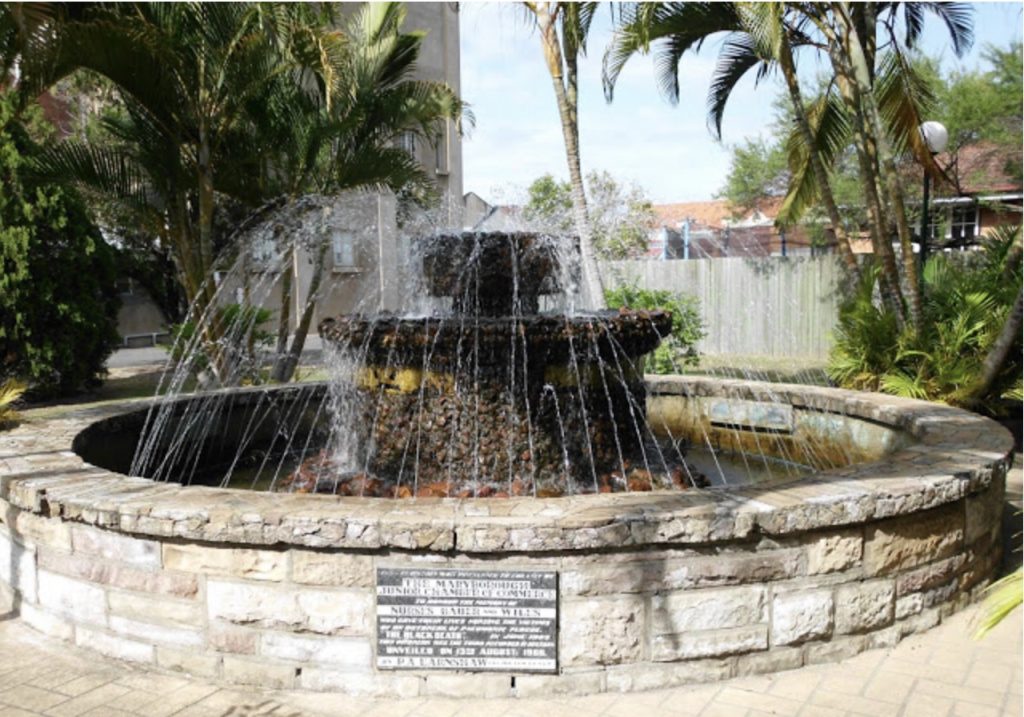
The fountain still stands, its water flowing gently where the town once panicked and prayed. Few passersby know the story it commemorates.
The Maryborough outbreak of 1905 could have been much worse. At a time before antibiotics and when global shipping spread plague from Asia to all major ports, Australia’s response was swift and disciplined.
The O’Connell children, their neighbour Mrs Edwards, and the young nurses who died with them are mostly forgotten today. However, their story remains a poignant reminder of how the Black Death briefly reappeared in a Queensland port town, and how the quiet bravery of many people, including doctors, nurses, council workers such as cleaners and rat catchers, the fire brigade, and ambulance staff, together helped stop a deadly disease.
Richard O’Connell survived but was left with little. After his wife died earlier, and then five children, he also lost all his possessions when the house he rented was burned down. He was unable to look after his two surviving daughters, who had “practically nothing to get out of bed in” while they were in hospital. In court, his younger daughter, May, was found to be a neglected child after her father admitted he had no means to house or provide for her. He applied to have her taken to a residential institution set up to house and educate poor, delinquent, or neglected children, known as Industrial Schools. He was willing to enter a bond to pay for her to attend.
When the two plague nurses from Brisbane returned home, they took the young girls with them. May was sent to Nudgee Industrial School at Nudgee in Brisbane for six years, where Richard paid five shillings a week to support her, and local priest Father Brady found work for Kate in the domestic service of one of Brisbane’s convents.
In their wonderful book Grave Tales stories not laid to rest – the Bruce Highway, Helen Goltz and Chris Adams report that Kate may have married Frances McIvor in 1910 at the age of 25, and young Mary married Martin Woods in 1918 and died in 1963. Bauer was engaged to marry before her untimely death. After her passing, her fiancée ended up in the USA working on the Golden Gate Bridge. Tragically, he fell off the bridge to his death.
Acknowledgement
I want to thank Marilyn Jensen, a nurse, historian and President of the Wide Bay Hospitals Museum in Maryborough. While she rolled her eyes at yet another person writing about this history, she saved me from perpetuating some myths. I am grateful for her guidance and research, which helped me focus on a more factual account of this remarkable story.
The museum itself is well worth a visit. Professionally curated, it holds materials and artefacts that showcase the crucial role healthcare professionals have played in our history. It opens on Thursday mornings or by appointment, and details are available on their Facebook page.
Well done, Robert. A little-known medical emergency clearly documented for a modern generation.
If true, nurse Cecilia Bauer’s fiancé was unlucky to fall off the Golden Gate Bridge during construction.
That project was an exemplar of good safety management in an era when it was typically not done well and workers were often also daredevils.
A novel feature was a safety net. Only 11 workers died, ten of them in a single incident in 1937 when the heavy scaffolding they were on collapsed and busted through the net. If it were not for that, the toll would have been a single death.
Nineteen workers fell into the net over the project’s duration and formed the “Half Way to Hell Club” and continued to meet up long after the bridge opened.
In contrast, and a decade earlier, there were 16 official deaths during the construction of the Sydney Harbour Bridge and possibly three others unreported. Almost as risky as being a faller in the forest industry before mechanised falling.
Thank you for your research and story. I am the great-granddaughter of May O’Connell and it’s always insightful to read accounts of this difficult time in my family’s past.