
There are times in military aviation when technological advances outpace operational experience and it is within those narrow gaps between innovation and understanding that tragedy often occurs.
The loss of a Royal Australian Navy Sea Venom off Hervey Bay on 8 August 1956 marks a difficult period as Australia’s Fleet Air Arm transitioned into the jet age, often learning the hard way what that shift truly entailed.
Only months earlier, the Royal Australian Navy had taken delivery of its new aircraft carrier, HMAS Melbourne, a vessel that symbolised not just the continuation of naval aviation but its transformation. Designed with an angled flight deck, a mirror landing system and a steam catapult, Melbourne represented the modern carrier, very different from the straight-deck carriers of the Second World War. While the ship incorporated the latest British innovations, the men who would operate from her decks were still gaining the practical experience needed to safely utilise those capabilities.
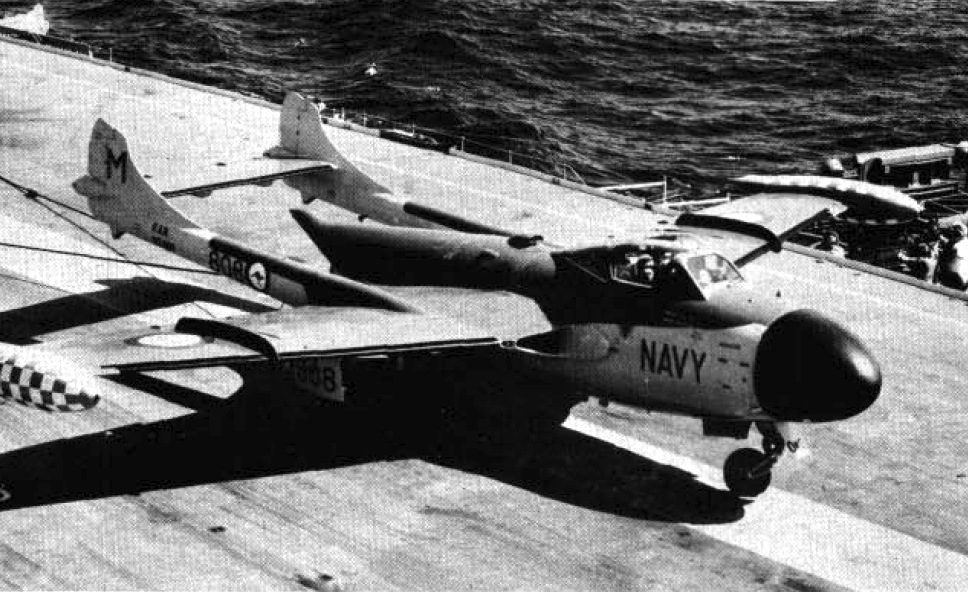
This environment saw the introduction of the de Havilland Sea Venom FAW.53, a twin-boom, two-seat, all-weather fighter that delivered top-tier performance and brought a corresponding increase in operational complexity.
A squadron forged in war, recast in peace
The aircraft lost off Hervey Bay belonged to 808 Squadron, a unit with a history that includes some of the key moments of twentieth-century conflict. Formed in the Royal Navy’s Fleet Air Arm, the squadron supported the D-Day landings and later saw extensive service during the Korean War, operating from HMAS Sydney.
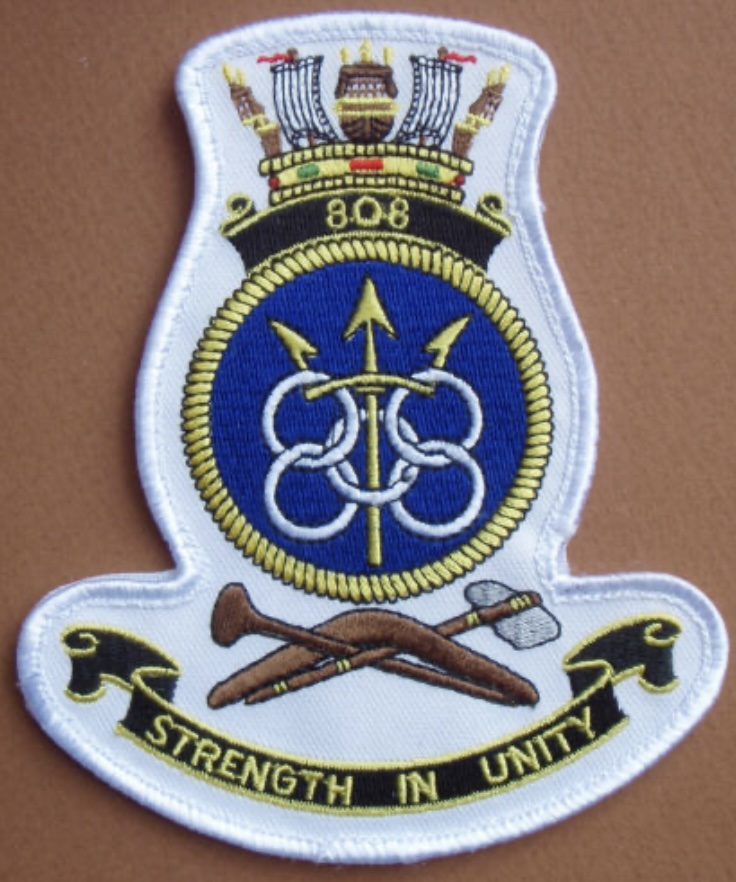
By the mid-1950s, the nature of naval air warfare was quickly changing. Propeller planes like the Sea Fury were being replaced by jets and the Fleet Air Arm in both Britain and Australia was adjusting accordingly. As part of this shift, 808 Squadron was moved to the Royal Australian Navy and re-equipped with the Sea Venom, the naval version of the earlier de Havilland Vampire.
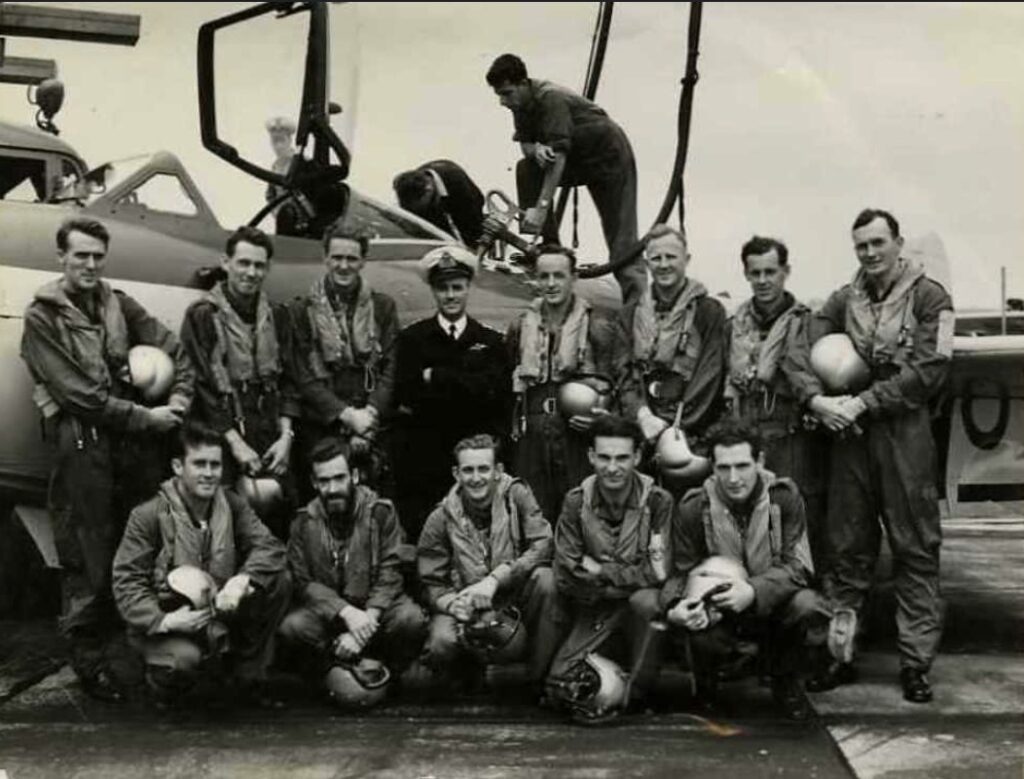
Training for this new role took place at Yeovilton in southwest England, where Australian crews underwent an intensive conversion program. They flew a mix of Royal Navy aircraft and newly delivered Australian machines, learning not only the handling characteristics of the Sea Venom but also the demanding routines of carrier operations, such as deck landings, catapult launches and coordinated flying between pilot and observer.
Photographs from that period capture a squadron in transition — confident, professional and outwardly composed, but operating in an environment where the margin between routine and disaster remained dangerously thin.
The Sea Venom: capability and complexity
The Sea Venom FAW.53 was, in many ways, a notable aircraft of its era. Powered by a single de Havilland Ghost turbojet engine, it could reach speeds near 600 miles per hour and operate effectively in conditions that would have grounded earlier fighters. Its design featured a twin-boom tail to clear the jet exhaust, while its straight wings, foldable for carrier storage, balanced low-speed handling with high-speed performance.
What truly set the Sea Venom apart was its role as an all-weather interceptor. Equipped with airborne interception radar, it required a crew with a pilot in the front cockpit and an observer or navigator in the rear cockpit, responsible for radar operation and tactical coordination. This division of roles added an extra layer of complexity, demanding clear communication and mutual understanding, especially during high-workload phases such as night interceptions or carrier operations.
Unlike modern jets, the Sea Venom lacked the redundancy and automation that later became standard. Engine response could be slow, instrumentation was relatively basic, and reliability, while generally acceptable, was not foolproof. In carrier operations, where aircraft were launched at high weight and low speed, often with minimal margin for error, these limitations were significant.
The mechanics of a catapult launch
To understand the events of 8 August 1956, it is essential to grasp the mechanics and dangers involved in a carrier catapult launch.
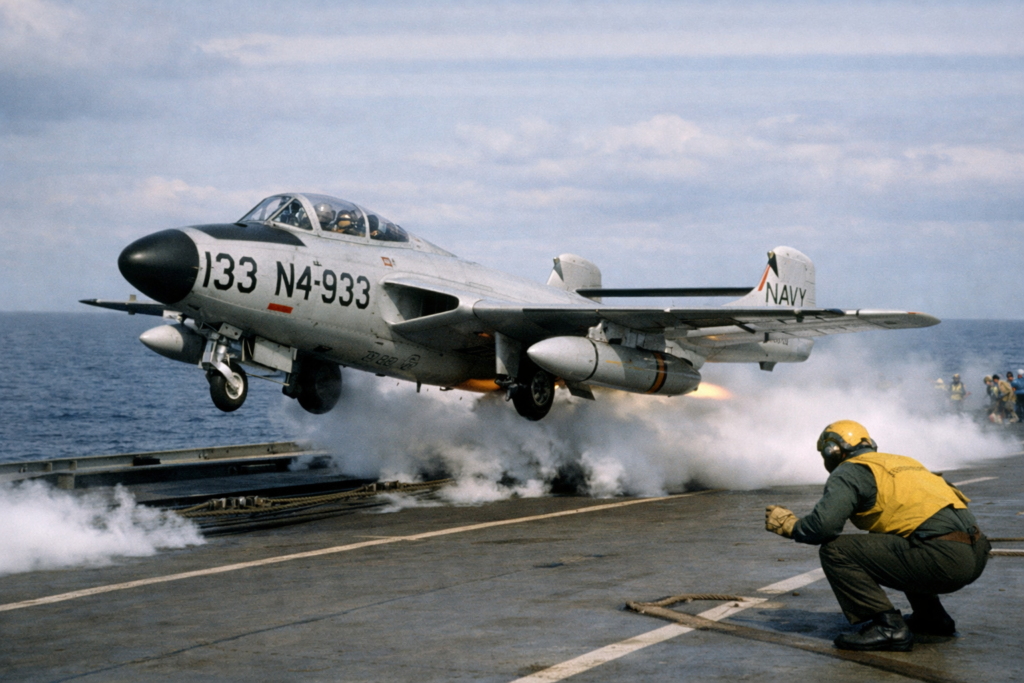
On a ship like HMAS Melbourne, the available deck length was not enough for a heavily loaded jet aircraft to reach flying speed under its own power. Instead, a steam catapult was used to accelerate the aircraft from a standstill to take-off speed within seconds. The aircraft was connected to the catapult shuttle through a launch bar, with its engine idling at full throttle before release, subjecting both the aircraft and crew to a strong forward acceleration.
At the moment of launch, the aircraft was committed. There was no opportunity to abort. The pilot had to maintain precise control as the aircraft left the deck, often skimming along the very edge of aerodynamic flight, relying on both engine thrust and airspeed gained from the catapult to stay airborne.
Any deficiency, whether in engine performance, control input, aircraft configuration, or mechanical function, could cause an immediate loss of lift. And at that point, with the aircraft only metres above the sea, recovery was rarely possible.
The loss of N4-933
The aircraft involved in the Hervey Bay tragedy was the Sea Venom FAW.53, serial N4-933 (formerly WZ933), which was delivered to the Royal Australian Navy on 27 February 1956. It had only been in service for about six months.
On 8 August 1956, during operations off the Queensland coast, the aircraft was launched from HMAS Melbourne as part of routine flying activities. The conditions, although not extensively documented in surviving summaries, were clearly not severe enough to halt operations, indicating that what followed was not due to poor weather but the inherent risks of the operation.
Shortly after being thrown from the deck, the aircraft failed to stay airborne and crashed into the sea. The sequence would have happened within seconds, involving a slight climb, possibly due to a loss of power or lift, followed by a quick descent and then impact. There would have been little, if any, opportunity for ejection or escape.
Both crew members were killed – the pilot, 26-year-old Lieutenant Barry York Thompson, and observer, Lieutenant Keith Charles Marley Potts. Their deaths occurred just two days after the squadron commenced operational flying in Australian waters, serving as a stark reminder of the risks involved in carrier jet operations within the Royal Australian Navy.
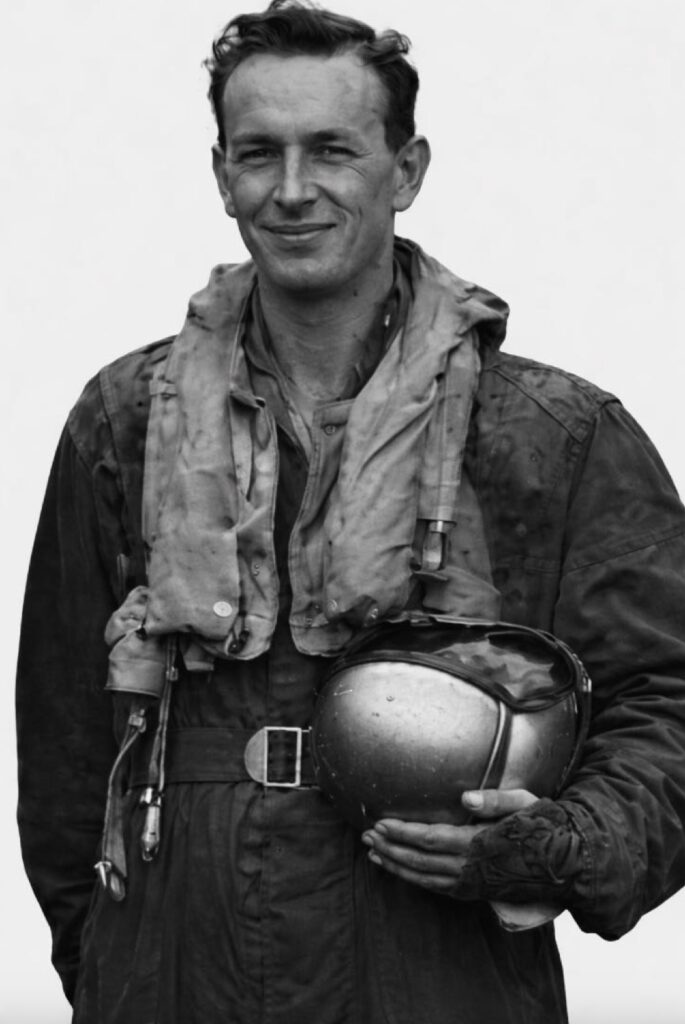
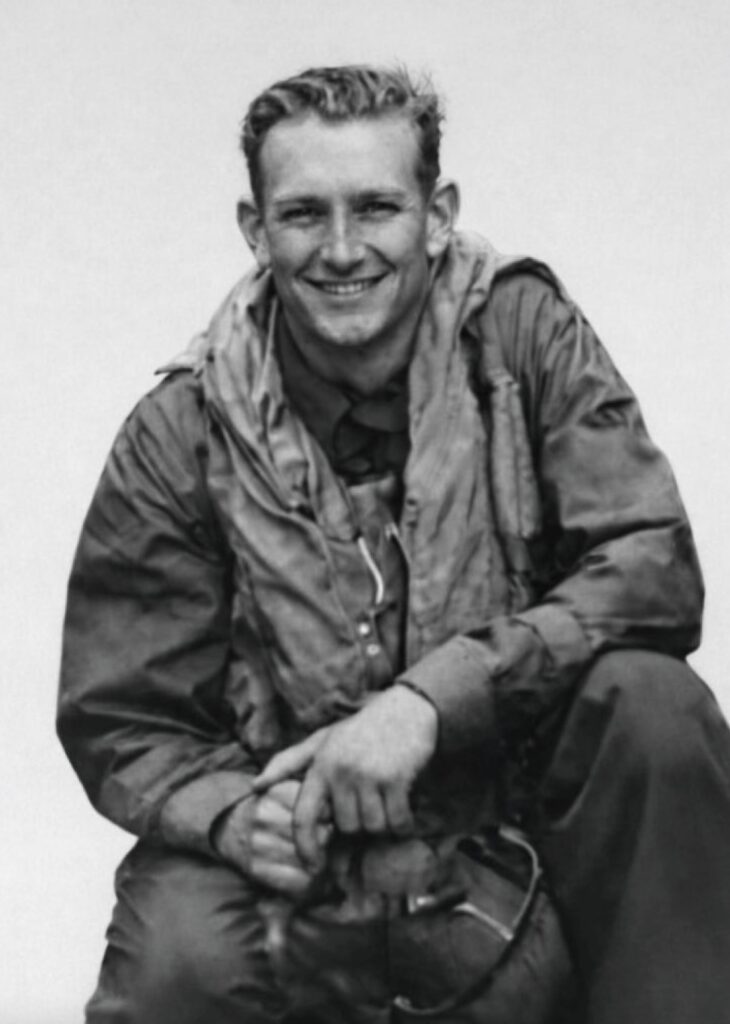
A funeral service for the two aviators was held aboard Melbourne near Hervey Bay the next day. The ship hove to in a solemn ceremony, and two crosses were committed to the sea by the ship’s Padre.
Early losses in a new era
The Hervey Bay crash highlighted a wider trend that reveals the difficulties of moving to jet-powered naval aviation.
Earlier that same year, in January 1956, another Sea Venom was lost in England when it collided with a chimney during a climb-out from Yeovilton in poor visibility. The aircraft crashed into a caravan park, killing both crew members and civilians on the ground.
Further losses occurred. In 1959, Lieutenant Stanley Carmichael was killed along with his observer when their aircraft crashed into the sea off the south coast of New South Wales during a low-level reconnaissance mission. The wreckage was not found until 1988, when it was discovered by a CSIRO research vessel.
These incidents, taken together, show a service operating at the cutting edge of modern technology, where experience was gained not only through training and doctrine but also through tragedy.
The human dimension
It’s easy, when recounting such events, to focus on aircraft types, serial numbers and operational procedures, but at the core of this story are two men, Thompson and Potts, whose lives were cut short while doing their duty.
They were part of a generation that hadn’t faced the large-scale global conflict of the Second World War, but they still found themselves in a profession with similar risks. Naval aviation in the 1950s required skill and a willingness to accept uncertainty, operating in an environment where the consequences of failure were immediate and often deadly.
Their loss, along with that of their squadron colleagues, became part of the collective experience from which safer practices would eventually arise. Advances in aircraft design, engine reliability, ejection systems and operational procedures would, over time, reduce but never entirely eliminate the risks inherent in carrier aviation.
A legacy beneath the water
Today, the waters of Hervey Bay are calm, their surface hiding nothing of what happened there in 1956. The aircraft itself lies somewhere beneath, long claimed by the sea, its structure slowly succumbing to time and rust.
However, its significance remains. The loss of Sea Venom N4-933 is one of the earliest operational tragedies involving Australia’s modern carrier capability. It highlights the challenges faced by the Royal Australian Navy as it shifted into the jet era and shows that technological progress rarely comes without a cost.
Broadly speaking, it is part of a continuum — a series of events, both successful and tragic, that together shaped the development of naval aviation in Australia. The lessons learned, often at great human cost, contributed to safer and more capable operations that followed.
Remembering the early years
There is a tendency, when reflecting on the early days of jet aviation, to view them through a nostalgic lens. Sleek aircraft, brave crews and a pioneering spirit are often highlighted. While this perspective holds some truth, it does not tell the full story. The reality was more complicated, marked by uncertainty, rapid changes and risks that are hard to fully grasp today.
The crash off Hervey Bay reveals the stark reality. It’s a story of a navy adopting new technology, aircrew developing new skills and the inevitable mistakes that happen along the way.
Above all, it is a story that deserves to be remembered, not as an isolated incident, but as part of Australia’s broader journey into modern naval aviation.
Well put together Robert, emphasising the complexities of an operational and technical system responding to revolutionary rather than evolutionary change. These aircrew were highly trained. After this incident the Sea Venoms were grounded and HMAS Melbourne operated with Gannets. Both 805 and 808 squadrons flew Sea Venoms off the Melbourne until 1958.
HAMAS Melbourne in caption of your header image? Are you trying to tell us something we don’t know about?
Oops, I’d better fix that. Good pickup.
Interesting story, Robert. I didn’t know they had originally flown Sea Venoms from Melbourne.
In 1972, I participated in a naval exercise in the South China Sea off the Philippines. HMAS Melbourne, equipped with A4 Skyhawks and Grumman Trackers, along with the much larger American carrier USS Kitty Hawk (decommissioned in 2009 as the last remaining non-nuclear carrier in the fleet), which flew F4 Phantoms, participated.
I remember talking to American F-4 aviators ashore in Subic Bay at the time who said they couldn’t believe their eyes when they saw the Australians flying Skyhawks, day and night, off such a small and short flight deck. They had huge respect for those pilots.
To say that HMAS Melbourne was “designed” with an angled flight deck is generous. Construction started in the middle of WWII as HMS Majestic, the first ship of the Majestic class. The flight deck was not designed to be angled. When the RAN purchased the launched but incomplete HMS Majestic from the RN in the early postwar years, they decided then to angle the flight deck. Construction wasn’t completed until the mid 1950s.
Melbourne’s sister ship, HMAS Sydney, was also a Majestic class (HMS Terrible). The RAN never angled her flight deck (due to cost?), hence her eventual role as a carrier of personnel and equipment between Australia and Vietnam until 1972 and her nickname, the Vung Tau Ferry.