
Cream, co-operation and the making of a Wide Bay industry
In the late 19th and early 20th centuries, when Maryborough was one of Queensland’s busiest regional centres, a visitor approaching the town would have found the air filled with the scents of industry. Timber mills lined the river, the clang of engineering workshops echoed, the whistle of locomotives sounded, the sweet aroma of sugar cane wafted through the air and the faintly sour smell of milk and cream arrived at the town’s dairy works.
For much of the 20th century, the Maryborough Co-operative Dairy Association — known locally simply as the Butter Factory — stood at the heart of this rural economy. Not only a manufacturing plant, it also served as the hub of a network of farms, cream carriers, railway sidings and country towns that spread across the Wide Bay and Burnett districts. The factory represented the rise of dairying in Queensland and the co-operative spirit that allowed small farmers to build an industry capable of supplying both local households and distant overseas markets.
Dairying arrives in Queensland
When Queensland separated from New South Wales in 1859, dairying in the new colony was nearly non-existent. Contemporary agricultural records show that there were only about 12 dairy cows in the entire colony at the time.
Butter was still mainly produced on individual farms using crude methods. Milk was poured into shallow pans and left to stand for a day or more while the cream slowly rose to the surface. The cream was skimmed off by hand and churned in small wooden churns. Any extra butter was sold through local stores or bartered with neighbours.
Demand for dairy products increased rapidly as settlements expanded, and by the 1880s, the colonial government began actively supporting the growth of a more organised dairy industry. Demonstration teams travelled through rural areas showing farmers how to use cream separators and improved churns. This travelling dairy plant system, introduced in 1888, helped establish small local factories and creameries across Queensland.
Simultaneously, advancements in refrigeration and shipping enabled the export of butter overseas without spoiling. The first shipment of Queensland butter arrived in London in 1895, marking the start of an export trade that would soon prove to be very profitable.
These developments occurred alongside the growth of agriculture around Maryborough.
The Wide Bay district turns to dairying
Maryborough initially served as a river port for the pastoral hinterland and later supported the Gympie goldfields. The discovery of gold in 1867 transformed the town into a significant regional supply hub. Ships delivered goods along the Mary River, while railways extended inland to farming areas and mining communities.
As the gold rush waned, agriculture increasingly took over from mining as the mainstay of the region’s economy. Sugar mills, timber mills and farms all thrived across the Wide Bay district. But for many settlers, dairying provided something the other industries couldn’t — a steady and reliable income.
Unlike cropping, which could fail entirely during a drought or flood, dairying provided farmers with a steady monthly cheque from the factory that purchased their cream or milk. This dependable cash flow made dairying particularly attractive to small farmers clearing land in the scrub country of the Burnett and Wide Bay districts.
Small butter factories and creameries soon sprang up across the region. One of the earliest was set up in the 1880s at Tiaro, near the railway station. Horses powered the churns in those early days, while milk arrived in heavy metal cans from nearby farms.
But the true turning point was the rise of co-operative dairying.
The rise of the co-operative movement
Early dairy factories were typically owned by private companies. Farmers supplied their cream but had little control over the price they received or how the business was operated. By the early 1900s, many producers were seeking an alternative model. The answer was the Co-operative Dairy Association.
Under the co-operative system, farmers owned the factory and shared in its profits. Each supplier held shares in the company and elected directors to run the business. The arrangement ensured that the industry’s benefits flowed back to the farming communities that produced the milk.
Across Queensland, co-operative factories quickly began to replace privately owned operations. By the early 1900s, the movement had gained considerable momentum. The Maryborough Co-operative Dairy Association was already operating by 1901, producing over 33,000 pounds of butter that year. From these modest beginnings, the enterprise expanded rapidly.
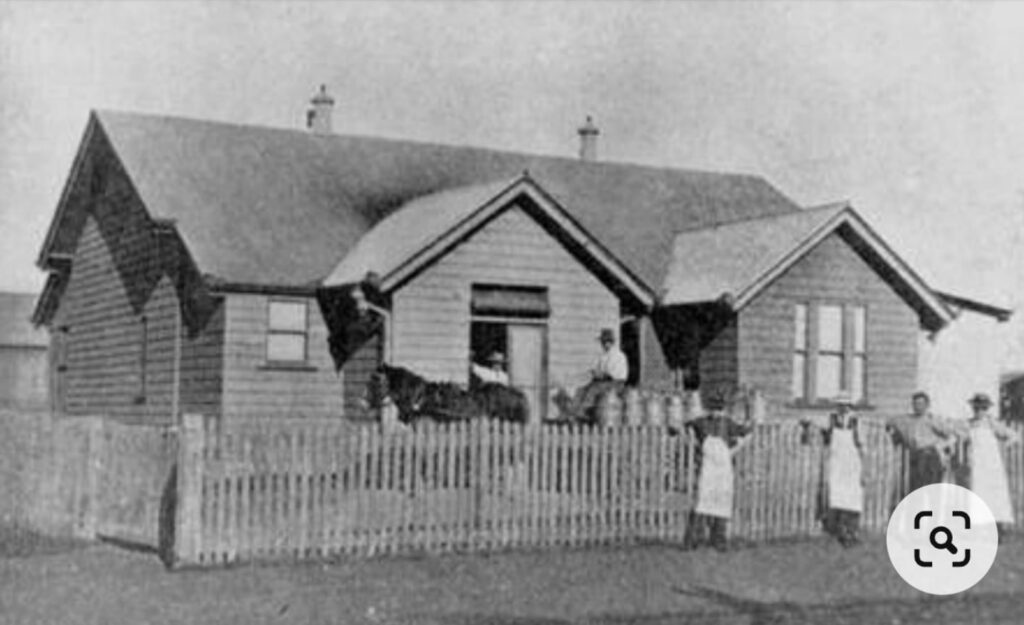
A newspaper report from 1906 shows how rapidly the Maryborough business was expanding. In the six months to June that year, the company reported a profit of £1,047, and over 7,000 boxes of butter were shipped to markets in London and Brisbane.
The factory paid suppliers over £10,000 for cream during that period, highlighting the significance the industry already held for local farmers.
Exporting butter to Britain proved especially lucrative and quickly became a key part of the industry.
Cream cans and country roads
Behind the statistics lay a huge network of dairy farms spread throughout the region.
In the early decades of the 20th century, milk didn’t travel to the factory in refrigerated tankers like it does today. Instead, it was transported in heavy metal cans that farmers loaded onto carts or trucks each morning.
Cream carriers followed regular routes across the countryside, collecting cans from farms and delivering them to creameries or directly to the factory. In some districts, the routes were formally gazetted by government regulation to ensure supplies reached the nearest factory and were transported efficiently.
Many families in the Wide Bay district still remember those routines. Farmers would rise before dawn to milk their cows, separating the cream before loading the cans onto waiting trucks. The carriers then set off along dusty roads, stopping at each farm gate before making their way into Maryborough.
By the time the trucks rolled into the factory yards, the morning’s milk had already travelled many miles.
Building the butter factory
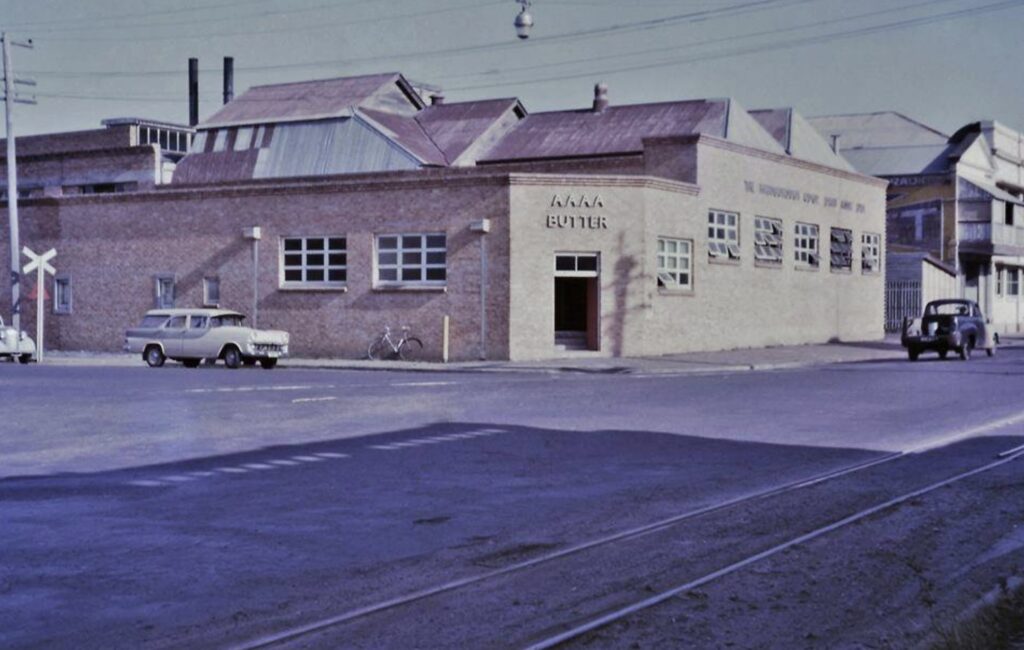
The building most people remember today was built in 1910 on land bought by the Maryborough Co-operative Dairy Association in March Street at the Five Ways. For the next 80 years, it processed cream and milk from farms across the district.
The factory complex eventually included processing rooms, cool stores, offices and a retail shop where townspeople could buy dairy products directly. Nearby stood an ice works that produced large blocks of ice to keep milk cool, as well as for households and camping trips.
Inside the factory, the process of turning milk into butter was both highly organised and physically demanding.
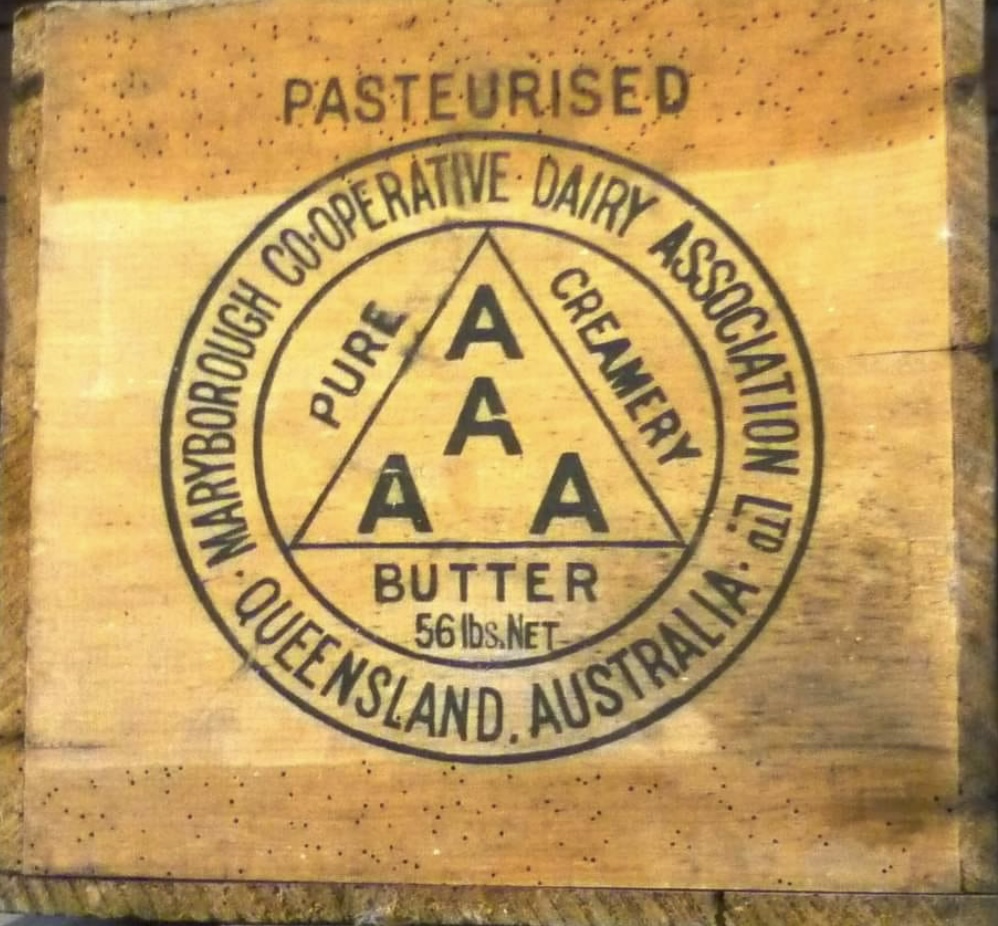
Cream arriving at the factory was first graded for quality, then pasteurised and churned in large mechanical churns. The resulting butter was washed, salted and packed into boxes for transport to markets in Brisbane or overseas.
Butter production required both speed and accuracy. Fresh cream had to be processed swiftly to preserve quality and the factory operated almost nonstop during peak seasons.
The work was hot, noisy and often exhausting, but it also supported hundreds of farming families.
The factory and the community
Over time, the Butter Factory became one of Maryborough’s most well-known landmarks. For many local residents, it was also their first job.
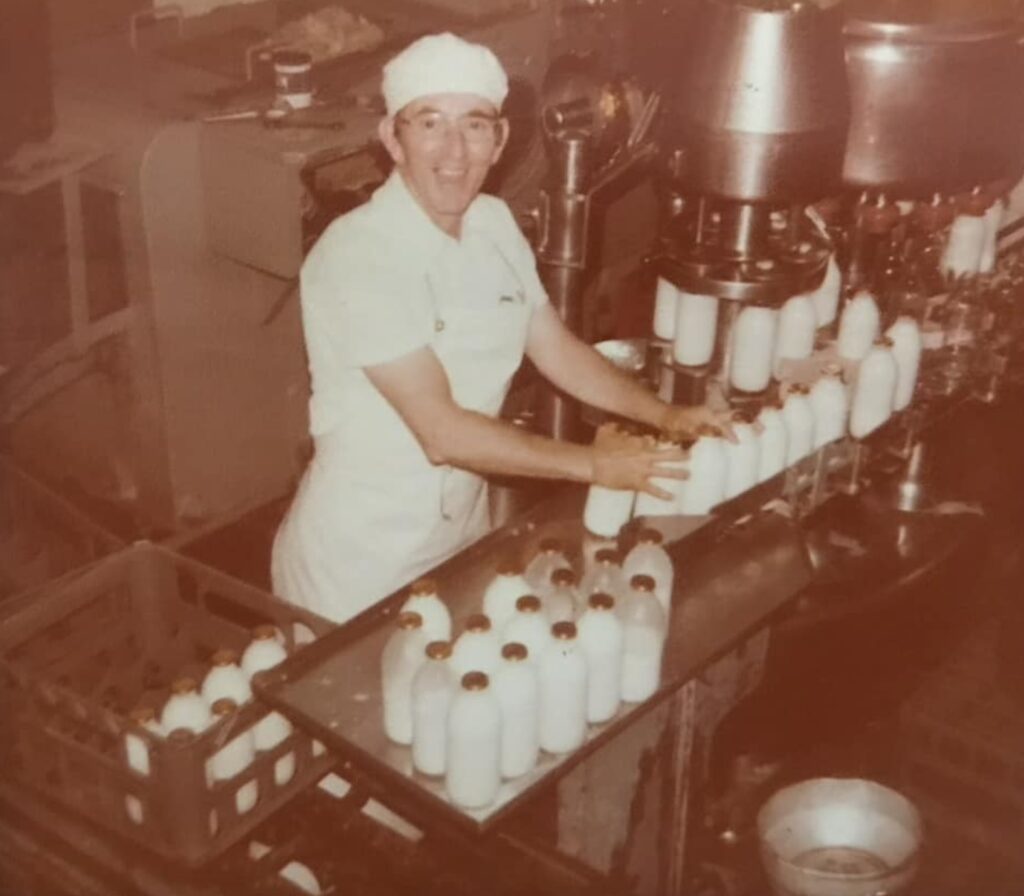
Children who delivered newspapers on Sunday mornings sometimes found themselves helping wash milk bottles in the factory yard. Office staff remembered carrying trays of tea and biscuits through the building to the managers and clerks. Upstairs rooms were occasionally cleared to allow staff to play badminton during lunch breaks.
The factory also produced a range of products besides butter. Milk, cheese, yoghurt and fruit juices were made there, with flavoured milk becoming a particular favourite with local customers. Flavours such as chocolate, banana, and caramel, often remembered under brand names like “Caramalt”, were a favourite among generations of schoolchildren.
For those who grew up around it, the Butter Factory was more than just an industrial site. It was a part of everyday life.
Expansion across the region
The Maryborough co-operative did not operate only a single factory. As the industry grew, branch factories were set up in towns across the Wide Bay and Burnett regions, including Kingaroy, Biggenden and Mundubbera. These smaller factories processed cream locally before sending butter and other products to larger markets.
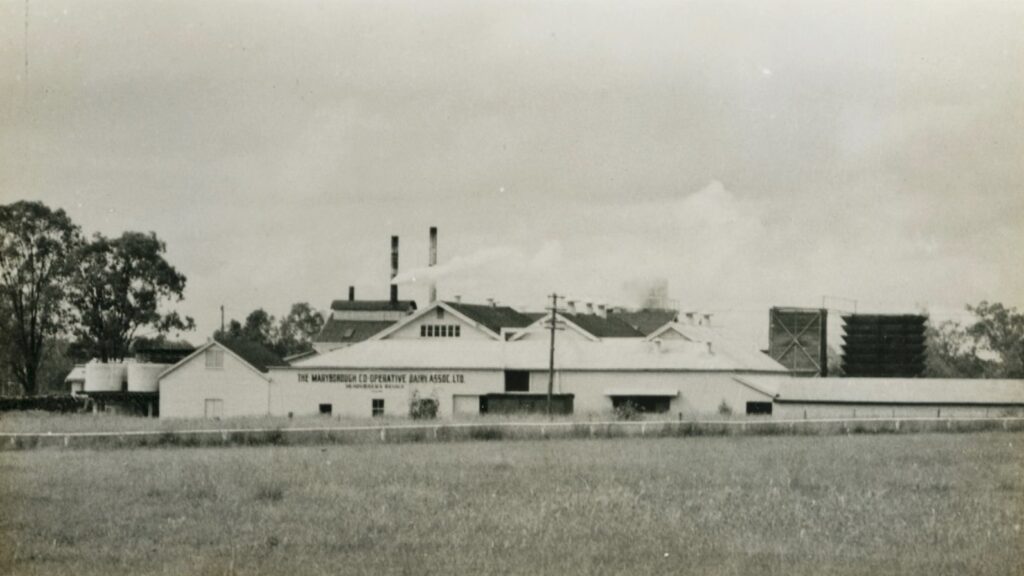
By the 1930s, the association had become one of the largest co-operative enterprises in the region, with hundreds of suppliers and an extensive transport network linking farms to factories. The industry’s success mirrored wider shifts in Australian agriculture.
New technologies like milking machines, widely introduced after the Second World War, transformed farm productivity. Refrigerated transport and better roads enabled milk to travel further without spoiling.
But the same forces that helped the industry grow would eventually cause its decline.
The changing dairy industry
After World War II, the structure of the dairy industry began to change markedly. Small regional factories found it hard to compete with larger, centralised processing plants. Advances in refrigeration and transport enabled milk to be transported over long distances to large factories, reducing reliance on small local operations.
At the same time, the number of dairy farms started to decline. Many small family-run operations shut down as farming became more capital-intensive. These changes affected the whole Wide Bay area.
By the late 20th century, the once lively network of local dairy factories had mostly disappeared. Production was concentrated in fewer, larger plants, and deregulation in the dairy industry around 2000 further sped up the decline of many traditional operations.
For towns like Maryborough, the transformation signified the end of an era.
The end of the butter factory
The Maryborough Butter Factory shut down in 1989 after nearly 80 years of operation at the March Street site.
The closure reflected both the decline of local dairying and the broader restructuring of the Australian dairy industry. Many of the farms that once supplied the factory had already ceased operations, while milk processing increasingly shifted to larger plants elsewhere. The building was sold the following year.
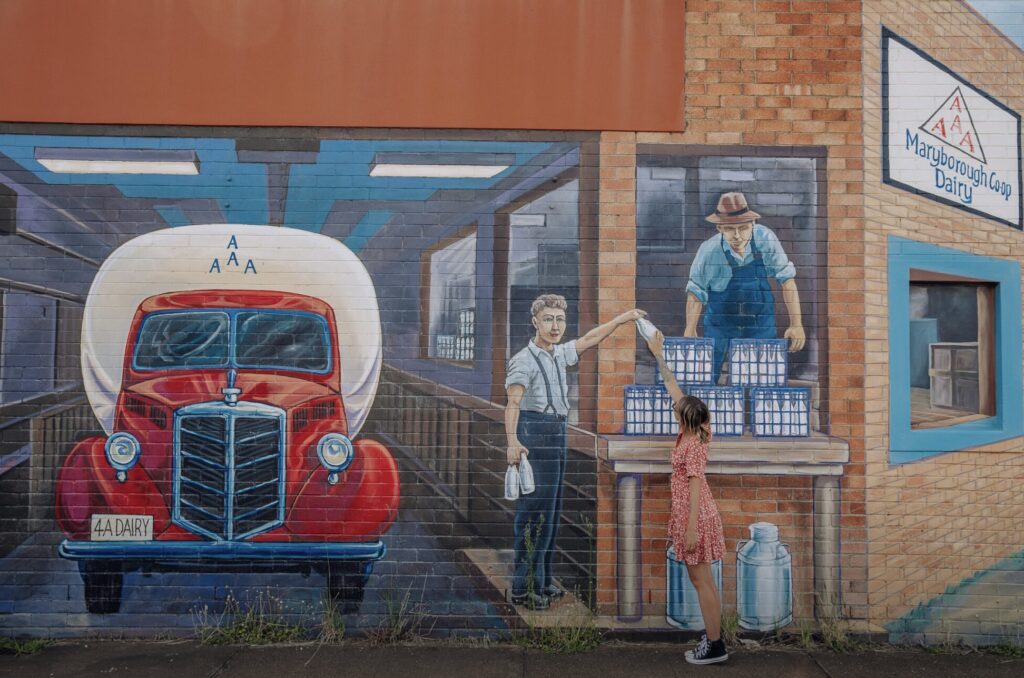
Today, the site remains part of Maryborough’s industrial landscape, and a mural honours the factory that once stood there. For older residents of the Fraser Coast, the memory of the Butter Factory still evokes the clatter of milk cans, the smell of cream and the long lines of delivery trucks arriving before dawn.
Remembering an industry
The story of the Maryborough Butter Factory reflects the history of the Wide Bay region itself.
It started with a few dairy farmers clearing paddocks from the scrub and grew into a large co-operative that linked hundreds of rural families. It supported nearby towns, funded community events, and provided generations of workers with stable jobs.
Perhaps most importantly, it showed the power of teamwork in rural Australia. Farmers who might otherwise have struggled on their own were able to create a thriving industry by sharing resources and working together.
Although the factory no longer exists, its legacy can still be seen in the Fraser Coast landscape.
Many of the old dairy farms still dot the countryside. Roads that once carried cream trucks continue to wind through the hills. And in the memories of local families, the Butter Factory remains a reminder of a time when the rhythm of life in the district was regulated by the daily milking and the steady arrival of cream cans at the factory gates.
It wasn’t just an industry that turned milk into butter; it also helped transform a rural community into a thriving and confident region.
I’ve got goose bumps reading this. Although Brisbane born and bred as I travelled the countryside in my early adult years I passed many dairies not long closed down and it was often still possible to see the bails with machinery still in place and paddocks were still fenced in the configuration used to rotate dairy cattle around feed.
In the 1970s I married into a former dairying family who still had relatives dairying until very recent times and a trip to the bails to watch milking was an obligatory routine when visiting relatives.
My first experience of dairy men selling warm milk to the door (providing milk to small towns without a co-operative) was in Caloundra when on holidays in Christmas 1966.
When I moved to Central Western Queensland in 1971 bigger towns like Barcaldine and Longreach had several dairy men selling to the door. Every evening you put a jug and money on the doorstep and early next morning there was a rattle and a clank as your warm fresh milk was delivered out of a vat on a ute.
In 1981, we moved to Chinchilla and the Co-Operative Butter factory there had not long closed. We knew so many people who still had their disused dairies, and often still had some equipment on the farms. We heated our house with hot water from a Jacko dairy boiler that provided wash-up water to a dairy that had once suppled the Chinchilla Co-Operative.
Even now, living on the Fraser Coast decades after the Maryborough Co-Operative has closed, we often see the dairy sheds around the farms with their distinctive rows of doors that let the cattle out of the bails after they had been milked.
When I am in Maryborough up around the Fiveways, I find myself looking at the old Maryborough Co-Op building, trying to imagine it operating, providing dairy products to local and overseas markets.
Thank you, Robert, for another excellent blog.
Thanks Robert for another comprehensive history of a local industry now consigned to oblivion through the operation of market forces beyond its control. As well as local amalgamations and rationalisation (ie big blokes swallowing up the little blokes), entry of the UK into the European Common Market in 1973 was the death knell for the Australian export butter trade and hastened the collapse of the whole industry.
Thanks also to Dave for his reminiscences of the domestic whole milk system. I well remember warm school milk in bottles with cardboard caps during WW2, and the milkman on his daily run in Ipswich post war filling our milk jug every morning using his pint measure to decant from the tank on his cart while his horse stood patiently by waiting for the next move up the street. That milk came from a local dairy outside of the Jacaranda Butter factory co-op; during the 50s several independent operators delivered fresh unpasteurised milk door to door.
I worked here in the 80’s and it was an absolute pleasure working with everyone, especially the Manager Tony Price!