
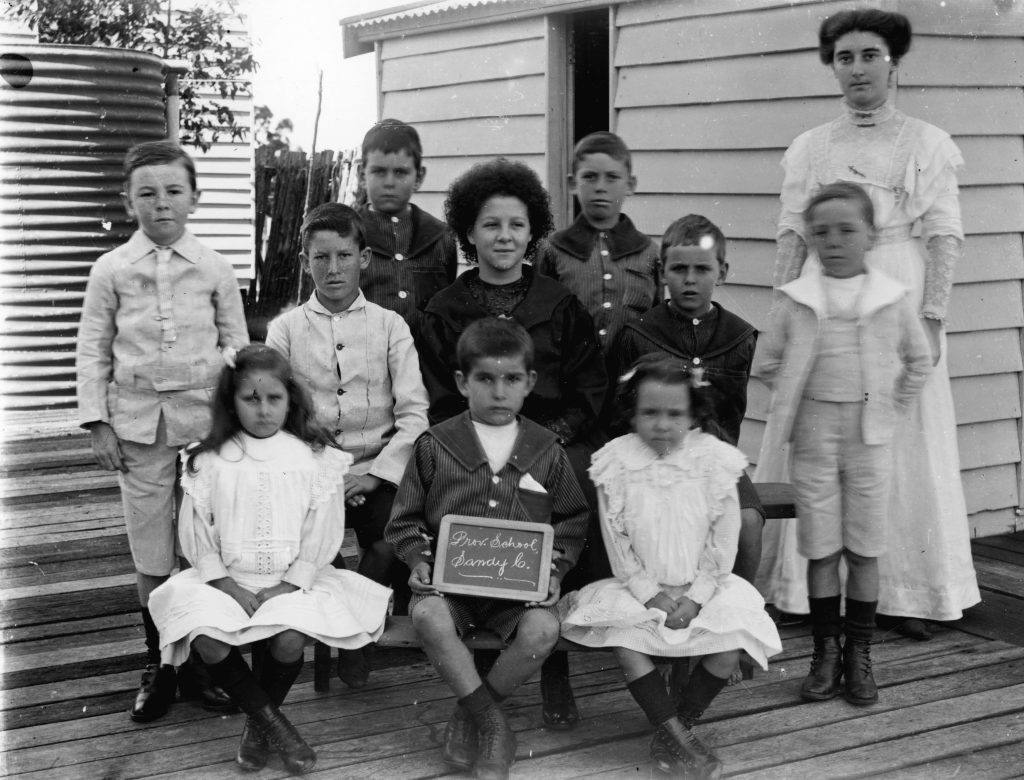
At the northern tip of Fraser Island, where the Pacific Ocean crashes its long rolling waves against a lonely stretch of sand, and the wind erodes the dune crests into shifting crescents, a small timber building once stood as a symbol of the young colony’s civilising ambition.
From 1870 to 1918, Sandy Cape Provisional School was situated at the base of the lighthouse — fully 50 miles from the nearest meaningful settlement and entirely reliant on the irregular visits of a government steamer for supplies, mail and news of the wider world.
It supported the children of lighthouse keepers who accepted isolation as the price of guarding the coast, and the wives and daughters who endured that solitude alongside them.
There were no roads, shops, a church, a doctor, or a social circle beyond the handful of families sharing the settlement. Yet, for nearly half a century, Queensland’s Department of Public Instruction maintained a teacher at that wind-swept tip of sand.
Queensland’s early education system was shaped by vast distances. As settlements emerged across a large, sparsely populated landscape, colonial and later state education authorities had to find ways to provide schooling to children who were often days or weeks away from the nearest town. Provisional schools, community-supported classrooms and itinerant teachers were common features of this system. Even so, Sandy Cape stands out as one of the most isolated schooling environments ever attempted in the state. It may well have been one of the most isolated schools in Queensland, possibly even in Australia.
But if the school initially stood as a testament to determination despite isolation, it would later become a crucible of resentment, jealousy and scandal where personal grievances flared unchecked in a place with nowhere to escape them.
A school at the lighthouse
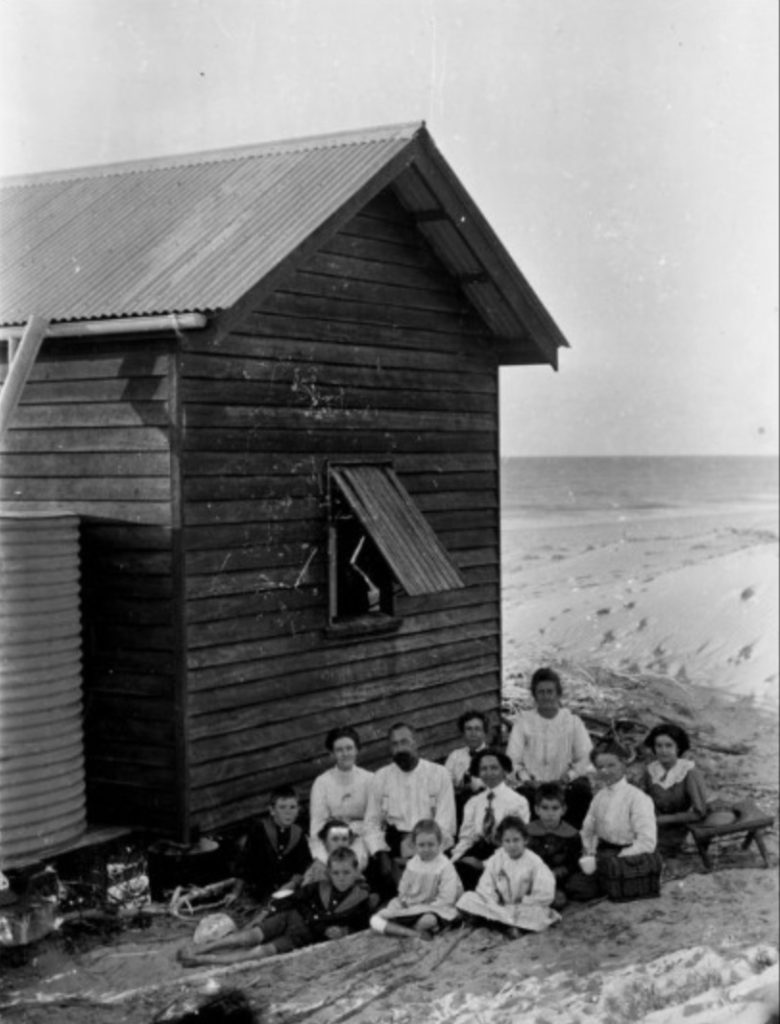
The first school on Fraser Island opened in September 1870. The building was just 18 feet by 16 feet, a small rectangular room with folding doors that let in sand in “great quantities” when open and only one window at one end. The teacher lived nearby in a small cottage, rent-free, with their salary boosted by a ration grant from the Harbour Department.
John Weaver, who arrived in September 1870, was the first teacher. He recorded with dry humour that he was happy to receive his salary quarterly because he “had no means of spending it here”.
Weaver’s early reports show the clash between practicality and penny-pinching. He had to hold classes inside the lighthouse for a short while while a cement floor was laid. He complained that the school building needed more windows, a proper door, ventilation and protection from blowing sand. Even the simplest upgrades were met with reluctance to spend.
Even so, the school began with enthusiasm. There were 12 to 15 pupils, sometimes more. When it opened, enrolment reportedly reached 21 children. Weaver also ran a Sabbath School on Sunday for the children and conducted religious services for adults.
But he also discovered something unusual about educating children raised in isolation. The older girls, nearly 14, were described as “extremely rude and ill-mannered,” believing themselves already women, encouraged by parents who relied on them for domestic chores. The children had spent months mixing freely with lighthouse workers, “dancing and skylarking until a late hour every evening” and found the discipline of school “irksome.” This was frontier life, where children matured quickly when the nearest town lay across treacherous seas.
Weaver lasted just one year, resigning at the end of 1870, “neither he nor the parents mutually satisfied.”
It wouldn’t be the last time Sandy Cape proved too much for a teacher.
A grudging commitment
During the 1870s and 1880s, teachers often came and went. Salaries rose and fell with enrolments — sometimes 22 children, other times only 11. In 1879, a memo from the Harbour Master noted that there were 13 school-age children, plus another 4 “who will be fit for school next year,” among the four lighthouse-keeper families. The Department fretted over low attendance, as if the teacher could summon students out of thin air.
Communication was inconsistent and often frustrating. In 1873, teacher Joseph Osborne complained bitterly that parcels were not sent because “the boat was loaded,” even as others received goods. He sought a transfer due to what he called intolerable inconvenience. Supplies arrived late, mail was unreliable and vegetables and fresh meat were hard to come by. Later, teachers would voice other similar grievances, such as bladder poisoning, poor health and lack of fresh food.
The Department recognised the challenge in attracting staff. Most disliked the unpleasant conditions and looked for transfers or resigned.
Nonetheless, the school endured. Its longest-serving teacher, Miss Erlina (Selina Frances Nanette Louise) Lovell, arrived around 1880 at the age of 53. An English migrant and trained teacher, she taught at Sandy Cape for 16 years. Lovell was no ordinary schoolmistress. She collected botanical specimens for the Queensland Museum and for the Colonial Botanist Fred Bailey, who honoured her with plant names, including Drosera lovelliae (now D. spathulata) and Archidendron lovelliae.
In 1890, she recorded a sighting of a 34-foot “sea monster,” known locally to Aboriginal people as “Moha Moha” — a reminder that the children she taught were growing up in a world that was both scientific and mythical.
For a time, under Lovell’s steady hand, Sandy Cape School appeared to run smoothly. But in the final years of the 19th century, the fragile balance started to break down.
The crime that shook the Cape
In 1900, assistant lightkeeper John Halford — a 59-year-old married man — was charged with the unlawful carnal knowledge of seven-year-old Eva Melican and Louisa Simpson, the daughters of fellow assistant lightkeepers.
The incident took place within the tight confines of the lighthouse settlement, where families lived close together and privacy was limited. Halford tried to take his own life while in custody, cutting his throat in a water closet. He survived, stood trial and was sentenced to five years’ penal servitude.
The case revealed the inherent weakness of such isolated postings. In a settlement of just a few families, trust was both vital and delicate. Once broken, it destroyed everything.
Suspicion lingered. The parents understandably became sensitive about their daughters’ welfare. In a tight-knit community, the scandal couldn’t disappear. It just kept circulating, fostering resentment.
And it was into this charged atmosphere that Mrs Mary Harper stepped.
The Harper vendetta and the collapse of order at Sandy Cape
If the Halford case revealed the weaknesses of a small, isolated community, the events that unfolded over the following years exposed something just as harmful — what can happen when personal grudges take hold in a place where escape is impossible.
By the early 20th century, Sandy Cape was no longer just a lighthouse settlement. It had become a stage where rivalries, resentments and suspicions played out with growing bitterness.
And at the heart of it all stood Mrs Mary Harper.
Mary Harper (née Curran), born in Ireland in 1867, arrived at Sandy Cape in 1901 as a teacher to replace her sister, Julia Curran. On paper, the arrangement looked completely reasonable. Mrs Harper had been trained as a paid monitress in Ireland and had teaching experience. Her husband was already working as the third assistant lighthouse keeper. In a place where attracting teachers was notoriously difficult, the appointment of a married woman already living on the station might have seemed handy. But in reality, it sparked a powder keg.
The lighthouse keepers and their families lived on modest government salaries and Mrs Harper’s household was now earning two incomes. In a small settlement where everyone faced the same isolation and hardships, that difference did not go unnoticed. Jealousy alone, however, does not account for the bitterness that quickly developed. Personality played a large part in it.
Before long, Lighthouse Superintendent George Byrne reported that Mrs Harper was physically unfit to carry out her duties. She was heavily pregnant and often unwell. Byrne bluntly stated that the school had become “simply a farce”.
The situation was both awkward and inconvenient. Parents expected discipline and proper education. Instead, they found a teacher often absent from the classroom, distracted by household chores and young children.
After the birth, Mrs Harper declared she believed she was entitled to resume her position. She insisted she could hire a housekeeper to handle domestic duties and thereby carry out her responsibilities as a teacher. The other parents were not convinced. Messrs Byrne and Melican informed the authorities that they would refuse to send their children to school if Mrs Harper returned. In a settlement with barely a dozen pupils, that amounted to a veto.
The Department now faced a tough dilemma. Either dismiss the teacher permanently and risk upsetting her family, or reinstate her and lose the trust of the other parents. Before a decision could be made, the dispute escalated sharply.
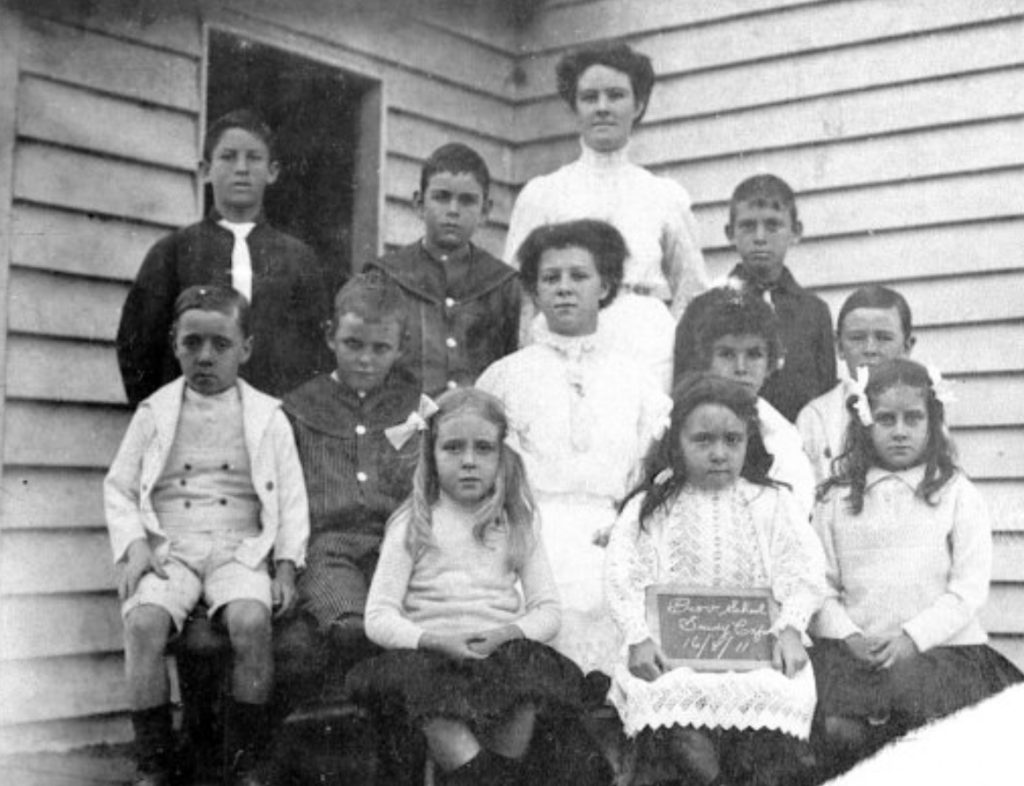
Among the most vocal critics of Mrs Harper was assistant lightkeeper Stephen Melican, father of several pupils at the school. Melican later gave the Department a detailed account of the upheaval at the station. He said that Mrs Harper had already arrived at Sandy Cape to undermine him. Shortly after she arrived, she reportedly told his wife that, while at the Port Authority office on the mainland, she had overheard that Melican was about to be demoted and transferred to Cape Cleveland. The claim caused immediate concern.
Melican’s wife travelled to Brisbane to check the rumour. When she visited the Port Office, officials told her no such transfer had ever been considered. The implication was clear that Mrs Harper had made the story up. Melican saw the incident as deliberate malice. He accused Mrs Harper of trying to ruin his reputation and break up his family.
The Byrne and Melican families believed Mrs Harper was stirring up trouble. In a typical town, such disputes might have been eased by distance or lost among numerous neighbours. At Sandy Cape, only a few families living within sight of each other across the dunes needed to cooperate. Every rumour spread quickly and every grievance stuck around. And the school — where all the kids gathered each day — became the heart of the conflict.
As tensions grew, another odd incident took place. Melican received an anonymous letter. The contents were so disturbing that he showed them to the Byrne family and advised them to be cautious about letting certain people into their home. The letter was later reported to the police and an investigation was carried out in Brisbane to see if it had been written by one of John Halford’s sons. Handwriting analysis showed no match. The author was never found. But in a settlement already filled with suspicion, the anonymous letter only worsened mistrust and widened divides.
Meanwhile, the children were caught in the middle. Mrs Harper struggled with pregnancy, miscarriage and ill health, which sometimes left the school unattended. Byrne complained that children repeated lessons in chaos, spelling mistakes went uncorrected and discipline was relaxed. One parent described a scene where one of Mrs Harper’s own children wandered around the classroom, throwing books off the desks. The school had become a battlefield.
Eventually, Superintendent Byrne pulled his children out of the school completely, arranging for them to be educated privately at home by his wife, who had previously worked in the Education Department. Other parents followed his example. The school, already delicate, was now on the brink of collapse.
A teacher caught in the crossfire
When Mrs Harper was finally removed from her teaching role, the Department hoped the problems would stop. Instead, they intensified.
The next teacher, Mary Kyle-Little, soon found herself caught between the warring families.
Complaints against her arrived almost immediately. Mrs Dicken accused the teacher of striking children, throwing slates and treating her daughters harshly. Kyle-Little vigorously denied the accusations, claiming the children were backward in their schooling and that she had merely tried to help them catch up. Another pupil insisted she had been struck on the head. Others testified they had seen nothing of the kind. The conflicting accounts made it nearly impossible for the Department to determine the truth.
What was clear, however, was that the school had become the centre of a feud much bigger than just classroom discipline.
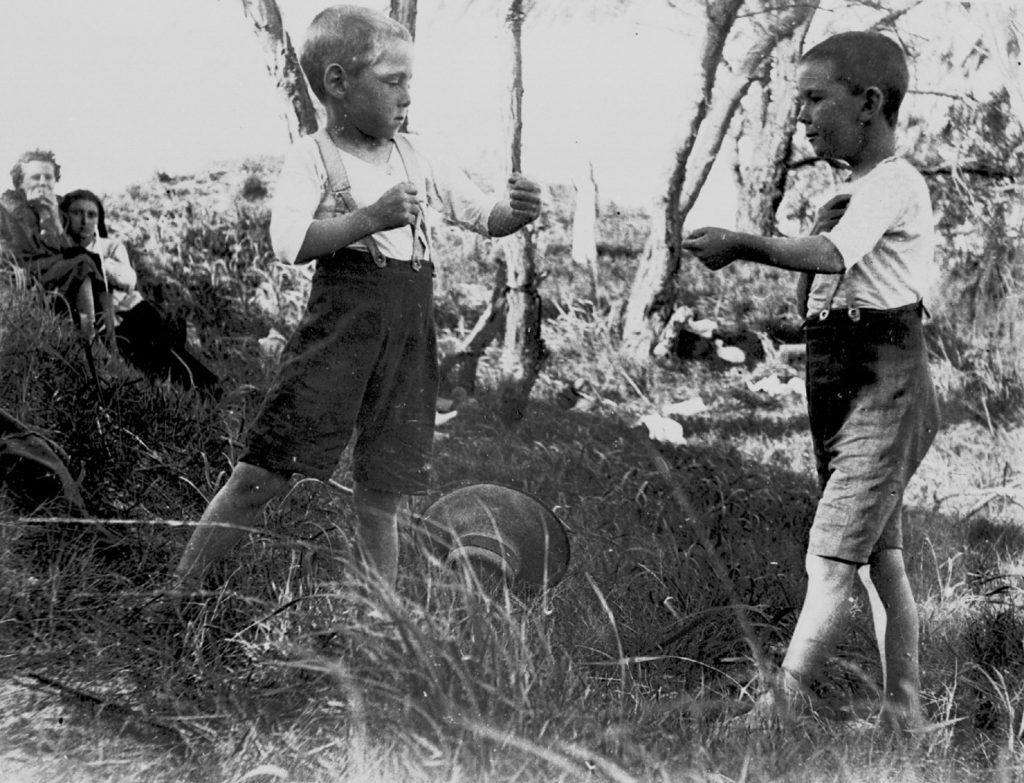
When Port Master Edward Boult was sent to Sandy Cape in October 1902 to investigate the complaints, he found himself facing a situation that bordered on the absurd. He later described the inquiry as the most unpleasant task he had ever undertaken in his departmental career.
He quickly realised that the settlement had split into two hostile factions. The Harpers and Dickens on one side and the Byrnes and their supporters on the other. The teacher, he reported, had become an unfortunate buffer between them.
Boult tried to collect evidence but found it nearly impossible. The witnesses were emotional, their stories conflicted and discussions often ended in tears and accusations. At one point, he said he had little experience dealing with women and children and hoped he would never have to do such an inquiry again.
After hours of questioning, Boult concluded that the dispute wasn’t really about schooling. The real problem, he wrote, was the long-standing animosity between Mrs Harper and Superintendent Byrne. As long as both stayed at Sandy Cape, he believed the station would never run peacefully.
The Department’s solution
The Education Department faced a familiar dilemma. Replacing teachers had not resolved the issue. Investigations revealed little beyond deep-seated hostility. In the end, the authorities chose a blunt administrative fix.
Instead of trying to reconcile the factions, they simply removed the families at the heart of the dispute. Both the Harper and Dicken families were relocated from Sandy Cape and replaced by other lighthouse keepers, with no attempt at mediation and no disciplinary actions taken. Rather than addressing the root causes of the conflict, the Department saw the issue as a logistical hassle and settled it by reassigning staff. In bureaucratic terms, the problem was resolved. Whether it healed the deeper wounds within the community remained another matter.
Looking back, the drama involving Mrs Harper shows something deep about life in remote government outposts. The lighthouse keepers at Sandy Cape endured harsh conditions. They were isolated from towns, relied on irregular steamers for supplies and mail and stayed for months at a time within a small settlement of just a few families. In such settings, small disagreements could quickly turn into personal feuds. Rumours spread without outside voices and resentments had nowhere to go.
And when personalities clashed — as they did between Mrs Harper and Superintendent Byrne — the whole community could become paralysed by hostility.
The school that would not die
Despite the scandal, the continued resignations, the irregular steamers and the reluctant bureaucrats, Sandy Cape School carried on.
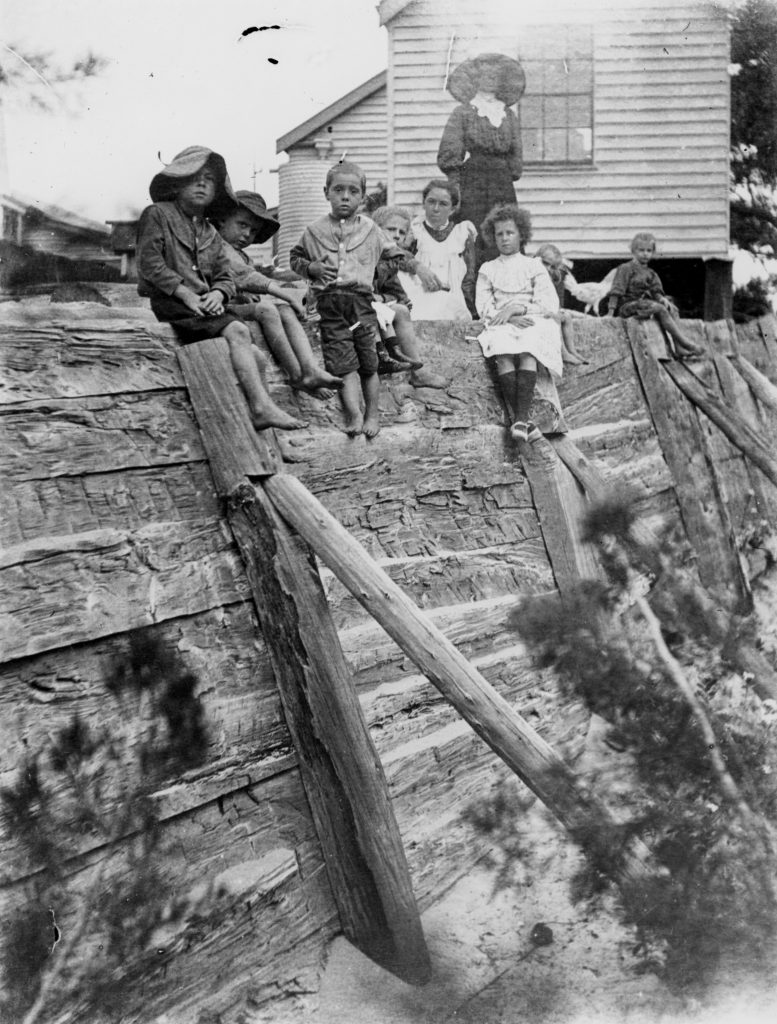
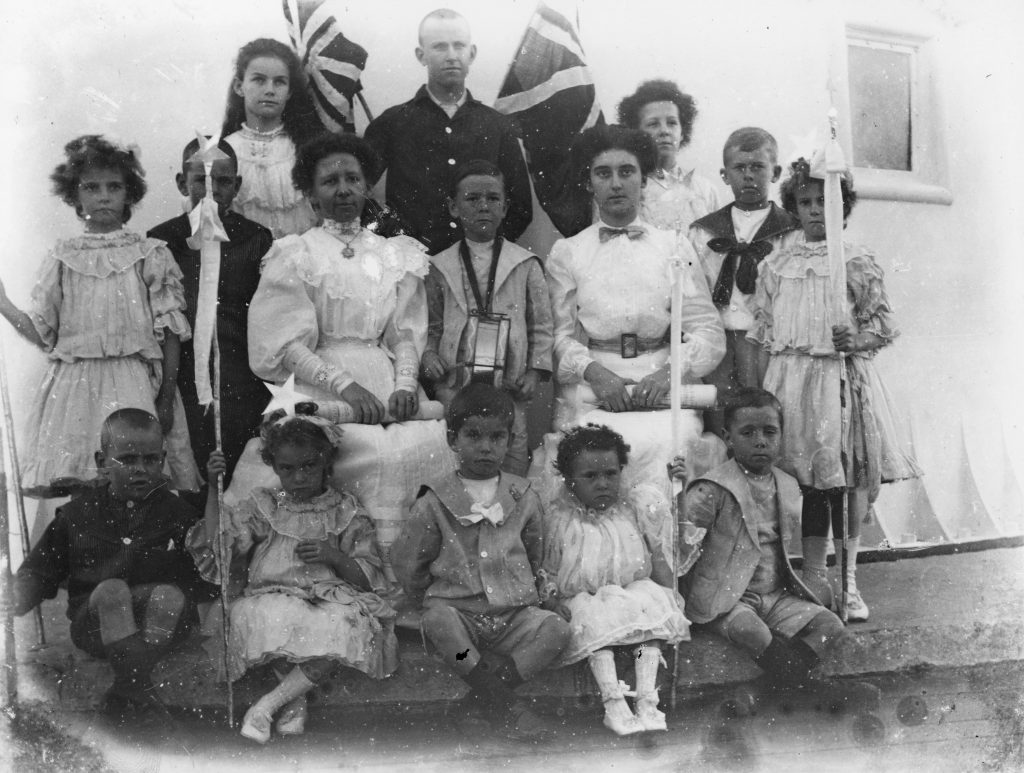
Photographs from 1910 and 1912 display neat rows of children in front of the schoolhouse, with teachers standing formally behind them. The method used to bring supplies up from the beach is visible in other images — a reminder that every book, slate and dictionary had to be winched from a boat onto the sand first.
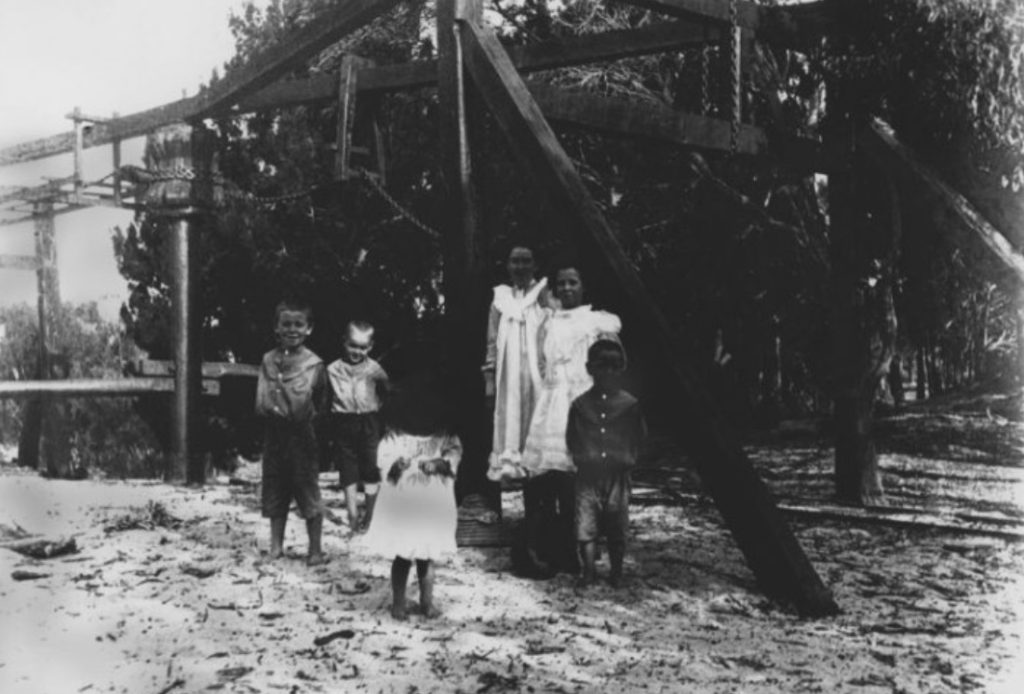
Teachers like Clara Muhldorf and Eva Connors persevered. In 1914, the school even temporarily closed to accommodate sailors from the wrecked Marloo off Orchid Beach — turning the classroom into a refuge during yet another naval emergency.
By 1916, enrolment dropped to just two children. Ada Osmond, the last teacher, found it hard to study for exams as mail boats operated irregularly and she resigned in 1918.
And then, quietly, the school closed.
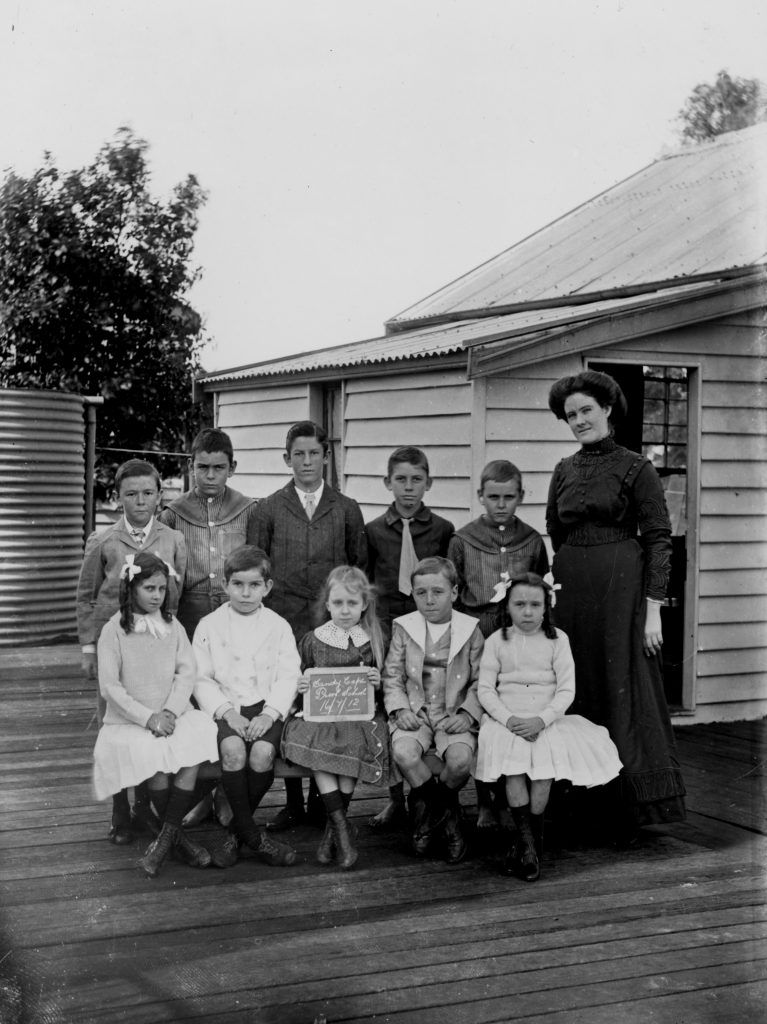
Lessons from the edge
Sandy Cape School was more than just a curiosity. It symbolised Queensland’s commitment to deliver education “practically, and not merely in theory, to every man’s door.”
But it also revealed something deeper. Isolation doesn’t automatically bring out the best in people. Instead, it tends to magnify whatever is already there — generosity or jealousy, resilience or resentment.
For nearly 50 years, children recited lessons while wind rattled the shutters and sand crept beneath doors in one of the most isolated classrooms in Queensland. They grew up amidst lighthouse machinery, telegraph wires that sometimes fell silent and adults whose disputes could not be avoided.
Today, only photographs and departmental files are left. The schoolhouse itself is gone and the sand has shifted as it always does.
And its history, far from being a simple tale of education in a distant post, became a remarkable window into the human dramas that unfolded at the edge of the world.
The list of teachers at Sandy Cape school
1870
1871
1872
1873
1874-5
1876
1877
1878
1879
1880
1881-94
1895
1896
1897
1898
1899
1900
1901
1902
1903
1904
1905
1906
1907
1908
1909
1910
1911
1912
1913
1914
1915
1916
1917
1918
John Weaver
Mr Dobson
??
Joseph Osborne
??
Charles Bolton
“
“
Miss A Curnow
Erlina Lovell
“
Erlina Lovell
Mary Pilcher
Alice Moore
“
Julia Curran
“
Mary Harper (nee Curran)
Mary Kyle-Little
Mary Rauchle
“
Henrietta Butler
“
“
Clara Muldorf
“
“
Eva Connors
“
Maud Thomas
“
Leonora O’Brien
“
C Ada Osmond
??
??
??
??
??
??
11 children
??
18 children
13 children
17 children
??
11 children
14 children
11 children
14 children
13 children
14 children
17 children
12 children
10 children
9 children
11 children
9 children
10 children
13 children
13 children
10 children
11 children
10 children
7 children
9 children
5 children
7 children
7 children
8 children
An incredible story. It is part of the bigger canvas of all Queensland lighthouses. When we see automated lights now operating so coldly and clinically, we can all too easily lose sight of the incredible loneliness of the first hundred years or so of our remote and difficult manual lights. Thank you, Robert.
An interesting article, thank you Robert.
Hi Robert, Thank you for the interesting article on the school… very enjoyable to read. I just wanted to let you know that in the first photo on page 1 of the document, the names for Esmond and Clarnece Byrne are swapped. Front: should be Esmond Byrne and Middle should be Clarence (he is blurred and is standing in front of the teacher.
George Patrick Byrne (Superintendent/keeper at Sandy Cape, Double Is. Point and Moreton Bay) was my maternal great-grandfather’s brother, whose name was Thomas Byrne. Thomas married Helen Simpson, daughter of John Simpson (first Superintendent at Sandy Cape and keeper at Woody Island Light).
Thomas was a timber getter on Fraser Island, then moved to Maryborough and was a carrier and involved in the Fire Brigade.
Thanks, Sheena. I have made the adjustment.