
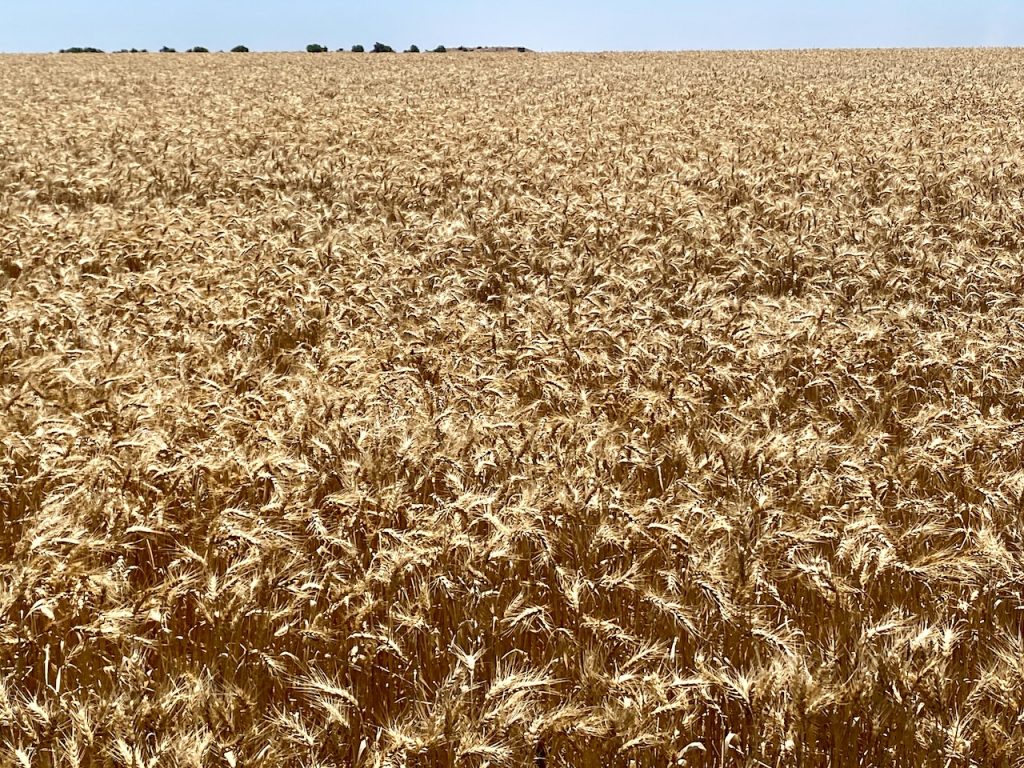
The mallee was not cleared because people were careless or negligent. It was cleared because they were hungry.
Not hungry in the rhetorical sense of modern politics, where scarcity is often theoretical and abundance is assumed. Hungry in the old sense, where food had to be grown close to where it was eaten, where freight was expensive, unreliable and slow and where a colony that could not feed itself could not survive for long. When South Australia expanded north and east into the bone-dry mallee belt, it did so because the colony needed more productive land. Population was growing, demand for grain was increasing and the lightly timbered country had already been settled.
Today, much of that same country is seen through a lens of regret. There are the treeless horizons, the wind-swept paddocks and the remaining shelter belts clinging to roadsides. That regret came with a language full of accusations. Words such as clearing, destruction, displacement and loss. All of these are true. But they don’t tell the whole story. Nor are they enough to explain why this landscape changed so completely, quickly and permanently.
To understand the mallee story, one must step back from the comforts of modern hindsight and stand, briefly, where the settlers stood before the iron-hard scrub, with little capital, few machines, fragile markets and a population that needed food.
A landscape not empty but different
Before Europeans arrived, the mallee was not “unused.” Aboriginal people had lived in and shaped these woodlands for thousands of years. Fire was their main tool, not to clear vegetation, but to manage it. They encouraged new growth, created pathways, attracted game and maintained a mosaic of habitats that changed with the seasons and purpose. The mallee they inherited from deep time was managed, though in ways that left few permanent marks.
But Aboriginal land use did not aim to replace the ecosystem with fields of wheat. Their economy was not based on export, storage, or mechanised production. It was local, seasonal and resilient, but it could not support a colonial society of towns, ports, railways, flour mills, bakeries, breweries and cities.
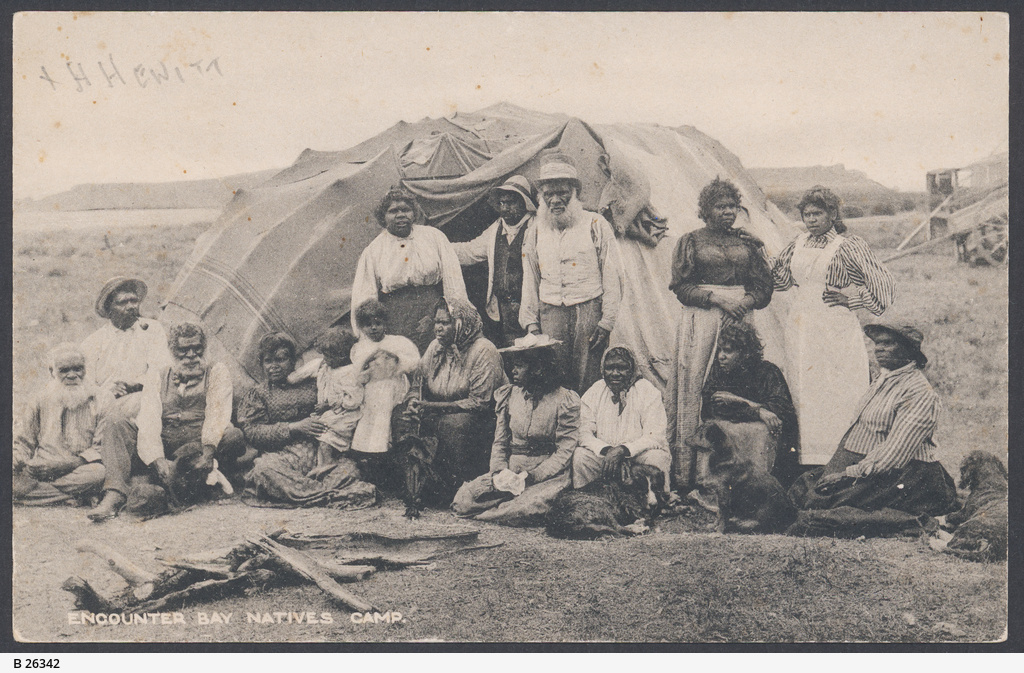
The arrival of Europeans marked the introduction of a fundamentally different relationship with the land. Instead of managing country to support seasonal movement and local resources, the new settlers sought to establish permanent agriculture capable of feeding a growing colony and generating economic prosperity. There was no shared way of managing land, no common economic approach and no way to blend subsistence living with the needs of a growing settler colony. Displacement happened, just as it always does when two land-use systems can’t coexist.
That loss cannot be softened by hindsight. Nor can it be understood if removed from the historical forces that drove it.
Why the mallee was avoided
In the early decades of South Australia’s development, settlement concentrated on the open, lightly timbered country. The mallee was intentionally left untouched, not out of respect, but because clearing it was extremely costly and physically demanding. The cost of grubbing exceeded the cost of the land, so the government’s terms for acquiring agricultural land often proved unrealistic. And quite frankly, it was entirely unattractive for farming.
Where clearing was attempted, it proved prohibitively costly. Clearing dense mallee scrub by cutting and burning, then grubbing out the massive underground lignotubers, could cost up to £7 per acre, which was a huge expense for a struggling farmer.
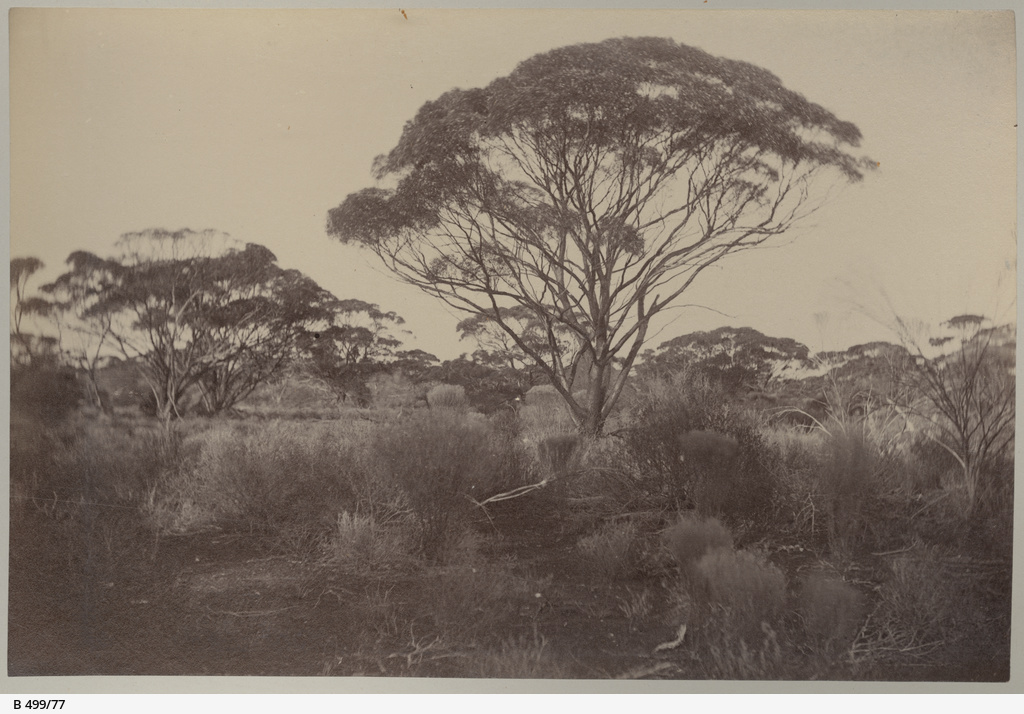
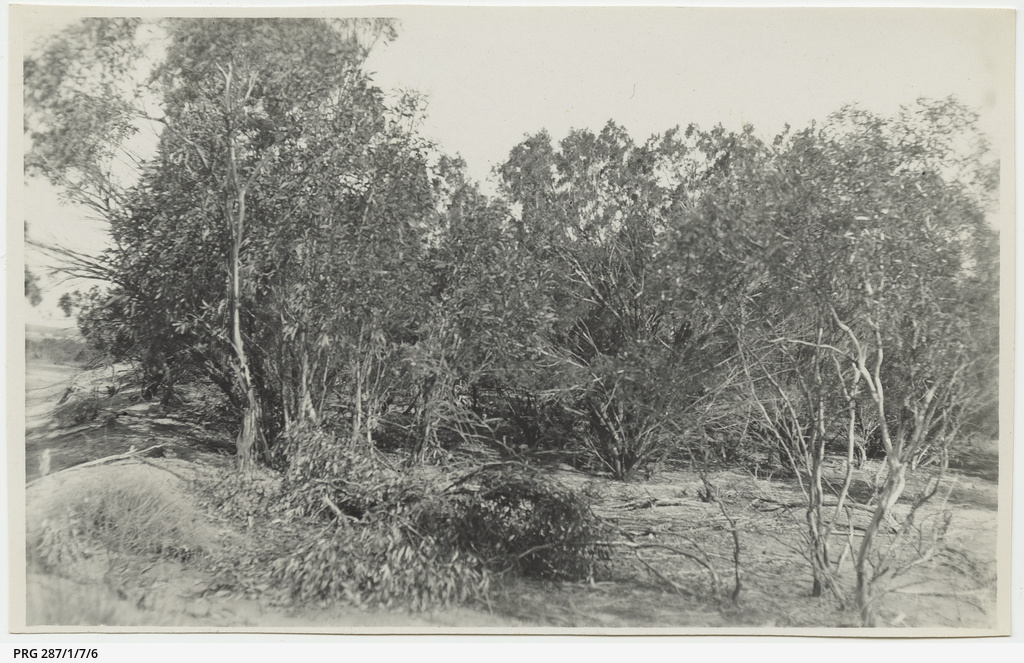
Consequently, for decades, the mallee was seen as useless scrub. It was too thick, too dry and too stubborn. Early explorers and surveyors called it “scrub desert,” fit only for grazing at best, abandoned at worst.
But the population kept growing and more arable land was needed. Beyond them lay millions of acres of mallee.
The push into the scrub
By the late nineteenth century, South Australia faced a dilemma. Its coastal plains and richer soils had already been cultivated and its population was increasing. Wheat was becoming the colony’s most dependable export. Beyond the last cleared frontiers lay vast tracts of mallee scrub – that thick, low, multi-stemmed eucalypt forest, growing in sandy, often marginal soils, hostile to plough and horse alike.
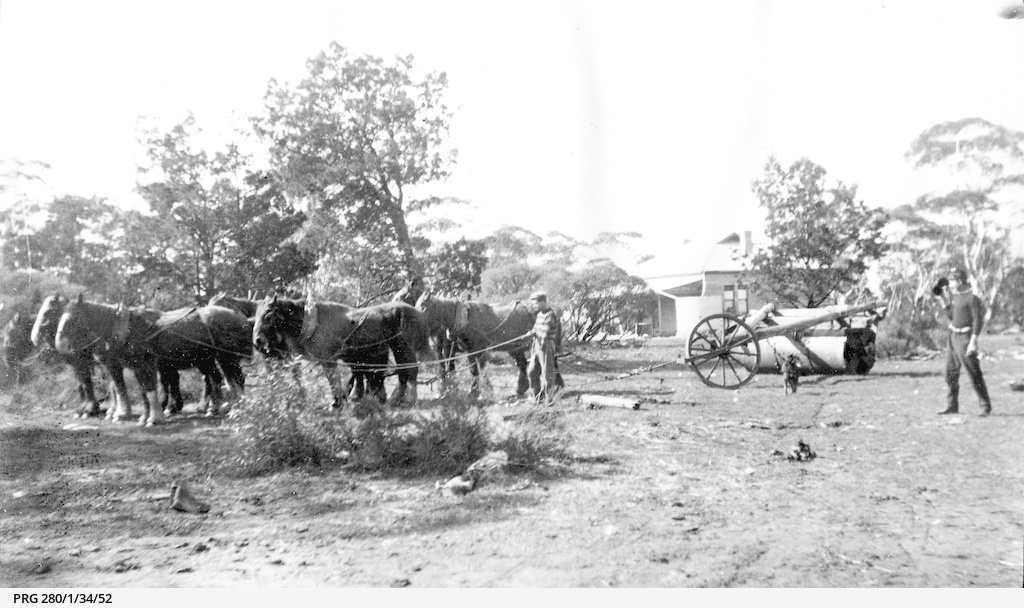
But necessity changes perception. The first breakthrough came in 1868. Instead of cutting down every tree, settlers found that lightly timbered mallee could be flattened with heavy rollers. After drying, the scrub was burned. Then, a crude V-shaped log fitted with iron spikes was dragged across the ash to scratch in a crop. This method, called mullenising, after its inventor Charles Mullen, allowed farmers to get a crop before the land was fully cleared. It was not elegant, but it was survival.
Wooden rollers were soon introduced. With them, scrub could be rolled and burnt for as little as eight shillings per acre, a remarkable drop in cost. By burning stubble over successive seasons, stumps could be killed without the need to grub them out.
Then came the iron giants, like the 45-inch Cornish boiler mounted as a roller, with a diagonal beam to avoid travelling through standing scrub. With eight bullocks, a farmer could clear eight acres per day of mallee trunks up to four inches thick.
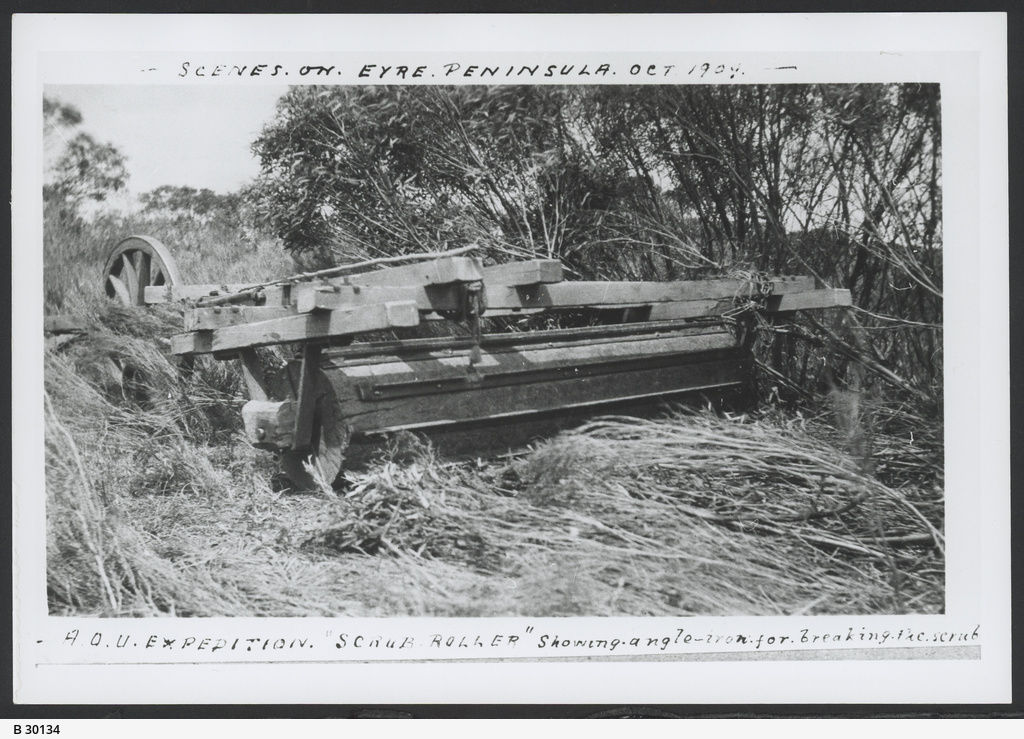
What was once impossible became simply difficult. Clearing the mallee was a tough physical battle. Trees were chopped down with axes and chainsaws, stumps were dragged or burned and root systems were pushed back year after year. Ongoing dangers included fires that swept through stacked timber, followed by dust storms and crop failures.
There was no romance to it, only endurance.
The machinery revolution
Rolling alone was inadequate. The ground stayed full of lignotubers that broke ploughs. Traditional set-ploughs proved useless.
Then, in 1876, the invention that revolutionised everything arrived. It was the stump-jump — a dramatic step forward for Australian agriculture.
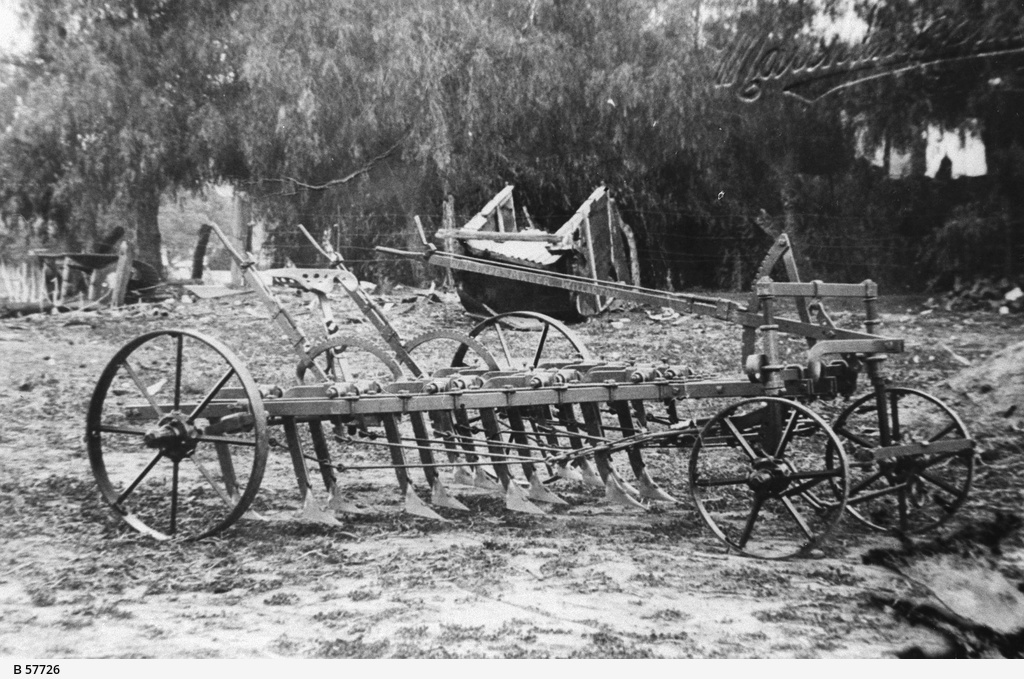
The Smith brothers’ Vixen, with hinged beams and counterweights, could glide over roots and then settle back into the soil. A simpler model, shown at the Moonta Show, attached a draught-chain directly to the foot.
However, the Smiths failed to get a patent for their design. Within a few years, every blacksmith in the colony was making stump-jump ploughs.
The effect was electrifying. Over the three years after its launch, half a million acres of new land were brought into cultivation. Along with the mallee roller, the economics of clearing were revolutionised.
Advances in steel ploughs, stump-jump technology, roller cutters and later mechanised traction enabled the clearing of scrub. Further development of stump-jump implements led to a more sustainable system of shallow cultivation, as the deep cultivation practised by farming pioneers had damaged the soil.
Governments keen on encouraging further settlement offered land on favourable terms. Railways gradually expanded into the interior, followed by mills, and towns emerged where none had existed before.
Law, land and scale
Technology alone, however, was not sufficient. Legislative reform was just as vital.
The Scrub Lands Act 1877 permitted larger holdings, eased clearing obligations and allowed purchase after eleven years. Within three years, over 250,000 acres were leased under the revised Act. Instead of speculative land grabbing, it was a government policy focused on survival.
South Australia, once known as the birthplace of the Australian wheat and barley industry, quickly became the continent’s granary. While earlier colonies struggled to produce enough grain to feed themselves, South Australia did not.
Before mechanisation, grain was harvested with a sickle, then stooked, dried, stacked and threshed. Labour was scarce and production was slow. In 1843, miller John Ridley built the horse-drawn stripper, capable of harvesting wheat six times faster than hand methods. It saved the colony from food insecurity.
The stripper and stump-jump plough — both South Australian inventions — were the start of the modern grain industry. They transformed marginal scrub into export wealth. Grain meant bread, which meant settlement and settlement meant a state.
In Australia’s driest state, this was dryland farming, which relies not on average rainfall but on timing and reliability, with winter being dominant. Growing seasons range from three to nine months.
While Australian cereal yields are modest compared to global benchmarks, Australian cereal production is remarkably efficient. They are cultivated without subsidy, in marginal climates and sold profitably on international markets.
The second clearing wave
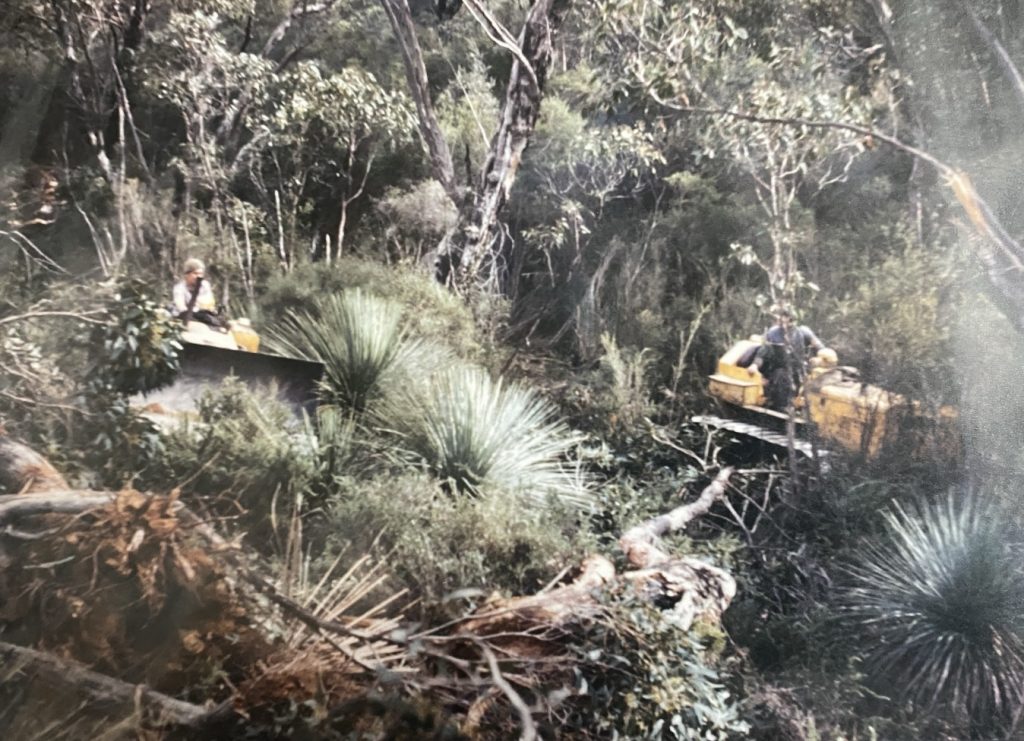
Mechanisation picked up again in the 1930s. On the Fleurieu Peninsula, between Mount Compass and Cape Jervis, crawler tractors like the International TD40, introduced in 1936, began to clear thousands of acres.
Steel scrub rollers, the “Majestic Plough” with 400-pound disc pressure, and improved traction shattered roots and yaccas (grass trees). The introduction of superphosphate, subterranean clover, and perennial ryegrass also transformed sandy soils into fertile grazing land.
The cereal crops that built a state
However, it was wheat and barley that transformed South Australia by turning subsistence into surplus, surplus into trade and trade into stability. The grain belt became the backbone of the state’s economy, feeding towns, financing infrastructure, attracting investment and creating an export identity that allowed South Australia to be more than just a distant outpost of the Empire.
The mallee, once dismissed, became indispensable. Its soils, though light, proved workable with careful rotation. Its vastness made mechanisation worthwhile and its openness, once cleared, allowed for scale.
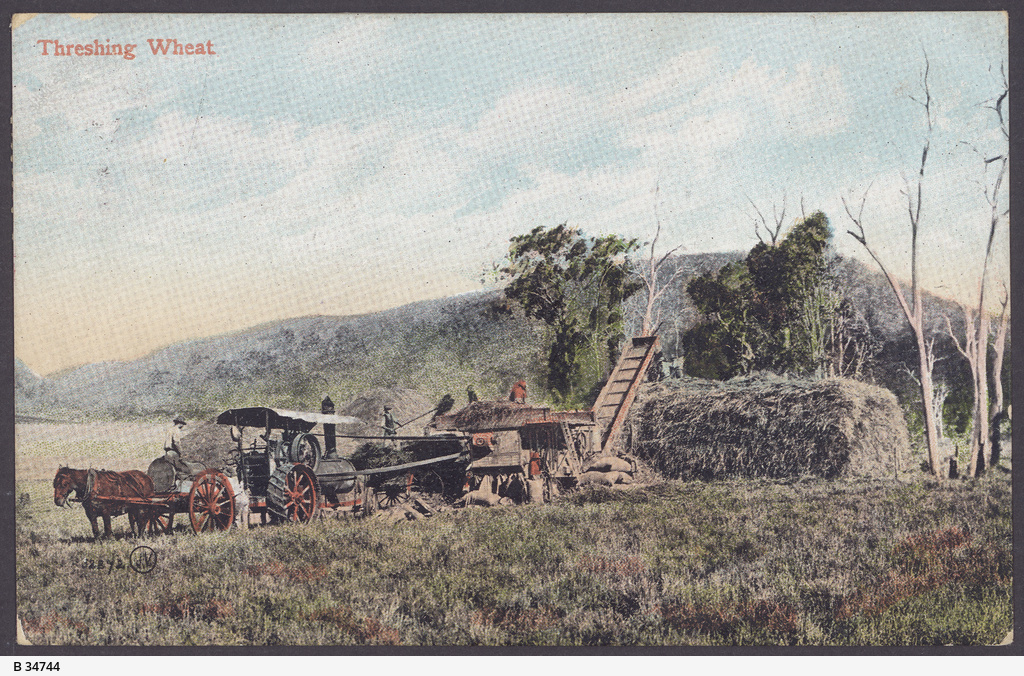
By the early twentieth century, cereal crops served as an economic base. Without them, South Australia would have struggled to support its population, keep its ports running, fund its railways, or feed its cities.
This part of the story is often left out of modern commentary. The lifestyle Australians now enjoy — including food security, urban density, export wealth, and national prosperity — did not come about without land transformation. It came because of it.
You can’t condemn the means while celebrating the ends without recognising the link between them.
A modified world, not a ruined one
It’s common to call cleared landscapes “destroyed,” but destruction implies permanence. The environment that supported the mallee wasn’t wiped out. It was replaced with something else.
That replacement incurs costs such as loss of biodiversity, soil erosion, altered hydrology and reduced resilience. But it also supports millions of lives. Roads, towns, schools, hospitals, universities and cities sit on land once covered in scrub. Every loaf of bread, every bowl of pasta, every beer brewed from barley carries the legacy of that clearing.
The mallee tree may have disappeared, but the environment became a cultivated landscape rather than a wild one.
Modern environmental narratives often portray this transformation as a moral failure. Many prefer to call it an act of greed or ignorance. However, that view assumes a luxury of choice that was not available at the time. People were not choosing between pristine forests and ethical sustainability. They were choosing between isolation and survival.
Virtue without memory
Today, many who loudly condemn land clearing are still affected by its effects. Their food comes from farms and their power depends on land-based infrastructure. Their homes are built on cleared land and their cities rely on the rural areas they criticise.
It’s simple to judge the past when the present relies on it. It’s easy to discuss restoration when one has already gained from change. But moral clarity that overlooks material reality is not wisdom. The mallee didn’t fall just for profit. It fell because people needed to eat, trade, grow and belong somewhere that could support them.
Holding two truths at once
The mallee story doesn’t need forgiveness or blame. Instead, it calls for honesty. Yes, Aboriginal people were displaced and ecosystems were simplified. And yes, a large amount of clearing happened.
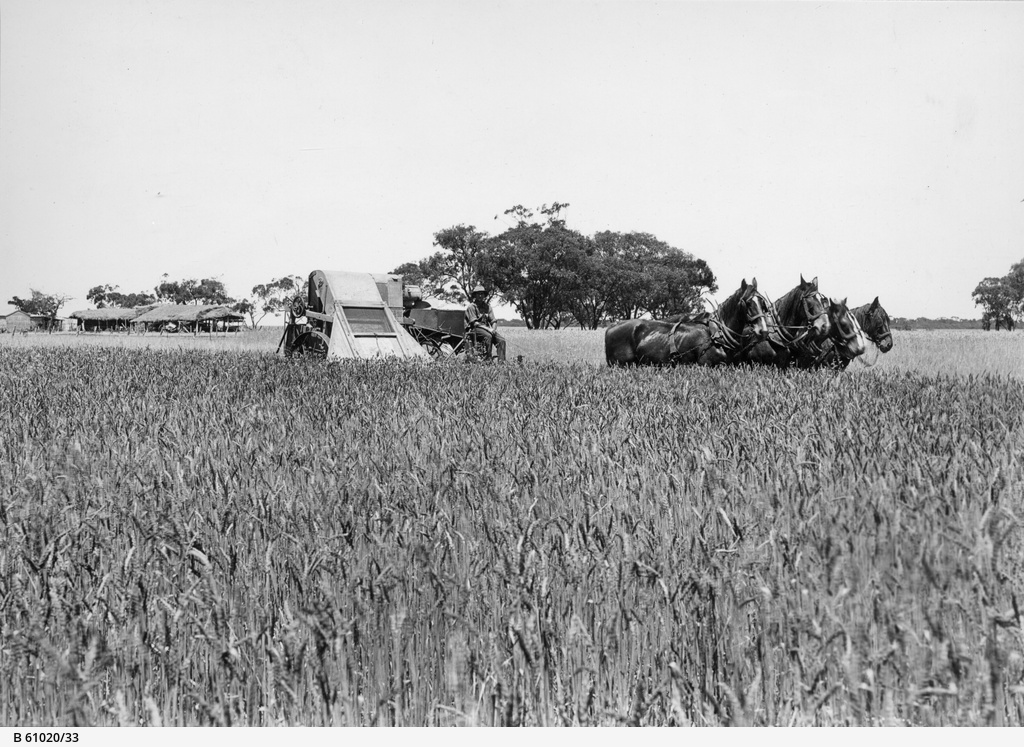
But it also established a state, nourished a nation and fostered the prosperity now regarded as normal. These truths do not contradict each other. They exist side by side.
The mallee is not a crime scene frozen in time. It is a living reminder that civilisation doesn’t grow in greenhouses. It is carved, shaped, compromised and maintained.
Living in South Australia today means being part of that legacy and living with the consequences of those decisions. Modern prosperity emerged as part of landscape change and was built upon it. Understanding that history requires more than counting what was lost. It also requires acknowledging what was created.
Thank you, Robert, for your excellent recount of the transformation of the mallee country.
Is it possible to access previous articles you have published, please? I saw an excerpt from your report on the windmill sites and the construction of solar generation and would very much like to read the complete article.
Again, many thanks.
John Jerrard
John
I have over 200 blog posts on my website. The best thing to do would be to search for the articles you are interested in. Most of the ones I think you want to read are under the Forestry tab.
I have written a couple of stories about the wind and solar factories. See – https://www.robertonfray.com/2023/10/06/wake-up-australia-renewable-energy-wont-save-the-planet-if-it-costs-the-earth/ and https://www.robertonfray.com/2023/12/01/killing-koalas-to-save-polar-bears/
Your readable prose, Robert, provides a deep historical perspective to the transformation of the mallee lands. Might I suggest that the descriptors you use are applicable to other transformations of forested lands to intensive agricultural pursuits?
“That loss cannot be softened by hindsight. Nor can it be understood if removed from the historical forces that drove it.”
“Modern environmental narratives often portray this transformation as a moral failure. Many prefer to call it an act of greed or ignorance. However, that view assumes a luxury of choice that was not available at the time. People were not choosing between pristine forests and ethical sustainability. They were choosing between isolation and survival.”
There is a fascinating, much later plant physiological aside to this story, viz.
Professor Graham Farquhar AO, working alongside CSIRO agronomist Dr Richard Richards, fundamentally changed how scientists breed crops for dry environments.
Plants “breathe” through microscopic pores called stomata. When they open these pores to absorb carbon dioxide for photosynthesis, they simultaneously lose water vapour. In the 1980s, Farquhar discovered a vital relationship between carbon isotope discrimination and water-use efficiency. Carbon naturally exists in two main forms (isotopes): Carbon-12 and the slightly heavier Carbon-13. Plants prefer the lighter Carbon-12.
When a water-efficient plant keeps its stomata tighter, carbon dioxide inside the leaf drops, forcing the plant to be less picky and absorb a higher ratio of the heavy Carbon-13.
By measuring the carbon isotopes trapped in the plant tissue, Farquhar and Richards realised they could easily screen for “thirsty” vs “water-efficient” wheat varieties simply by testing a single leaf. They quickly bred the “Drysdale” and “Rees” strains with high water efficiency.
These varieties deliver up to a 10% yield advantage in dryland farming environments using the exact same amount of available water. This work has since been applied worldwide to other major dryland crops like barley, rice, and chickpeas.
For this monumental contribution to global food security, Farquhar and Richards were awarded the prestigious Rank Prize for Crop Husbandry. Professor Farquhar was also later awarded the Prime Minister’s Prize for Science (2015) and named Senior Australian of the Year (2018).
Thanks, Gary, for that interesting add-on. In my blog about the WA wheatbelt, I touched on the advances that helped farmers remain competitive on the world stage but didn’t know the details about this. A truly fascinating part of the story.