
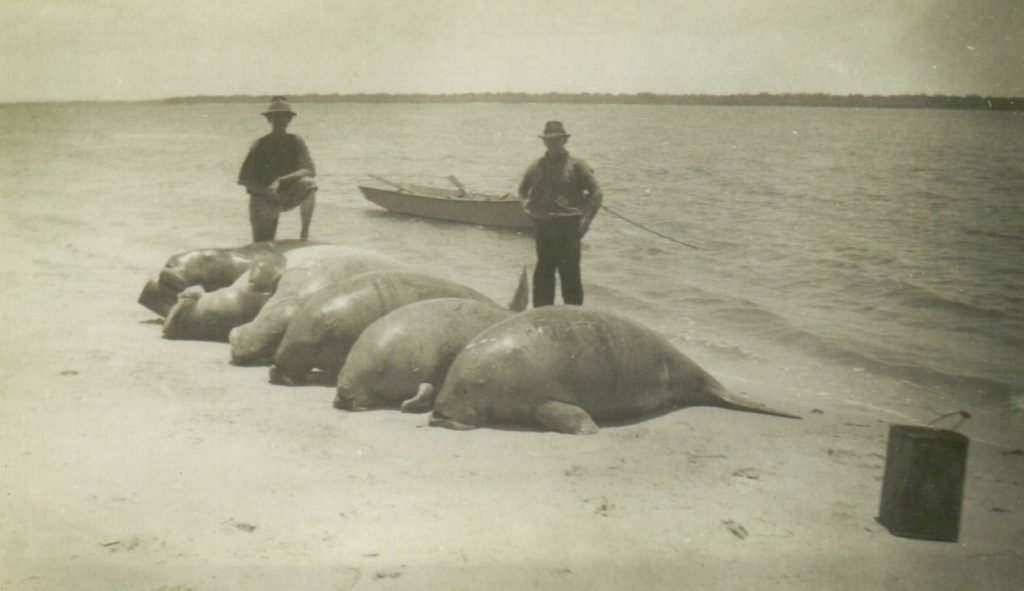
Long before modern marine conservation efforts, the expansive, shallow waters of the Great Sandy Strait and Hervey Bay were home to one of Australia’s most remarkable and ultimately tragic commercial marine harvests. Here, in the connected estuaries, islands and seagrass meadows off Queensland’s Fraser Coast, European settlers encountered vast herds of dugong — large, gentle marine mammals that hundreds of years earlier had supported Indigenous subsistence hunting.
Their value as a food is high. The fresh flesh is clear, clean and finely grained, resembling the finest veal.
Over more than a century, dugongs transitioned from being a traditional Aboriginal food to a commercial commodity, with dugong meat, oil, and other processed products supplied not just to local markets but also to distant cities and international buyers. This story details how the industry started, expanded and eventually collapsed.
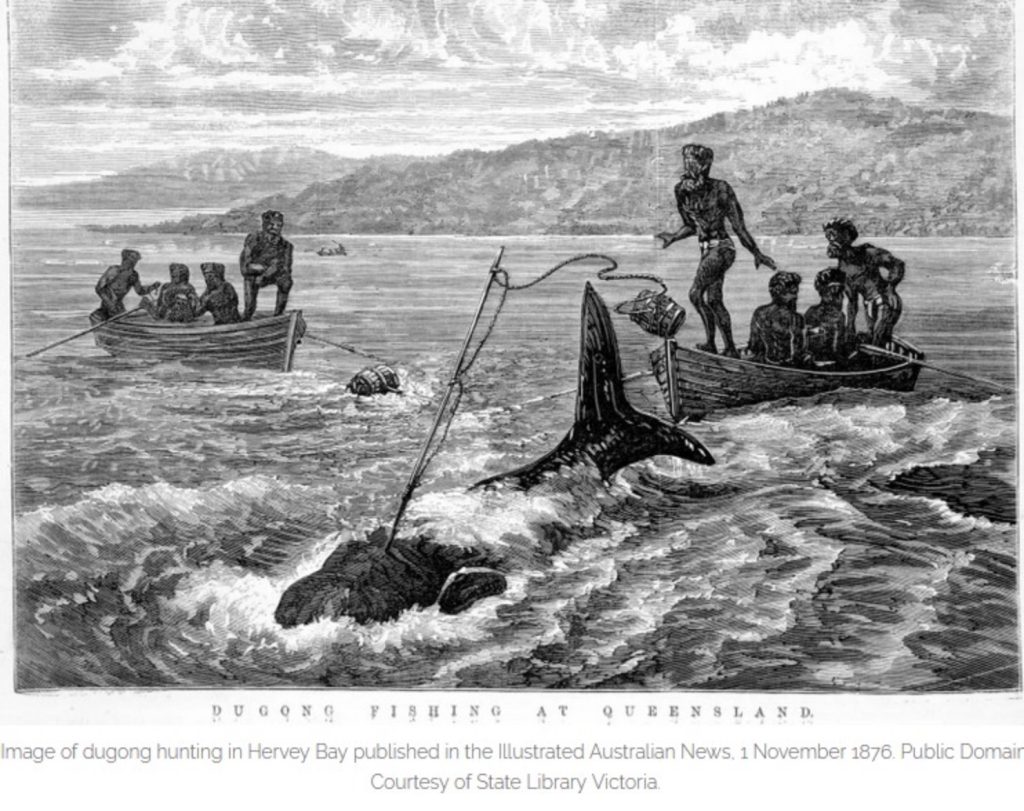
The dugong and its habitat
Dugongs are large, slow-moving marine mammals, often called “sea cows” because they graze on seagrasses, which are the underwater grasses that cover extensive coastal bays and estuaries.
The dugong’s body is quite similar to a seal’s, while its head has been described as resembling a pig’s. Its snout is used to root up the seagrass that grows on shallow flats and reefs.
A typical adult may grow up to around three metres long and weigh between 400 and 500 kilograms. They spend many hours each day feeding on seagrass beds, mainly at night during the flood tide. They are surprisingly swift creatures, faster than a shark but slower than a porpoise. They get their speed from their strong crescent-shaped tail.
If sharks attack in any numbers, the herd gathers, with the calves at the centre protected by the cows, while the bulls ferociously circle around.
Dugongs have a low reproductive rate. Females only reproduce every three to seven years, mature slowly, and calves stay with their mothers for up to two years. These biological traits make them especially vulnerable to over-exploitation.
The waters of the Great Sandy Strait and Hervey Bay, which separate Fraser Island from the mainland, are among the richest dugong habitats in Australia. Surveys conducted since the 1980s suggest that these waters have historically supported large dugong populations; aerial counts have documented thousands of individuals, highlighting the area’s importance for dugong feeding and refuge.
Aboriginal practices and knowledge
Long before European commercial interests arrived, Aboriginal peoples in this region had developed their own methods and cultural practices for dugong hunting. They wove traditional nets from the inner bark of scrub vines, and seasonal knowledge informed the best times to catch dugongs. Dugong meat and oil had long been valued, and Indigenous accounts mention oil being used to help sick people, highlighting a deep connection between people, animals and the land.
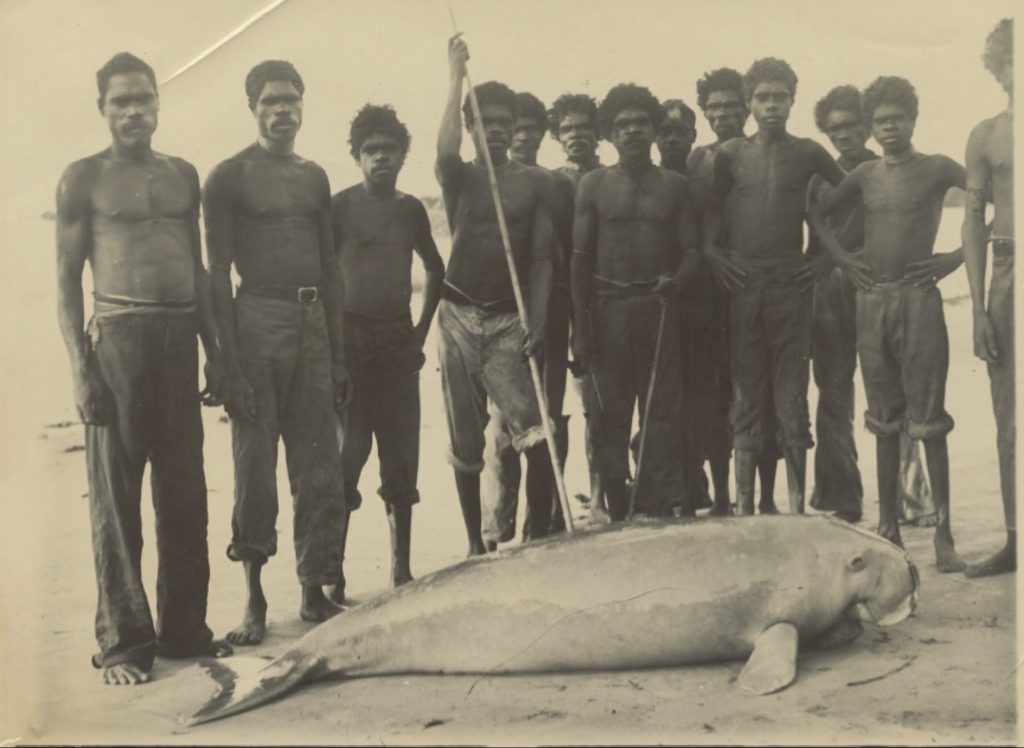
These Indigenous practices were not merely extractive but deeply rooted within cultural and ecological systems, incorporating spiritual elements linked to totems and hunting rites. Some anthropological accounts describe intricate hunting rituals aimed at respecting totemic connections and fostering harmonious relations between people and dugong populations.
Early contact and the beginnings of a trade
While Aboriginal Australians had hunted dugongs in these waters for centuries using woven vine nets and spears, and believing in the animal’s nourishing and healing qualities, European involvement in dugong fishing began in the mid-19th century.
The earliest specific reference to European dugong fishing in the Wide Bay–Burnett region was in 1850, when a dugong oil industry was established at the head of Tin Can Bay at Kauri Creek and Pelican Bay. A decade later, a successful dugong, shark, and turtle-catching business began in the same area, reportedly spearheaded by a man known simply as “Ching.”
An article in the Brisbane Courier from 1869 reported herds of dugong in:
Almost incredible numbers were to be found in Moreton Bay, Wide Bay and Hervey Bay.
The industry capitalised on the plentiful dugong populations, the easily accessible shallow waters, and growing markets for dugong products.
This was when Brisbane doctor William Hobbs observed the Moreton Bay Aborigines’ use of dugong flesh and fat. He tested their medicinal properties and began producing and marketing dugong oil for health purposes.
John Lionel Ching: pioneer of the dugong industry
The man who most famously led the early commercial dugong industry was Maryborough chemist John Lionel Ching, who became synonymous with the trade in the 1860s and 1870s. Despite the Chinese-sounding surname, documentation suggests Ching was of English Cornish origin, and he quickly became the leading figure in dugong processing in Wide Bay and Hervey Bay.
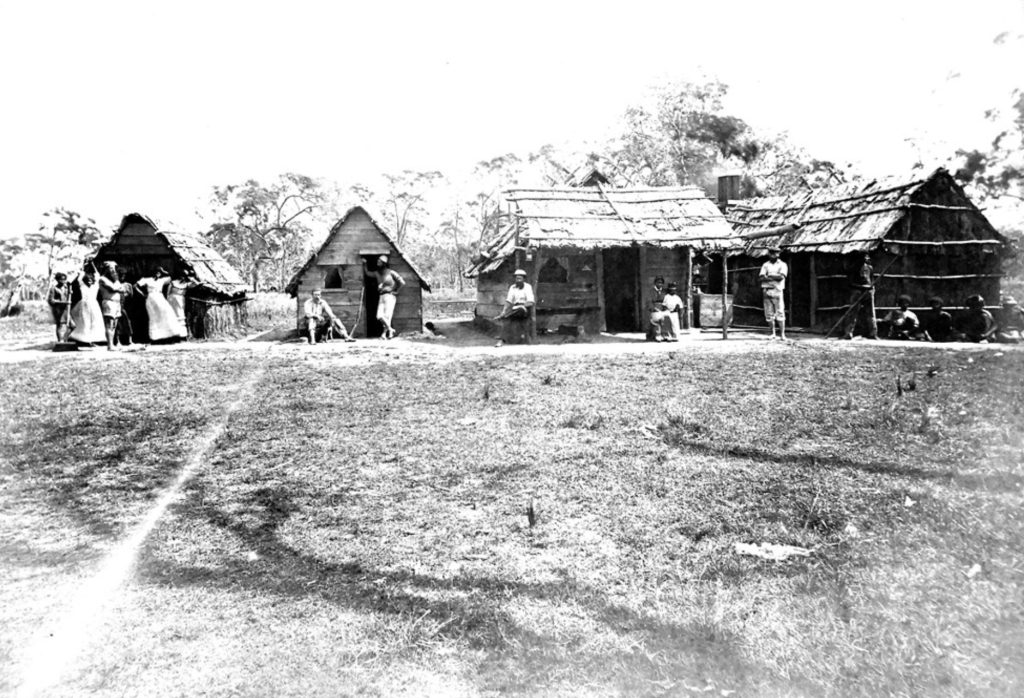
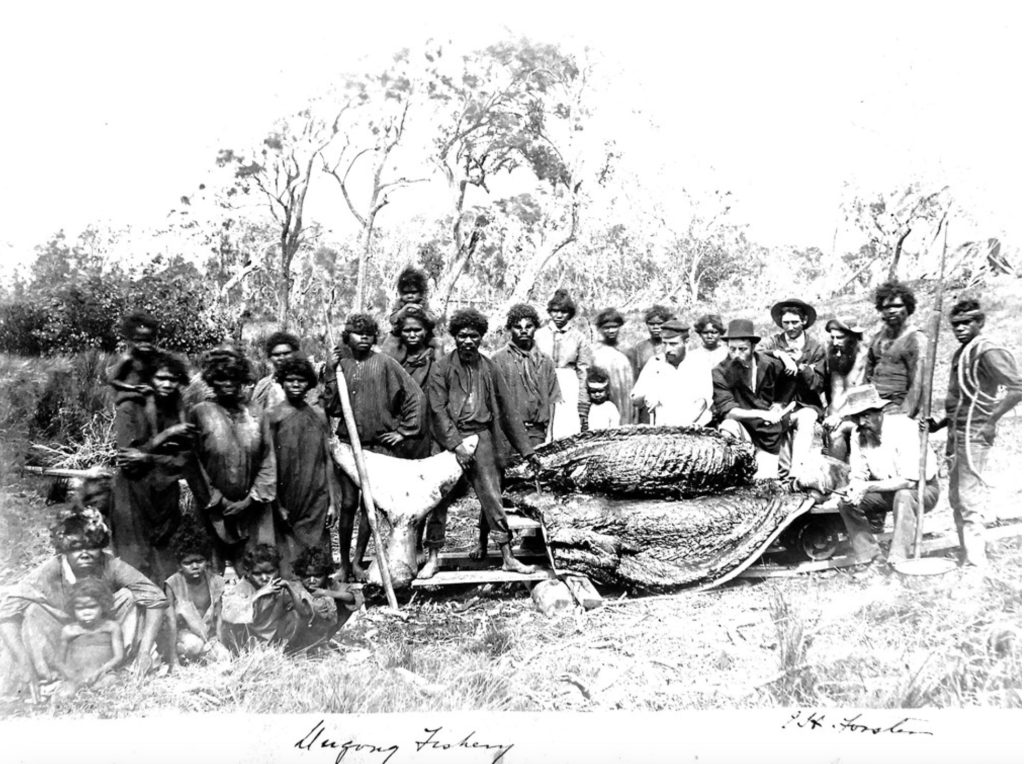
Ching operated a “boiling down” factory at Stewart Island, opposite Boonooroo, and also at Major King’s Creek (now Pulgul Creek) near Urangan. His business involved not only hunting dugongs but also processing their flesh and oil into saleable products. He mainly employed Aboriginal workers who either netted or harpooned the animals. Ching relied on Indigenous skills to reach his targets.
From the torn about condition of the seagrass; from the fresh uncovered dark coloured ground; from the ruffled or smooth bed of the passage, the native fishermen will tell you how old the track will be, whether one or more days; and will also tell if it is worth the setting of the net or not.
Ching’s techniques involved lining estuary mouths and creek entrances with long nets imported from Devon in England. The nets were typically drawn in the first quarter of the moon and reset during the last quarter. This was because the moon’s brightness made the nets visible to the dugong.
Dugongs feeding on seagrass would be driven into these nets, leap forward, upward and backward in a somersault, becoming entangled and drowning, after which they could be hauled ashore for processing. Dugong carcasses were delivered to a shed via a railway carriage, dismembered and boiled. The fat was then rendered and boiled, then filtered through big flannel bags and bottled. The stearine, a glycerol-based compound present in fats, was retained in the flannel bags during the filtering process and sold to soap makers. Ching also cured the flesh into products akin to bacon.
According to Thomas Welsby:
No man has done so much as Lionel Ching of Maryborough to establish the dugong industry or introduce the various valuable products of the animal to the notice of mankind. He has certainly deserved success.
Ching had agents all over the world selling his products. He promoted widely and even took part in International Exhibitions. At the United States Centennial Exhibition in Philadelphia in 1876, Ching displayed a dugong skull, which sparked overseas interest in the Hervey Bay fishery.
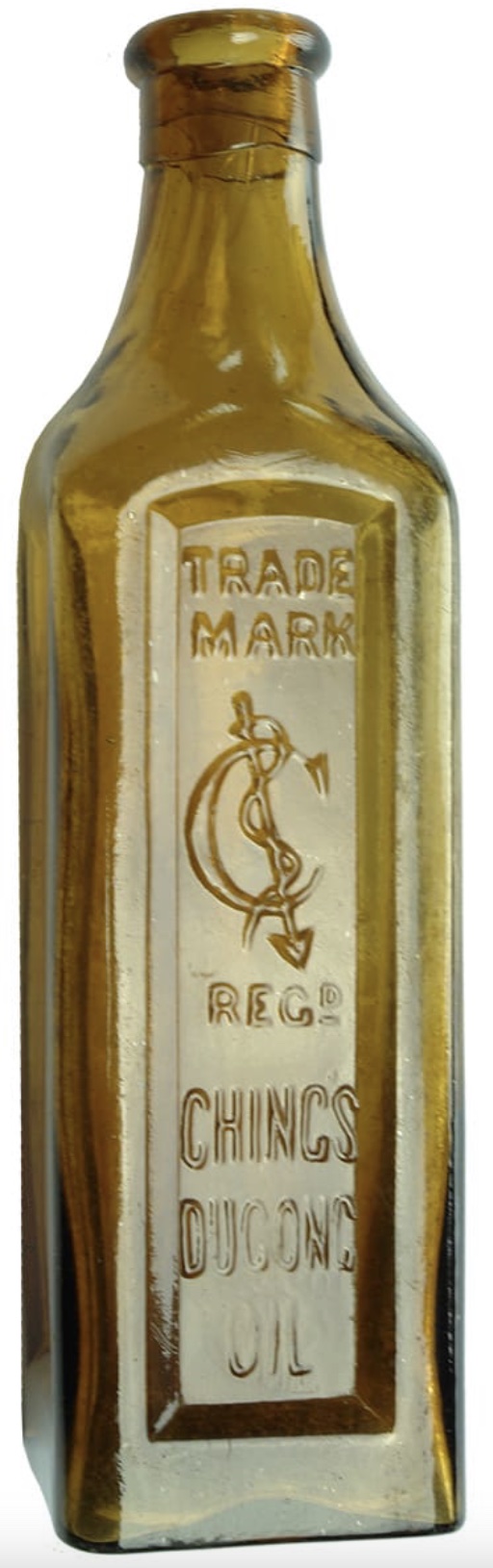
High on his agenda was the medicinal properties of the dugong oil. His fishery camp was rarely seen without invalid visitors. Ching also examined the potential of dugong leather, transporting hides to Sydney and local tanneries.
He even bought a sausage-making machine in January 1874 to process dugong meat for sale as “small goods”.
While Ching earned medals worldwide for the extreme purity and top quality of his medicinal oil, his business sense was sadly lacking, as he was too ambitious and daring in his dealings, which led to bankruptcy in 1881.
A Victorian source: “A lumberer’s” account
An interesting contemporary account comes from a writer identified as “A Lumberer,” describing a voyage through the straits in 1866. After being forced ashore by a storm, the party came across a camp of dugong hunters near Tin Can Bay. The writer observed:
The salted flesh of the dugong was excellent, and, but for the absence of fat, better than beef. For catching the animal the harpoon and net are used, the first is the most sporting way of catching them, and reminds one of whaling excitement, but if practiced too often, frightens the dugong away from the fishing ground.
This passage captures the lived reality of early dugong fishing: a mix of manual skill, rugged conditions, and the uneasy balance between sustainable harvest and depletion.
Products of the dugong
What made dugongs commercially valuable was not just their meat but also the oil extracted from their substantial fat deposits, which had notable healing properties. Dugong oil became a popular item in advertisements during the late 19th and early 20th centuries. The oil was smooth on the palate and easy to digest, sharing the valued qualities of fish liver oils.
Producers claimed it had remarkable medicinal qualities: advertisements promoted its use for treating chest and lung complaints, rheumatism, bruises, sprains, and general “ills of the flesh.” Some chemists even recommended it as a replacement for cooking lard or cod liver oil, and it was marketed both internally and externally as a remedy.
The value of dugong oil grew even more. It was widely traded, and advertisements and references indicate that orders for dugong oil came not only from Queensland but also from other Australian states and from overseas markets in the United States and the United Kingdom. Some reports say that by the early 20th century, dugong oil was packed in containers alongside other commercial goods, showing its importance in trade at the time.
The Queensland Director General of Health and Medical Services, Sir Ralph Cilento, reported in 1935:
The value of dugong oil is definitely established. It is not a curative mixture, but when used as a regular addition to diet, it does as much as cod liver oil, not to cure, but to prevent tuberculosis, teeth defects, etc., and generally to increase body resistance.
But dugong products weren’t limited to the edible and medicinal. The industry used nearly every part of the animal, which was an economic necessity in remote areas with limited access to imported materials. Bones were burned into charcoal used in sugar refining; hides were repurposed as brake pads on horse-drawn wagons; and even men’s hair products and ointments were marketed from dugong derivatives.
Expansion, displacement and environmental cost
Ching’s success inspired others. By the late 19th century, several dugong fishers operated in Wide Bay and Hervey Bay. Fishermen described dugong mesh crowding an area half a mile long by four miles wide.
However, the industry was not without consequences. Dugong populations started to decline in heavily hunted areas, forcing hunters to relocate or increase their efforts. Some reports from the late 1870s mention that dugong numbers had become so low that the fishery was “about to be given up for a time,” marking an early acknowledgment that the resource could not support continuous harvesting. The problem arose from the killing of calves and breeding females.
Other early figures in the industry included Ebenezer Thorne, who claimed he had worked these waters before Ching’s arrival, and associates who contested their roles in the industry’s origins. Nonetheless, Ching’s dominance remained clear, and his methods were emulated by others.
By the early 20th century, commercial dugong netting advanced further: netting techniques enabled dugongs to be pulled to the surface and shot, producing substantial quantities of oil — each animal could yield about four gallons when processed.
Surprisingly, Ching reappeared in 1886. The Maryborough Chronicle, commenting on his return, wryly noted:
The spell from the molestation, which the dugong in the Sandy Straits have had, no doubt allowed them to breed up again.
With fewer dugongs in the straits and Hervey Bay, Ching used his schooner as a floating station and tried the ship factory method that whalers used 30-40 years earlier. As dugong numbers continued to decline and competition increased, Ching faced more struggles. He claimed that harpooning was ruining his business.
Despite the setbacks, he kept promoting his products. He displayed dugong oil at exhibitions in Sydney, Brisbane, Melbourne, London, Paris and Philadelphia. By 1888, he had earned more medals. However, he faced financial troubles again as floods in the 1890s made waterways less visible, and dugong numbers decreased, leading them to move to more visible areas for seagrass.
Burrum Heads and later operations
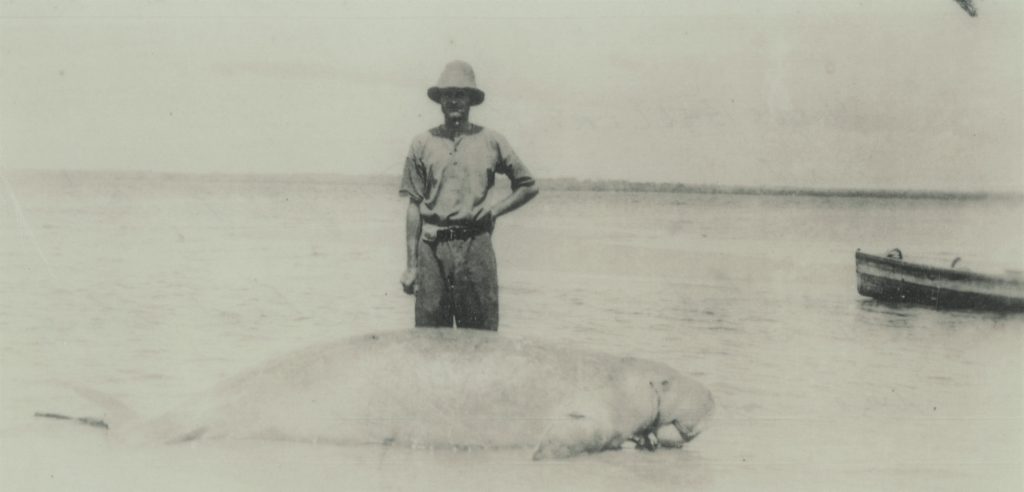
In the 1920s and 1930s, the dugong fishery expanded around the Burrum Heads area and nearby waters. Aboriginal and local fishers, like Percy Wheeler and John Schwarzrock, netted in seagrass beds around the shallow flats at the mouth of the Burrum River, used shore stations and boats to tow dugongs for processing, and the Burrum Heads station reportedly supplied a significant portion of dugong oil to the market at that time.
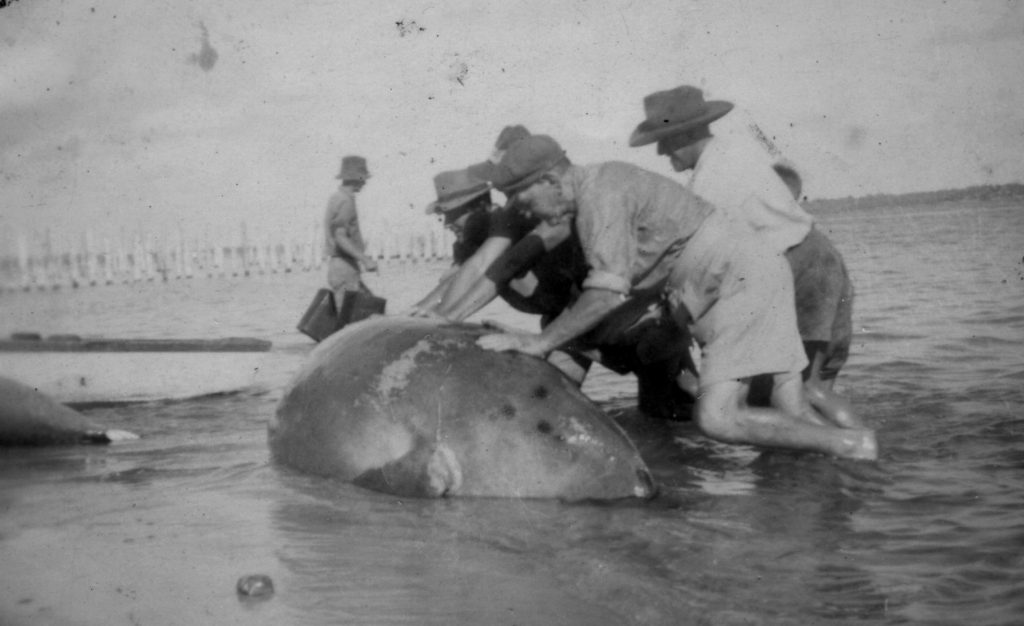
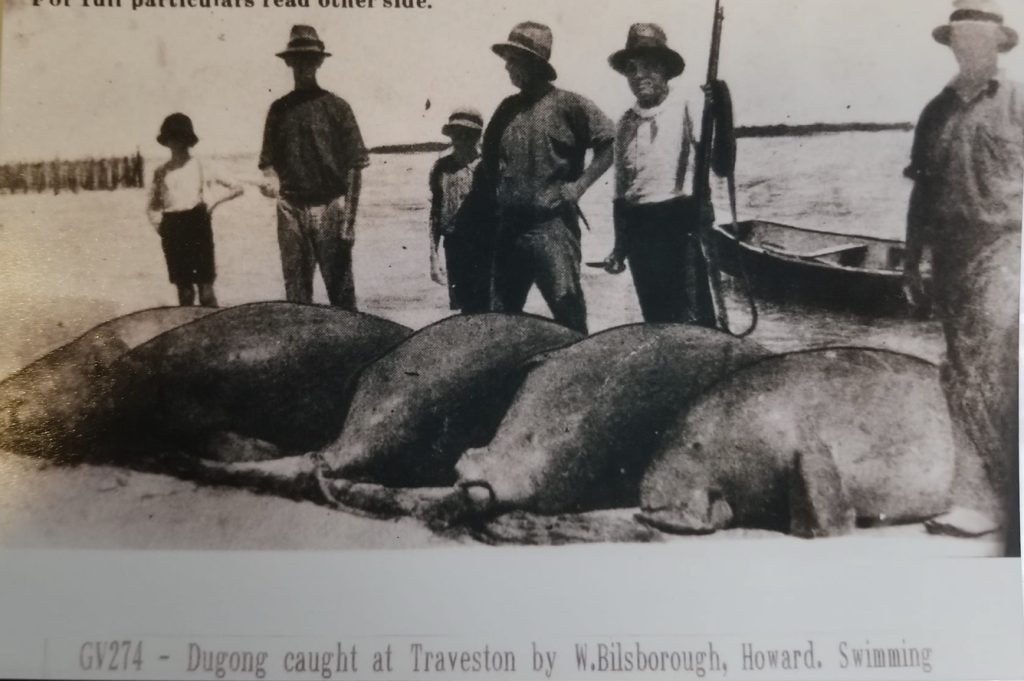
Other names linked to the fishery included the Bellerts, the Smith brothers in the Isis River, and later operators like Bill Bilsborough, who worked on dugong boats and processing stations well into the mid-20th century. A lively, thriving industry later developed. They would net the animals or shoot them when they surfaced. Each net was checked daily because sharks sometimes ate the dead dugong and damaged the nets.
Harry Bellert and his son, Hans, fished for dugongs around Bogimbah Creek on Fraser Island and Toogoom. On Fraser Island, the dugongs were boiled in three large vats on the beach in front of their house at Bogimbah Creek. The vats were made of heavy-gauge galvanised iron with very thick bottoms. The nets they used to catch the dugongs had an 85-centimetre mesh, were 180 metres long, and 6 metres deep. The nets were preserved by boiling them in a mixture of tar and tanbark, pieces of ironbark or red mangrove bark.
The Bellerts would search for feeding furrows in the seagrass. Male dugongs used their tusks to rake the seabed, and the disturbed seabed marked the feeding furrows from those of green turtles. They also looked for floating pieces of seagrass as evidence of dugong feeding.
Dugongs mainly fed at night and were hunted on dark, moonless evenings. Keith Bellert, Harry’s grandson, described the hunting methods using a net in detail. The men laid nets in front of, and at right angles to, the direction the dugongs were moving while feeding. At each end of the net, there was a wing about 40 metres long called a ‘swinger’. They placed the swinger at a 90-degree angle to the line of nets to create a yard, with the nets firmly anchored by poles sourced from cypress on the island.
Harry recognised when a dugong hit the net because he could hear it surface and blow. He had to remove it quickly before sharks arrived. When a trapped dugong came up, it was shot, towed by the dinghy, and taken to the beach. The bodies were skinned. The layer of fat was cut into pieces and boiled in the vats for about 12 hours.
The next morning, once the vats had cooled and the oil had floated to the top, it was skimmed off. Carcasses were then towed out to sea and left.
It was a lucrative industry, especially for the Bellerts. The Brisbane-based pharmaceutical firm, Taylor-Elliotts Limited, purchased the oil that sold for two pounds ten shillings a gallon in the 1940s.
Bill Bilsborough was drawn to the industry after overhearing Aborigines’ stories about how crippled clan members were healed with mystical dugong oil. The oil was used to treat arthritis, rheumatism, tuberculosis, indigestion and even colds. Children were often given a teaspoon of dugong oil. These later figures continued the tradition of harvesting dugongs, but by then, broader changes were already in motion that would shape the industry’s future.
By the 1930s, the number of dugongs caught greatly exceeded the catches in earlier decades. Throughout the 1940s, the dugong industry stayed successful. However, by the 1950s, Bilsborough was the last bloke still operating and did so under a strict licence.
The decline and end of commercial hunting
Over time, evidence accumulated that commercial dugong hunting was unsustainable. By mid-century, dugong numbers were declining across Queensland waters, and concerns about marine conservation, along with changing economic conditions, reduced demand for dugong products. Oil from other sources became accessible, and public awareness of wildlife decline increased.
In Queensland, increasing regulation led to a complete ban on hunting dugongs — both commercial and non-commercial — in 1969, although Aboriginal traditional hunting remains as part of native title rights.
Legacy: conservation and cultural memory
Today, dugongs in the Great Sandy Strait and Hervey Bay are protected species, listed as vulnerable under Australian conservation laws. Efforts to monitor and safeguard these marine mammals continue, including aerial surveys and protection of important seagrass habitats.
Dugong numbers vary with environmental and human influences. Floods and poor water quality can damage seagrass beds and force dugongs to relocate or face starvation. Although populations in the Hervey Bay area have remained relatively stable in recent decades, threats such as fishing nets and boat strikes persist.
Photographs and artifacts preserved by local museums — such as the Hervey Bay Historical Village and Museum and Burrum and District Museum — highlight a forgotten chapter in regional history: the dugong industry that once employed local fishermen, supplied distant markets, and left a lasting mark on the coastal culture of south-east Queensland.
Conclusion
From Indigenous subsistence practices to thriving colonial trade and, ultimately, to a banned extractive industry, the history of dugong fishing and dugong oil production in the Great Sandy Strait and Hervey Bay reflects broader changes in Australian environmental history. It tells of plentiful natural resources, entrepreneurial spirit, and eventual acknowledgment of ecological limits.
The dugong, once so abundant that entire herds could be netted in shallow bays, now survives precariously; its past exploitation teaches us both about human ingenuity and the costs of unchecked harvest. As modern preservation efforts aim to restore and protect dugongs and their seagrass habitats, recalling this “industry of the sea cows” offers lessons not only for ecology but also for cultural memory.
It is a reminder of how societies once coexisted with the sea and how they must learn to steward it today.
Harry and Hans were my great grandfather and grandfather my mother also helped when she was a child, I’ve heard all her adventures as a child growing up.
I lived there as a child in the forties and fifties and never heard mention of any of this history.
There’s a island on the southern side of Kauri Creek entrance called Ching Island.
Keith Bellert related parts of this history to me over a couple of years when he used to come back to the Bay annually with his wife, Margaret. A very interesting pair to spend time with.
In 2017, Keith was resting on his bed in a cabin at Hervey Bay Harbourside Caravan Park when a green tree snake woke him up when it dropped from the ceiling onto his lap. Margaret said he just brushed it off as an annoyance. One of the original hard doers from the past.