
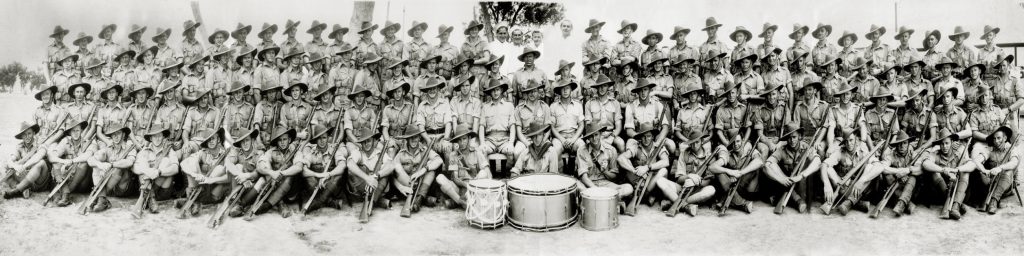
The abandoned battalions
By the time Australians learned the names Sparrow Force and Lark Force, their fate had already been sealed.
In early 1942, three small Australian units — Sparrow Force in Timor, Lark Force in New Britain, and Gull Force on Ambon — formed a fragile arc north of the mainland. These weren’t field armies. They were battalion-sized tripwires, spread across islands that modern Japanese forces could easily reach and reinforce rapidly.
Each was sent out with limited heavy weapons. None had air cover, naval protection, or any real chance of reinforcement or evacuation once Japan moved south.
In each case, the men fought, and each outcome exposed a brutal truth. These forces were not meant to hold. They aimed to symbolise resistance by buying time politically, if not militarily.
I wrote about how the Australian Sparrow Force and Dutch troops in Timor survived only because they refused to fight conventionally. After all, the Timorese population shielded them, and surrender was never truly enforced. My story on Lark Force revealed what happened when surrender was met with indifference, leading to mass murder and one of the war’s worst maritime atrocities.
Gull Force sits between those two stories and completes the pattern
Unlike Sparrow Force, Gull Force could not melt into the hills and continue fighting. Unlike Lark Force, its destruction was neither swift nor single. Instead, Gull Force was gradually wiped out, initially in battle, then through execution, starvation, disease and ongoing brutality over more than three and a half years of captivity.
What happened on Ambon was not an anomaly. It was the logical result of a strategy that spread under-resourced forces across a growing front, then quietly accepted their loss once bigger priorities took over.
In the tense months before Japan joined the Second World War, Australia’s military planning in the north relied on hope rather than strength. It was hoped that distance would shield the continent, that Britain’s global influence still counted in Asia, and that small, lightly armed garrisons could delay or stop a modern, battle-hardened enemy.
Few formations embodied this hope more clearly than Gull Force.
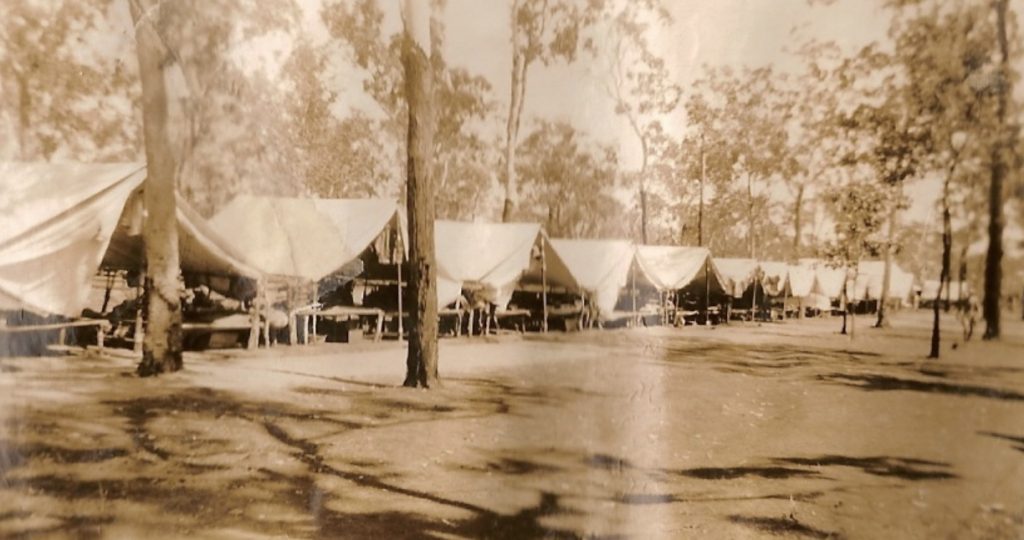
Officially named the 2/21st Battalion Group of the Second Australian Imperial Force, Gull Force was sent to Ambon Island, one of the famous Spice Islands of the Moluccas, in December 1941. Its task was simple in words but impossible in practice. They had to prevent Japan from taking the island’s airfields and harbour, or at least to delay their capture long enough to be meaningful.
The men who landed at Ambon were not fools. They understood, even before the first Japanese aircraft appeared overhead, that they were isolated, under-supported and expendable. One officer would later remark with bitter humour that the unit should never have been called Gulls at all — “Shags” would have been more appropriate, a seabird left to fend for itself on a barren shore.
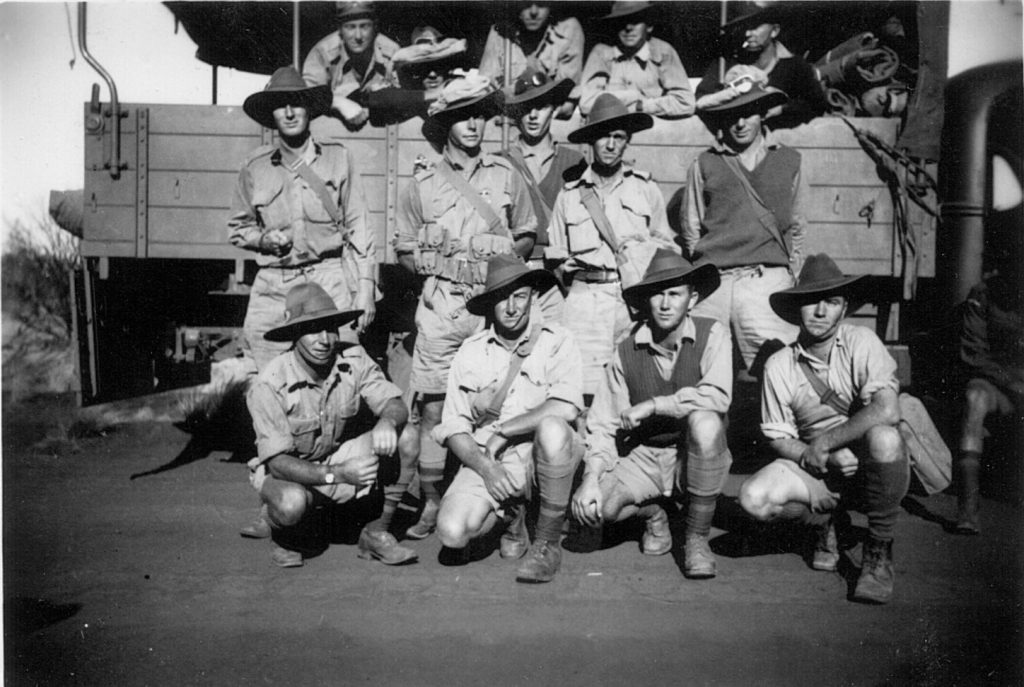
That humour masked a harsher truth. Gull Force was not defeated only by the Japanese but also by policy, assumptions formed years earlier in Canberra and London, and a strategic culture that favoured gestures over achievable results.
The battle, surrender, captivity and the staggering death toll that followed remain one of the most catastrophic episodes in Australia’s military history.
A strategic outpost nobody intended to save
Ambon was strategically significant precisely because it was vulnerable. Sitting between Timor and New Guinea, the island guarded approaches to northern Australia and had airfields capable of threatening Darwin. For Japan, Ambon was a stepping stone. For Australia and the Netherlands, it was a tripwire. The problem was that tripwires aren’t designed to last.
Before the war, Ambon was under Dutch rule in the Dutch East Indies. Its local military force, the Koninklijk Nederlands-Indisch Leger (KNIL), was poorly trained, inconsistently motivated and equipped for colonial policing rather than modern warfare. Australian planners understood this. They also recognised that no significant naval or air reinforcements could be spared.
Nevertheless, the decision was made to reinforce Ambon with an Australian battalion group. Not to hold the island forever, but to show resistance. The presence of Australians, it was hoped, would boost Dutch resolve and cause at least some toll on a Japanese landing. It was a profoundly cynical calculation.
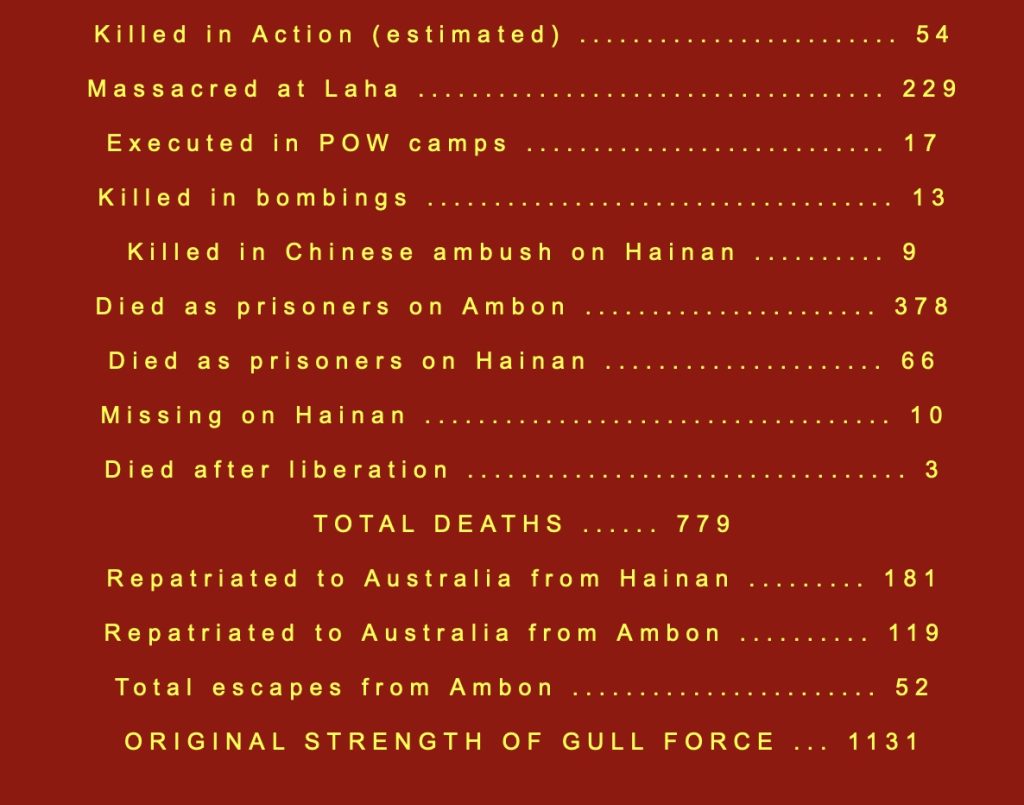
Gull Force comprised about 1,131 men, mainly from the 2/21st Battalion, supported by artillery, engineers, signals and medical staff. They were capable, well-trained soldiers, many of whom had training experiences that prepared them for service in the Middle East, not the jungles of Southeast Asia.
They lacked modern aircraft, radar, heavy artillery, armour, naval support, and above all, any realistic prospect of relief, all key aspects that make defence credible.
Arrival at the end of the line
Within days of their arrival at Ambon, the world the Australian troops expected to join no longer existed. On 7 December (8 December Australian time), Japan attacked Pearl Harbour. Nearly simultaneously, Japanese forces launched strikes across Southeast Asia – Malaya, Hong Kong, the Philippines and the Dutch East Indies. Ambon was no longer a forward outpost since it was already behind enemy lines.
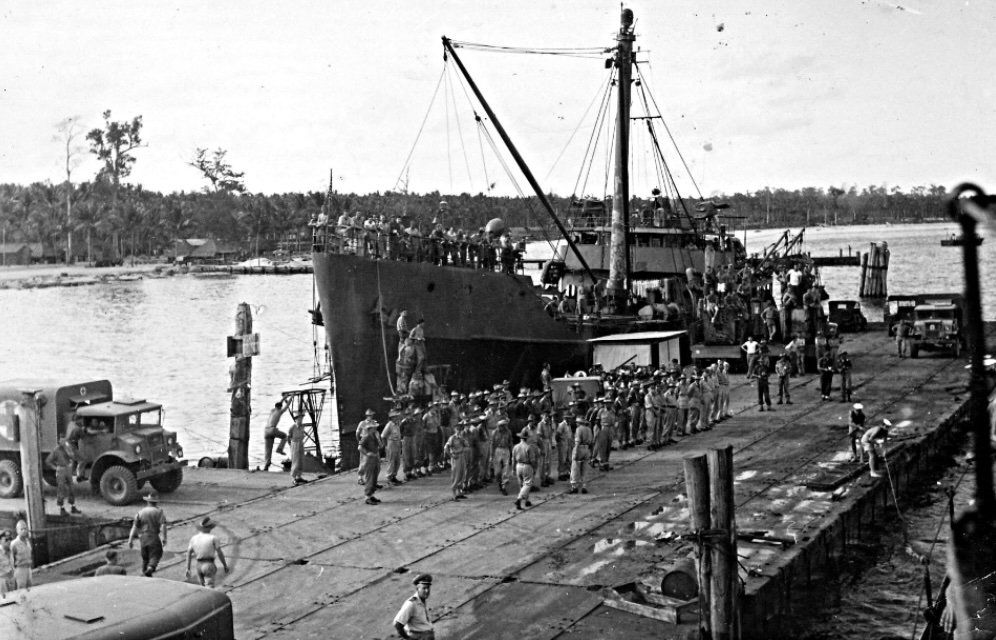
From the beginning, cooperation with Dutch forces was lacking. Language barriers, incompatible command structures and differing views on defence created confusion. The island was divided into sectors, with Australian troops mainly responsible for the Laha airfield area, while Dutch forces managed other installations.
The terrain worked against them. Ambon was rugged, forested and very humid — a place where movement was slow and visibility limited. Defensive positions were improvised, often poorly sited and difficult to supply. Communications were fragile. Even before combat began, Gull Force was stretched thin.
Morale, however, stayed remarkably steady. The men trained, dug in and waited. They didn’t have to wait long.
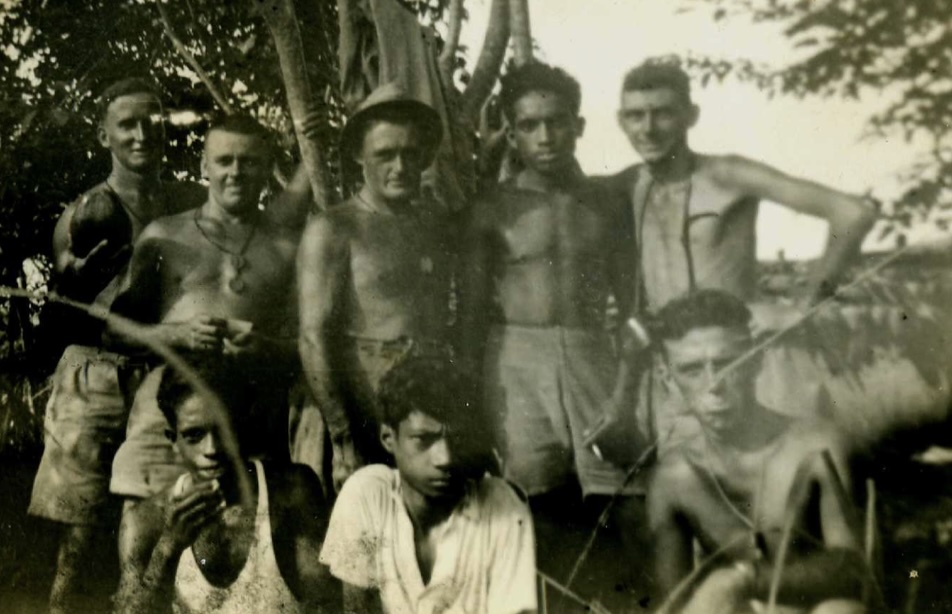
The Japanese come ashore
In late January 1942, Japanese reconnaissance flights increased. Bombing raids followed unopposed because Allied aircraft were absent. The men of Gull Force watched enemy planes operate freely, destroying installations, mapping defences and eroding any illusion of balance.
On the night of 30–31 January 1942, Japanese forces landed on Ambon. They arrived in overwhelming strength. Elements of the Japanese 228th Infantry Regiment, supported by naval units and aircraft, carried out coordinated landings at multiple locations. The defenders were outnumbered many times over, and more importantly, the Japanese held complete air and naval superiority.
Australian and Dutch units fiercely defended their positions where possible. There were intense clashes around Laha airfield, where Australian forces caused casualties and slowed the enemy’s advance. Small groups held their ground in the hills, mounting local counter-attacks, ambushes and conducting fighting withdrawals.
But the result was never in doubt. Without air support, defensive positions were systematically destroyed, communications broke down and units were cut off. Ammunition ran low. Dutch resistance faltered unevenly, with some units disbanding entirely and others fighting stubbornly but on their own.
The Australians found themselves engaged not in a well-organised defensive fight but in a series of isolated, desperate efforts that were brave and disciplined but ultimately futile.
The decision to surrender
By 3 February 1942, just four days later, organised resistance was no longer possible. Casualties were increasing and medical facilities were overwhelmed. Ammunition stocks were critically low. There was no hope of evacuation, reinforcement, or relief. The choice to surrender was made.
It is crucial to clearly explain what surrender meant in this situation. It was not a loss of willpower, nor cowardice. It was the final act of a force that had been placed in an unwinnable position from the moment it disembarked.
When Gull Force surrendered, the men believed — or hoped — that captivity would at least mean survival. That belief would soon be shattered.
Lieutenant Colonel Leonard Roach – command without illusion
Lieutenant Colonel Leonard Roach, commanding officer of the 2/21st Battalion, was well aware of his responsibility. His correspondence and subsequent assessments clearly showed that he understood Ambon could not be held against a determined assault without air or naval support.
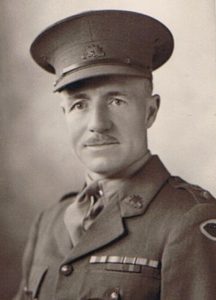
Roach’s dilemma reflected that faced by Lieutenant Colonel John Scott at Rabaul and Lieutenant Colonel William Leggatt in Timor – how to reconcile duty with the knowledge that the position was indefensible.
Unlike Leggatt, Roach had no chance to refuse surrender and continue fighting as a guerrilla. Once Dutch resistance disintegrated unevenly across the island and Japanese forces took control of the airfields, further resistance would only lead to pointless annihilation.
Roach’s decision to surrender on 3 February 1942 was made to save lives. That many lives were still lost afterwards is not a failure on his part, but a result of the enemy’s policies towards prisoners.
From prisoners to victims
The Japanese attitude towards prisoners of war was influenced by doctrine, culture and circumstance. Surrender was despised. Prisoners were seen as dishonoured men who had lost respect, not as neutralised enemies.
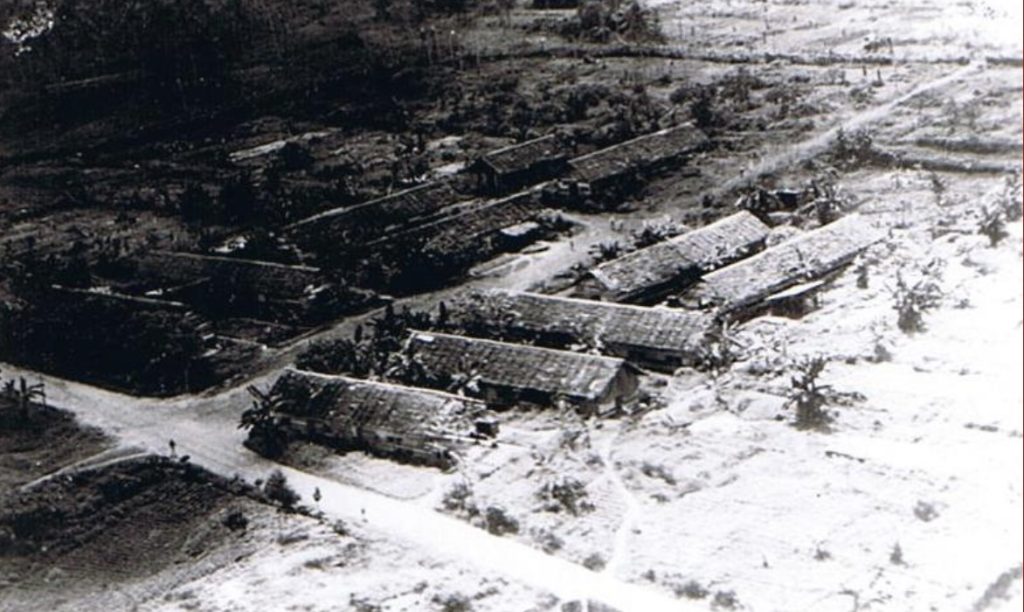
For the Aussies on Ambon, this turned into instant brutality. The men were herded back to their old barracks, now surrounded by guards. Beatings were frequent, random and often brutal. Discipline was maintained through violence. Food was scarce and lacked proper nourishment. Medical care was nearly non-existent. Even worse was what happened in the days after the surrender.
In a series of atrocities that remain among the darkest episodes of the Pacific War, over 300 Australian and Dutch prisoners were taken from Laha airfield, just 1,000 kilometres from Darwin, and executed by Japanese forces. Post-war investigations confirmed that prisoners were bound, taken in small groups, and some were bayoneted, some shot and others beheaded. Their bodies were dumped in mass graves near the airfield. They weren’t shot in battle, nor were they killed resisting captivity. They were systematically executed.
The survivors didn’t immediately grasp the full extent of the massacre. Rumours spread as men vanished. Fear took hold and became ever-present.
Unlike the Montevideo Maru, where death arrived unseen beneath the sea, the Laha massacre was pieced together by surviving prisoners — men who later testified, often reluctantly, about screams heard at night, comrades taken away and never seen again and burial details guarded too closely to be mere coincidence.
For those still alive, captivity lasted for years, and Ambon became a place of lingering grief.
Survival as a daily battle
Life as a prisoner on Ambon was not constant misery. It was a continual fight against starvation, disease, violence and despair.
Food rations mainly consisted of mouldy rice, with occasional scraps of vegetables. Protein was nearly absent. Men wasted away as beriberi, dysentery, malaria and tropical ulcers ran rampant.
Work details were unrelenting. Prisoners laboured on airfields, roads and defensive works that bolstered Japanese control of the island. Those who collapsed were beaten. Those who could not rise again were left to die.
The psychological toll was as severe as the physical one. Men lived under constant threat of violence. They saw mates beaten to death, executed for minor infractions, or simply disappear. There was no sense of time beyond the slow erosion of the body.
Yet even here, discipline and mutual support endured. Men shared scraps of food. Medical orderlies improvised treatments with nothing. Leadership persisted in fragments from a quiet word, a refusal to abandon a mate, or an act of defiance invisible to guards.
Some survivors refused to remember. Les Hohl, an Australian engineer attached to Gull Force, survived Ambon but never came to terms with it.
His post-war reflection is one of the starkest from any Australian prisoner of the Japanese.
I didn’t want to know any more about Ambon. When we left Ambon we said we don’t want anything that’s ever going to remind us of this place again.
This was not just bitterness. It reflected psychological self-defence, a survival instinct that had carried over into peacetime.
Hohl had witnessed repeated beatings, starvation and the casual disposal of life. Like many survivors, he found that the language of remembrance, honour, sacrifice and closure sat uncomfortably alongside memories that had never been processed and never truly acknowledged.
Rather than being confronted or remembered, Ambon was sealed off in memory, a course that conveniently suited politicians and senior military officers at the time.
Numbers that defy comprehension
When the war ended in August 1945, the full extent of the Gull Force’s loss became clear. Out of the 1,131 original members, just 352 survived. That’s a 69 per cent fatality rate. In other words, only one in four men made it back.
No Australian unit in the Middle East, North Africa, or Europe suffered losses approaching this scale. Only the island garrisons of the early Pacific war — Lark Force and Gull Force foremost among them — endured destruction so complete. And unlike units destroyed in a single battle, Gull Force died slowly, across years of captivity, far from home and largely unseen.
The men who came back didn’t march in victory parades. They didn’t match the national story of triumph. They arrived quietly, thin, broken and often bitter.
Many felt, with justification, that their service had been an embarrassment. Yet, their survival highlighted uncomfortable truths that they had been sent without sufficient resources; that their sacrifice achieved little strategically; and that their suffering raised questions no one wanted to answer. They were prisoners who were liberated, not soldiers who were celebrated.
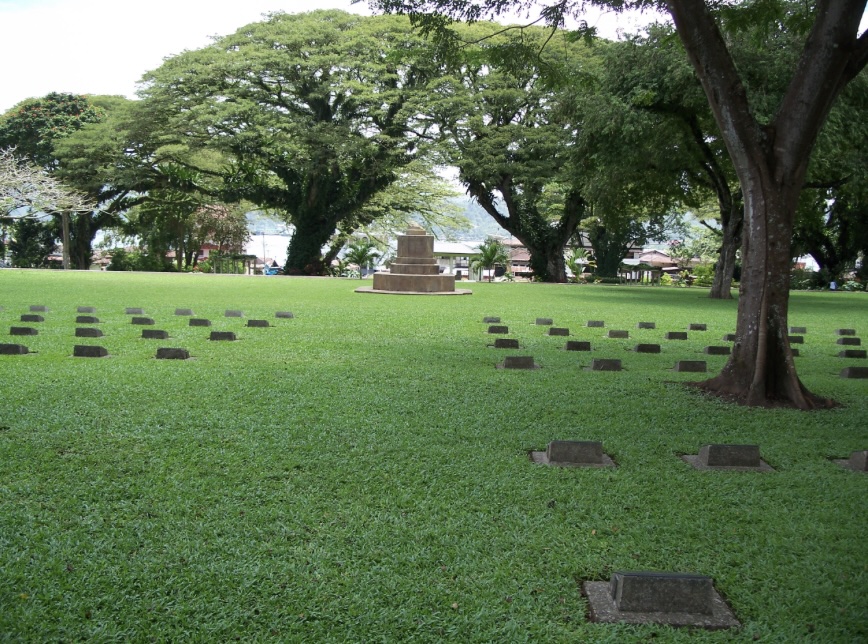
The long silence after the war
For decades, Ambon hardly made it into the Australian public memory. There were no famous monuments, no iconic images. The story was too grim, too accusatory.
Some veterans spoke. Many remained silent. Those who stayed silent were not weak. They understood that the experience of Ambon couldn’t be explained without facing institutional failure. And institutions rarely welcome such scrutiny.
The bitterness some men carried was not solely aimed at the Japanese, although the cruelty they suffered left lasting scars. It was also directed at the system that put them there, isolated and unsupported, and then moved on.
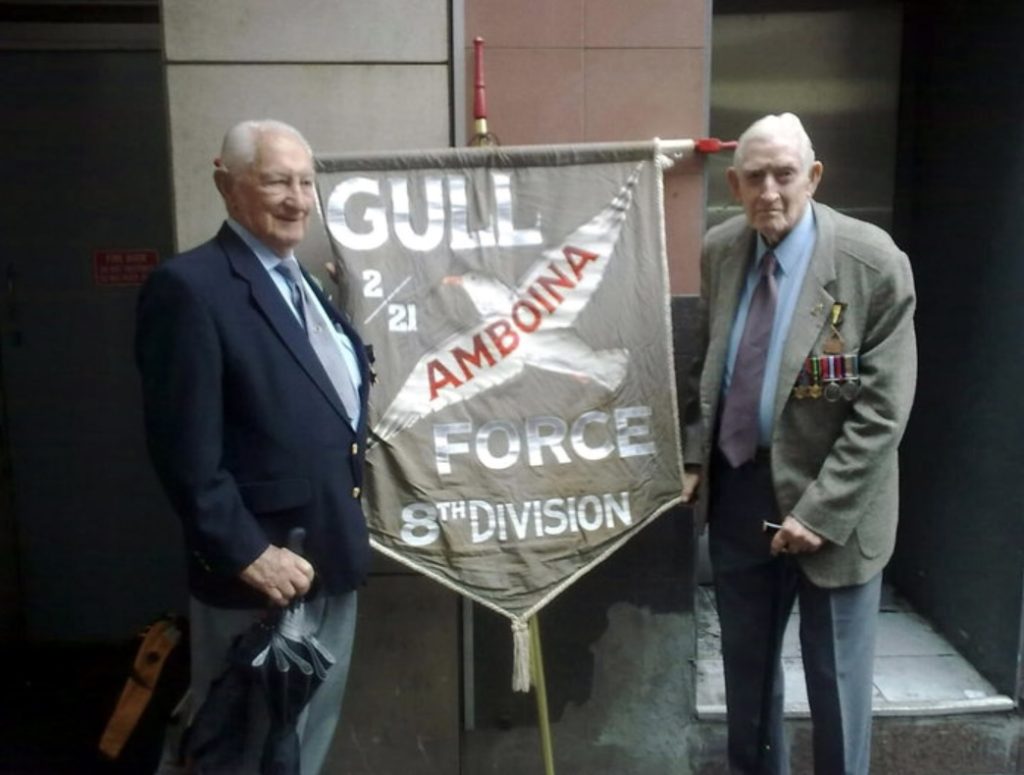
What Gull Force represents
The Gull Force episode is important because it exposes the cost of strategic complacency. It highlights the risks of token deployments and shows how easily bravery can be wasted through poor planning.
Above all, it highlights the quiet heroism of men who fought, endured and survived not for glory, but for each other. They were not only left behind during the battle but also forgotten in memory.
Sharing their story fully reflects a desire to restore truth rather than reopen wounds. And unlike hope, truth doesn’t falter when tested.
A closing analytical thread of the three bird battalions
Sparrow Force survived because it refused the logic imposed upon it. Lark Force perished because surrender was followed by abandonment. Gull Force experienced all these outcomes — surrender without protection, captivity without oversight and survival without recognition.
Together, the three forces reveal a pattern in Australia’s early Pacific war of courage at the edge of empire, unsupported by modern war machinery and quietly dismissed once defeat became unavoidable.
To tell the story of Gull Force properly isn’t just about recounting suffering. It’s about facing the results of sending men where strategy can’t reach and then mistaking silence for an answer.
If Sparrow Force became a story of survival, and Lark Force a story of sudden annihilation, Gull Force turned into something entirely different. Their story is one of extended suffering followed by long neglect. One of the survivors, Courtney Harrison, wrote about the massacres:
Perhaps because the information has been hard to obtain or because of the trauma it may have created, many people have been denied knowledge of the circumstances in which loved ones suffered and died.
Harrison said that while other battles in Australia’s war history, such as the Kokoda Trail, Changi Prison and the Burma Railway, attract greater public attention, it would be difficult to comprehend a more appalling tragedy than that at Ambon.
The Gull Force deserves so much more.
Thanks, Robert, for completing your trilogy documenting political ineptitude and bastardry, and military incompetence and cavalierism at the highest levels.
You have made a valuable contribution to the record; I hope it finds its way into a more permanent repository. Why is it that the higher up the food chain people rise, the less common sense and empathy for fellow man they display? The problem is still alive and well, unfortunately, in today’s political/military complex.
At the end of the day its the PBI and fellow cohorts who pay the price. This is close to home, having lost a Lark Force family member post Rabaul in the sinking of the Montevideo Maru.
Stay tuned, Ian. I am working on submitting a manuscript of some of my WWII stories under four main themes:
1). Australia Under Threat with stories on how close the war came to Australia, and how the nation prepared.
2). War at Sea and from the Air about Australia’s maritime vulnerability and sacrifice.
3) Special Operations, Atrocities and Hard Truths, which includes this trilogy as well as the Jaywick and Rimau Special Operations.
4). The Machinery, Symbols and People of War with stories on how Australia adapted—and who carried the burden.
It is provisionally titled “Forgotten Fronts: Australia’s Hidden War Stories”