
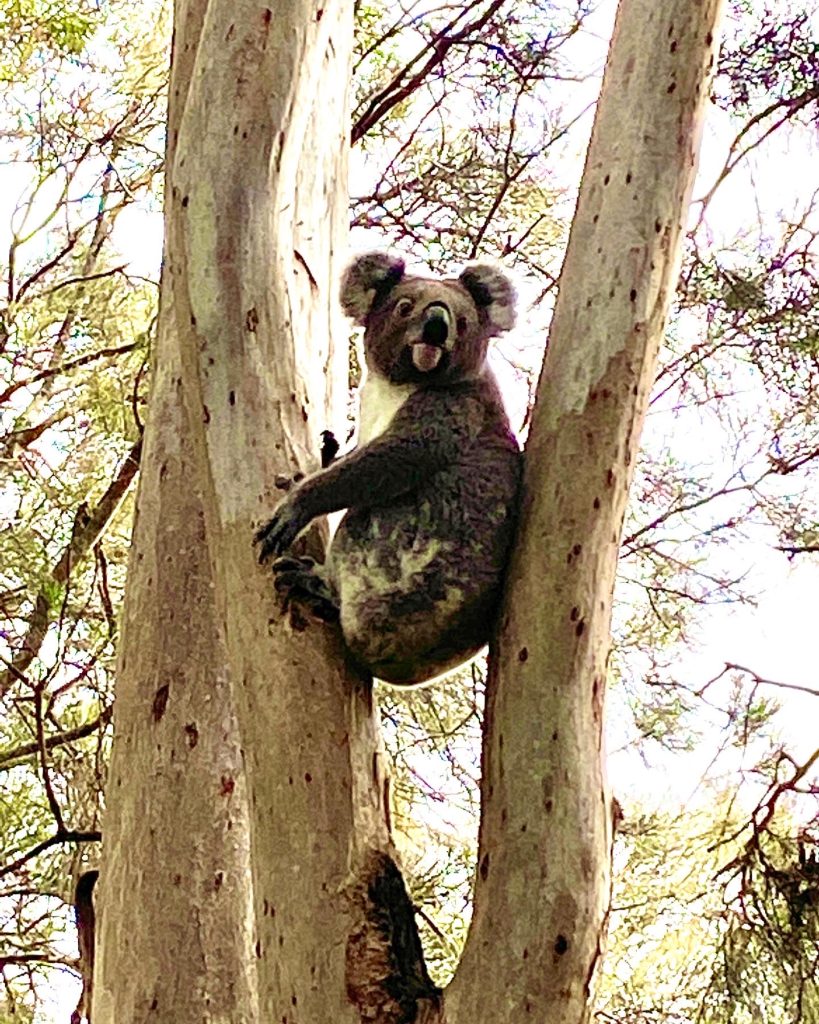
Australia’s koala has become more than just a marsupial. It’s now a symbol, a fundraising tool and a political icon. Smile for photos, showcase their faces on postcards and talk about imminent extinction, and suddenly, money starts flowing. Politicians, environmentalists and the media all love it. Yet, like all great myths, the story of the koala’s supposed doom is more a crafted tale than a real ecological threat.
Few consider whether koalas were ever truly abundant in the way modern preservationists think they were. Or is the story being told today more about emotional appeal than biological truth? To find out, we need to go back to before Europeans arrived on the continent.
Aboriginal management: fire, forests, and the low-density koala
Long before white settlement, Aboriginal Australians shaped the continent through fire. “Firestick farming” created a patchwork of open eucalyptus woodlands that supported healthy, low-density koala populations. These animals, unlike kangaroos, are solitary creatures with large home ranges, perfectly adapted to spread across the mosaic of burn-managed forests.
Historical records from early European settlers often describe koalas as scarce and sparse. One observer in the early 1800s noted encountering only the occasional koala across miles of forest, highlighting their nocturnal and elusive behaviour. This is not a species in crisis, but one naturally low in density, controlled by habitat and its own biology.
Aboriginal fire regimes also controlled the density of young saplings and undergrowth. By the time settlers arrived, koalas were already sparsely distributed, a point often overlooked in modern preservation debates, where abundance is frequently imagined rather than observed.
Historical records indicate that koalas were never widespread, existing mainly in small, concentrated patches. Early accounts often describe elusive sightings and solitary behaviour. Aboriginal fire management and low-density populations kept koalas naturally sparse but sustainable.
Archival evidence also shows that koalas were once absent from areas where modern campaigns claim they “used to thrive”, indicating that some of the conservation panic is based on retrospective assumptions rather than data.
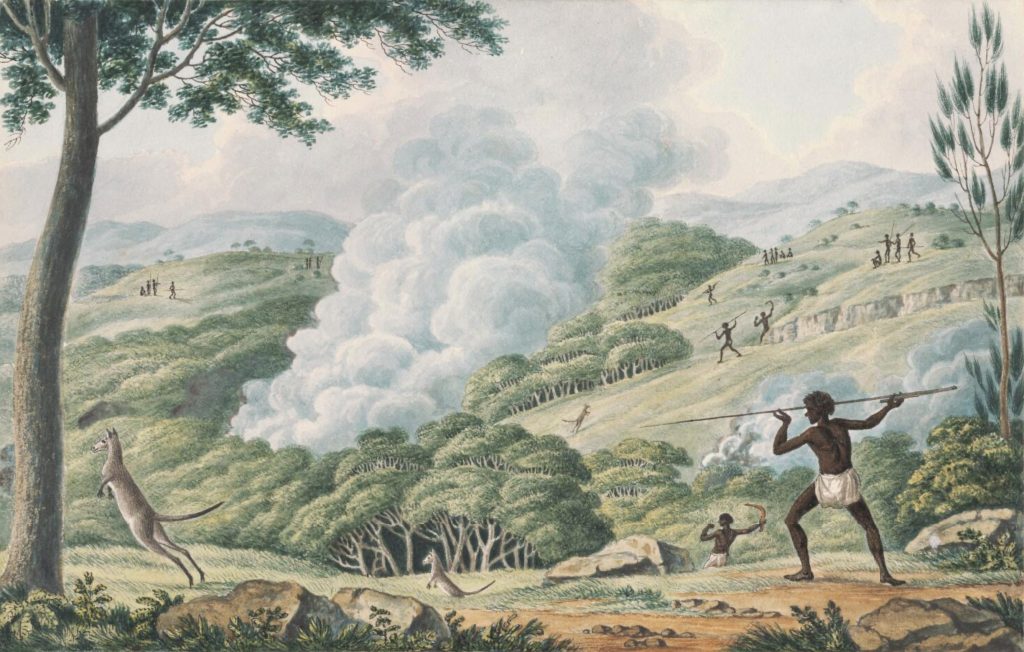
Koalas after European settlement: abundance, exploitation, and misperception
When Europeans arrived, they encountered an animal that was mostly unseen during the daylight in the forests but was quite common at night. Their first impressions were driven by curiosity and newness, not by scientific knowledge.
Queensland Land Commissioner H. A. Watson wrote in 1923:
During the past three years, and travelling over hundreds of miles of country, I have not seen more than a hundred bears. They are practically wiped out.
As Greg Gordon and Frances Hrdina summarise in their paper on the exploitation of koalas in Queensland during the period 1906-1936:
This rating is classified as ‘scarce’ here, based on the statement ‘they are practically wiped out’. Observers in the early 20th century were aware of the very high abundance around the turn of the century, which they apparently thought of as ‘normal’, and appeared to celebrate their rating against that level: thus, if the numbers seen were substantially lower, it was taken as evidence of near extinction. However, a modern observer of koalas would probably rate such an observation at least one level higher, that is, ‘uncommon’, or possibly even ‘common’, based on the number sighted. If a casual, non-expert observer saw 100 koalas in western Queensland today, it would be taken as evidence of a relatively good status.
The apparent abundance of koalas in some districts was deceptive, due to both selective observation and the ecological upheaval caused by clearing, agriculture and logging.
The settlers’ axes and fires transformed large areas of forest into a mosaic of new growth. Many of the new eucalypt species happened to be among the koala’s preferred foods. This sudden flush of young, nutritious leaves caused local koala populations to increase rapidly. Areas that once supported modest koala numbers under Aboriginal fire management now experience what ecologists call irruptions — sudden, brief spikes in population following habitat disturbance.
By the 1860s and 1870s, settlers in parts of coastal New South Wales, Victoria and Queensland started talking about koala “plagues.” Reports described animals so numerous in certain valleys that they stripped the trees bare, leaving the canopy skeletal. It was an irony lost on most observers that the same processes responsible for this abundance — such as land clearing, ringbarking and altered fire regimes — were also setting the stage for collapse.
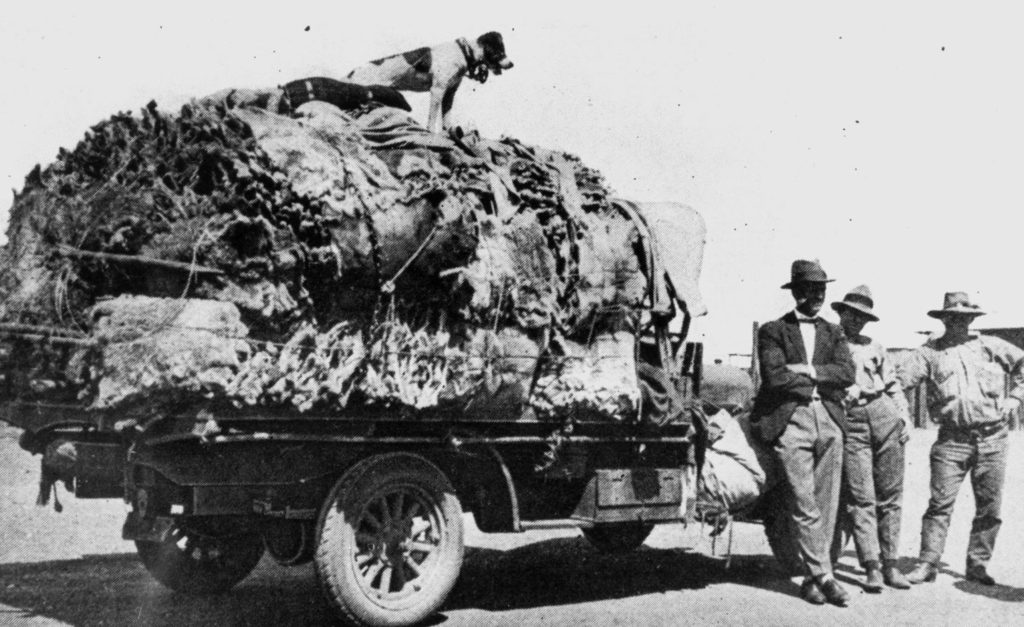
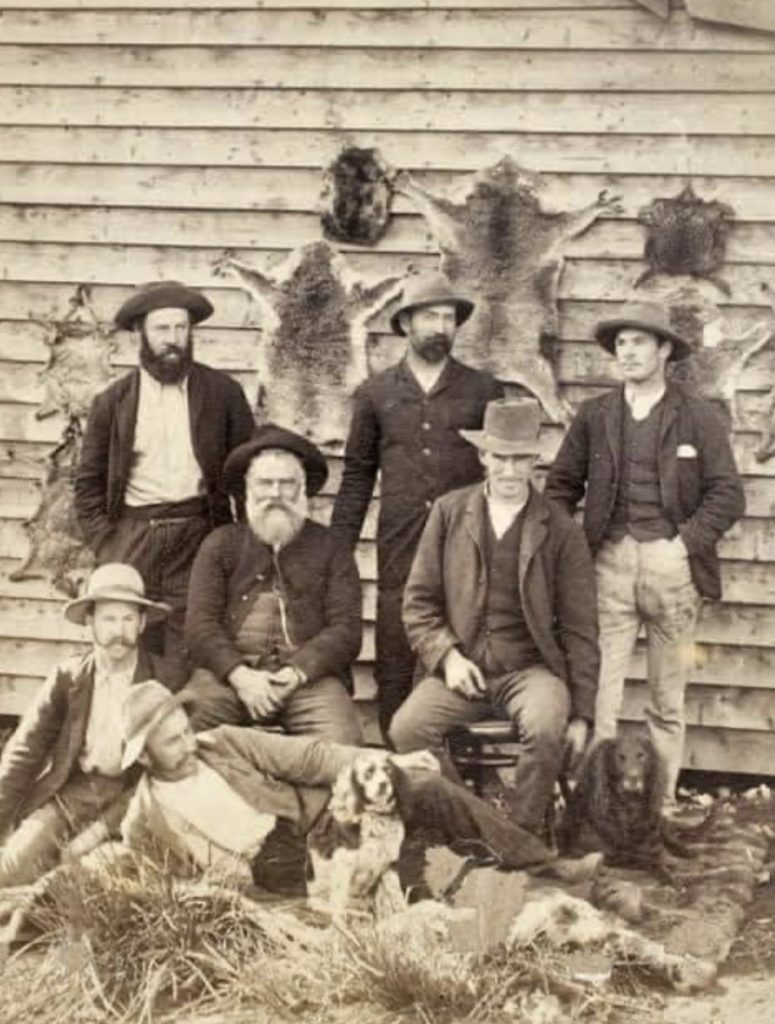
With abundance came opportunity. By the late nineteenth century, koala pelts had become a major export product. The dense, water-resistant fur was highly valued in Europe and America, and hunters responded to the demand with industrial efficiency. The scale of the slaughter is hardly believable today. In 1919, Queensland exported over one million skins. A decade later, during the Great Depression, another mass cull — the infamous 1927 “open season” — saw hundreds of thousands more animals shot, skinned and salted for overseas shipment. Estimates suggest that between 1919 and 1930, as many as eight million koalas were killed across eastern Australia.
Koalas were believed to be extinct in South Australia, New South Wales and Southeast Queensland by the 1930s. It seemed that only a few still existed in Victoria. However, naturally low-density populations remained undisturbed in the forests. After World War II, with the onset of mechanisation, logging intensified to keep up with the housing boom that followed. Young regrowth trees flourished, and koalas’ numbers grew. In 1976, scientists meeting at Taronga Zoo unanimously agreed they were no longer endangered.
Public reaction was mixed. Urban Australians, already nostalgic for a vanishing bush, were horrified. Rural communities, by contrast, saw the hunts as a legitimate way to earn income and control pests. Koala populations, inflated by decades of regrowth, were visibly dropping, but the idea of extinction seemed far-fetched. To many bushmen, there were “always more in the next valley.”
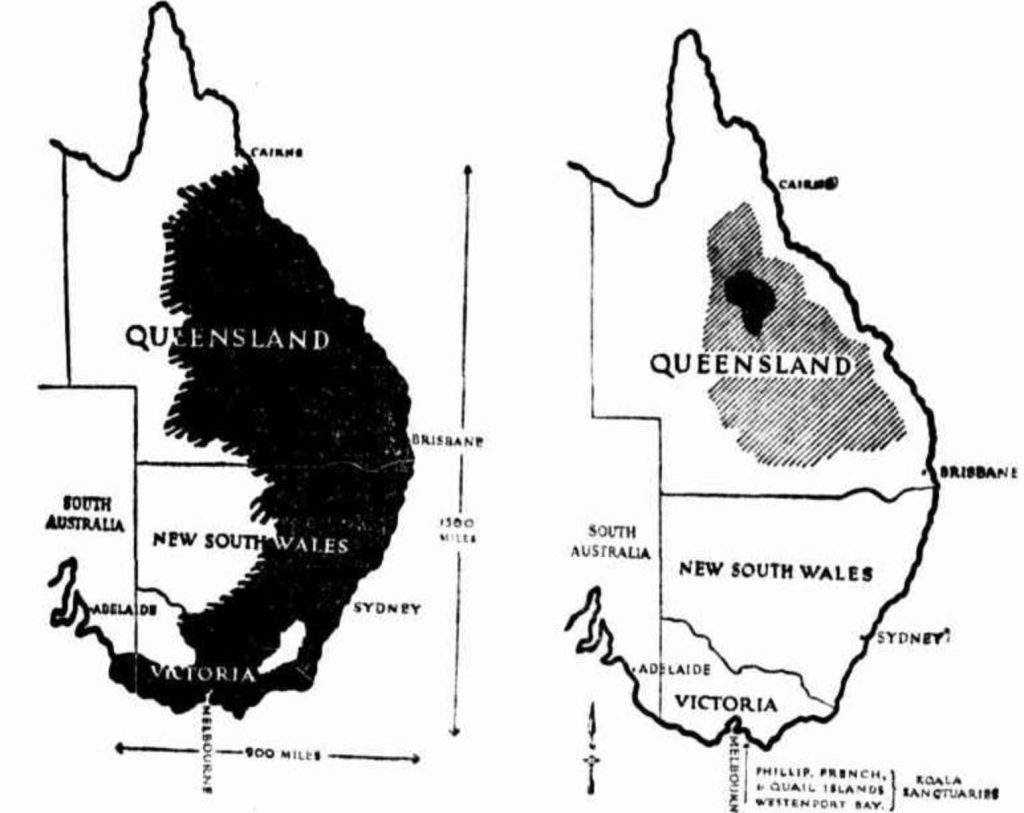
Ecologically, the story was predictable. Populations had surged far beyond the land’s sustainable carrying capacity; disease and starvation followed. Epidemics of chlamydia and wasting syndromes appeared in remnant colonies, which were classic signs of density stress. Yet public understanding lagged behind ecology. The koala’s decline was seen not as a natural correction but as evidence of human sin. The animal’s transformation from commodity to moral symbol had begun.
By the mid-twentieth century, protective sentiment had become ingrained in national mythology. The koala was regarded as a symbol of innocence and victimhood. The soft, silent, perpetually threatened cuddly bear. Children’s literature and preservation efforts transformed it into an icon of environmental virtue. The complexity of its ecological story – the tale of boom, bust and the cyclical interplay of disturbance and regrowth – was conveniently ignored.
Irruption and decline: nature’s balancing act
Ecologists use the term “irruption” to describe what happens when a population suddenly exceeds its environment’s carrying capacity. In Australia’s flammable landscapes, such cycles are common. Fire, drought and regrowth cause abundance and scarcity in cycles. Koalas, though slow-breeding, are not immune to these patterns. Their fortunes have always risen and fallen with the quality and amount of their food trees, and those trees, in turn, respond to fire.
The story of the Pilliga forests in north-central New South Wales exemplifies this dynamic perfectly. Today, the Pilliga is seen as a vast native forest reserve and a crucial habitat for biodiversity, as well as a supposed refuge for koalas. It is a clear example of how ecological history can be rewritten to fit modern political agendas.
Early explorers, such as John Oxley and Thomas Mitchell, repeatedly crossed the district before 1846, but never recorded a single koala sighting. Naturalist John Gould, who scoured the nearby Liverpool Ranges in the 1840s, found only a handful of animals after “diligent” searching with Aboriginal help. In those days, there was no Pilliga Scrub — only open grassy valleys where squatters grazed stock and had no need to clear trees. Before colonisation, much of the region was open grassy woodland maintained by Aboriginal fire.
The dense forest we now call the Pilliga is a European artefact. It sprang up after the severe droughts of the late 1800s, when abandoned runs and the lack of Aboriginal burning allowed woody regrowth to overrun the grasslands. Cypress and eucalypt saplings grew unchecked, gradually forming a continuous, closed-canopy forest. By 1910, koalas had exploded into unsustainable numbers, feeding on the fresh growth of young eucalypt leaves. The inevitable decline followed. Malnutrition, disease and drought reduced the population to its natural low levels, where it stayed for most of the twentieth century.
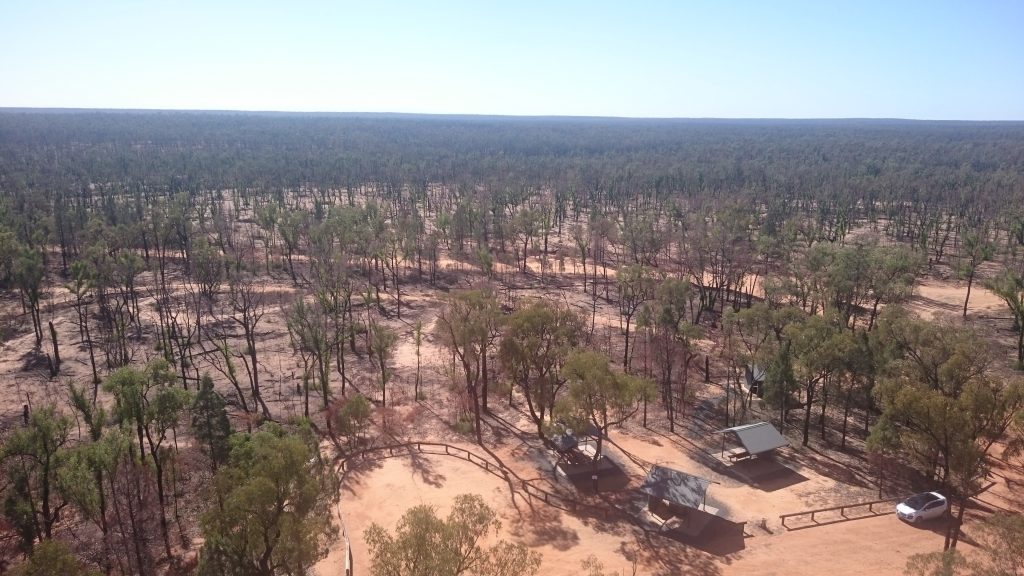
A second irruption occurred in the 1970s when forestry practices shifted, prompting dense eucalypt to regrow. Once again, koalas multiplied in the new growth, which provided plenty of tender leaves.
The apparent “recovery” of the species in the Pilliga during the early twentieth century was not a return to some ancient equilibrium but the result of ecological upheaval.
When Premier Bob Carr declared the Pilliga a national park in 2005, he justified it on the grounds of its high koala population. However, the area was already a landscape on the verge of another collapse. The Millennium Drought duly arrived, as did a large wildfire in December 2006, and koala populations plummeted once again. The lesson is clear but often ignored. Koala numbers fluctuate in response to habitat disturbance and drought. Declaring more national parks doesn’t change that fundamental reality, just as in the Pilliga, where it failed to reduce the impacts of drought and fire on the koalas.
Yet in doing so, it unintentionally created an ecological trap. By locking up large areas of maturing forest and excluding regular low-intensity fire, managers allowed fuel loads to build up. The result was a landscape ready for high-intensity wildfires. When these fires inevitably occurred, as they repeatedly did in the late twentieth and early twenty-first centuries, they burned with ferocity unimaginable in the pre-European landscape.
Koalas, although they benefit from the new leaf growth after these wildfires, cannot survive repeated large-scale fires. The heat, smoke and crown fires destroy their habitat faster than it can regenerate. In the Pilliga, as in other isolated forests, the boom has turned into a bust. Populations drop drastically, recover locally where fire is less intense, and then decline again when the next drought hits.
Calling the Pilliga a “natural” forest misreads its history. It is a cultural artefact, a monument to both European neglect and bureaucratic good intentions. The koala’s struggles are not proof of a climate disaster but of ecological naivety. The policies designed to protect it have worsened the extremes of its environment.
This pattern of irruption followed by decline is often misunderstood by the public as a story of human-caused catastrophe. In reality, it reveals a deeper instability in a forest that is out of ecological harmony. When disturbance regimes are removed or replaced with protectionist dogma, the system swings wildly instead of fluctuating smoothly. The koala, caught in the middle, becomes both a symbol and a victim of that imbalance.
Vic Jurskis discusses this in his books, Firestick Ecology and The Great Koala Scam. On the south coast of New South Wales, the koalas were in naturally low-density populations because the predominant eucalypts carry leaves of very low nutritional value. In the Bega Valley, settlers sowed pastures under the red gum woodlands, which triggered a chronic decline in tree health. However, this also supported a thriving koala population, leading to a booming fur industry in the late nineteenth century. As the trees died, the koalas suffered an epidemic disease. The Federation Drought practically wiped out the koalas. This irruption and decline mirrored that in Queensland mentioned previously.
The illusion of stability
Modern preservation rhetoric often views the koala as a fixed species in an unchanging landscape — as if equilibrium were normal in nature and any change signals a crisis. However, Australia’s ecological history shows a different picture. Instability is the norm and balance is the rare exception.
The irony runs deep. The animal most loved as a victim of change is itself a creature that responds to disruption. Its biggest successes have come after clearing, regrowth and fire. Its biggest setbacks have happened when those same forces are suppressed. The tragedy of modern koala management isn’t that we’ve failed to protect them, but that we’ve misunderstood the system they live in.
If there’s a lesson in the Pilliga and in the wider story of the koala’s history, it is that protection without proper process is risky. Fire exclusion, sentimental symbolism and political theatrics do not ensure ecological safety. Instead, they result in combustible forests, unstable populations and ongoing public confusion.
Koalas are not vanishing because Australians don’t care. They are facing struggles because we have confused caring with knowing. The species has survived for millions of years, enduring climate upheavals, megafaunal extinction and human settlement. Yet it might not survive another century of policies designed to soothe emotions rather than protect ecosystems.
The koala industry that is based on fundraising, fear and fiefdoms
The koala industry is lucrative. Organisations capitalise on the animal’s iconic status to attract donations, corporate sponsorships and government grants. Adoption schemes, branded merchandise and media campaigns are common. In this environment, fear sells, and crisis becomes currency. There are at least 14 koala charities or groups in Australia competing for public and government funding.
Competition among organisations intensified this issue. Some groups were accused of exaggerating the threat, while others tried to outdo them with even more alarming stories. Internal rivalries, personality clashes and disputes over donors and media attention have become integral to public perceptions of koala conservation, often overshadowing genuine scientific findings.
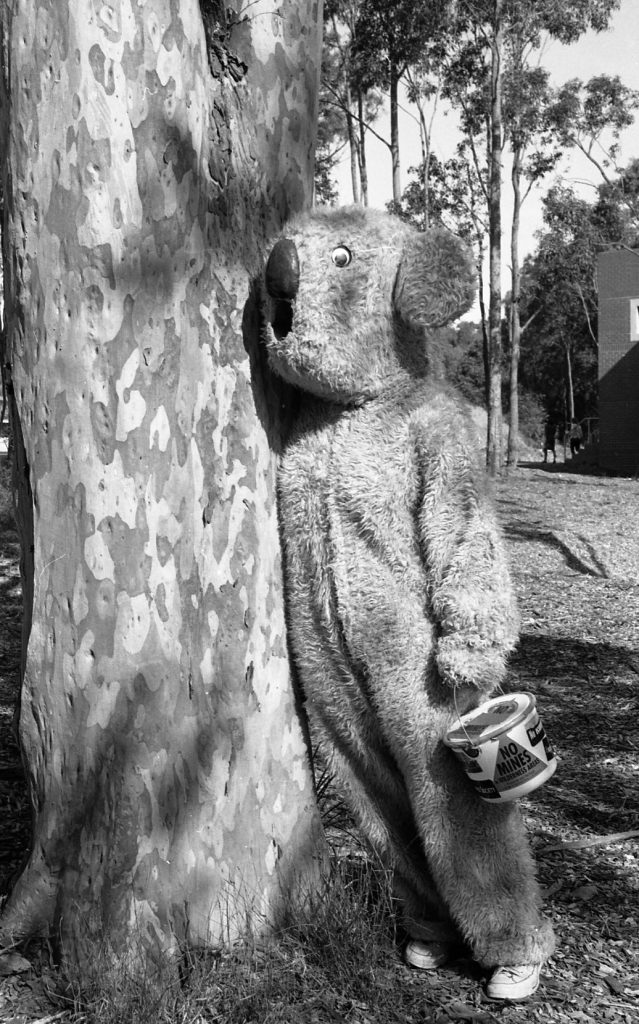
By the mid-1980s, the koala had gone from being a secretive forest dweller to Australia’s most charming fundraising mascot. With its cuddly look and distinctive round ears, the animal could inspire donations like few others. This was not unnoticed by a growing network of advocacy groups, each with its own clear priorities, unique personalities and, inevitably, a taste for rivalry.
The Australian Koala Association Inc. was established on 17 January 1986 and later that year changed its name to the Australian Koala Foundation Inc. (AKF). Its founders included Barry Scott, Steve Brown and others. Barry Scott travelled across the country to set up branches. Its early focus was on tackling koala diseases, especially chlamydia and raising significant funds to “save the koala.” It later shifted its focus strongly towards habitat destruction, mapping, advocating for tougher legislation and high-profile media campaigns. It described itself as:
The principal non-profit, non-government organisation dedicated to the effective management and conservation of the Koala and its habitat.

The AKF often used dramatic figures and worst-case scenarios to create urgency and boost fundraising. They launched campaigns like “Adopt a Koala.” They effectively capitalised on the high profile of their public figure, the “Koala Woman” Deborah Tabart, a fearless leader, as a branding tool to attract broad donor support. With Tabart’s prominence, AKF focused on national habitat mapping, legislative lobbying and branding the koala as being on the brink of extinction.
The Australians for Animals (AFA) was established in 1989 as an animal rights and advocacy group by Sue Arnold, a former journalist, and others. Its website highlighted a strong concern for koalas. Their message was that koalas faced a crisis across Australia. Its campaign style was urgent, confrontational and aimed at motivating volunteers, raising donations and exerting political pressure. It earned a reputation for fiery newsletters that emphasised immediate suffering and called for donations to address what was portrayed as a national emergency.
Its frequent newsletters were titled “Koala Crisis” and called for urgent government action, suggesting extinction unless immediate measures were taken. Their messaging was more alarmist and advocacy-driven than that of some other organisations, emphasising suffering, immediate threat and government failure. AFA made history as the first Australian group to have an Australian animal listed under the US Endangered Species Act.
AFA typifies advocacy groups whose funding and visibility depend on maintaining a high-urgency narrative, supporting a “doomsday messaging industry”.
A newer organisation, Koala Advocacy, was established around March 2024, focusing on the Sydney/NSW area, urban habitat issues and logging. Their aim is to advocate for the protection of koalas and their habitat, promote best practices and connect koala rescue, care, and support groups.
Their campaign focused heavily on the native forestry industry and land clearing. They emphasised the “end of native forest logging” as crucial for koala survival. Since their recent launch, they are still building their profile and tend to align more with climate and forest activism rather than mainstream species conservation.
Koala Advocacy highlights how various organisations focus on specific areas, such as urban habitats, development and forestry, yet all still promote crisis-driven messages about koalas. Competition for donors and media means each highlights emergencies.
There are many other local rescue and care organisations, such as Koala Rescue Queensland, Port Macquarie Koala Hospital and Northern NSW Koala Rescue, that focus on injured or orphaned koalas, roadkill and dog attacks, rather than habitat policy.
Then there are government initiatives, such as the federal Saving Koalas Fund, which announced A$76 million over four years for koala conservation, habitat restoration, health and monitoring. These include research institutes and monitoring programs, like the CSIRO National Koala Monitoring Program, which periodically produce data that challenge or refine popular narratives (e.g., higher population estimates, distribution nuances).
The outcome was a crowded, competitive scene in which each group vied for donors, media coverage and political clout. Limited public donations and government grants were hotly contested. Messaging grew more intense, and the more dramatic the claim — “Koalas extinct by 2050!”, “Only 80,000 left!” — the more persuasive it became for fundraising efforts.
The personalities involved mattered almost as much as the animals themselves. Some campaigners became the public face of the koala, their personal reputations tied to the urgency of the species’ plight. Others, equally passionate, promoted competing narratives, often criticising rivals for exaggeration or brand-focus, while chasing their own share of the attention and donor dollars.
This rivalry, while superficially about preservation, had a darker side. It fostered an industry whose survival depended on maintaining the crisis narrative. Koalas were no longer just animals needing habitat; they became symbols, commodities and bargaining chips in a high-stakes media and fundraising game.
Science vs. narrative: what does the evidence show
Independent researchers tell a very different story. Koala populations are larger and more widely distributed than is usually claimed, thriving in forests that undergo selective logging and active management. Studies by forest ecology experts show that the number of food trees, habitat connectivity and disease control matter much more than simply establishing national parks.
Fire, long blamed for its destructive effects, is actually vital to koala health. In areas where prescribed burns are applied, koalas benefit from a diverse canopy, adequate space and proper nutrition, which helps prevent population crashes naturally. Conversely, regions left untouched often develop dense undergrowth, leading to boom-and-bust cycles that place greater stress on the animals.
Before modern advocacy influenced public views, koalas were naturally sparse residents of Australia’s eucalypt forests. Early European settler accounts described koalas as rarely seen, mainly nocturnal and scattered across the vast woodlands. The idea that they were once “abundant everywhere” is mostly mythologised to support today’s claims of a sudden decline.
Aboriginal management of the land using firestick burning naturally controlled koala populations, preventing overpopulation in any area. Koalas adapted to large home ranges, moving to zones best suited for food and shelter. Periodic fires ensured the forests stayed productive for both the animals and the people who depended on the land.
After European colonisation, widespread fire suppression, combined with selective logging and land clearing, created conditions for unnatural population booms followed by crashes. Koalas were sometimes seen as “endangered” during these natural fluctuations, especially when disease, food shortages, or habitat fragmentation coincided with high-density areas.
One of the most serious threats is chlamydia, which naturally helps regulate population numbers. Other major causes of death include dog attacks, vehicle collisions and habitat fragmentation caused by human settlement, not logging in managed forests. Ironically, areas with strict protection but poor management often develop dense undergrowth, leading to boom-and-bust cycles in koala populations.
While preservation campaigns often blame timber harvesting for population decline, scientific evidence presents a different picture. Key studies indicate that koalas thrive in state forests subjected to selective logging, provided the forests are well-managed and biodiversity is maintained.
Ecologists like Vic Jurskis and Dr Brad Law have consistently highlighted that well-managed forests support healthy koala populations. Meanwhile, stories of extinction persist mainly because they attract media attention, political support and funding from donors.
In the 20th century, research into forestry and selective logging showed that koalas could adapt to managed landscapes. Populations in state forests with ongoing timber harvesting stayed healthy, contradicting the “logging kills koalas” myth.
Law’s work is very instructive. Working with the NSW Department of Primary Industries, he has employed new acoustic survey methods across a large area of forests on the north coast of New South Wales, which have detected more koalas than any previous surveys. Koalas were found in forests with a history of logging. Annual monitoring since 2015 has shown a stable trend at the regional level, although koala populations crashed in the Pilliga, as mentioned earlier. He has presented findings that challenge decades of prevailing political ideology, demonstrating that sustainable forestry and koala conservation can coexist. Law’s published data don’t support claims that harvesting restrictions are necessary to maintain koala numbers.
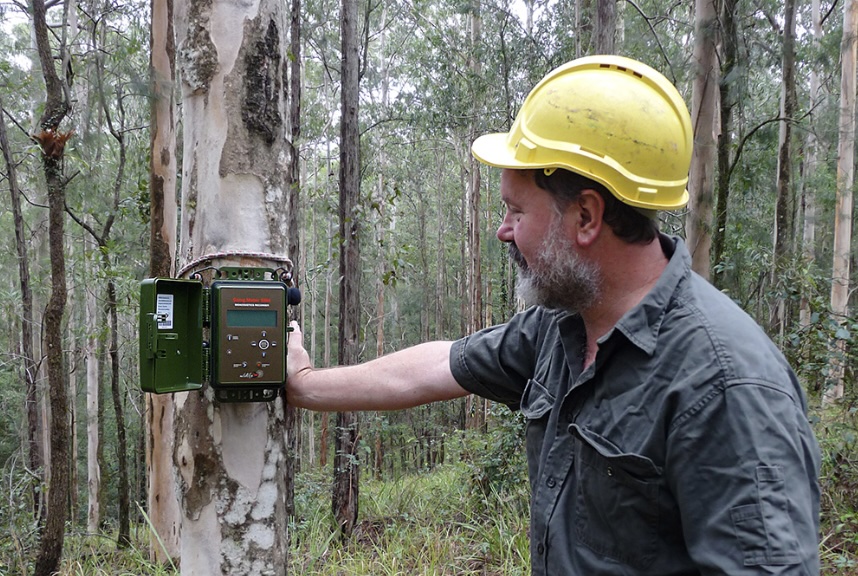
Law’s research indicates that timber harvesting, as practised under the comprehensive rulesets applying in the native forests of north-east New South Wales, is not a threat to koala populations. And so does the CSIRO data.
The CSIRO national koala monitoring program’s April 2024 report offers koala population estimates for New South Wales, Australian Capital Territory and Queensland, ranging from 117,050 to 244,440. The Victorian and South Australian populations are estimated to be between 170,780 and 383,570. This results in a total national estimate of 287,830 to 628,010 koalas, indicating that there is no risk of koala extinction by 2050. It also shows that koalas are recovering after the devastating 2019-20 bushfires along the eastern seaboard.
The NSW Government’s first statewide baseline population dataset for koalas in New South Wales estimates that there are between 231,000 and 320,000 koalas in the state, further reinforcing the koala’s safe status, as shown by earlier estimates from CSIRO and the Government’s own scientists. It shows that koala populations are high in New South Wales forests.
CSIRO’s National Koala Monitoring Programme has, since 2023, used expert data to calculate koala numbers and disturbances. According to the CSIRO:
The change in the population estimate most likely reflects a combination of increased survey effort, more sensitive survey methods, the inclusion of additional data and model improvements.
However, in contrast, the New South Wales state government relies on its agency, the National Parks and Wildlife Service (NPWS), to tell it how many koalas are left. But NPWS employs ineffective and archaic survey methods, such as mail-outs and searches for faecal pellets. They hopelessly lack reliable data on koala numbers or trends.
Despite this, they claim North Coast koalas are slowly declining, telling the government that only 50,000 koalas remain in the wild in NSW and that it is essential to “save the koala from extinction by 2050”. But much more effective surveys show they are actually increasing rapidly. During Black Summer, large numbers of koalas were apparently burned, despite experts telling us there were few remaining.
The politics of endangerment
The modern claim that Australia’s koalas are on the brink of extinction relies more on bureaucracy than on biology. In 2022, after the Black Summer fires, then Environment Minister Sussan Ley sought advice from the Commonwealth’s Threatened Species Scientific Committee (TSSC) on whether koalas deserved higher protection under the Environment Protection and Biodiversity Conservation Act (EPBC Act). The Committee advised that populations in Queensland, New South Wales and the Australian Capital Territory had experienced severe declines and should be listed as endangered. The same species in Victoria and South Australia, however, remained officially “not threatened.” In other words, a koala crossing the Murray River could have its conservation status changed overnight.
The decision was based not on extensive field data but on a process called “Expert Elicitation,” which is a polite way of saying educated guesswork. In 2012, fifteen researchers were asked to estimate koala numbers across 19 bioregions and then to estimate how these numbers were changing in each area. From their opinions, populations were “hindcast” to 2001 and “projected” forward to 2021, with the losses from the Black Summer fires subtracted. The result was a calculated decline of more than 50 per cent, enough to trigger an endangered listing. The method, borrowed from the Delphi Process (named after the Greek oracle), explicitly stated that:
It was not necessary to achieve high levels of certainty or consensus.
and that a:
Quantitative, scientific method was possible in the absence of empirical data.
Critics dubbed it science by spreadsheet. The Senate Environment Committee had previously admitted there were no reliable population data. Yet, it quoted fanciful estimates — such as 10 million koalas at the time of European settlement, despite the first colonists taking 15 years to find one. Successive updates to advise the Minister turned uncertainty into alarm. By 2012, koalas in Queensland, New South Wales and the Australian Capital Territory were listed as “vulnerable”; a decade later, they were classified as “endangered.”
To achieve this, the TSSC invoked an obscure clause — Section 517 of the EPBC Act — allowing a “distinct population” to be classified as a separate species. It was the first time this power was used to split a single national species into two administrative units. Many saw this as an act of political convenience rather than scientific necessity. More a way to declare a crisis in the north while ignoring the thriving populations in Victoria and South Australia, where koalas have reached plague densities in blue gum plantations and translocation colonies.
Meanwhile, contradictory evidence kept emerging. Dr Law found koala numbers on the north coast were up to five times higher than previously believed, and logging showed no measurable impact on their numbers. Field ecologists observed koalas quickly recolonising areas affected by earlier fires, with some breeding within a year of major crown fires. During the Black Summer, volunteers described koalas “popping up everywhere” in areas where official models had predicted near extinction. Even the ABC’s Catalyst later reported that joeys born during those fires were in good condition.
Nevertheless, the endangered listing proceeded, accompanied by a surge of funding announcements: a $50 million federal plan to “save” koalas and a $193 million New South Wales strategy to “double” an unknown population by 2050. Much of the funding went towards habitat restoration, which mainly involved planting denser eucalypt regrowth and expanding national parks.
Ironically, these measures risk repeating the ecological mistakes of the past. Dense regrowth forests are koala magnets. Lush at first, but susceptible to drought, disease and megafire. The result is the familiar boom-and-bust cycle that has always characterised koala populations in disturbed environments. Yet this dynamic reality is largely ignored by a preservation industry now financially dependent on crisis narratives.
The Great Koala National Park: politics over science
The announcement last year of the creation of a Great Koala National Park in northern New South Wales shows that advocacy stories shape political decisions more than ecological needs do. Governments can declare national parks with lots of fanfare; politicians can pose with koalas for photo opportunities; and preservation groups can boast about “policy wins.”
Research shows that simply locking up state forests without active management does little to improve koala health. Thick, unburnt forests are more prone to severe fires, disease and food shortages. Meanwhile, selective logging and controlled burns in state forests help maintain habitat diversity and support sustainable koala populations.
The creation of the park also shows how political spectacle can replace science. It’s easier to announce a large, protected area, promise funds and attract media attention than to carry out detailed, evidence-based management of forests and koala habitats. The focus is on appearance, not ecology.
There is a certain irony in the koala preservation scene. The animal most often seen as helpless and at risk is, in fact, resilient and adaptable. Koalas are thriving in managed forests, on the edges of farmland, and in some peri-urban areas, often in larger numbers than when European settlers first arrived.
Ironically, the same blue gum and flooded gum plantations once vilified by preservationists as barren monocultures have now been recast as essential habitats for koalas. In south-west Victoria, dense populations have established themselves in the blue gum belts planted for the export woodchip trade. These are landscapes that preservationists once described as “ecological deserts.” Similarly, near Coffs Harbour on the New South Wales north coast, flooded gum plantations planted for pulp on previously cleared land for dairy farms have become de facto koala sanctuaries. In both regions, foresters are now expected to balance timber production with the welfare of an animal that arrived entirely of its own accord.
This volte-face reveals the strange circularity of environmental politics. The same plantation model once condemned as a crime against biodiversity is now praised as vital “habitat.” The fact that koalas thrive in these highly uniform, managed forests suggests something awkward for the story of imminent extinction. Koalas are neither rare nor particularly fragile but surprisingly adaptable. The animal that once ranged sparsely through open forests has learned to settle in tree farms, suburbs and even near nuclear reactors — a far cry from the delicate victim shown in glossy fundraising brochures.
Yet the industry centred on “saving” the koala profits from their supposed suffering. Dramatic statistics, alarmist newsletters and adoption drives keep the donations flowing. Rivalries between groups spark public debate, with each claiming its approach as the only real solution. The more urgent the message, the more attention and the more money comes in.
This doesn’t mean koalas are completely free from human impact. They’re vulnerable to roads, pets, habitat fragmentation and disease. However, their situation has been blown out of proportion into a national obsession that often ignores science in favour of storytelling.
The sad reality is that the official narrative of koala decline relies on selective data, speculative modelling and political expediency. The real threat to koalas isn’t forestry but the neglect of active land management. We’ve turned a resilient, irruptive marsupial into a constant fundraising mascot. Now, it serves as a symbol of virtue for an urban conscience rather than a species understood through ecological truth.
Conclusion: saving the koala from its saviours
Koalas are remarkable animals. They are resilient, solitary and adapted to Australia’s vast, fire-managed landscapes. They do not need grand national parks to survive; they require practical, science-based forest management. Selective logging, prescribed burns, disease monitoring and tackling hazards like roads and dogs are far more effective than media-friendly gestures.
The koala has become a fundraising mascot, a political symbol and a symbol of environmental urgency. Organisations compete for donations, media attention and political influence, often reinforcing a narrative of extinction that is disconnected from evidence. Researchers also contribute to the chaos, seeking more funds to conduct additional studies to amplify the alarm about extinction.
Ironically, in the effort to “save” the koala, the species often benefits less than the people and groups who advocate for it. Knowing its true ecological needs, based on history, science and forest management, is the only way to achieve genuine conservation, without turning Australia’s iconic marsupial into a symbol of ongoing crisis.
Stay tuned. I am in the middle of writing up a 6-year study we have just completed, measuring impacts and recovery on koala density in a north coast forest impacted by 2019 wildfires. We are going to have some good evidence of a very strong recovery soon.
Well done Mark. I would love to see the results when they come out.
Great article. About time we got some reality into the Koala cause. We need more forests and less national parks. National parks are neglected and become degraded without active management. Logging is the only realistic way to achieve this.
The 2019-2020 fires resulted in massive tree loss, and no logs were made available for logging in the National Parks. As a result, we will have dead trees falling for the next 50 years, creating a hazard throughout the parks. A tragic waste of resources.
Good reading Robert. I personally know of a lady who donated $12 million to the Bob Brown Save the Koala Fund. I also know of an old log cutter who felled trees in Pine Creek State Forest most of his Life and he said he never cut a tree with a koala in it.
The latest CSIRO’s data-driven estimate that the size of the listed (NSW, ACT, QLD) koala population is between 398,000 and 569,000 (May 2025). The latest data-driven population model has been built based on tens of thousands of data points spread across the species range. Ironically, the Endangered population in NSW, QLD & ACT EXCEEDS the unlisted population in VIC & SA (only 303,000 to 381,000 koalas)!!!
Also, the koala has been listed as Vulnerable since 2012 and Endangered in Queensland, New South Wales and the ACT since 2022, based on the “expert opinion” (rather than data) that the population had declined from 184,748 to 92,184.
The data also backs up the NSW Government’s own Department of Primary Industries scientists revealed that koala populations are ‘high and stable’ in NSW forests over the last decade, including since the Black Summer fires.
I seem to remember that when Premier Bob Carr brought in State Environmental Planning Policy No 46 they listed the threatened species in NSW the koala was not on the list. It got included on the list by popular request, not by scientific survey.
At a meeting of the lower Murray Darling Catchment Management Committee, we were told that estimates of a species’ population can be expected to decline once someone starts studying it because as the quoted numbers decline, the available research grants improve.
Back in the late 1960s the workers camped at Rummery Park on Whian Whian State Forest used to complain that koalas grunting kept them awake at night. That forest was a blackbutt plantation.
In recent times the call has gone out for productive native forests not to be harvested to save threatened species. Since the best habitats for these species became national parks 25 years ago, as part of the Regional Forest Agreement process, it tells me that in 25 years the best habitats have deteriorated, and the production forests have become the preferred habitats of our rare and threatened species.
Are claims of “critical endangerment” by popular demand or genuine scientific survey? I wonder?
Only when the last hectare of state forest been placed into the reserve system and the last hectare of native forest incinerated and the last koala confined to a zoo, will more and more parks campaigners realise they must now blame climate change for their failure to understand the role that active management by Aboriginal people played in the evolution of the ecology of our native forests.
Having something else to blame will allow them to continue to avoid responsibility for their inept understanding of the ecology of Australian forests and the need for active and adaptive management.
Great article, Robert.
In my 25 years wandering through Qld native forest, assessing timber quality and quantity for harvesting (a past time requiring much canopy gazing), I saw very few koalas. I have noted they seek shelter in trees with denser canopies to escape predators (Casuarinas are very popular) during daylight hours.
In Qld, significant (questionable) areas are now designated Koala habitat. In many cases, the koala would be required to carry a water bag and tucker to negotiate the distance between isolated stems!
Koala irruptions have been much more than brief spikes and have typically ended in extreme droughts, with numbers crashing rather than declining. Densities of 0.03 per hectare or greater indicate an irruption. They are 0.07 in the koala park. Koalas thrive in dense young forests and in forests sick because of a lack of frequent burning. Numbers are driven by the amount of soft young shoots.
Here’s a scientific article: https://connectsci.au/wr/article-abstract/44/7/471/40796/Ecological-history-of-the-koala-and-implications?redirectedFrom=fulltext